Krásna Hôrka Castle
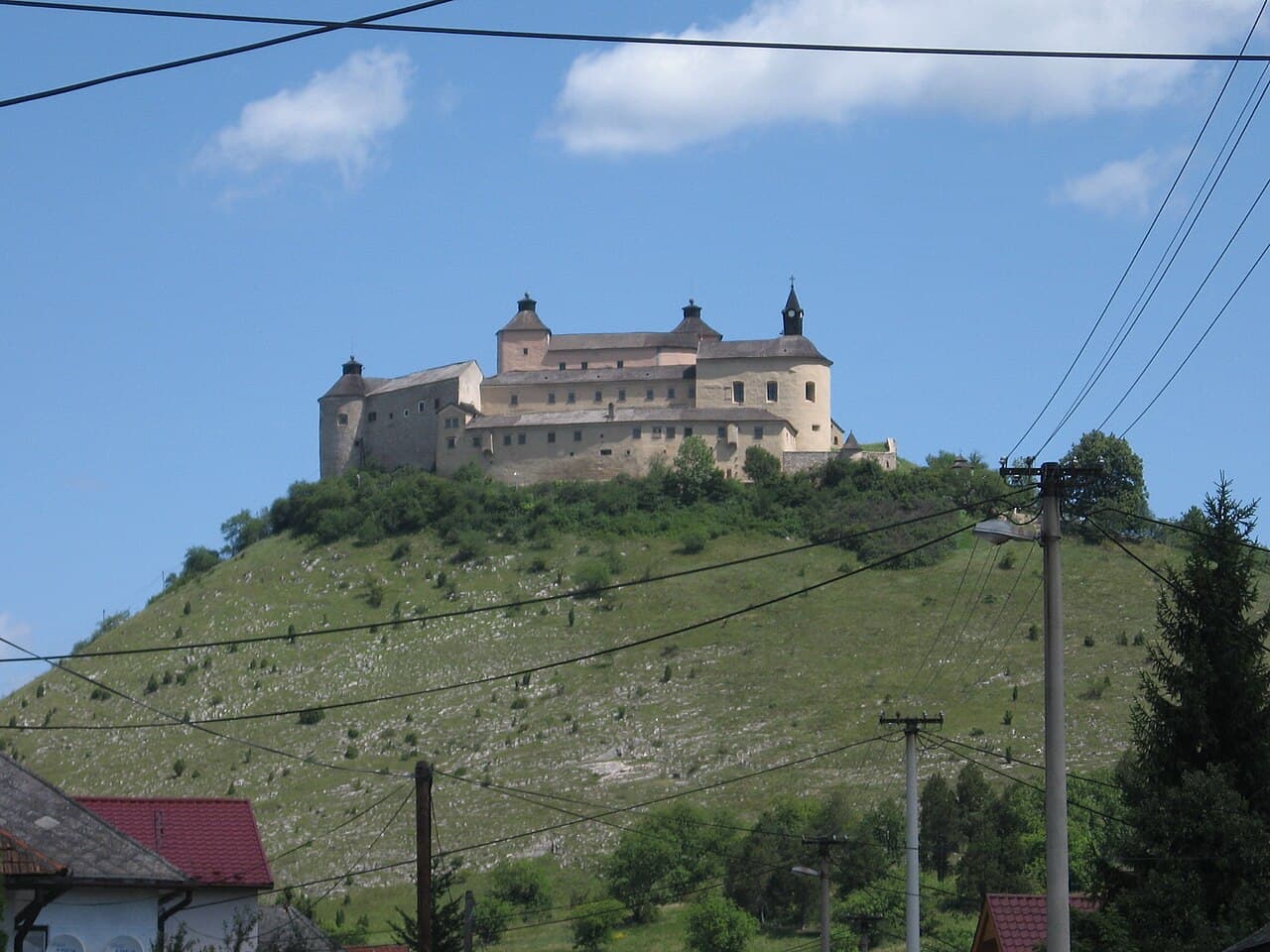
Krásna Hôrka Castle is a prominent medieval fortress located on a conspicuous hill above the village of Krásnohorské Podhradie in the Košice Region of Slovakia. Built around 1320, this hill castle occupies a strategic position overlooking the Rožňavská kotlina basin, historically guarding important trade routes through the Slovak Ore Mountains. The castle's Gothic origins are evident in its earliest preserved structures, while later additions reflect significant Renaissance and Baroque modifications that transformed it from a military fortress into an elegant noble residence.
Early history and strategic importance
The site of Krásna Hôrka Castle was likely fortified as early as the 13th century, with the first written record dating to 1333. Local tradition holds that King Béla IV sought refuge here during the 1241 Mongol invasions, highlighting the hill's defensive value. The castle was originally constructed by the Kingdom of Hungary to protect the vital trade routes crossing the mining-rich Gemer region.
Throughout the late medieval period, the castle was controlled by powerful noble families such as the Ákos and Bebek clans. The Bebek family, in particular, undertook substantial fortification upgrades in the mid-16th century to counter the growing threat of Ottoman incursions. These enhancements included the addition of artillery bastions and reinforced walls, designed by the Italian architect Alessandro de Vedano.
Architectural evolution and fortifications
Krásna Hôrka Castle features a distinctive triangular ground plan, with semicircular bastions at each corner added during the Renaissance period. The main entrance is protected by a multi-level, semi-cylindrical bastion, with a drawbridge guarding the secondary gate. The castle's fortifications were expanded to include three cannon bastions and a cannon terrace, reflecting the adaptation to artillery warfare.
The upper castle houses the original Gothic palace and defensive tower, while the lower castle contains residential and utility buildings added during the Baroque period. Notably, the Baroque-Classicist chapel of the Nativity of the Virgin Mary was created by converting one of the cannon bastions, featuring a revered painting of the black Madonna, which inspired religious processions.
The andrássy family and noble residence transformation
The castle came under the ownership of the Andrássy family in 1642, who transformed it significantly over the following century. Their renovations introduced Gothic-Renaissance interior styles and Baroque architectural elements, adapting the castle for residential comfort and noble functions rather than purely military use.
In the 18th century, the Andrássys built a small Baroque chapel of St John Nepomuk near the castle gates and expanded the residential wings. The interiors were furnished with original furniture, including a well-preserved kitchen with a large open hearth and a collection of medieval and modern weapons, such as harquebuses and a bronze cannon from 1547.
Museum and cultural heritage
By the 19th century, Krásna Hôrka Castle was gradually converted into a museum by the Andrássy family, preserving its historical interiors and collections. The museum opened to the public in the late 1800s, showcasing noble life, arms, and artifacts related to the castle's history.
The castle also features a torture chamber with original devices, a 17th-century assembly hall, and a music salon with historical instruments. The adjacent Andrássy family crypt and an Art Nouveau mausoleum containing family sarcophagi are located nearby.
Fire damage and restoration efforts
On March 10, 2012, a devastating fire caused by discarded cigarettes severely damaged the castle's wooden shingle roofs, upper Gothic palace, and bell tower. Despite losses valued at around eight million euros, approximately 90% of the historical collection was saved.
Since the fire, extensive restoration and archaeological work has been underway to stabilize and rebuild the castle. Temporary wooden roofing has been installed, with plans to restore the original roofing style. The castle is expected to partially reopen to visitors, continuing its role as a cultural monument and museum.
Architectural features and layout
The castle's layout reflects its evolution from a medieval fortress to a Renaissance and Baroque noble residence. The triangular upper castle contains the main palace and defensive tower, surrounded by fortified walls and bastions. The lower castle includes residential quarters, stables, a bakery, and utility buildings.
Defensive features such as the semicircular bastions, cannon terraces, and drawbridges illustrate adaptations to changing military technology. The castle's courtyard and galleries display Renaissance architectural influences, while Baroque chapels add artistic and religious significance.
Visitor experience and exhibitions
Today, Krásna Hôrka Castle offers visitors a glimpse into medieval and early modern noble life through its well-preserved interiors and museum collections. Exhibits include arms and armor, historical furnishings, and artifacts illustrating the castle's military and residential history.
Annual events like the "Castle Games" feature demonstrations of medieval siege weapons, including a reconstructed catapult installed in the late 20th century. Nearby attractions include the Andrássy family mausoleum and a portrait gallery at the foot of the castle hill.
Frequently asked questions (FAQ)
- What is the historical significance of Krásna Hôrka Castle?
- Krásna Hôrka Castle is a prominent historical landmark in Slovakia, dating back to the 13th century. It served as a royal residence and played a crucial role in regional defense, showcasing the architectural evolution of the period.
- When was Krásna Hôrka Castle built?
- The construction of Krásna Hôrka Castle began in the early 13th century, with significant expansions and renovations occurring over the centuries. Its strategic location and fortifications were vital during various historical conflicts in the region.
- What are the opening hours for Krásna Hôrka Castle?
- Krásna Hôrka Castle is typically open to visitors from April to October, with varying hours depending on the season. It is advisable to check the official website for the most current opening times before planning your visit.
- Can I take a guided tour of Krásna Hôrka Castle?
- Yes, guided tours are available at Krásna Hôrka Castle, providing visitors with an in-depth understanding of its history and architecture. It is recommended to book in advance, especially during peak tourist seasons.
- Is it possible to access Krásna Hôrka Castle with public transport?
- Yes, Krásna Hôrka Castle is accessible via public transport, with bus services operating from nearby towns. Additionally, the castle is within walking distance from Krásnohorské Podhradie, making it convenient for visitors.
- What is the best time to visit Krásna Hôrka Castle?
- The best time to visit Krásna Hôrka Castle is during the spring and early autumn months when the weather is mild and the scenery is beautiful. These seasons also tend to have fewer crowds, allowing for a more enjoyable experience.
- What are the ticket prices for Krásna Hôrka Castle?
- Ticket prices for Krásna Hôrka Castle vary based on age and group size, with discounts often available for students and seniors. It's best to check the castle's official site for the most accurate and up-to-date pricing information.
- Are there any nearby attractions to visit alongside Krásna Hôrka Castle?
- Yes, visitors can explore several nearby attractions, including the charming village of Krásnohorské Podhradie and the picturesque Slovak Paradise National Park. These locations offer a variety of outdoor activities and cultural experiences, enhancing your visit.
Photo gallery

Information
Website
Visit websiteSources & official resources
Verify the information above using these authoritative references.
Loading map...
Visitor reviews
No reviews yet. Been here? Write the first review and help other travelers!
Write the first reviewVisited this castle? Share your experience
Your review helps other travelers and adds first-hand knowledge to our encyclopedia.