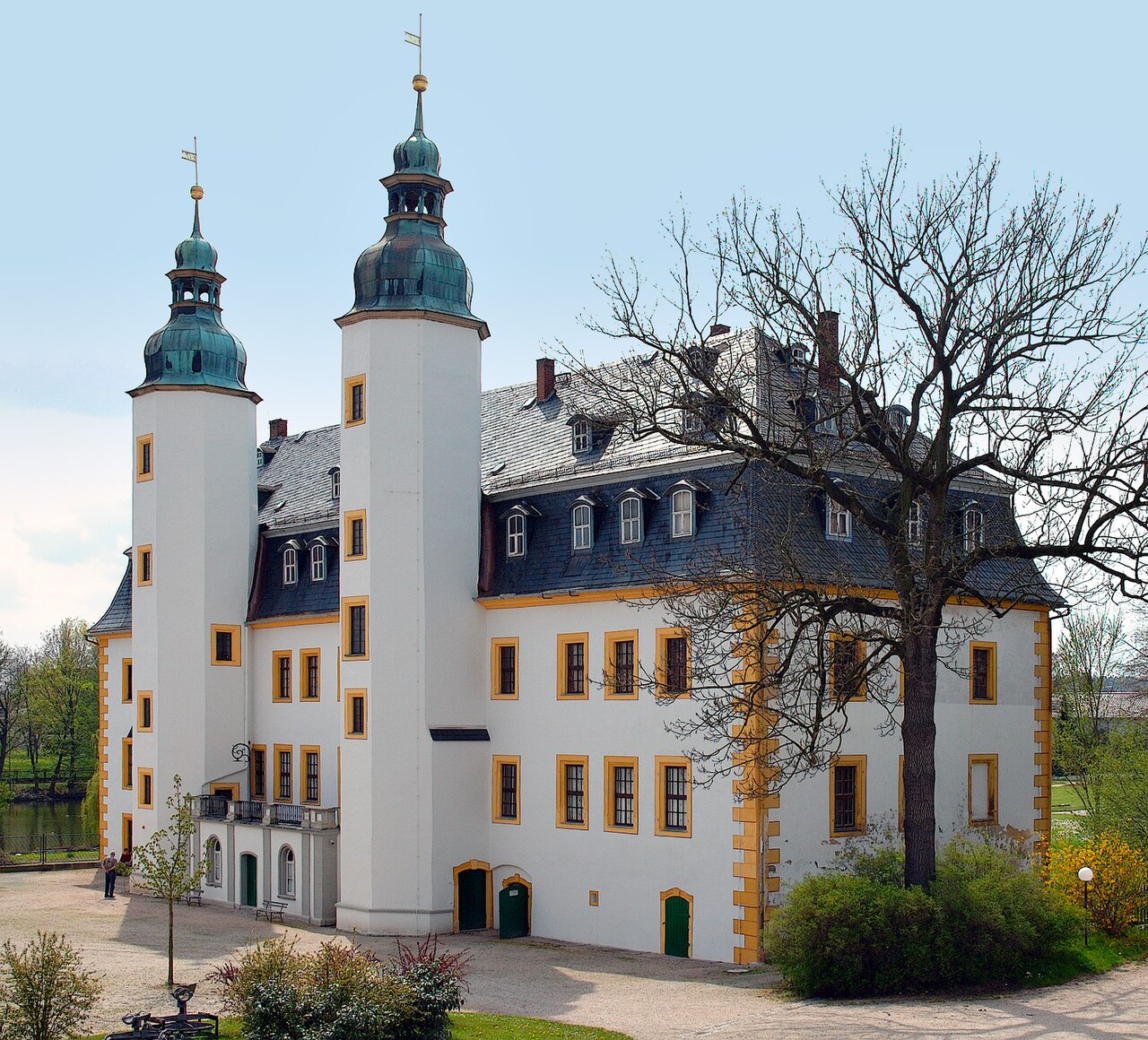
Kranichfeld Oberschloss Castle
Kranichfeld Oberschloss castle stands prominently on a mountain spur overlooking the historic two-castle town of Kranichfeld in the scenic region of Thuringia, Germany. Surrounded by picturesque mountains and dense forests of the Weimarer Land, this castle is a striking example of architectural evolution from a medieval fortress to a Renaissance palace. Though the castle appears intact at first glance, only the outer walls of the main castle have survived intact, as the interior was devastated by a fire in 1934.
Historical significance and noble ownership
The Oberschloss ("upper castle") earned its name to distinguish it from the later-built lower castle in Kranichfeld. Throughout its history, it was owned by several noble families who played key roles in the early modern history of Thuringia. The castle was a symbol of power and prestige, reflecting the influence of its owners in the region.
In the 1560s, the castle became the center of a notable "neighborhood quarrel" between two branches of the Reussen family, who shared the castle. The "older gentleman" occupied the eastern wing, while the "younger gentleman" lived in the western wing. Conflict arose when the older line constructed a new wing that obstructed light to the younger line's quarters. This dispute highlights the complex social dynamics and architectural modifications within the castle during the Renaissance period.
Architectural features and development
Medieval origins and 12th-century stonework
The castle's foundations date back to the 12th century, with much of the surviving stonework from this period. Key medieval structures include the chapel, the Palas (the main residential building), and the imposing Torre Grassa ("Fat Tower"), which served as a defensive keep. These elements illustrate the castle's original function as a fortified stronghold.
Transition from castle to Renaissance palace
Over the centuries, the castle underwent significant transformation, particularly in the Renaissance era, reflecting a shift from purely defensive architecture to more comfortable and representative residential spaces. The castle's current appearance largely stems from this period, showcasing Renaissance architectural elements while preserving its medieval core.
Unique architectural details
One of the castle's most curious features is the castle gallery located in a bay window at the southwest corner, known as the "Leckarsch" or "licking arse". This stone figure provocatively displays its bare rear with the inscription "Leck mich im Mars" ("lick me in the arse"), a bold and humorous emblem typical of 16th-century castle iconography, reflecting the era's different social mores.
Modern restoration and visitor experience
After the castle was pawned in 1577 and changed ownership multiple times, it eventually came under the control of the Counts of Schwarzburg-Rudolstadt, who expanded the outer courtyard. The castle suffered significant damage in the 20th century, particularly the devastating fire in 1934 that destroyed the interior.
In 1999, the "101 Steps Campaign" was launched to restore parts of the castle. This initiative led to the installation of a staircase inside the impressive keep, and in 2011 the Torre Grassa was fitted with a dome and an accessible viewing platform, allowing visitors panoramic views of the surrounding landscape.
Today, visitors can explore an exhibition route that guides them through the external courtyard, the Palas, the Torre Grossa, the chapel, and the cellar. The chapel and Palas, dating back to the 12th century, are also venues for concerts and weddings, blending historical ambiance with contemporary cultural use.
Architectural and cultural significance
Kranichfeld Oberschloss castle exemplifies the architectural transition from medieval fortress to Renaissance palace, preserving elements from both periods. The castle's stonework, towers, and chapel offer valuable insights into construction techniques and noble life in Thuringia over several centuries.
The castle's unique features, such as the "Leckarsch" figure and the historical disputes between noble families, add layers of cultural and social history, making it a fascinating site for historians and visitors alike.
Location and surroundings
Situated in the Thuringia region, the castle overlooks the town of Kranichfeld and is surrounded by natural beauty, including mountains and forests. Its elevated position on a mountain spur not only provided strategic defense advantages but also offers spectacular views, enhancing its appeal as a tourist destination.
Visitor information
Visitors to Kranichfeld Oberschloss castle can enjoy a rich historical experience combined with cultural events hosted within the castle grounds. The restored viewing platform on the Torre Grassa allows for breathtaking vistas, while the chapel and Palas offer intimate settings for concerts and ceremonies.
Frequently asked questions (FAQ)
- When was Kranichfeld Oberschloss castle originally built?
- Kranichfeld Oberschloss castle dates back to the 12th century, with much of its original stonework from that period still visible today.
- Can visitors access the Torre Grassa viewing platform?
- Yes, since 2011, the Torre Grassa has a dome and an accessible viewing platform, offering panoramic views of the surrounding Thuringian landscape.
- What is the significance of the 'Leckarsch' figure at the castle?
- The 'Leckarsch' is a stone figure in a bay window that humorously displays its rear with a 16th-century inscription, reflecting the social customs of that era.
- Is the interior of the castle fully preserved?
- No, the interior was destroyed by a fire in 1934, but the outer walls and several key structures have been preserved or partially restored.
- Are there cultural events held at the castle?
- Yes, the chapel and Palas are used for concerts and weddings, integrating historical ambiance with contemporary cultural activities.
Information
Current owner
Municipality
Loading map...
Visitor reviews
No reviews yet. Been here? Write the first review and help other travelers!
Write the first reviewVisited this castle? Share your experience
Your review helps other travelers and adds first-hand knowledge to our encyclopedia.