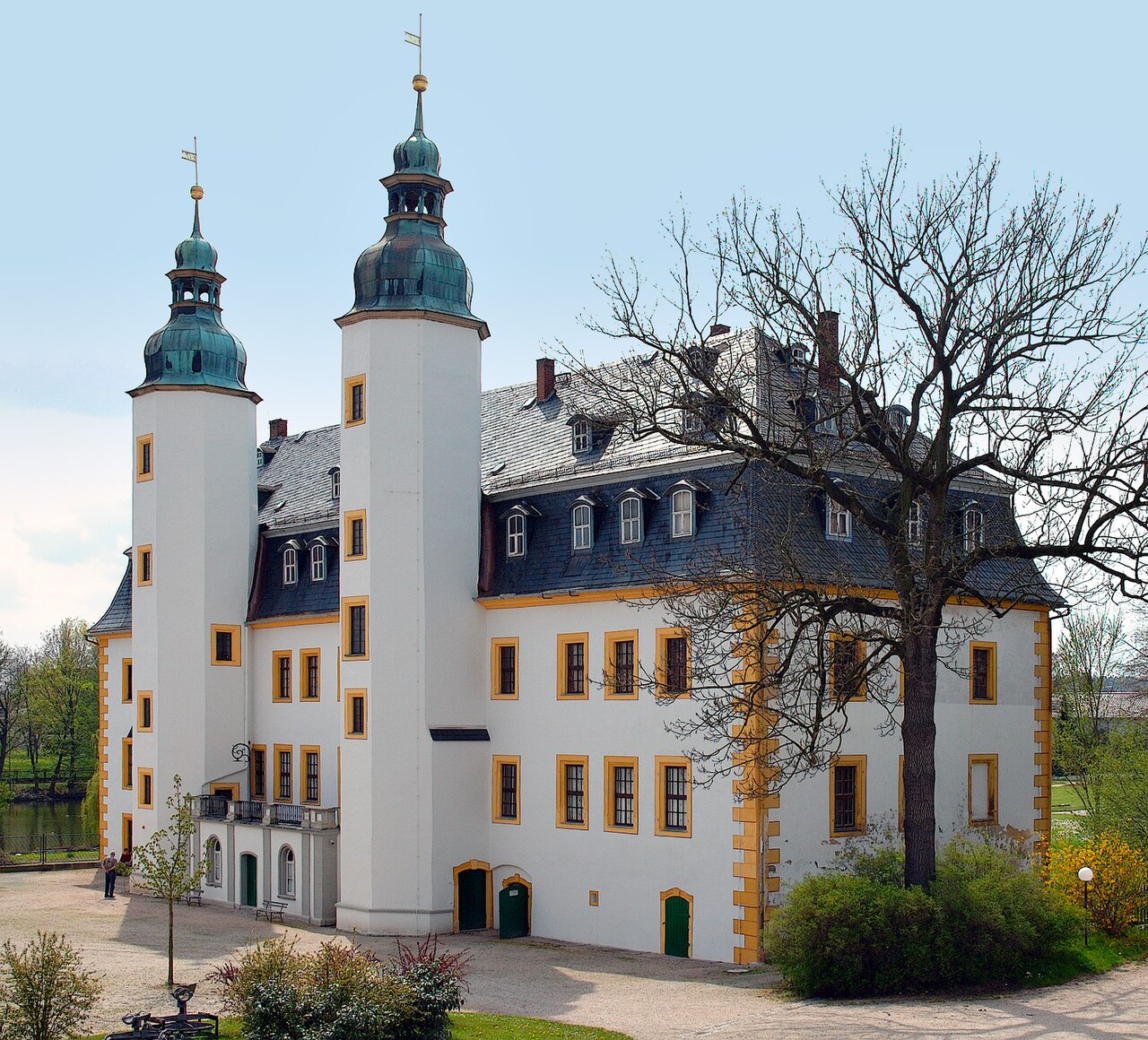
Schloss Belvedere
Schloss Belvedere stands prominently on a hill south of Weimar, Germany, surrounded by an expansive 43-hectare parkland. Constructed between 1724 and 1748, this Baroque summer residence was commissioned by Duke Ernst August of Saxe-Weimar-Eisenach. The estate originally served as a hunting lodge and featured an orangery, a pleasure garden, and a labyrinth, all elements typical of an absolutist estate of the early 18th century. The castle complex includes stables and knights' quarters, which contribute to its authentic period atmosphere.
Architectural design and baroque features
The design of Schloss Belvedere reflects the post-Renaissance Baroque style, characterized by its elegant symmetry and integration with the surrounding landscape. The castle's architecture emphasizes harmonious proportions and decorative elements that blend with the natural environment. The orangery was a significant feature, serving both practical and aesthetic purposes by housing exotic plants and acting as a symbol of prestige.
Historical development and ducal residence
After Duke Ernst August's death in 1748, the castle's gardens fell into neglect until Duchess Anna Amalia revived the estate by spending her summers there. The subsequent ruler, Duke Carl August, who assumed power in 1775, was deeply interested in botanical studies and collaborated with the renowned writer Johann Wolfgang von Goethe at Belvedere. By 1820, a botanical garden was established, cultivating approximately 7,900 plant species from Germany and abroad, highlighting the estate's role in scientific and cultural pursuits.
The russian garden and romantic park transformation
In 1811, Duke Carl August bequeathed the castle and park to his son, Carl Friedrich, and his wife, the Russian Grand Duchess Maria Pavlovna. To honor her heritage, a Russian garden was laid out west of the castle. Between 1815 and 1830, the original Baroque gardens were transformed into a post-classical romantic country park featuring meandering paths and ornamental structures, reflecting the changing tastes of the era.
Preservation and restoration efforts
Grand Duke Carl Alexander, who began his reign in 1853, ensured the careful preservation of the castle, park, and orangery. In the 20th century, the park underwent significant restoration between 1974 and 1978, with the Russian Garden restored from 1978 to 1982. Restoration of the orangery complex commenced in 1998 and has been progressing in phases to maintain the estate's historical integrity.
Museum collections and cultural significance
Since 1923, Schloss Belvedere has housed a museum dedicated to 18th-century crafts. The museum's exhibits complement the castle's interior and focus primarily on porcelain and glassware associated with the ducal household. The collection includes court accessories and French and German furniture from the 18th century, reflecting the tastes and craftsmanship of the period.
Porcelain and decorative arts
The museum displays Oriental porcelain, Thuringian earthenware, and portraits of the ducal family on the ground floor. The upper floor showcases early Meissen porcelain and Thuringian figures. Other notable pieces come from the royal porcelain factory in Berlin, the Fürstenberg factory in the Duchy of Braunschweig-Wolfenbüttel, and the imperial factory in St. Petersburg. These items arrived in Weimar due to the ducal family's extensive dynastic connections across Europe.
Additional exhibitions
The West Pavilion features an exhibition on the architecture and garden culture during Duke Ernst August's era, offering insights into the estate's original design and landscaping philosophy. The East Pavilion presents a collection of 18th-century weapons belonging to the ducal family, illustrating the history of court hunting and the martial culture of the time.
Schloss belvedere in the context of weimar's cultural heritage
Schloss Belvedere is an important cultural landmark within the city of Weimar, a place renowned for its role in German literature, philosophy, and the arts. The castle's connection to figures such as Goethe and its preservation of Baroque and Romantic landscape design contribute to its significance as a site of historical and artistic interest. Visitors to the castle experience a blend of architectural beauty, botanical richness, and curated collections that reflect the refined tastes of the ducal court.
Today, Schloss Belvedere remains a well-preserved example of a Baroque summer residence adapted through centuries of changing styles and uses. Its extensive parklands and museum collections make it a valuable destination for those interested in 18th-century aristocratic life, garden design, and European decorative arts.
Frequently asked questions (FAQ)
- What are the opening hours of Schloss Belvedere?
- Schloss Belvedere is typically open to visitors from 10 AM to 6 PM daily, but it's advisable to check the official website for any seasonal changes or special events that may affect these hours. Guided tours may have specific times, so planning ahead is recommended for the best experience.
- When was Schloss Belvedere built?
- Schloss Belvedere was constructed between 1724 and 1732, serving as a summer residence for the Dukes of Saxe-Weimar. Its Baroque architecture reflects the grandeur of the era and has made it a significant historical landmark in Weimar.
- Can I visit the gardens at Schloss Belvedere?
- Yes, the gardens surrounding Schloss Belvedere are open to the public and provide a beautiful setting for a leisurely walk. The landscaped grounds feature various plant species and stunning views of the castle, making it a perfect spot for photography and relaxation.
- Is it possible to purchase tickets online for Schloss Belvedere?
- Yes, tickets for Schloss Belvedere can be purchased online through the official website, which is convenient for avoiding long lines at the entrance. Online purchasing often offers options for guided tours and special exhibitions, enhancing your visit.
- What is the historical significance of Schloss Belvedere?
- Schloss Belvedere is an important cultural site, representing the artistic and intellectual legacy of Weimar, a city known for its association with famous figures like Goethe and Schiller. The castle is also recognized for its role in the development of German architecture and landscape design during the 18th century.
- How do I get to Schloss Belvedere using public transport?
- Schloss Belvedere is easily accessible via public transport, with several bus lines serving the area. The nearest bus stop is just a short walk from the castle, making it convenient for visitors coming from Weimar's city center.
- What nearby attractions can I visit while at Schloss Belvedere?
- While visiting Schloss Belvedere, you can also explore the nearby Park an der Ilm, where you can enjoy scenic walks and historic sites. Additionally, the Goethe National Museum and the Bauhaus Museum are within a short distance, offering a deeper insight into Weimar's rich cultural heritage.
- What are the ticket prices for Schloss Belvedere?
- Ticket prices for Schloss Belvedere vary, with general admission typically costing around €8 per adult. Discounts are often available for students, seniors, and children, so it's a good idea to check the official website for detailed pricing and any available promotions.
- When is the best time to visit Schloss Belvedere?
- The best time to visit Schloss Belvedere is during the spring and early autumn when the gardens are in full bloom and the weather is pleasant. However, if you prefer fewer crowds, visiting during weekdays or in the off-peak season can enhance your experience.
Information
Website
Visit websiteSources & official resources
Verify the information above using these authoritative references.
Loading map...
Visitor reviews
No reviews yet. Been here? Write the first review and help other travelers!
Write the first reviewVisited this castle? Share your experience
Your review helps other travelers and adds first-hand knowledge to our encyclopedia.