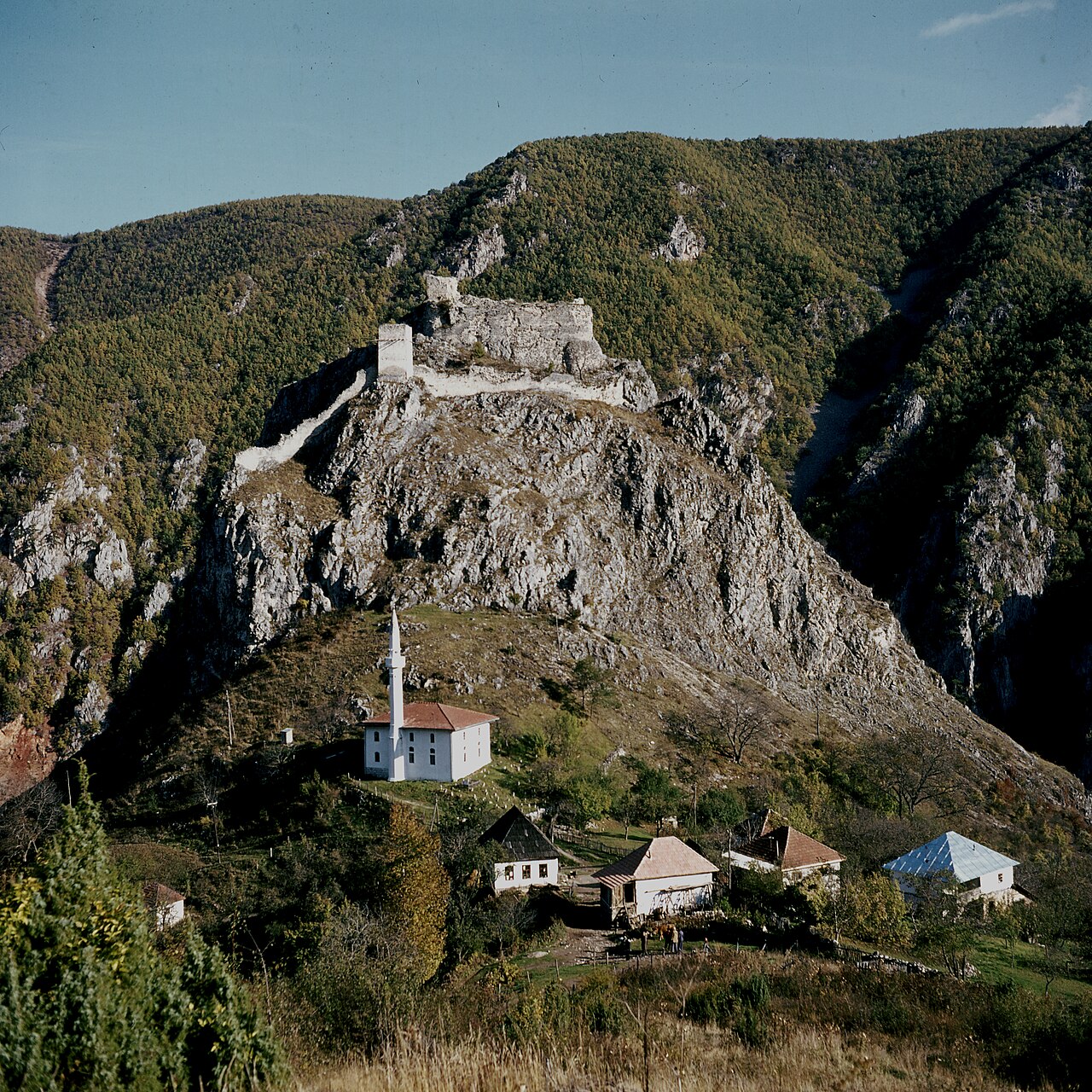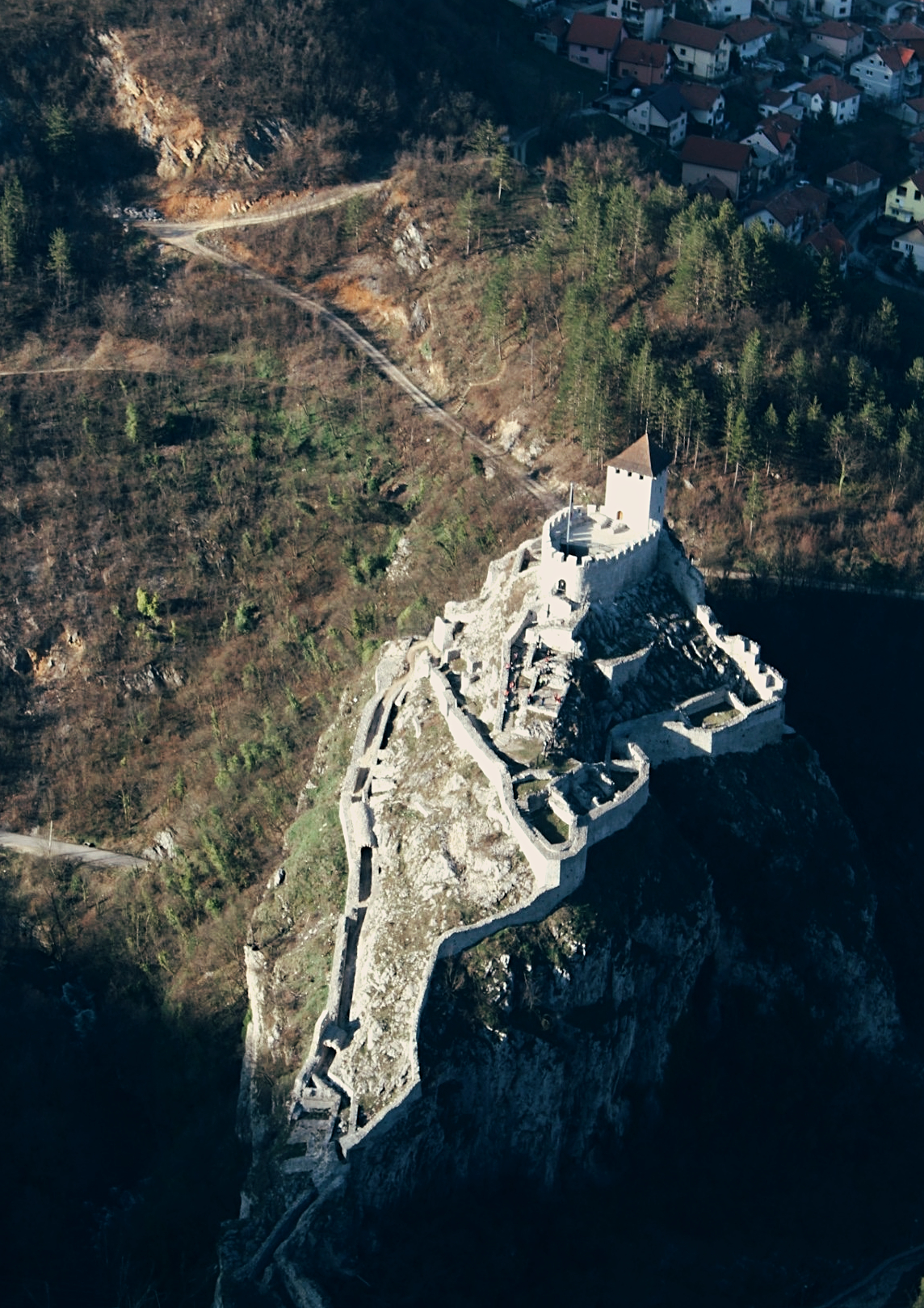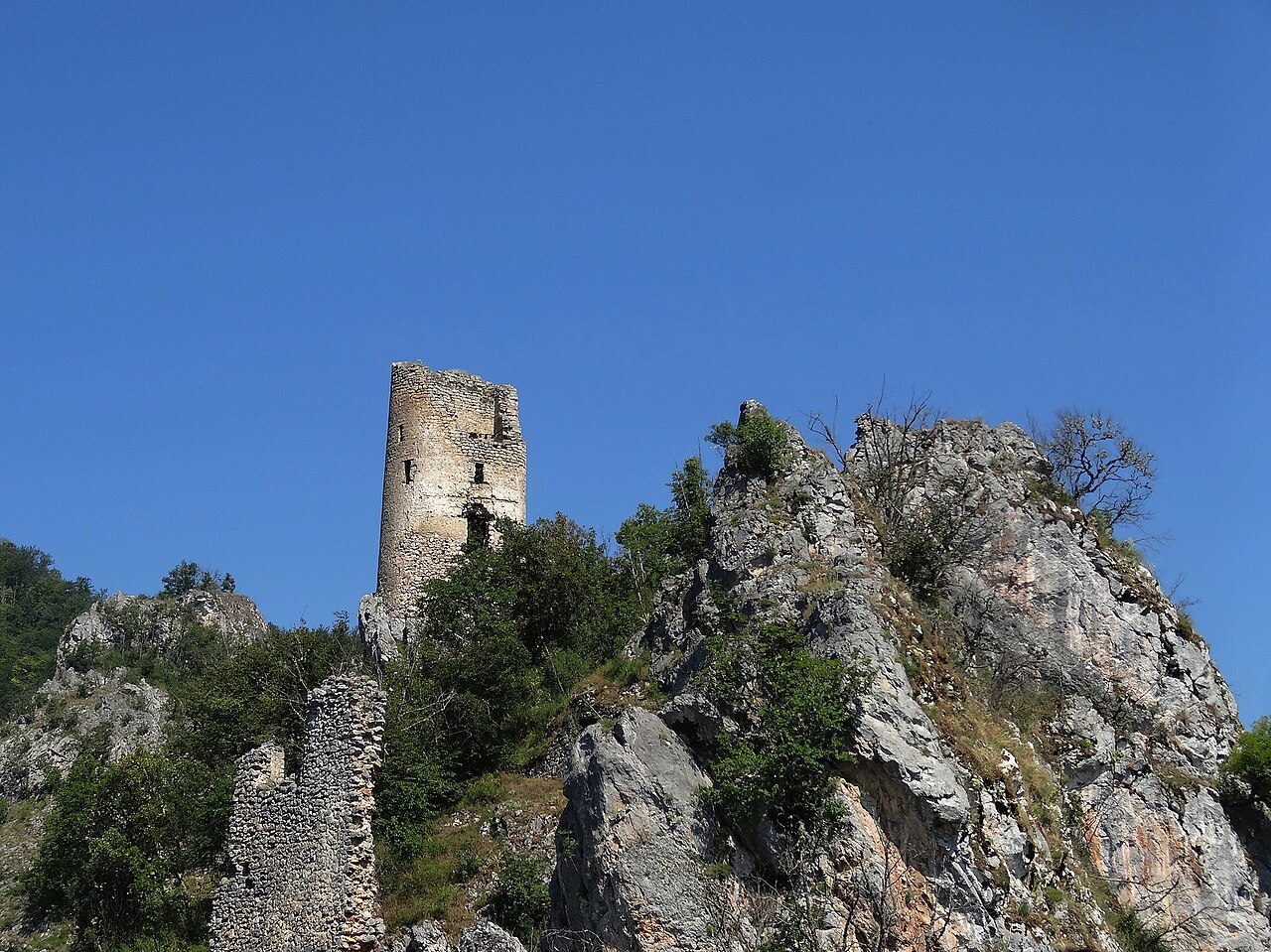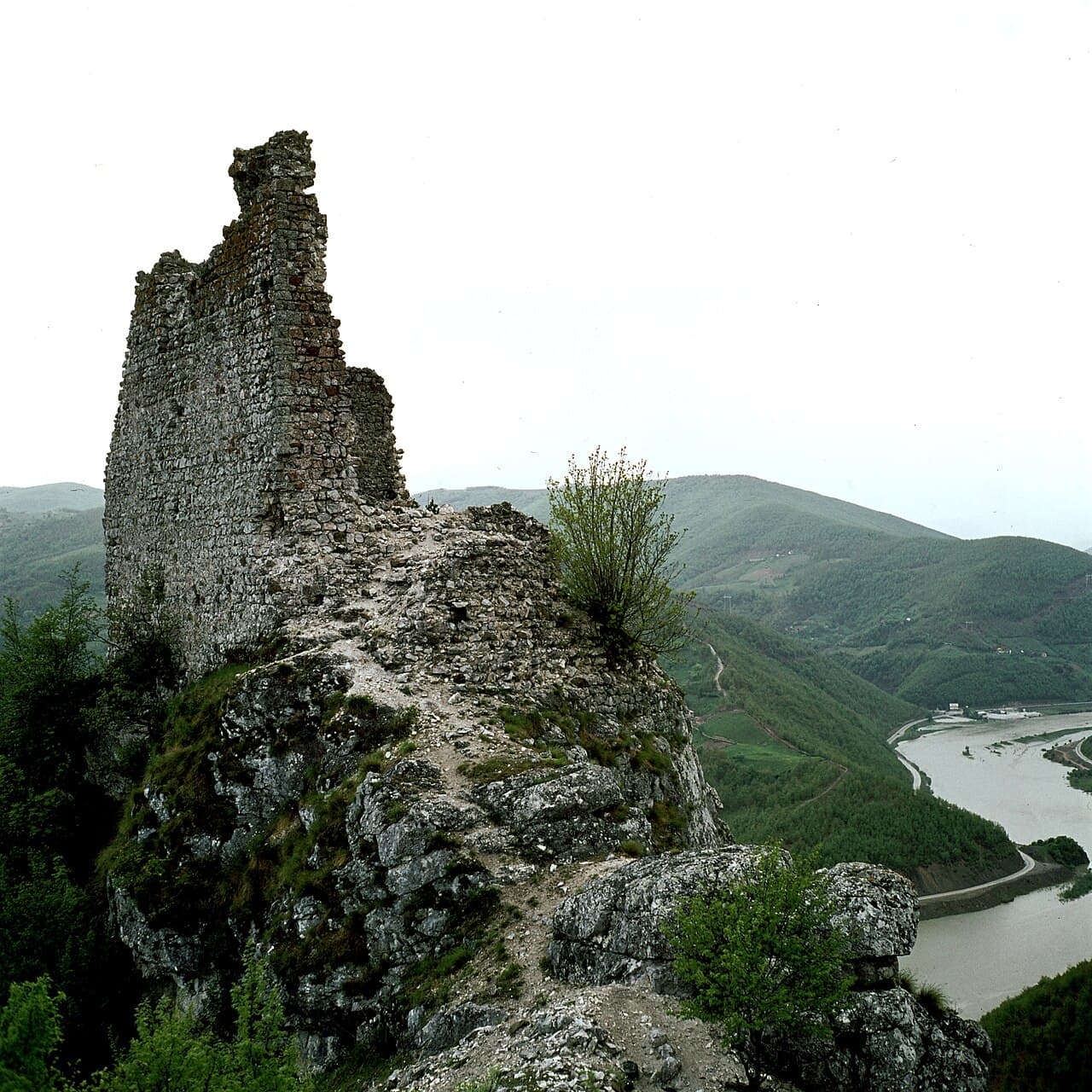
Kovin fortress is a notable bastioned fortress located in southwestern Serbia, approximately 9 kilometers north of the town of Prijepolje. It is situated strategically on a steep rock formation overlooking the dramatic Lim gorge from the left bank, at an altitude of 698 meters. The fortress occupies a commanding position that allowed for control over the surrounding area and the important communication routes passing through the gorge.
Historical background and strategic importance
The fortress's location near the villages of Džurovo, Kučin, and Izbičanj underscores its role as a military stronghold in the region. Kovin fortress was constructed during the Ottoman period, likely in the 15th or 16th century, when the Ottoman Empire expanded its control over the Balkans and sought to fortify key positions along important river valleys and mountain passes.
The fortress served as a defensive bulwark against incursions and was part of a network of fortifications designed to secure the Lim valley and the surrounding borderlands. Its position on a steep rock overlooking the gorge provided excellent visibility and natural defenses, making it difficult for attackers to approach undetected.
Architectural features and fortification design
Kovin fortress is classified as a bastioned fortress, a style that became prominent in the late medieval and early modern periods, particularly under Ottoman influence. This type of fortress is characterized by angled bastions projecting outward from the main walls, allowing defenders to cover adjacent walls with crossfire and eliminate blind spots.
The fortress's design incorporates these bastions, which were adapted to the rugged terrain of the steep rock outcrop. The walls were constructed using local stone, and the fortress included defensive elements such as thick curtain walls, battlements, and possibly a gatehouse to control access.
Inside the fortress, there would have been various functional spaces including barracks, storage rooms, and possibly a cistern to collect rainwater, essential for withstanding sieges. The layout would have been compact due to the limited space on the rock, emphasizing defensive strength over comfort.
Natural defenses and location advantages
The fortress's placement on a steep rock provided a natural defense, making direct assaults challenging. The elevation offered a vantage point for surveillance of the Lim river valley and the surrounding mountainous terrain. This natural advantage was complemented by the fortress’s bastioned walls, creating a formidable defensive position.
Current condition and archaeological significance
Today, Kovin fortress remains in a partially preserved state. While much of the original structure has been lost to time and natural erosion, significant portions of the walls and bastions are still visible, allowing visitors and researchers to appreciate the fortress's original scale and defensive capabilities.
The site holds archaeological importance as it provides insights into Ottoman military architecture in the Balkans and the strategic considerations of fortress construction in mountainous terrain. Ongoing preservation efforts aim to protect the remaining structures and promote the fortress as a cultural heritage site.
Visiting Kovin fortress
Access to Kovin fortress requires a hike up the steep rock, which may be challenging but rewarding due to the panoramic views of the Lim gorge and surrounding landscape. Visitors interested in medieval and Ottoman military architecture will find the site particularly engaging.
There are no formal visitor facilities or ticketing systems at the fortress, reflecting its status as a historical ruin rather than a fully developed tourist attraction. Visitors should prepare accordingly, wearing suitable footwear and bringing water.
Frequently asked questions (FAQ)
- How do I get to Kovin Fortress?
- Kovin Fortress is located in the town of Kovin, Serbia, easily accessible by car or public transport. The nearest major city is Belgrade, which is about an hour's drive away. Buses frequently run from Belgrade to Kovin, making it convenient for visitors.
- What is the historical significance of Kovin Fortress?
- Kovin Fortress dates back to the 15th century and played a crucial role in the defense against the Ottoman Empire. It has witnessed numerous battles and changes in power, reflecting the rich history of the region. Today, it stands as a monument to Serbia's medieval heritage.
- When was Kovin Fortress built?
- Construction of Kovin Fortress began in the late 15th century, under the rule of the Hungarian King Matthias Corvinus. The fortress was strategically built on the banks of the Danube River, enhancing its defensive capabilities. Over the years, it has been expanded and renovated, showcasing various architectural styles.
- Can I explore the interior of Kovin Fortress?
- Yes, visitors can explore the interior of Kovin Fortress, including its towers and walls. Guided tours are available, providing insights into the fortress's history and architecture. Be sure to wear comfortable shoes as some areas may require climbing.
- Why is Kovin Fortress a popular tourist attraction?
- Kovin Fortress attracts visitors due to its stunning views of the Danube River and its rich historical significance. The well-preserved architecture offers a glimpse into Serbia's past, making it a fascinating destination for history enthusiasts. Additionally, the surrounding area is ideal for hiking and nature walks.
- Is it possible to visit Kovin Fortress year-round?
- Yes, Kovin Fortress is open to visitors year-round, although the best time to visit is during spring and early autumn when the weather is mild. Some facilities may have limited hours in winter, so it's advisable to check in advance. Always confirm the opening hours before your visit to avoid inconvenience.
- What are the ticket prices for Kovin Fortress?
- Ticket prices for Kovin Fortress are quite affordable, typically ranging between 200 to 400 Serbian dinars for adults. Discounts may be available for students and groups, so it's worth inquiring at the ticket office. Children under a certain age often enter for free.
- What are the opening hours of Kovin Fortress?
- Kovin Fortress generally opens at 9 AM and closes at 6 PM, but these hours may vary depending on the season. It's best to check the official website or contact local tourism information for the most accurate times. Special events or holidays may also affect the schedule.
- Are there any nearby attractions to visit after Kovin Fortress?
- Yes, after visiting Kovin Fortress, you can explore the charming town of Kovin, known for its picturesque streets and local cuisine. The nearby Danube River offers opportunities for boat rides and fishing. Additionally, you can visit the nearby archaeological site of Viminacium to delve deeper into the region's history.
Photo gallery

Information
Loading map...
Visitor reviews
No reviews yet. Been here? Write the first review and help other travelers!
Write the first reviewVisited this castle? Share your experience
Your review helps other travelers and adds first-hand knowledge to our encyclopedia.