Kostrzyn
Kostrzyn castle stands at the strategic confluence of the Warta and Oder rivers in Poland, a location that historically served as a critical junction for both land and water trade routes. This site has been fortified since the early medieval period, initially as a defensive stronghold and seat of a castellany, and one of the oldest customs chambers in the region. The castle's history is deeply intertwined with the territorial expansion and defense strategies of the early Polish state, notably under the rule of Prince Mieszko I and later Bolesław III Wrymouth, who used Kostrzyn as a base during the conquest of Pomerania.
Archaeological and historical evidence suggests that by the 13th century, a stone defensive structure resembling a castellum existed on the site, marking the transition from wooden fortifications to more durable masonry constructions. In 1232, Kostrzyn was granted to the Templar Order by Duke Władysław Odonic of Greater Poland, but shortly thereafter it passed into the hands of the Silesian dukes, Henry the Bearded and Henry the Pious. By the late 13th century, the castle and town came under the control of the Margraves of Brandenburg, with the town receiving municipal rights in 1300 from Margrave Albert III, establishing Kostrzyn as a significant administrative and political center, later becoming the capital of the New March.
Medieval origins and the joannite castle
Following the dissolution of the Templar Order, their possessions, including Kostrzyn, were transferred to the Order of Saint John (Joannites). It was under their stewardship that the first known stone castle was constructed, although detailed descriptions of the 14th-century castle remain scarce. Contemporary documents refer to the structure as a "fastes Haus", meaning a fortified stone house, indicating a modest but fortified residence rather than a large military fortress.
The Teutonic Knights and fortification enhancements
In 1402, the Teutonic Order purchased the New March, including Kostrzyn, for 1300 groschen. To secure their newly acquired western frontier, the Teutonic Knights undertook significant expansions of the existing castle, transforming it into a robust bastioned fortress. The castle's position allowed it to guard a vital river crossing and customs point, while also serving as a counterbalance to the nearby Joannite stronghold in Słońsk.
The initial Teutonic castle featured a two-story residential building measuring approximately 33.5 by 8 meters, aligned parallel to the Oder River. A dominant main tower with walls up to 3 meters thick was attached to the south side. By the mid-15th century, a new northwest wing was added, known as the "church wing" due to the chapel it housed. This wing was a three-story rectangular structure measuring 43 by 11.5 meters, complete with a stair tower facing the courtyard. The original riverside wing was also heightened by one story during this period.
The entire complex was enclosed by a defensive curtain wall with corner turrets and surrounded by a water-filled moat. The natural protection of wide rivers and surrounding wetlands further enhanced the castle's defensive capabilities. Historical records also suggest the presence of a freestanding tower near the castle, tasked with overseeing and controlling traffic over the Oder bridge.
Renaissance transformation under Brandenburg rule
In 1455, Kostrzyn reverted to Brandenburg control. The mid-16th century saw the castle's transformation into a Renaissance residence under Margrave John of Brandenburg-Küstrin, who expanded the fortress into a three-winged irregular quadrangle measuring 64 by 52 meters. Each wing was three stories tall, vaulted in the basement, and topped with gabled roofs. Distinctive spiral staircases housed in attached towers provided access to each wing, while the riverside and church wings featured elegant cloisters.
Four cylindrical corner towers enhanced the castle's silhouette. The facades were richly decorated with sgraffito wall paintings depicting mythological scenes, a testament to the Renaissance artistic influence. The interiors were equally lavish, featuring ornate stonework and decorative elements that elevated the castle from a military fortress to a noble residence.
Circa 1600, Elector Joachim Frederick added a fourth southeast wing, enclosing an inner courtyard adorned with terracotta portals. The main tower was remodeled with an octagonal shape and crowned with a conical roof and lanterns. A covered gallery connected the castle to the adjacent church, spanning the moat on two masonry pillars. During this period, the entire town was fortified with bastion fortifications, turning Kostrzyn into a formidable fortress city and limiting its urban expansion for nearly two centuries.
Religious and educational functions in the 17th century
In 1613, Elector John Sigismund converted the castle chapel to a Calvinist place of worship, reflecting the religious shifts of the time. By 1627, parts of the castle were adapted to serve as a Calvinist school. However, the Thirty Years' War (1618-1648) brought devastation to Kostrzyn, with the castle and town suffering significant damage. Restoration efforts under Frederick William and Frederick III included raising the main tower to a spire topped with a dome and lanterns.
Decline and changing roles in the 18th and 19th centuries
By the early 18th century, Kostrzyn castle lost its residential function. In 1714, valuable furnishings were removed to Berlin, and copper roofing materials were repurposed for military use. The castle became the seat of the New March administration and the Royal War and Domain Chamber from 1723. The connecting gallery to the church was dismantled in 1730, and the castle walls were plastered, unfortunately obscuring the Renaissance sgraffito decorations.
The castle's basements were used as prison cells, famously holding the Neapolitan alchemist Count Dominik Emanuel Caetano di Rugiero, who was executed for failing to produce gold, as well as the future King Frederick II of Prussia, imprisoned by his father in 1730 for attempting to flee to England.
The Seven Years' War inflicted further damage, particularly during the 1758 Russian artillery bombardment. A 1770 reconstruction stripped the castle of much of its Renaissance character, filling in moats and leaving only some portals and window frames intact. The castle was repurposed as an archive and housing for officials. During the Napoleonic Wars, it served as a hospital and later as barracks, with 19th-century modifications giving it the monumental quadrangular form visible in pre-World War II photographs.
Destruction and legacy in the 20th century
The most tragic chapter in Kostrzyn's history came in 1945 during World War II. The town and fortress, a final stronghold of the Red Army en route to Berlin, were subjected to intense bombing that obliterated the historic old town, which had stood for seven centuries. Although the massive castle walls survived the initial destruction, they were severely cracked and at risk of collapse.
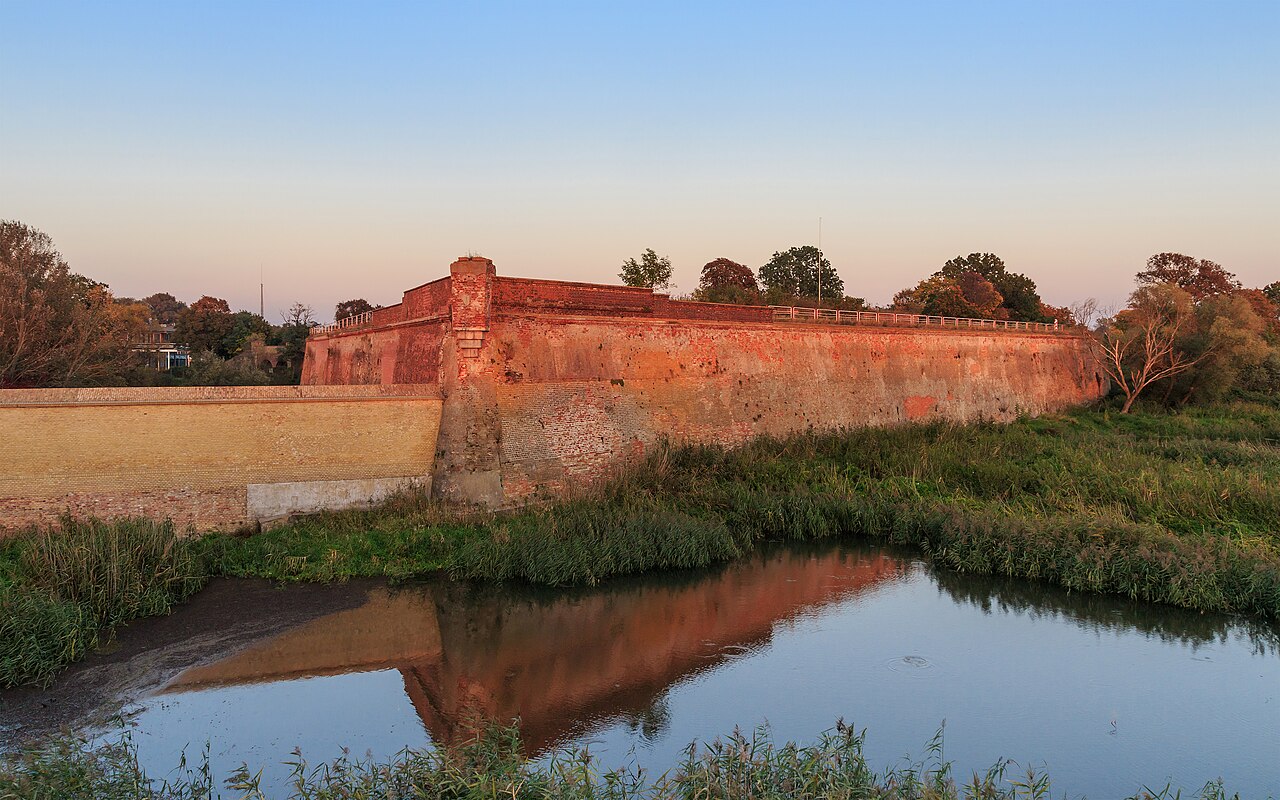
In a controversial decision in 1969, authorities demolished the remaining castle ruins rather than preserving them. Today, only the foundations remain, surrounded by overgrown ruins of the old town, earning Kostrzyn the somber nickname of "Polish Pompeii." The surviving bastion fortifications, including the restored Philip Bastion and historic gates, stand as the best-preserved elements of the fortress's defensive system.
Architectural and cultural significance
Kostrzyn castle exemplifies the evolution of military and residential architecture from the medieval stone fortress through the Renaissance palace to a bastioned fortress city. Its layered history reflects the shifting political and religious landscape of Central Europe, marked by the influences of Polish dukes, the Templar and Joannite orders, the Teutonic Knights, and Brandenburg rulers.
The castle's Renaissance transformation is particularly notable for its artistic sgraffito decoration and architectural innovations such as cloisters and spiral stair towers. The integration of the castle with the town's bastion fortifications illustrates the strategic importance of Kostrzyn as a border fortress controlling key river crossings and trade routes.
Visiting the site today
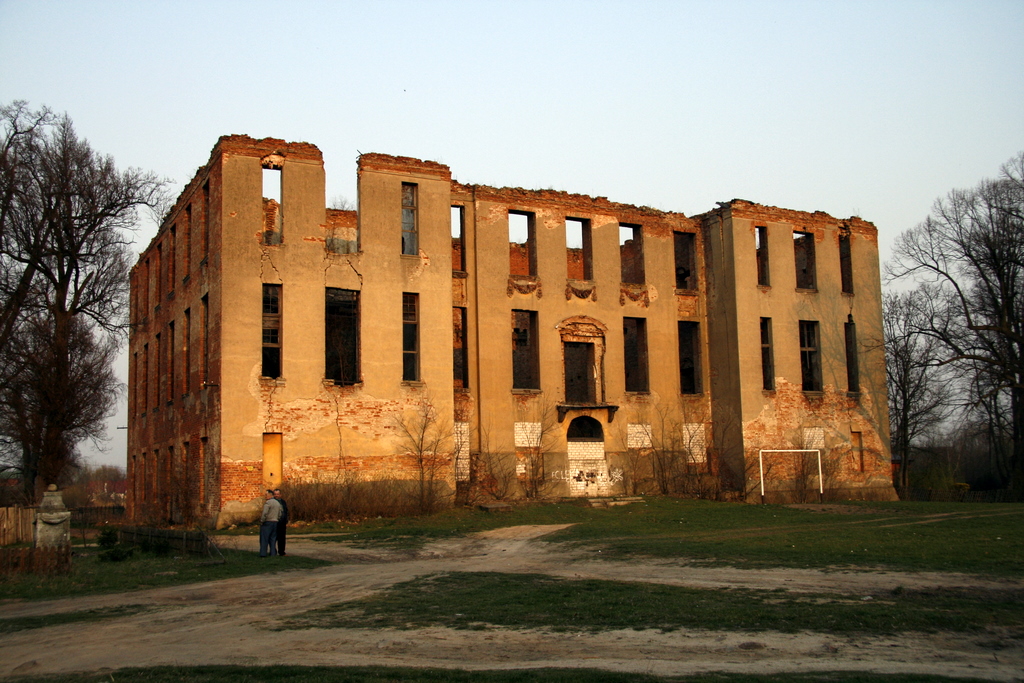
Visitors to Kostrzyn today encounter a poignant landscape of ruins and overgrown streets, with only fragments of the once-imposing castle and fortifications preserved. Efforts to reconstruct the old town and castle have been limited, with the Philip Bastion being the most notable restoration achievement. The site offers a powerful historical narrative and a tangible connection to the region's medieval and Renaissance heritage.
Exploring the ruins and surviving fortifications provides insight into the castle's military architecture and the turbulent history of Kostrzyn. The surrounding natural features, including the rivers and wetlands, continue to define the strategic landscape that shaped the castle's development for centuries.
Frequently asked questions (FAQ)
- What is the historical significance of Kostrzyn Castle?
- Kostrzyn Castle, also known as the Fortress of Kostrzyn, has a rich history dating back to the 13th century. It played a vital role in defending the region from invasions and has witnessed numerous battles throughout its existence, making it a key site in Polish history.
- When was Kostrzyn Castle built?
- The construction of Kostrzyn Castle began in the late 13th century, with significant expansions occurring in the following centuries. The castle's strategic location along the Oder River made it an important military stronghold during its early years.
- Can I visit Kostrzyn Castle?
- Yes, you can visit Kostrzyn Castle! The site is open to the public, allowing visitors to explore its historical ruins and learn more about its significance in Polish history.
- What are the opening hours of Kostrzyn Castle?
- Kostrzyn Castle is typically open to visitors from 10:00 AM to 6:00 PM during the summer months, and from 10:00 AM to 4:00 PM in the winter. It's always a good idea to check the official website for any seasonal changes or special events.
- What are the ticket prices for visiting Kostrzyn Castle?
- Ticket prices for Kostrzyn Castle are generally affordable, with discounts available for students and seniors. Adult tickets typically cost around 10 PLN, while children under 12 may enter for free.
- Is it possible to access Kostrzyn Castle by public transport?
- Yes, Kostrzyn Castle is accessible by public transport. Buses and trains frequently run to Kostrzyn, making it easy for visitors to reach the castle without a personal vehicle.
- When is the best time to visit Kostrzyn Castle?
- The best time to visit Kostrzyn Castle is during the late spring and early autumn months when the weather is mild and pleasant. This allows for a more enjoyable experience while exploring the castle grounds and surrounding area.
- Are there any nearby attractions to visit while at Kostrzyn Castle?
- Yes, there are several nearby attractions, including the picturesque town of Kostrzyn and the beautiful natural landscapes along the Oder River. Visitors can also explore local museums and parks that showcase the rich heritage of the area.
Information
Loading map...
Visitor reviews
No reviews yet. Been here? Write the first review and help other travelers!
Write the first reviewVisited this castle? Share your experience
Your review helps other travelers and adds first-hand knowledge to our encyclopedia.