Korets Castle
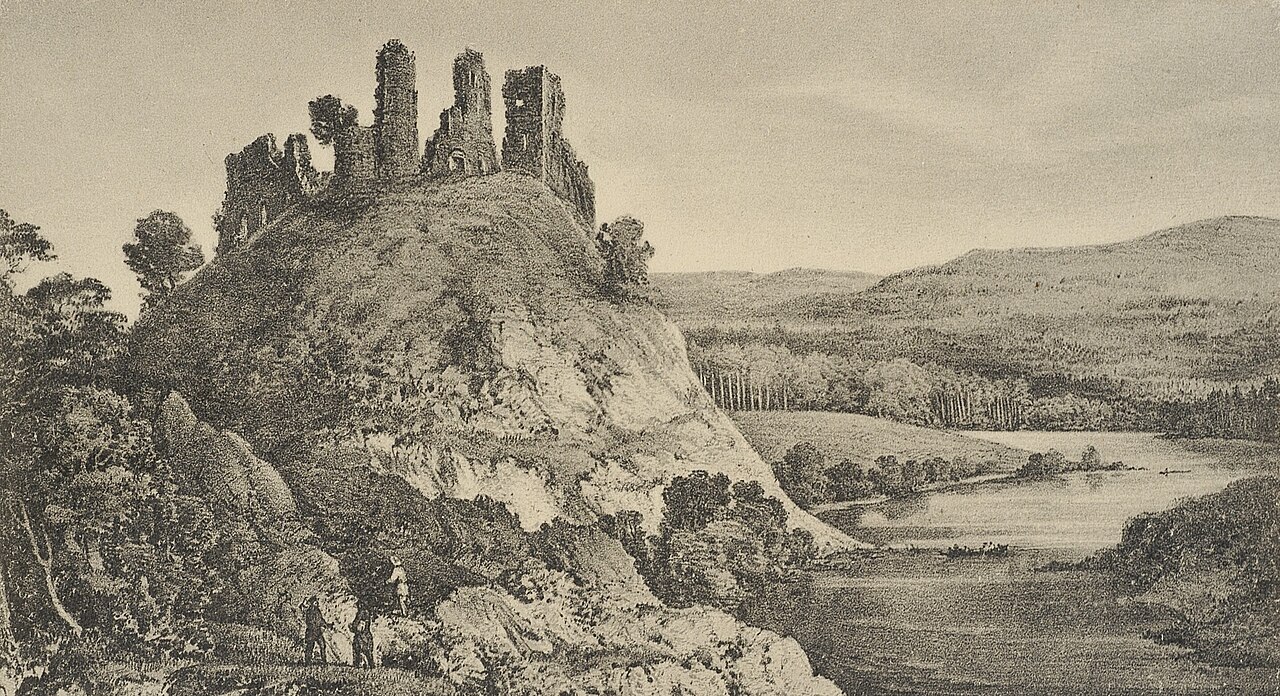
Korets Castle stands as a significant historical monument in the town of Korets, Ukraine, embodying centuries of military and noble heritage. Established in the late 14th century, this hill castle was strategically built atop the slopes overlooking the Korchik River to control the surrounding region and provide robust defense. Its origins trace back to the era of the Grand Duchy of Lithuania and the rising Ruthenian nobility, reflecting the complex political landscape of Eastern Europe during the late medieval period.
Founding and early history
The castle's foundation is most commonly attributed to Prince Fedor Ostrogski in 1386, although some historical accounts mention Dmitry Olgerdovich as a possible founder. Regardless, the majority of evidence supports Ostrogski's role in initiating the construction of the fortress and its defensive walls. The location was carefully chosen for its natural defensive advantages, perched on a hill with steep slopes and surrounded by the river, which enhanced its security. The initial design focused on fortification, with thick walls and a protective moat to deter invaders.
Architectural evolution and fortification enhancements
Throughout the 15th and 16th centuries, Korets Castle underwent several modifications to adapt to changing military technology and threats. When ownership passed to Prince Bohdan Koretsky during the 16th century, significant reinforcement of the castle's fortifications occurred. These upgrades included strengthening the walls and possibly adding bastions or towers to improve defense against artillery, which was becoming increasingly prevalent in warfare. The castle's layout, originally designed primarily for defense, began to incorporate more comfortable living quarters as the role of castles shifted from purely military to residential strongholds.
Defensive features
The castle was originally enclosed by fortifications dating from the 15th through the 18th centuries, including a deep moat on three sides. This moat was a critical element of defense, supplemented by a bridge that served as the main controlled access point. Historically, this bridge was a viaduct, a sophisticated architectural feature that allowed for controlled entry and enhanced security. The viaduct was repaired in 2005, preserving this vital aspect of the castle's defensive infrastructure.
Residential transformation
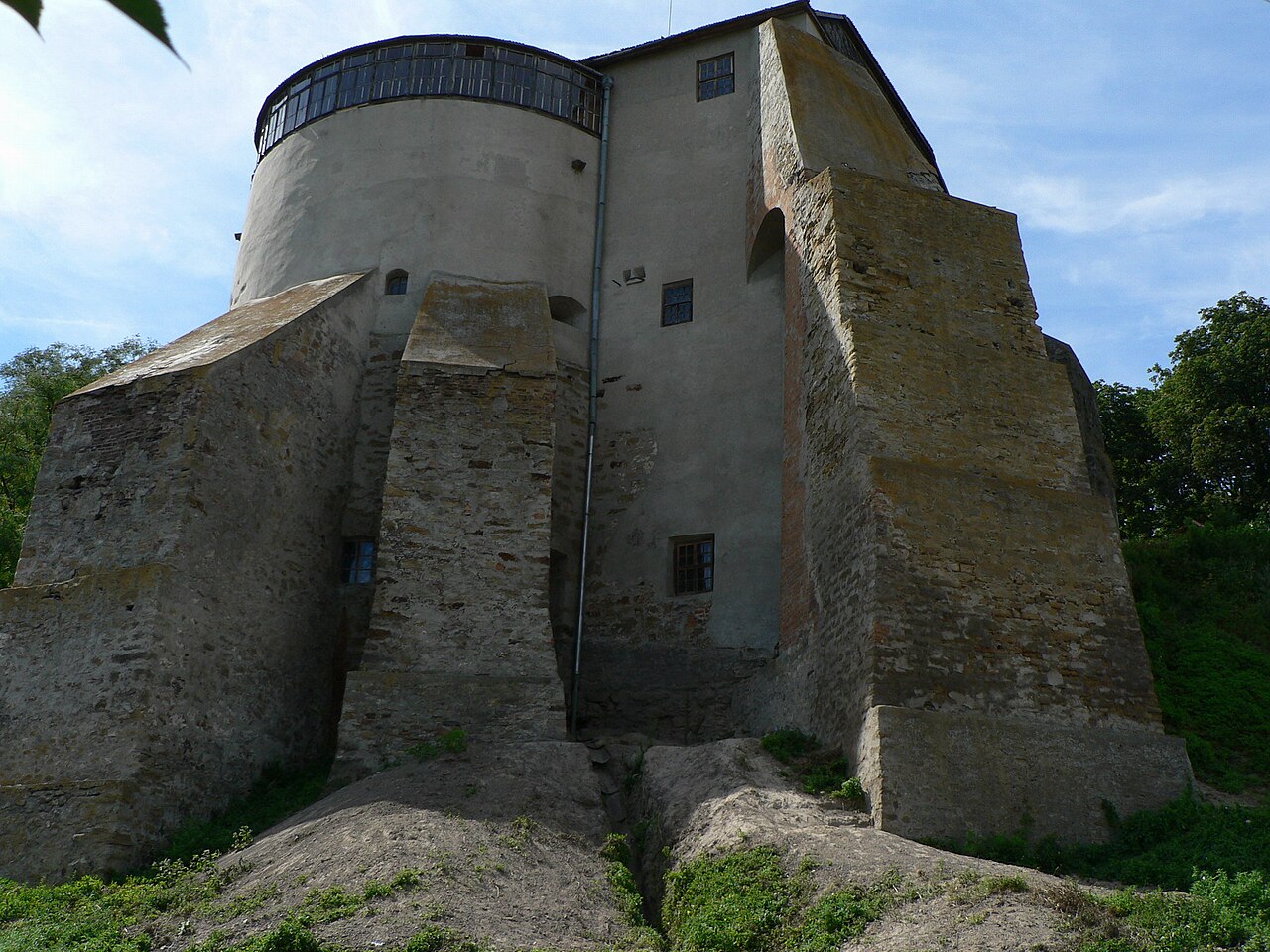
By the 17th and 18th centuries, Korets Castle was transformed from a fortress into a more palatial residence. The final major reconstruction in 1780, overseen by Prince Józef Klemens Czartoryski, reflected contemporary noble tastes and architectural styles. The medieval fortress was adapted to blend fortification with comfort and aesthetic appeal, typical of noble estates of the period. This transformation included the addition of two-story residential buildings adjacent to the gate tower, signaling the castle's evolution into a noble residence rather than a purely defensive structure.
Decline and preservation efforts
The castle's decline began in the early 19th century, notably after the November Uprising of 1830–1831, a Polish insurrection against Russian rule. In 1832, a devastating fire severely damaged the fortress, leading to the abandonment of its function as a stronghold or noble residence. Subsequent efforts to restore the castle were undertaken in the 1920s by the then-owner, Bninsky, but these were limited in scope and did not prevent continued deterioration. Today, Korets Castle remains a historical ruin, with the gate tower as its most prominent surviving feature.
Architectural remains and current condition
The most visible remnant of Korets Castle is the rectangular, three-story gate tower, which once controlled access to the complex. Its current state reflects the long years of neglect and partial decay, yet it still stands as a testament to medieval defensive architecture. Adjacent to the gate tower are ruins of two-story buildings, which highlight the castle's later adaptation as a noble residence. The castle's layout, with its moats and defensive walls, remains discernible, offering insight into its strategic design and historical significance.
Symbolic importance
The gate tower of Korets Castle holds cultural significance for the town, being incorporated into Korets' city coat of arms. This symbolizes the enduring legacy of the castle as a landmark and a connection to the town's medieval past. Preservation efforts, including the repair of the viaduct in 2005, demonstrate ongoing interest in maintaining the site as a historical monument and tourist attraction.
Historical context and regional significance
Korets Castle played a crucial role in the borderlands of Eastern Europe, where shifting political powers and military conflicts demanded strong fortifications. Its establishment during the late 14th century coincided with the expansion of the Grand Duchy of Lithuania and the complex interactions with Ruthenian principalities. Over the centuries, the castle witnessed numerous historical events, including regional conflicts and uprisings, reflecting the turbulent history of Ukraine and its neighboring regions.
Military and noble functions
Initially built for defense, Korets Castle's military significance was paramount during the medieval period. As warfare evolved, so did the castle's architecture and function, transitioning into a noble residence that balanced security with comfort. This dual role is evident in the castle's layered construction phases and its surviving architectural elements.
Visiting korets castle today
Visitors to Korets Castle can explore the ruins and appreciate the blend of medieval fortification and noble residence architecture. The site offers a tangible connection to Ukraine's medieval history and the legacy of the Grand Duchy of Lithuania and Ruthenian nobility. Although the castle is in a state of ruin, its gate tower and remaining structures provide a compelling glimpse into the past. The repaired viaduct ensures access, facilitating tourism and educational opportunities.
Frequently asked questions (FAQ)
- When was Korets Castle built and by whom?
- Korets Castle was built in 1386, most likely by Prince Fedor Ostrogski, with some sources suggesting Dmitry Olgerdovich as a possible founder.
- What architectural features remain at Korets Castle?
- The most prominent remains include the rectangular three-story gate tower, ruins of two-story residential buildings, and the defensive moat with its viaduct bridge.
- How did Korets Castle change over time?
- Originally a defensive fortress, Korets Castle was reinforced in the 16th century and transformed into a noble residence by the 18th century, especially after renovations in 1780 by Prince Józef Klemens Czartoryski.
- Is Korets Castle accessible to visitors today?
- Yes, visitors can explore the ruins and walk across the repaired viaduct bridge, which provides access to the site.
- Why is Korets Castle historically significant?
- Korets Castle reflects the complex history of the Grand Duchy of Lithuania and Ruthenian nobility, serving as both a military stronghold and noble residence through centuries of regional conflict.
Photo gallery

Information
Website
Visit websiteSources & official resources
Verify the information above using these authoritative references.
Loading map...
Visitor reviews
No reviews yet. Been here? Write the first review and help other travelers!
Write the first reviewVisited this castle? Share your experience
Your review helps other travelers and adds first-hand knowledge to our encyclopedia.