Konstantin Battery
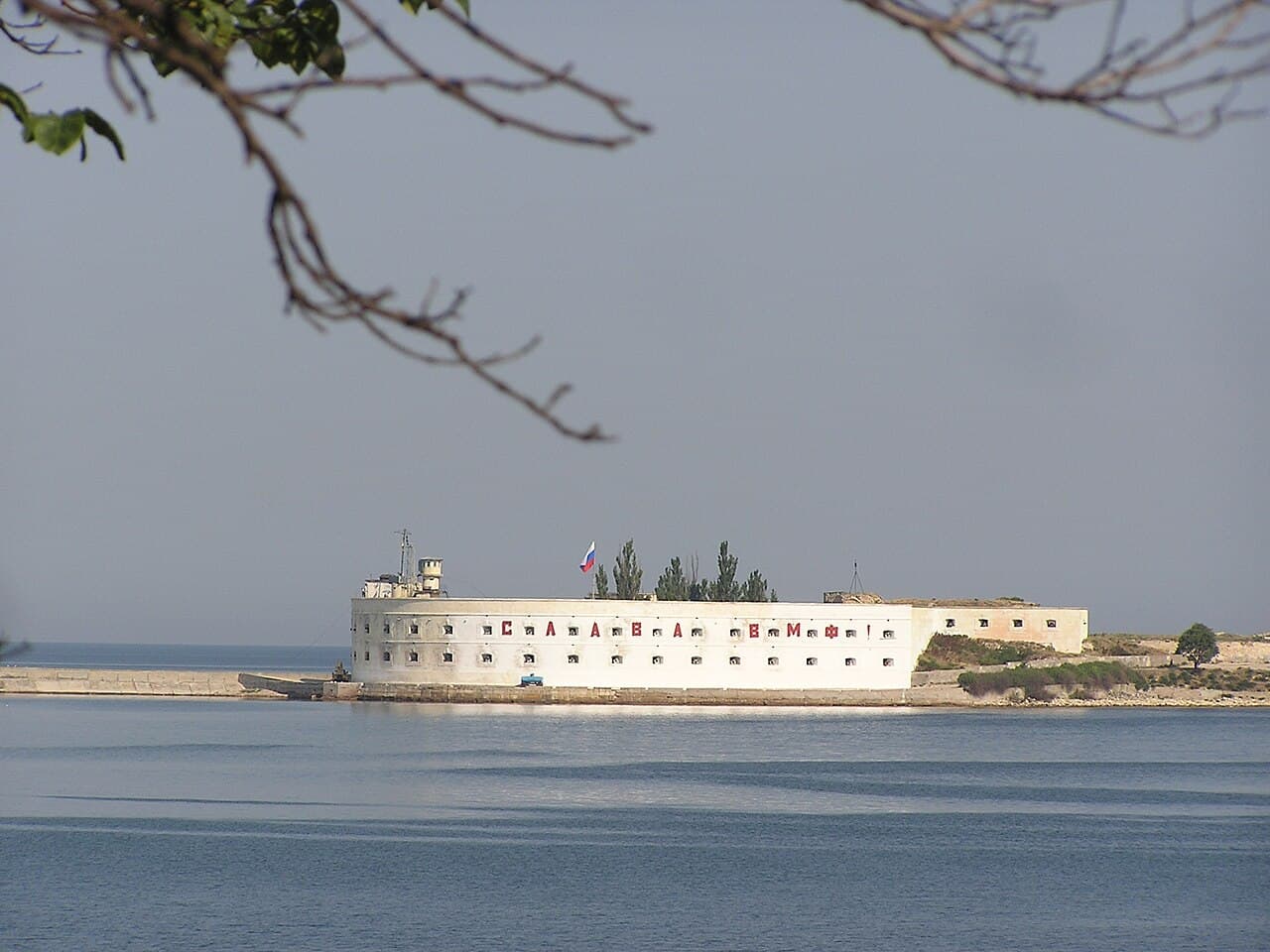
The Konstantin Battery, also known as Fort Constantine, is a prominent bastioned fortress located on the northern side of Sevastopol in Crimea. Constructed in the 19th century and completed in 1840, this fortification was named in honor of Grand Duke Konstantin Pavlovich, the younger brother of Alexander I of Russia. Its strategic position was crucial for the defense of Sevastopol, a key naval base on the Black Sea.
Historical context and strategic importance
During the early 19th century, the Russian Empire focused on strengthening its military presence in the Black Sea region. The Konstantin Battery was part of a larger network of fortifications designed to protect Sevastopol's harbor and naval facilities from potential naval attacks. Its construction reflects the military engineering advancements of the Modern period, particularly in the use of bastioned fort designs that allowed for improved defensive firepower and coverage.
Architectural features and design
The fortress exemplifies the bastioned fortress style, characterized by angular bastions projecting outward from the curtain walls. These bastions provided overlapping fields of fire, minimizing blind spots and enabling defenders to cover the approaches effectively. The Konstantin Battery was equipped with heavy artillery positioned to command the northern approaches to Sevastopol's harbor.
The layout includes thick masonry walls, embrasures for cannons, and defensive ditches. The design was intended to withstand artillery bombardment, which was becoming increasingly powerful during this period. The battery's robust construction and strategic placement made it a formidable defensive installation.
Role in military conflicts
The Konstantin Battery played a significant role during the Crimean War (1853–1856), when Sevastopol was besieged by allied forces of Britain, France, the Ottoman Empire, and Sardinia. The fortress's artillery positions contributed to the city's defense, though the prolonged siege eventually led to severe damage to many fortifications in the area.
Despite the damage sustained during the war, the battery remained an important military site in subsequent years, reflecting the evolving nature of coastal fortifications in response to advancements in artillery and naval warfare.
Current status and museum
Today, the Konstantin Battery is preserved as a historical monument and houses a museum operated by the Russian Geographical Society. The museum offers visitors insights into the fortress's military history, the broader context of Sevastopol's defense system, and the technological developments in fortification design during the 19th century.
The site includes exhibitions of artillery pieces, historical documents, and detailed models of the fortress. Visitors can explore the bastions, walls, and underground chambers, gaining a comprehensive understanding of the fortress's operational role and architectural significance.
Architectural legacy and cultural significance
The Konstantin Battery stands as a well-preserved example of 19th-century bastioned fortress architecture in the Black Sea region. Its historical importance is linked to its role in the defense of Sevastopol, a city with a rich military heritage. The fortress contributes to the cultural landscape of Crimea and serves as an educational resource for military historians, architects, and tourists interested in coastal fortifications.
Frequently asked questions (FAQ)
- What is the historical significance of Konstantin Battery?
- Konstantin Battery was a key bastioned fortress built in the 19th century to defend Sevastopol's harbor, playing a vital role during the Crimean War siege.
- Can I visit Konstantin Battery today?
- Yes, Konstantin Battery is open to visitors as a museum operated by the Russian Geographical Society, offering exhibitions on its military history and architecture.
- What architectural style characterizes Konstantin Battery?
- The fortress is designed in the bastioned fortress style typical of 19th-century military architecture, featuring angular bastions and thick defensive walls.
- When was Konstantin Battery constructed?
- The construction of Konstantin Battery was completed in 1840 during the 19th century.
- Why was Konstantin Battery named after Grand Duke Konstantin Pavlovich?
- The battery was named to honor Grand Duke Konstantin Pavlovich, the younger brother of Alexander I of Russia, reflecting its significance within the Russian Empire's military network.
Photo gallery

Information
Current owner
Russian Geographical Society
Loading map...
Visitor reviews
No reviews yet. Been here? Write the first review and help other travelers!
Write the first reviewVisited this castle? Share your experience
Your review helps other travelers and adds first-hand knowledge to our encyclopedia.