Konopi Castle — Romania castle

Konopi Castle

Konopi Castle in Romania: history and architecture
High Medieval (11th–13th c.)
Ruins

Konopi Castle is a notable hill castle located in Romania, distinguished by its medieval origins and strategic placement atop elevated terrain. Although the exact city or town of the castle remains unspecified, its classification as a hill castle suggests it was constructed to take advantage of natural elevations for defense and surveillance.

Historical context and significance

The castle likely dates back to the High Medieval period, a time when fortifications were essential for regional control and protection against invasions. Romania's medieval castles often served as strongholds for local nobility or military garrisons, and Konopi Castle would have played a role in the defense network of the area.

During the medieval era, castles like Konopi were centers of administration and military command. Their locations on hills allowed defenders to monitor surrounding lands and respond quickly to threats. The castle's history might be intertwined with regional conflicts, feudal disputes, or border defense, common themes in Romanian medieval history.

Architectural features

As a hill castle, Konopi Castle was designed to utilize the natural topography for defense. Typically, such castles feature robust curtain walls, fortified gates, and towers positioned to cover all approaches. The elevated position would have made direct assaults difficult and provided clear lines of sight.

While specific architectural details of Konopi Castle are scarce, hill castles in Romania often include a central keep or donjon, surrounded by defensive walls with battlements. The castle might also have had a moat or ditch to enhance its defenses, though this is more common in lowland castles.

The construction materials would likely have been local stone and timber, common in medieval Romanian fortifications. The castle's design would reflect practical military needs, combined with residential spaces for the lord and garrison.

Preservation and current condition

The current state of Konopi Castle is not well documented, but many Romanian medieval castles are in various states of preservation, ranging from ruins to partially restored sites. Given the lack of detailed information, it is possible that Konopi Castle exists as ruins or an archaeological site, with remnants visible that provide insights into its original structure.

Efforts to preserve such castles in Romania often involve archaeological research, conservation of remaining walls, and sometimes restoration to stabilize the ruins for visitors. The castle's remote or less accessible location might contribute to limited tourist infrastructure.

Visiting Konopi Castle and cultural importance

Visitors interested in medieval history and castle architecture may find Konopi Castle intriguing, especially for its hilltop setting and potential views of the surrounding landscape. However, due to limited information about public access, opening hours, or facilities, prospective visitors should seek local guidance or regional tourism resources.

Romanian castles like Konopi contribute to the cultural heritage of the country, reflecting the historical layers of medieval defense, feudal society, and architectural evolution. They offer valuable opportunities for education and exploration of Romania's past.

Frequently asked questions (FAQ)

What is the historical significance of Konopi Castle?
Konopi Castle is a remarkable example of medieval architecture in Romania, reflecting the region's rich history and cultural heritage. Built in the 14th century, it served as a strategic fortress during various conflicts and has remained a symbol of resilience through the ages.
When was Konopi Castle constructed?
Konopi Castle was constructed in the 14th century, with its establishment attributed to the need for defense against invasions. Over the centuries, it has undergone several renovations, preserving its historical charm while adapting to changing architectural styles.
Can I visit Konopi Castle year-round?
Yes, Konopi Castle is open to visitors year-round, although specific opening hours may vary by season. It is advisable to check the official website or local tourism information for the most current visiting hours before planning your trip.
What are the ticket prices for visiting Konopi Castle?
Ticket prices for Konopi Castle are generally affordable, with discounts available for students and seniors. Group rates may also apply, so it's a good idea to inquire in advance if you're visiting with a larger party.
Is it possible to access Konopi Castle by public transport?
Yes, Konopi Castle is accessible by public transport, with regular bus and train services operating in the vicinity. Additionally, local taxi services are available for those who prefer a more direct route to the castle.
What is the best time to visit Konopi Castle?
The best time to visit Konopi Castle is during the spring and early autumn when the weather is mild and conducive for exploring the grounds. Additionally, visiting during these seasons allows you to enjoy the natural beauty surrounding the castle.
Are there nearby attractions to visit along with Konopi Castle?
Yes, there are several nearby attractions, including local museums and historical sites that highlight the rich culture of the region. Exploring the surrounding area can enhance your visit and provide a deeper understanding of the historical context of Konopi Castle.
What architectural styles can be seen at Konopi Castle?
Konopi Castle showcases a blend of Gothic and Renaissance architectural styles, reflecting the evolution of design during its construction and subsequent renovations. The intricate stonework and fortified walls are notable features that draw visitors interested in medieval architecture.

Photo gallery

Konopi Castle
Click to view

Photo by Țetcu Mircea Rareș•CC BY-SA 4.0

1 photo • Click any image to view in full screen

Information

Hill Castle

Loading map...

Visitor reviews

No reviews yet. Been here? Write the first review and help other travelers!

Write the first review

Visited this castle? Share your experience

Your review helps other travelers and adds first-hand knowledge to our encyclopedia.
Write a review

(5/5)

0/2000 characters

Your review will be visible after admin approval

Nearby castles

35.1 km
Mocioni-Teleki Castle — Romania castle

Mocioni-Teleki Castle

Căpâlnaș, Romania

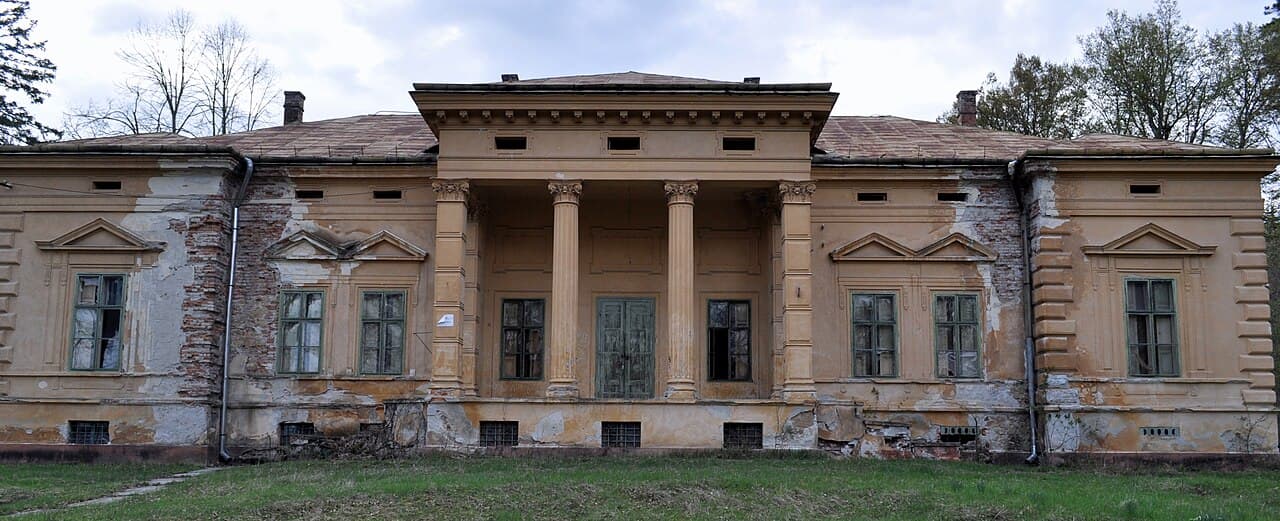
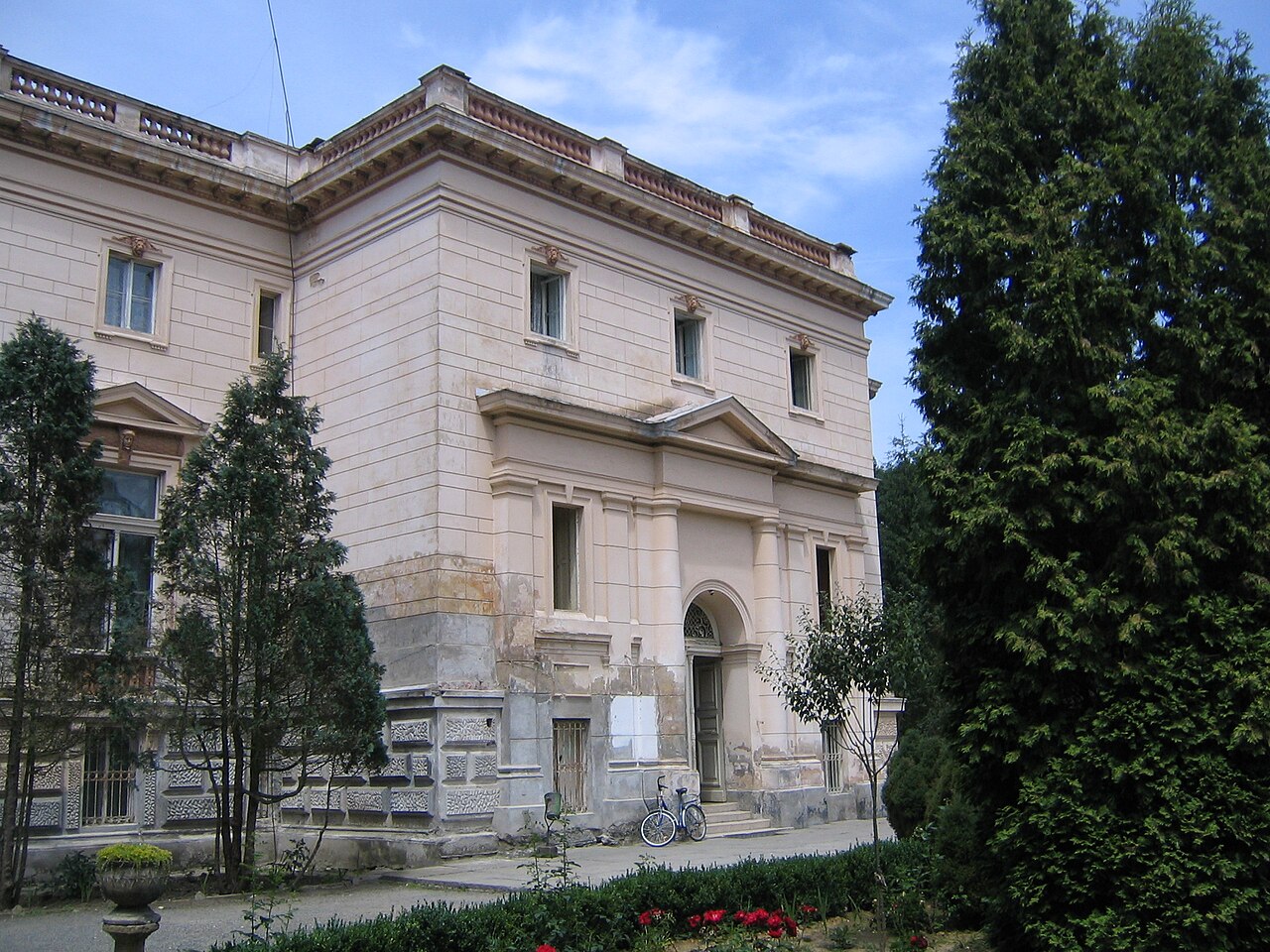
The Mocioni-Teleki castle stands as a remarkable example of 19th-century aristocratic residences in Romania, located in the commune of Căpâlnaș. Established in the mid-1800s by the noble Mocioni family, whose origins trace back to Aromanian roots from Macedonia, the castle embodies a blend of cultural heritage and architectural elegance. The family's ennoblement under Emperor Joseph II and their subsequent rise in Hungarian nobility set the stage for the castle's creation as a symbol of status and refinement. In 1853, the estate was acquired by Ioan Mocioni de Foeni from the Zichy counts, marking a pivotal expansion of the Mocioni family's landholdings. The union of family branches through the marriage of Mihai Mocioni (1811–1890) and Ecaterina de Foeni in 1836 further consolidated their influence. The couple commissioned the castle's construction, designed in an elegant French architectural style, which became the family's principal residence in the region. Architectural design and features The castle's design was realized in 1867 by the renowned Viennese architect Otto Wagner, whose precise and refined plans brought to life a two-level structure comprising a ground floor and an upper floor. The building's hill castle classification reflects its elevated position within the village, offering commanding views of the surrounding landscape. The main façade is distinguished by its four stone columns topped with Corinthian capitals, featuring stylized acanthus leaves that exemplify classical decorative motifs. Each façade section integrates a large door surmounted by a square window, allowing natural light to permeate the interior spaces. An ornamental cornice with delicate, lace-like patterns runs along the top edge, enhancing the refined aesthetic of the exterior. Inside, the main salon opens onto a broad terrace, which is accessed externally by two semicircular marble steps. This design creates a harmonious transition between the interior and the extensive parkland surrounding the castle. The park includes a notable statue of a deer positioned prominently in front of the building, integrating art and nature within the estate grounds. Historical significance and cultural impact The Mocioni-Teleki castle is not only architecturally significant but also culturally important due to the family's active role in local society. Ecaterina de Foeni was a prominent community figure, managing estate affairs and supporting Romanian cultural initiatives. Her operation of a pharmacy within the castle walls to provide medicines to peasants highlights the family's social engagement and humanitarian efforts. In the 20th century, the castle gained international recognition when the English traveler Patrick Leigh Fermor visited in the 1930s. In his travelogue, Between the Woods and the Water, Fermor described the castle's distinctive atmosphere, the Teleki family's extensive rare book collection, and the count's impressive butterfly collection. These details underscore the castle's role as a center of intellectual and cultural life. Later uses and preservation Following its aristocratic phase, the castle was repurposed as a medical facility and currently functions as a sanatorium. This adaptive reuse has allowed the building to remain in active use while preserving its historical character. The castle underwent restoration in 1964, which carefully maintained its original architectural features and ensured the structure's longevity. Today, the Mocioni-Teleki castle is registered as a historic monument in Arad County, reflecting its cultural and architectural value. Its well-preserved condition allows visitors to appreciate the harmonious blend of French architectural style with the natural beauty of its parkland setting. Architectural context and legacy The castle exemplifies the 19th-century trend among European nobility to adopt and adapt French architectural elements, symbolizing prestige and cultural sophistication. The involvement of Otto Wagner, a figure associated with Viennese architectural innovation, adds further significance to the building's design pedigree. Its location in a rural Romanian village, combined with its aristocratic heritage and cultural contributions, positions the Mocioni-Teleki castle as a unique historical landmark. The estate's ongoing use as a sanatorium demonstrates a successful integration of heritage conservation with modern functionality. Notable architectural elements Corinthian columns on the main façade, showcasing classical influences Ornamental cornice with lace-like detailing Two-level structure with ground and upper floors Broad terrace connected by semicircular marble steps Extensive parkland with artistic elements like the deer statue Preservation efforts The 1964 restoration preserved the castle's original character, ensuring that its architectural and historical integrity remain intact. The castle's status as a registered historic monument supports ongoing conservation and public awareness of its significance.

Post-Renaissance (17th–18th c.)
Details
37.8 km
Fortress of Arad — Romania castle

Fortress of Arad

, Romania

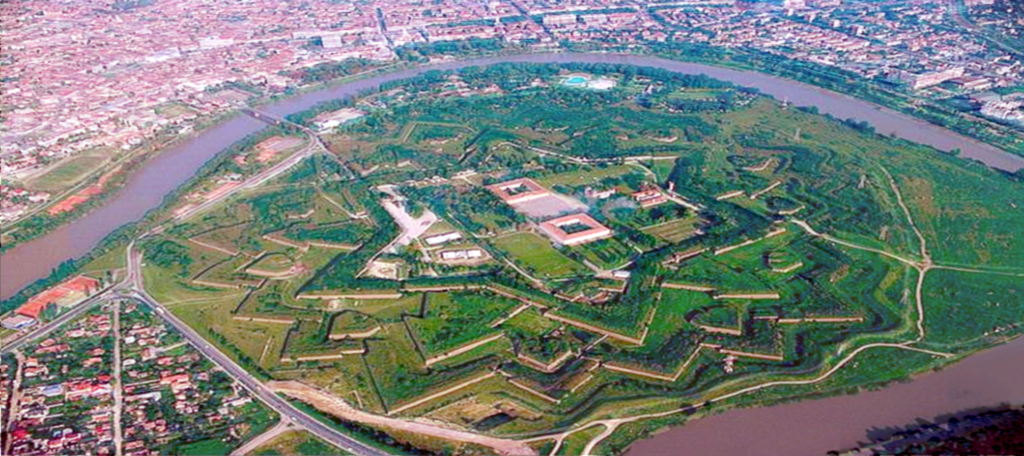
The Fortress of Arad is a significant bastioned fortress located in the city of Arad, Romania. Constructed in the 18th century during the post-Renaissance period, this fortress was commissioned by the Habsburg Empress Maria Theresa as part of a strategic military defense system along the empire's eastern frontier. The fortress was built on the left bank of the Mureș River, in what is now the city's Subcetate neighborhood, marking the boundary between the Habsburg Empire and the Ottoman Empire.Historical context and strategic importanceThe Fortress of Arad was erected in response to ongoing conflicts between the Habsburgs and the Ottoman Empire, serving as a key military stronghold on the empire's border. Its location was chosen for its tactical advantage, overseeing the Mureș River crossing and protecting vital routes into the heart of the Habsburg territories. The fortress formed part of a broader system of fortifications designed to secure the empire's eastern flank during a time of frequent warfare and shifting alliances in Eastern Europe.Architectural design and featuresThe fortress exemplifies the bastioned fortress style, a hallmark of post-Renaissance military architecture that evolved to counter advances in artillery technology. This design features angled bastions protruding from the main walls, allowing defenders to cover adjacent walls with overlapping fields of fire, minimizing blind spots. The walls were constructed with thick masonry and earthworks to absorb cannon fire, while the fortress's layout includes ravelins, moats, and curtain walls to enhance its defensive capabilities.The fortress's plan is typically star-shaped, a common feature of bastioned fortresses, facilitating a comprehensive defense network. Inside, the complex housed barracks, armories, powder magazines, and command buildings. The design reflects the military engineering principles of the 18th century, combining functionality with strategic defense.Military and prison use through historyThroughout its history, the Fortress of Arad served multiple military purposes. It functioned as a garrison for troops guarding the empire's border and later played a role in regional conflicts. Notably, the fortress was also used as a military prison, detaining prisoners of war and political detainees during various periods. Its robust construction and isolated location made it suitable for secure confinement.In the 20th century, the fortress continued its military role and currently serves as the headquarters for the Romanian 191st Infantry Battalion. Since 1999, this unit has been part of the Mixed Romanian-Hungarian Battalion, highlighting the fortress's ongoing military significance in the region.Current condition and cultural significanceToday, the Fortress of Arad remains a well-preserved example of 18th-century bastioned fortifications. While some parts have undergone restoration, much of the fortress retains its original structure and defensive features. It stands as a cultural landmark within Arad, reflecting the city's historical role as a military frontier town.The fortress attracts visitors interested in military history and architecture, offering insights into the defensive strategies employed during the Habsburg era. Its location in the Subcetate neighborhood makes it accessible for cultural tourism and educational purposes.Architectural elements and layout detailsThe fortress's star-shaped layout includes multiple bastions connected by curtain walls, surrounded by a deep moat that was originally filled with water from the nearby river. The bastions are designed to provide crossfire coverage, a defensive innovation that reduced the risk of successful enemy assaults.Within the walls, the fortress contains various functional buildings such as officers' quarters, soldiers' barracks, and storage facilities. The fortress also features a main gate fortified with defensive towers and equipped with mechanisms to control access securely.Defensive innovationsThe bastioned design allowed defenders to cover all approaches with overlapping fields of fire, eliminating dead zones. The use of angled bastions and ravelins helped to deflect cannonballs and resist sieges more effectively than earlier medieval castles.Construction materials and techniquesThe fortress was built primarily from stone and brick, combined with earthworks to absorb artillery impact. The walls are thick and sloped to better withstand cannon fire, demonstrating advanced military engineering for the period.

Post-Renaissance (17th–18th c.)
Details
38.8 km
Făget Medieval Fortress — Romania castle

Făget Medieval Fortress

, Romania

The Făget medieval fortress is a significant example of a bastioned fortress located in Romania. While the exact city location is not specified, this fortress represents a key element of Romania's medieval military architecture. Bastioned fortresses are characterized by angular bastions protruding from the main walls, designed to provide overlapping fields of fire and improved defensive capabilities against artillery, reflecting advancements in fortification during the late medieval and early modern periods. Architectural features and design The Făget fortress exhibits typical features of bastioned fortresses, including thick defensive walls and bastions that allowed defenders to cover all approaches with cannon and musket fire. The design incorporates angular bastions at the corners, which replaced earlier medieval round towers, improving the fortress's ability to withstand artillery bombardment. The walls are likely constructed of stone and mortar, designed to absorb and deflect cannonballs. The fortress's layout would have included a moat or ditch surrounding the walls to hinder attackers, along with a main gate fortified with defensive structures such as a gatehouse or barbican. Inside, the fortress probably contained barracks, armories, and storage rooms to support a garrison during sieges. Historical context and significance The construction of bastioned fortresses like Făget reflects the evolution of military architecture responding to the introduction of gunpowder and artillery in warfare, primarily from the 15th to 17th centuries. Romania, situated at the crossroads of Eastern and Central Europe, was a region of frequent conflict and strategic importance, necessitating robust fortifications. Făget fortress would have played a role in regional defense against Ottoman incursions and other military threats during the late medieval and early modern periods. Its bastioned design signifies adaptation to new military technologies and tactics, marking a transition from medieval castles to early modern fortresses. Preservation and current condition While specific information about the current condition of the Făget medieval fortress is limited, bastioned fortresses in Romania often survive as ruins or partially preserved structures. These sites are valuable for understanding the military history and architectural development of the region. Efforts to preserve such fortresses focus on stabilizing remaining walls and bastions, preventing further decay, and sometimes providing visitor access to promote cultural heritage tourism. Legacy and cultural importance The Făget fortress contributes to Romania's rich tapestry of historic fortifications, reflecting the region's strategic military history and architectural responses to evolving warfare. It stands as a testament to the adaptation of medieval fortresses into bastioned designs that shaped early modern military defense. Today, such fortresses are studied by historians and architects to better understand the transition in fortress construction techniques and the geopolitical challenges faced by Romania in the medieval and early modern periods.

Details