Fortress of Arad
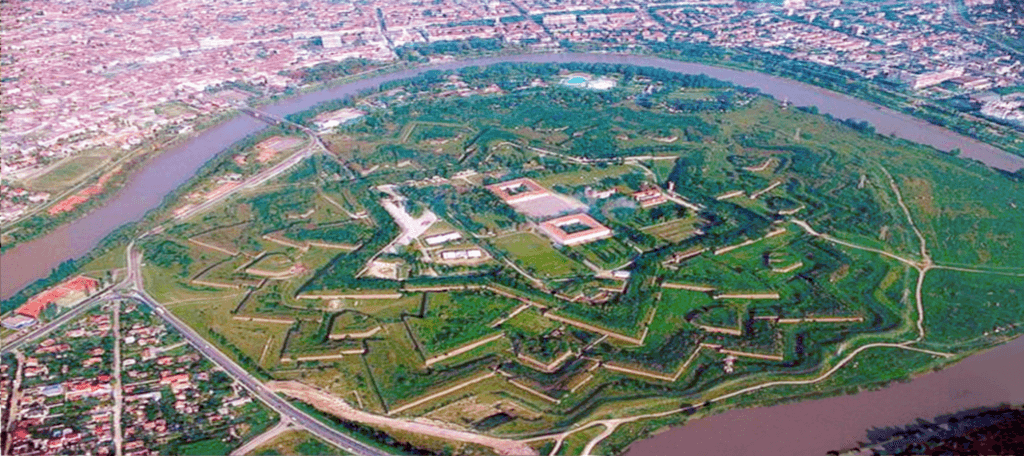
The Fortress of Arad is a significant bastioned fortress located in the city of Arad, Romania. Constructed in the 18th century during the post-Renaissance period, this fortress was commissioned by the Habsburg Empress Maria Theresa as part of a strategic military defense system along the empire's eastern frontier. The fortress was built on the left bank of the Mureș River, in what is now the city's Subcetate neighborhood, marking the boundary between the Habsburg Empire and the Ottoman Empire.
Historical context and strategic importance
The Fortress of Arad was erected in response to ongoing conflicts between the Habsburgs and the Ottoman Empire, serving as a key military stronghold on the empire's border. Its location was chosen for its tactical advantage, overseeing the Mureș River crossing and protecting vital routes into the heart of the Habsburg territories. The fortress formed part of a broader system of fortifications designed to secure the empire's eastern flank during a time of frequent warfare and shifting alliances in Eastern Europe.
Architectural design and features
The fortress exemplifies the bastioned fortress style, a hallmark of post-Renaissance military architecture that evolved to counter advances in artillery technology. This design features angled bastions protruding from the main walls, allowing defenders to cover adjacent walls with overlapping fields of fire, minimizing blind spots. The walls were constructed with thick masonry and earthworks to absorb cannon fire, while the fortress's layout includes ravelins, moats, and curtain walls to enhance its defensive capabilities.
The fortress's plan is typically star-shaped, a common feature of bastioned fortresses, facilitating a comprehensive defense network. Inside, the complex housed barracks, armories, powder magazines, and command buildings. The design reflects the military engineering principles of the 18th century, combining functionality with strategic defense.
Military and prison use through history
Throughout its history, the Fortress of Arad served multiple military purposes. It functioned as a garrison for troops guarding the empire's border and later played a role in regional conflicts. Notably, the fortress was also used as a military prison, detaining prisoners of war and political detainees during various periods. Its robust construction and isolated location made it suitable for secure confinement.
In the 20th century, the fortress continued its military role and currently serves as the headquarters for the Romanian 191st Infantry Battalion. Since 1999, this unit has been part of the Mixed Romanian-Hungarian Battalion, highlighting the fortress's ongoing military significance in the region.
Current condition and cultural significance
Today, the Fortress of Arad remains a well-preserved example of 18th-century bastioned fortifications. While some parts have undergone restoration, much of the fortress retains its original structure and defensive features. It stands as a cultural landmark within Arad, reflecting the city's historical role as a military frontier town.
The fortress attracts visitors interested in military history and architecture, offering insights into the defensive strategies employed during the Habsburg era. Its location in the Subcetate neighborhood makes it accessible for cultural tourism and educational purposes.
Architectural elements and layout details
The fortress's star-shaped layout includes multiple bastions connected by curtain walls, surrounded by a deep moat that was originally filled with water from the nearby river. The bastions are designed to provide crossfire coverage, a defensive innovation that reduced the risk of successful enemy assaults.
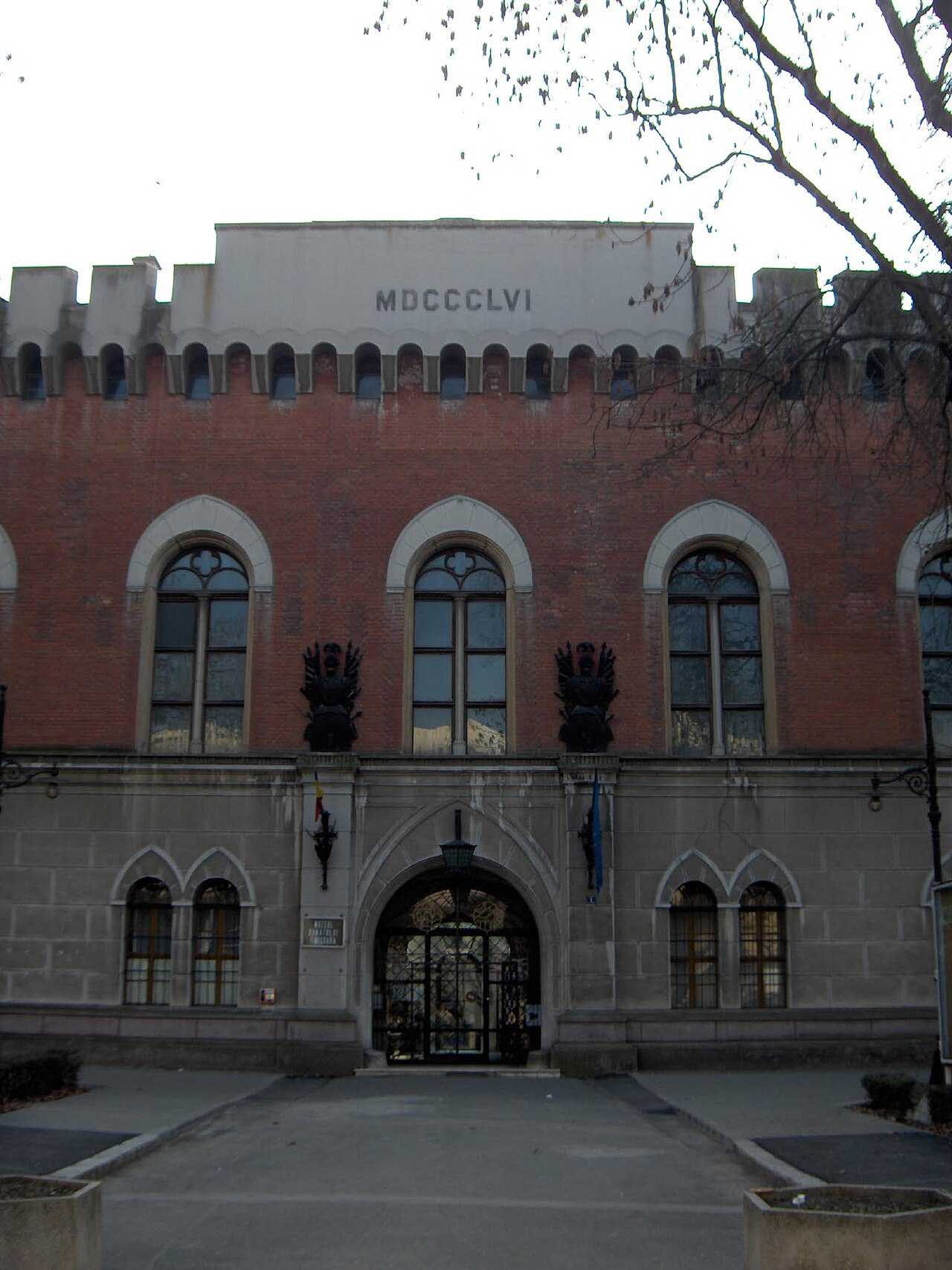
Within the walls, the fortress contains various functional buildings such as officers' quarters, soldiers' barracks, and storage facilities. The fortress also features a main gate fortified with defensive towers and equipped with mechanisms to control access securely.
Defensive innovations
The bastioned design allowed defenders to cover all approaches with overlapping fields of fire, eliminating dead zones. The use of angled bastions and ravelins helped to deflect cannonballs and resist sieges more effectively than earlier medieval castles.
Construction materials and techniques
The fortress was built primarily from stone and brick, combined with earthworks to absorb artillery impact. The walls are thick and sloped to better withstand cannon fire, demonstrating advanced military engineering for the period.
Frequently asked questions (FAQ)
- How do I get to the Fortress of Arad?
- The Fortress of Arad is easily accessible by car or public transport. If you are traveling by train, the nearest station is Arad, from which you can take a taxi or local bus to the fortress.
- What is the historical significance of the Fortress of Arad?
- The Fortress of Arad, built in the 18th century, played a crucial role in the defense against Ottoman and later Austrian invasions. Its strategic location made it an important military stronghold, and today it stands as a symbol of the region's rich history.
- When was the Fortress of Arad constructed?
- Construction of the Fortress of Arad began in 1763 and was completed in 1783. It was designed in the Vauban style, which reflects the military architecture of the period.
- Can I take guided tours of the Fortress of Arad?
- Yes, guided tours are available at the Fortress of Arad, providing visitors with in-depth insights into its history and architecture. Tours can be booked in advance or on-site, depending on availability.
- Why is the architecture of the Fortress of Arad unique?
- The architecture of the Fortress of Arad is characterized by its star-shaped layout and thick walls, typical of fortifications designed by Vauban. This unique design not only served defensive purposes but also showcases the military engineering of the 18th century.
- Is it possible to visit the Fortress of Arad year-round?
- Yes, the Fortress of Arad is open for visitors throughout the year, but the best time to visit is during the spring and autumn months when the weather is mild. Be sure to check the opening hours before planning your visit.
- What are the ticket prices for entering the Fortress of Arad?
- Ticket prices for the Fortress of Arad are generally affordable, with discounts available for students and seniors. It is advisable to check the official website for the latest pricing and any special promotions.
- What are the opening hours for the Fortress of Arad?
- The Fortress of Arad typically opens at 9 AM and closes at 6 PM, with extended hours during the summer months. It is recommended to verify the current opening hours before your visit, as they may vary on holidays.
- Are there any nearby attractions to visit after the Fortress of Arad?
- Yes, after visiting the Fortress of Arad, you can explore the nearby Arad City Hall and the Neolog Synagogue, both of which showcase beautiful architecture. The area also offers parks and local restaurants to enjoy a meal or relax.
Photo gallery

Information
Loading map...
Visitor reviews
No reviews yet. Been here? Write the first review and help other travelers!
Write the first reviewVisited this castle? Share your experience
Your review helps other travelers and adds first-hand knowledge to our encyclopedia.