Konin
Konin castle stands as a significant example of a late medieval bastioned fortress in Poland, with origins tracing back to early medieval times. Archaeological research confirms that as early as the 11th to 12th centuries, a fortified stronghold existed approximately 3.5 kilometers from the modern city center. This early fortification was strategically positioned in a wide, marshy valley of the Warta river at the confluence with the small Powa stream, guarding an important crossing on an ancient trade route connecting southern Poland through Kujawy to the north.
The original stronghold declined following changes in the river's course and the destruction of the ford in the 13th century, prompting relocation of the settlement to the present-day city area. The developing settlement suffered devastation during the Teutonic Knights' invasion of 1331. In response to this destruction, King Casimir III the Great commissioned the construction of a new Gothic brick castle on a small, artificially raised island formed by the broad, slow-flowing Warta river.
Architectural design and fortifications
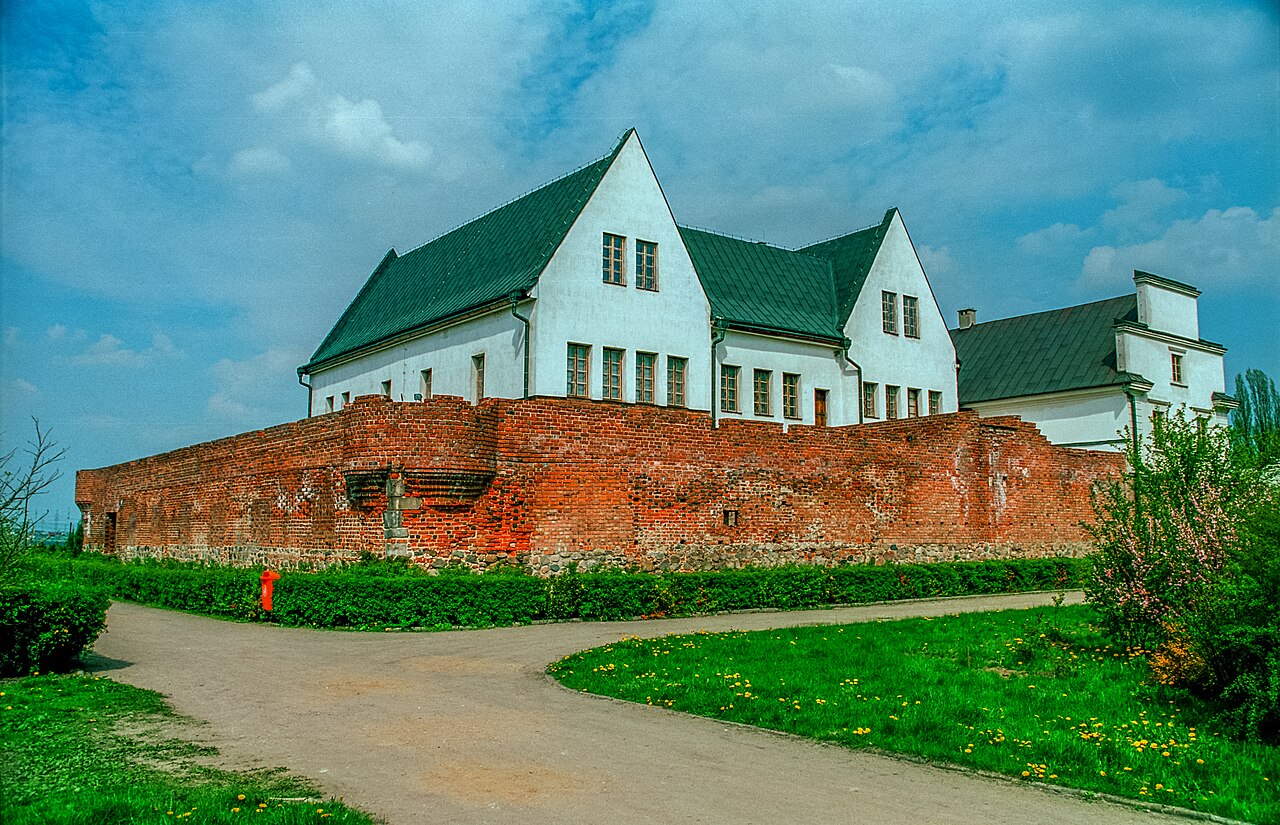
The castle was designed as a regular quadrilateral enclosed by robust brick walls resting on a stone foundation. A prominent feature was the 15-meter-high octagonal tower located at the southeast corner, serving as a defensive stronghold and lookout. Along the western curtain wall stood the main three-story residential building, which housed the castle's lord and administrative functions. A smaller auxiliary building adjoined the northern section of the curtain wall, likely serving service or storage roles.
In the 15th century, as the town's fortifications were completed, the castle was enclosed within a second ring of walls accompanied by a broad 12-meter-wide moat, enhancing its defensive capabilities. Although the town walls abutted the castle walls, the fortress remained an independent entity with its own northern gate. While exact details of the gate fortifications are unclear, it is presumed that a drawbridge was part of the entrance defenses, though no gate tower remains have been found.
Historical significance and role
From its inception, the Konin castle served as the seat of the local starosta (royal governor) and frequently hosted Polish monarchs. Notably, in 1433, it functioned as the command center for the Polish army during a campaign against the Teutonic Knights, where the ailing King Władysław Jagiełło monitored the military operations.
Despite its strategic importance, the castle gradually lost prominence in later centuries due to a lack of modernization. Its decline culminated during the Swedish Deluge (Potop Szwedzki) in the mid-17th century. In 1656, the fortress was severely damaged during a siege by local nobility against the Swedish garrison. The retreating Swedish forces set fire to the castle buildings, inflicting devastating damage.
Although reconstruction efforts were initiated, the castle suffered further destruction in 1707 during the Great Northern War. Under orders from King Charles XII of Sweden, the fortress was completely burned, marking the definitive end of its military and administrative functions.
Post-military history and current state
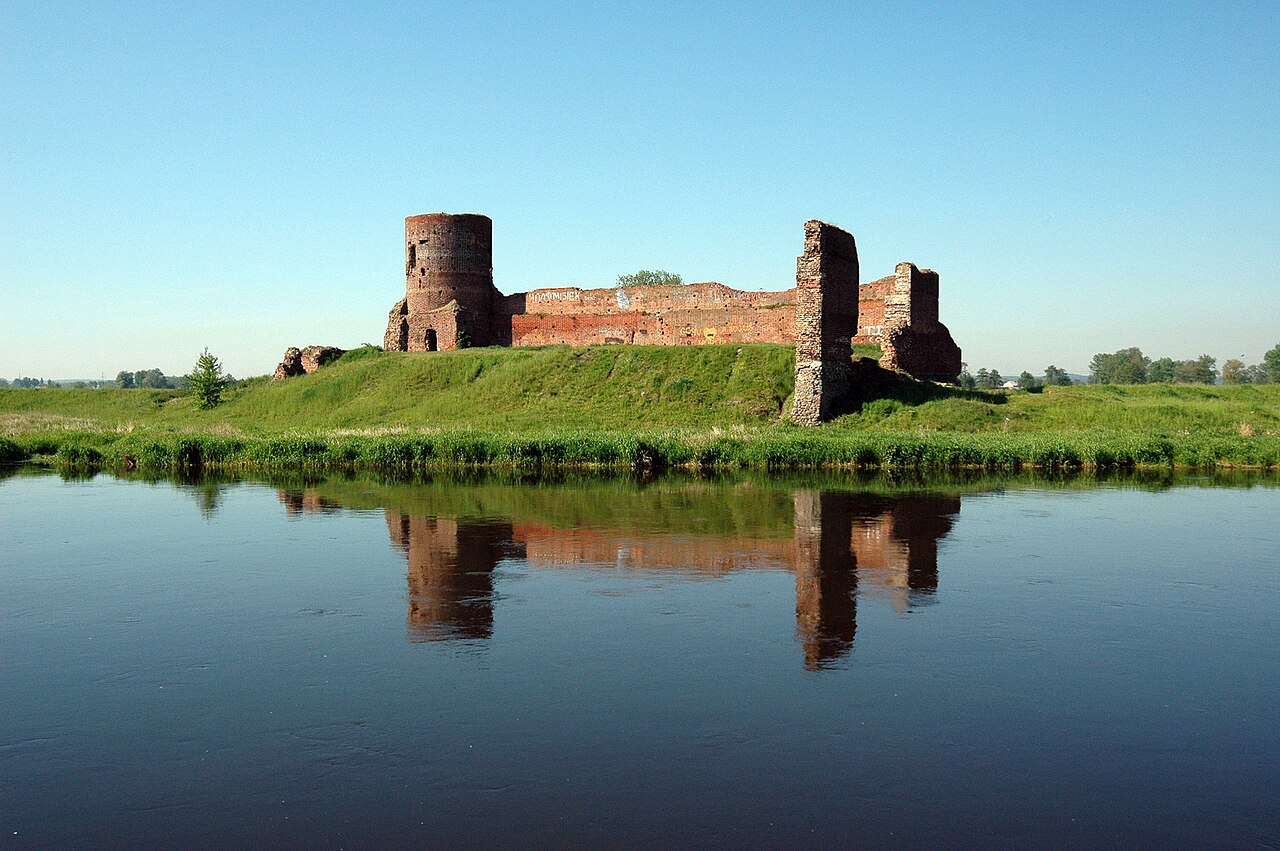
Following the castle's destruction, its ruins were dismantled during the period of the partitions of Poland. Today, no substantial remains of the castle survive above ground. The only reminders of the royal castle in Konin are the street named Zamkowa (Castle Street) and several 19th-century watercolor paintings depicting its former appearance.
Despite its ruinous state, the site of Konin castle holds great historical and cultural significance as a testament to medieval Polish fortifications and the turbulent history of the region. Its strategic location on the Warta river and its role in regional defense highlight the importance of riverine castles in medieval Poland.
Archaeological findings and research
Extensive archaeological investigations have shed light on the early medieval origins of the castle site. Excavations have revealed the layout of the original fortifications, the construction techniques involving brick and stone foundations, and the spatial organization of the castle buildings within the defensive walls. These findings contribute valuable insights into the evolution of medieval military architecture in Poland.
Castle layout and defensive features
The castle's compact quadrangular plan optimized defensive strength while accommodating residential and administrative functions. The octagonal tower provided a vantage point for surveillance and defense against attackers. The surrounding moat and second ring of walls constructed in the 15th century illustrate the adaptation of the fortress to advances in siege warfare and artillery.
Materials and construction techniques
The use of brick on stone foundations reflects common construction practices in Polish Gothic castles of the 14th century. The masonry work ensured durability and resistance to the damp conditions of the river island. The integration of residential buildings within the curtain walls demonstrates a multifunctional approach to castle design, combining defense with habitation.
Legacy and cultural importance
The legacy of Konin castle endures in the local heritage and historical consciousness. Although physical remnants are scarce, the castle's story is preserved through historical records, artworks, and archaeological documentation. It exemplifies the efforts of King Casimir the Great to strengthen Poland's borders and fortify key settlements during the late medieval period.
Today, the site invites reflection on the medieval history of Konin and the broader region of Greater Poland. It remains a subject of interest for historians, archaeologists, and visitors intrigued by Poland's medieval past and castle architecture.
Frequently asked questions (FAQ)
- How do I visit the ruins of Konin castle?
- The ruins of Konin castle are accessible to the public year-round. Visitors can explore the site freely, as it is an open archaeological area located near Zamkowa Street in Konin.
- What is the historical significance of Konin castle?
- Konin castle was a key defensive stronghold built by King Casimir the Great in 1331. It played an important role in regional defense and served as the seat of the local starosta and a royal residence.
- Are there any visible remains of Konin castle today?
- Today, Konin castle exists only as ruins with no substantial above-ground structures remaining. The site is marked by archaeological findings and commemorated by Zamkowa Street and historical artworks.
- When was Konin castle built and by whom?
- Konin castle was constructed in 1331 by King Casimir III the Great following the destruction of the earlier settlement during the Teutonic Knights' invasion.
- What architectural style characterizes Konin castle?
- Konin castle was built in the Gothic style typical of Polish medieval fortifications, featuring brick walls on stone foundations and an octagonal tower.
Information
Current owner
Municipality of Konin
Loading map...
Visitor reviews
No reviews yet. Been here? Write the first review and help other travelers!
Write the first reviewVisited this castle? Share your experience
Your review helps other travelers and adds first-hand knowledge to our encyclopedia.