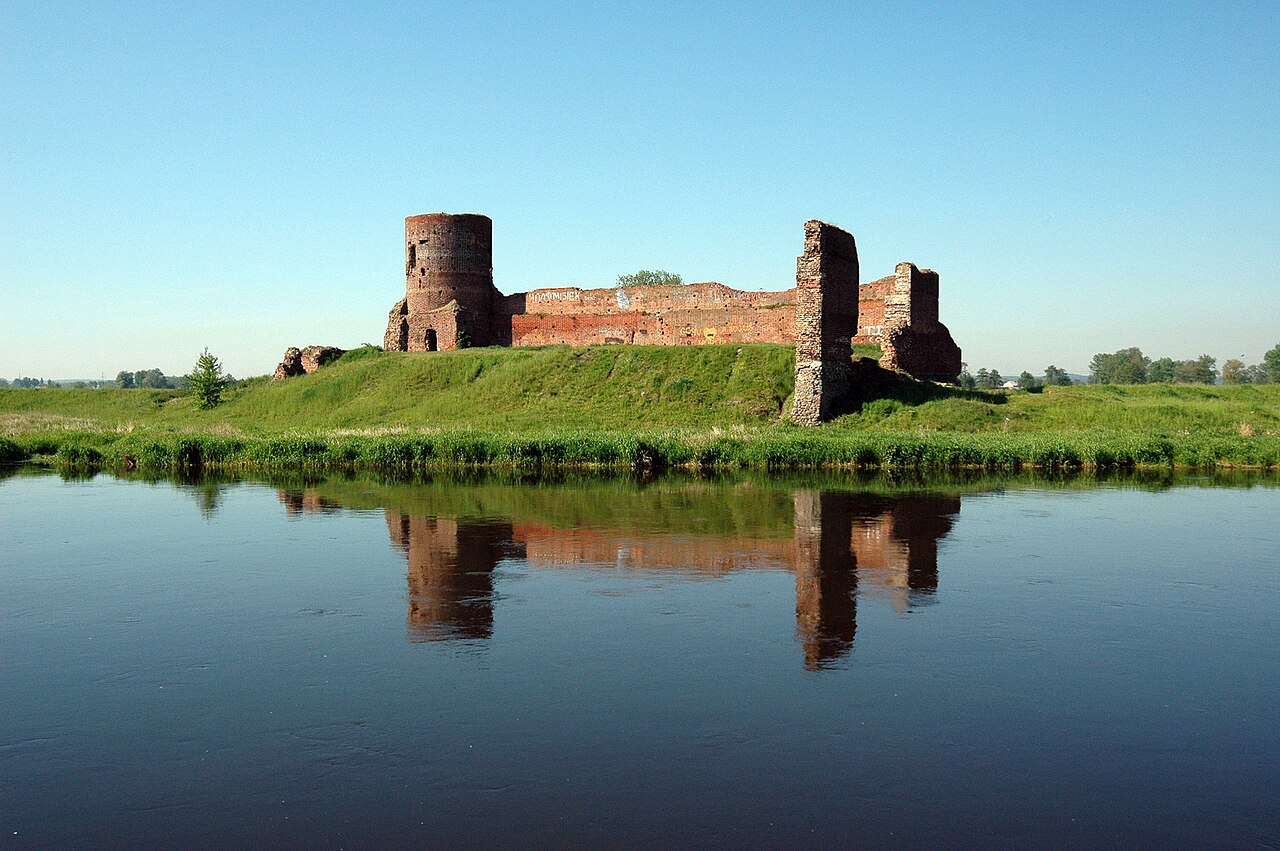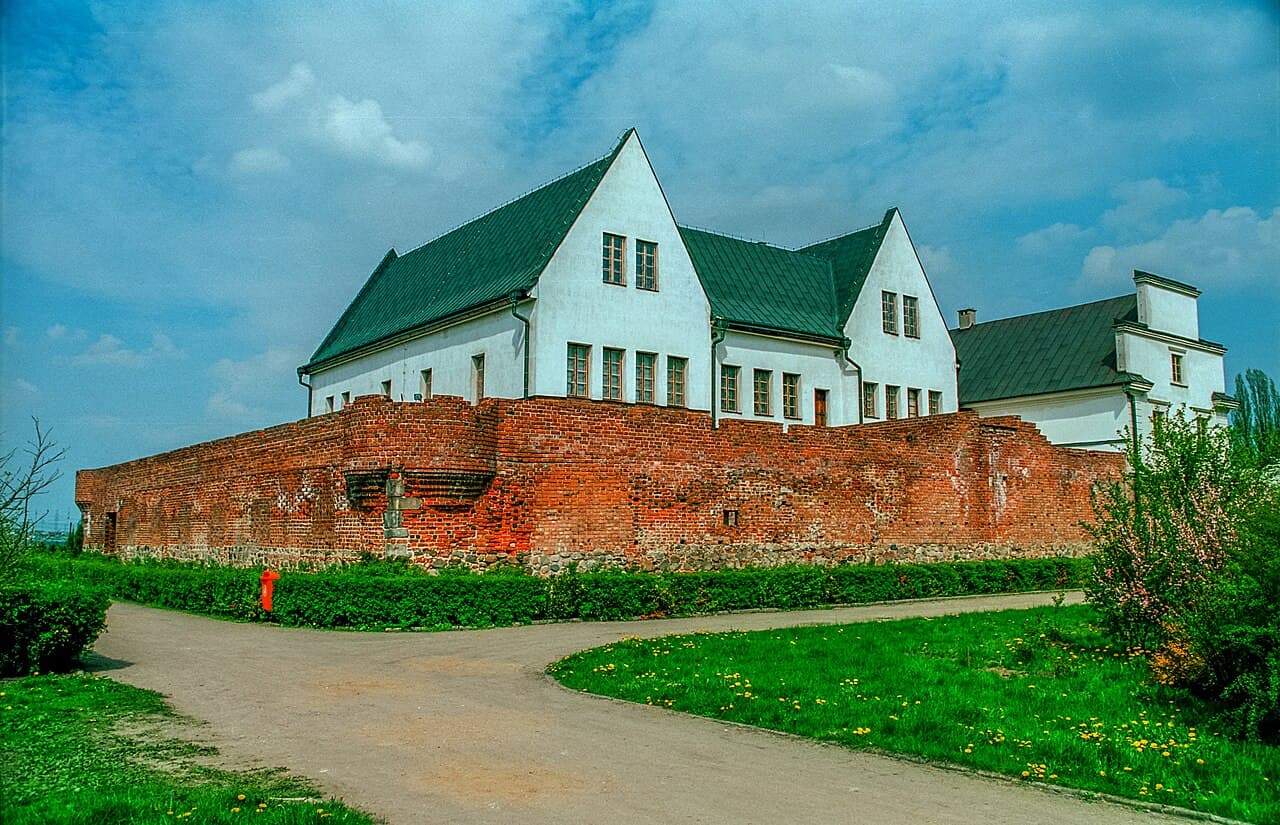
Gosławice Castle is a significant example of a Gothic hill castle situated in the district of Gosławice, now part of the city of Konin in central Poland. Constructed between 1418 and 1426 under the direction of Bishop Andrzej Łaskarz of Poznań, the castle was originally designed to serve as a fortified residence and administrative center for the bishopric. Its strategic location on a hill overlooking Gosławskie Lake provided natural defensive advantages, combining elevation with a water barrier that enhanced its protection during the late medieval period.
Architectural design and defensive features
The castle's design follows a regular quadrilateral plan, comprising two parallel two-story residential buildings. Each building contained two rooms per floor, covered by pitched gable roofs with gables aligned parallel to each other. The basements of these structures feature arrow slits in the external walls, indicative of their defensive function. Between the two buildings lies a small courtyard enclosed by walls on the northern and southern sides.
The southern wall housed the main entrance gate, which was protected by a gatehouse equipped with a mechanism for a drawbridge. A later addition connected the two residential buildings along the northern wall, further enclosing the courtyard. Surrounding the castle was a defensive curtain wall approximately 3.5 meters high on the northern side. This wall was reinforced at the corners by four small cylindrical towers, each equipped with embrasures designed for firing, reflecting adaptations to the use of early firearms.
A notable defensive feature was the moat encircling the castle, fed by water from Gosławskie Lake. This water barrier significantly enhanced the castle's defenses against siege tactics. The curtain wall included a wall-walk with loopholes, allowing defenders to patrol and repel attackers effectively. The combination of natural and man-made defenses illustrates the castle's advanced military architecture for its time.
Historical context and transformations
The castle's early history is closely tied to the ecclesiastical authority of Bishop Andrzej Łaskarz, who not only commissioned the castle but also contributed to the construction of the nearby Gothic church. The castle functioned as both a defensive stronghold and a residence for the bishop's representatives, embodying the dual military and administrative roles typical of late medieval fortifications.
During the Swedish Deluge in the mid-17th century, a period of widespread conflict and destruction in Poland, Gosławice Castle sustained significant damage. This event marked a decline in its military importance and residential use. By 1772, ownership had passed to Jadwiga Łącka, and later in 1800 to the Kwilecki family. The 19th century saw the castle's transformation from a feudal residence to an economic facility.
In 1838, a granary was constructed between the castle and the adjacent church, signaling a shift towards agricultural use. Subsequent adaptations included conversion of parts of the castle into a distillery or brewery, reflecting the changing economic landscape. These modifications contributed to the gradual deterioration of the castle's original medieval fabric.
Restoration and current status
After decades of neglect and damage, including impacts from 20th-century conflicts, a comprehensive restoration was carried out between 1978 and 1986. The restoration focused on preserving the castle's Gothic architectural features, including its defensive walls, towers, and characteristic layout. Since November 30, 1986, Gosławice Castle has been home to the Regional Museum in Konin, which serves as a cultural and historical institution highlighting the castle's heritage.
The museum's exhibitions cover the castle's architectural evolution, its role in regional history, and the broader cultural context of the area. Adjacent to the castle, an open-air museum displays traditional post mills or windmills, emphasizing the region's agricultural heritage and enriching visitors' understanding of the historical landscape.
Architectural significance and military innovations
Gosławice Castle stands as a notable example of a late medieval fortified residence that integrates defensive features adapted to the emergence of firearms. The inclusion of embrasures in the cylindrical corner towers and the presence of a moat fed by a natural water source demonstrate sophisticated defensive planning.
The castle's compact layout, featuring two parallel residential buildings and a small courtyard, reflects efficient spatial organization while maintaining strong defensive capabilities. The cylindrical towers provided enfilading fire, enhancing the castle's ability to defend against attackers from multiple angles.
Its position on a hill by a lake combined natural topography with constructed defenses, characteristic of hill castles that utilize both terrain and architecture for protection. The castle's design reveals an evolution in military architecture responding to changing warfare technologies of the late medieval period.
Visitor information and cultural heritage
Today, Gosławice Castle is well preserved and accessible to visitors as a museum. The restored chambers, defensive walls, and towers offer insight into the castle's architectural features and historical significance. The museum hosts exhibitions on regional history, medieval architecture, and the ecclesiastical influence on local governance.
The nearby open-air museum complements the castle experience by showcasing traditional rural technologies such as post mills, providing a broader cultural context. Gosławice Castle remains an important cultural landmark, reflecting the region's medieval heritage and its transformation through centuries of social, economic, and military changes.
Frequently asked questions (FAQ)
- What are the visiting hours for Gosławice Castle?
- Gosławice Castle is typically open to visitors from 10:00 to 16:00 daily, but it is advisable to check the museum's official website for seasonal variations and special closures.
- How do I get to Gosławice Castle?
- Gosławice Castle is located in the Gosławice district of Konin, Poland. It is accessible by local public transportation and car, with parking available nearby.
- What is the historical significance of Gosławice Castle?
- Gosławice Castle was built in the early 15th century by Bishop Andrzej Łaskarz and served as a fortified residence and administrative center. It played a role in regional defense and ecclesiastical governance during the late medieval period.
- Can I explore the castle's defensive structures?
- Yes, visitors can explore the castle's restored defensive walls, corner towers, and moat, which showcase typical late medieval military architecture adapted to early firearms.
- Is there an admission fee to visit Gosławice Castle?
- Admission fees apply to enter the Regional Museum housed in Gosławice Castle. Prices vary, so it is recommended to check the museum's official site for current ticket information.
Photo gallery

Information
Sources & official resources
Verify the information above using these authoritative references.
Loading map...
Visitor reviews
No reviews yet. Been here? Write the first review and help other travelers!
Write the first reviewVisited this castle? Share your experience
Your review helps other travelers and adds first-hand knowledge to our encyclopedia.