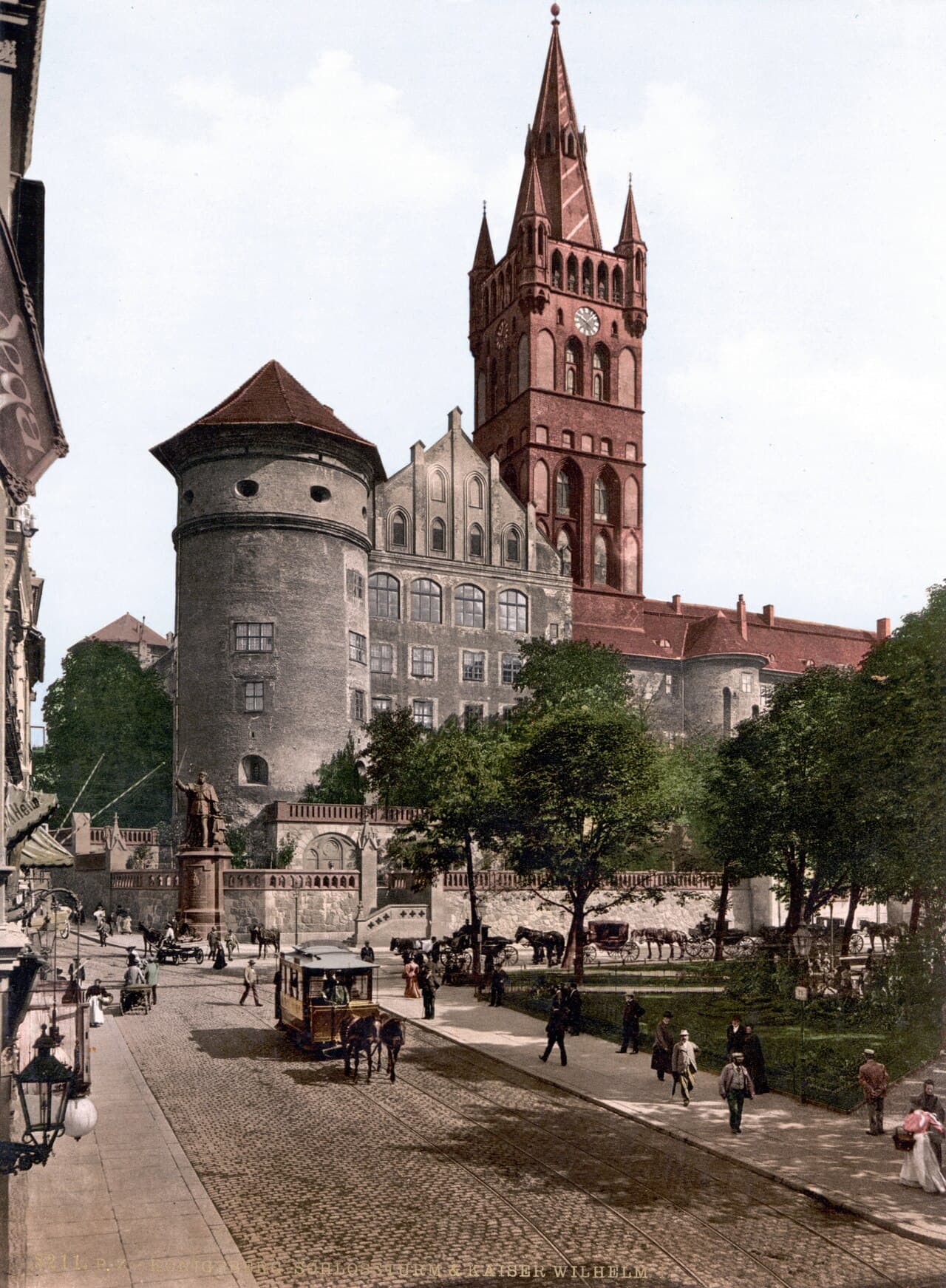
Königsberg Castle
Königsberg Castle (German: Königsberger Schloss, Russian: Кёнигсбергский замок) was a prominent medieval fortress and royal residence located in the city historically known as Königsberg, now Kaliningrad, Russia. Founded in the 13th century by the Teutonic Knights, the castle served as the seat of the grand masters of the order and later became the residence of the dukes and kings of Prussia. The castle's strategic position on the banks of the Pregel River made it a key military and administrative center in the region of East Prussia.
Early construction and architectural evolution
The original fortress was constructed in the 1250s as a high medieval stronghold by the Teutonic Knights during their crusade in the Baltic region. Initially, it was a typical hill castle with defensive walls and a moat, designed to secure the Knights' control over the newly conquered territory. Over the following centuries, the castle underwent numerous expansions and renovations, evolving into a large complex that combined military fortress elements with residential and administrative buildings.
Architecturally, Königsberg Castle displayed characteristics of Gothic style, with its pointed arches, ribbed vaults, and towering structures. The castle featured multiple towers, including a prominent keep that dominated the skyline. The extensive curtain walls and fortified gates provided formidable defense against sieges. Inside, the castle housed grand halls, chapels, and living quarters that reflected the status and power of its occupants.
Historical significance and role in prussian history
Königsberg Castle was not only a military bastion but also a cultural and political hub. It was the residence of the Teutonic Order's grand masters during their rule and later became the seat of the Dukes of Prussia after the secularization of the order's territories in the 16th century. The castle witnessed significant historical events, including the coronation of Prussian kings and important diplomatic meetings.
The castle's importance continued through the centuries as Königsberg grew into a major city of the Kingdom of Prussia. It symbolized Prussian authority and heritage until the upheavals of the 20th century.
Damage, destruction, and post-war legacy
During World War II, Königsberg Castle suffered severe damage from Allied bombing raids and the subsequent Battle of Königsberg in 1945. Although the castle's exterior walls remained largely intact, the interior and many structural elements were devastated.
After the war, Königsberg was annexed by the Soviet Union and renamed Kaliningrad. The Soviet government undertook systematic demolition of the castle ruins, driven by ideological motives and urban redevelopment plans. The demolition continued in stages, with the final sections destroyed by 1968.
On the site of the former castle, the Soviet authorities began constructing the House of Soviets, a massive administrative building intended as a symbol of Soviet power. However, the building was never completed and remained largely unused for decades due to structural issues and changing political circumstances. It was finally demolished in 2024, leaving the site open for potential new developments.
Architectural and cultural legacy
Despite its destruction, Königsberg Castle remains a significant historical and cultural symbol. Its ruins and archaeological remains have been the subject of study and preservation efforts, highlighting the castle's role in the medieval history of the Baltic region and Prussia.
The castle's architectural features, such as its Gothic elements and fortress design, reflect the military and political ambitions of the Teutonic Knights and subsequent Prussian rulers. Today, the site is recognized as an important archaeological location, offering insights into medieval castle construction and urban development in Eastern Europe.
Plans for future memorials or reconstruction projects occasionally emerge, reflecting ongoing interest in preserving the heritage of Königsberg Castle as part of Kaliningrad's complex history.
Frequently asked questions (FAQ)
- How do I get to Königsberg Castle?
- Königsberg Castle is located in the heart of Kaliningrad, making it easily accessible by public transport or by car. Visitors can use local buses or taxis to reach the castle, and there are parking facilities nearby for those driving.
- What is the historical significance of Königsberg Castle?
- Königsberg Castle has a rich history dating back to the 13th century and served as a key stronghold for the Teutonic Knights. It played a significant role in the region's political and cultural development, especially during the time of the Prussian state.
- When was Königsberg Castle built?
- The construction of Königsberg Castle began in 1255 and continued over several centuries, with various architectural styles being added over time. The castle has undergone significant changes, especially after being damaged during World War II.
- Can I take guided tours of Königsberg Castle?
- Yes, guided tours are available at Königsberg Castle, providing visitors with detailed insights into its history and architecture. It's recommended to check the official website for tour schedules and availability, especially during peak tourist seasons.
- Why is Königsberg Castle a popular tourist attraction?
- Königsberg Castle attracts visitors due to its fascinating history, stunning architecture, and its role in the cultural heritage of Kaliningrad. The castle also houses several museums that showcase artifacts and exhibits related to the region's past.
- Is it possible to host events at Königsberg Castle?
- Yes, Königsberg Castle offers facilities for hosting various events, including weddings, conferences, and cultural gatherings. Interested parties should contact the castle management for information on venue availability and arrangements.
- What are the opening hours of Königsberg Castle?
- Königsberg Castle is typically open to visitors from 10 AM to 6 PM, with extended hours during the summer months. It’s advisable to check for any changes in opening hours or special closures on holidays before planning your visit.
- What are the ticket prices for entering Königsberg Castle?
- Ticket prices for Königsberg Castle vary depending on the type of access and guided tours chosen. Generally, entrance fees are affordable, and discounts may be available for students and seniors; check the official website for the latest pricing information.
- What is the best time to visit Königsberg Castle?
- The best time to visit Königsberg Castle is during the late spring and early autumn when the weather is mild and pleasant. This period also allows visitors to enjoy the surrounding gardens and outdoor areas more fully.
- Are there any nearby attractions to visit after Königsberg Castle?
- Yes, after visiting Königsberg Castle, you can explore nearby attractions such as the Kaliningrad Cathedral, the Museum of the World Ocean, and the beautiful beaches along the Baltic Sea. These sites provide a comprehensive experience of the region's history and natural beauty.
Photo gallery

Photo by Unknown authorUnknown author•Public domain
Information
Loading map...
Visitor reviews
No reviews yet. Been here? Write the first review and help other travelers!
Write the first reviewVisited this castle? Share your experience
Your review helps other travelers and adds first-hand knowledge to our encyclopedia.



