Komorowice
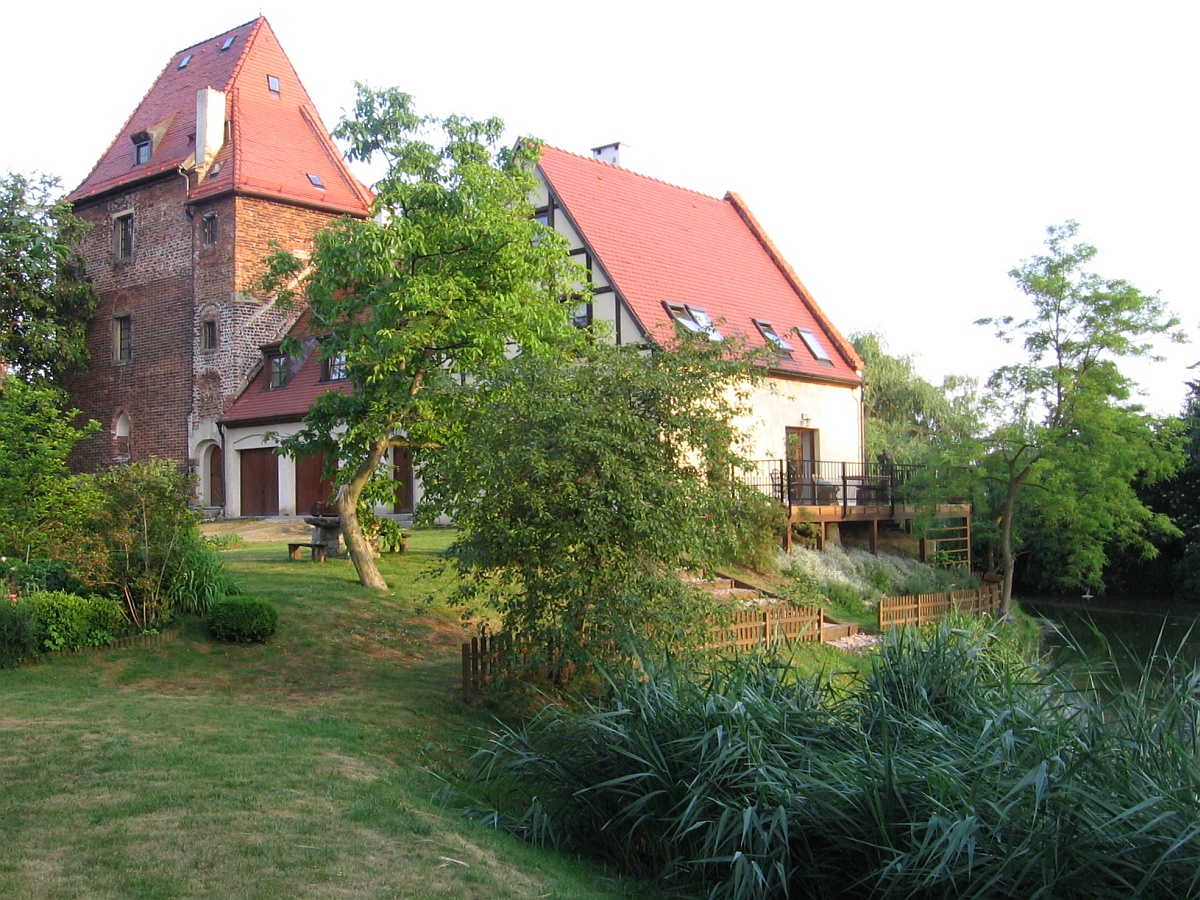
Komorowice manor house stands as a significant historical site in the village of Komorowice, Poland, with origins tracing back to the 13th century. The earliest records of Komorowice date from the mid-13th century, marking it as a location of medieval settlement and strategic importance in the Silesian region. Over centuries, the manor evolved from a fortified residence into a refined Renaissance estate, reflecting the architectural and social transformations of the area.
Medieval origins and early history
The site of Komorowice was first documented in the high medieval period, a time when many fortified structures were established across Silesia to assert territorial control and protect local populations. While the original medieval fortifications have not survived intact, the manor's foundation is rooted in this era, providing a glimpse into the region's feudal past. The manor's location in Komorowice positioned it within the cultural and political milieu of Silesia, an area influenced by shifting borders and noble families.
Renaissance transformation and architectural features
In 1529, the estate was acquired by Melchior Hirsch von Kaltenbrunn, a wealthy burgher from Wrocław. He commissioned the construction of a Renaissance manor house, marking a significant architectural upgrade from the medieval structures. This new manor was designed as a three-winged rectangular complex, with the south side enclosed by a curtain wall. The western wing, the most prominent part, was a one-story, vaulted structure with a basement. The ground floor featured a grand representative hall, separated by a vestibule from two smaller chambers. The first floor mirrored this layout and included latrine bays integrated into the bay windows.
The manor is notable for its late Gothic window frames and a richly decorated portal bearing the Hirsch family coat of arms. The northern wing contained a passage hall leading to an inner courtyard and two additional rooms, while the eastern wing housed three rooms, including a kitchen. Surrounding the manor was a water-filled moat, enhancing its defensive capabilities and aesthetic appeal.
Later additions and modifications
In the early 18th century, around 1700, corridors with arcades were added to the northern and eastern wings, enriching the manor’s architectural complexity. The 19th century brought further changes, particularly in the second half, when the arcades on the courtyard were bricked up. Staircases and an entrance terrace were also added, and the main facade underwent stylistic updates along with interior redesigns. These modifications reflected changing tastes and functional needs of the manor’s owners.
Ownership lineage and historical significance
Komorowice manor passed through the hands of several notable families, including Heinrich von Logau, brother of the Bishop of Wrocław Kaspar von Logau, and later the von Lüttwitz, von Schickfuss, and Steiner families. In the first half of the 19th century, Christian Steinert and subsequently Emil von Schweinichen were the estate’s owners. Up until World War II, the manor belonged to the descendants of August von Schönberg.
The manor's history reflects the broader socio-political dynamics of Silesia, illustrating the transition from medieval fortifications to Renaissance residences of wealthy burghers and nobility. It also exemplifies the architectural evolution typical of noble estates adapting to changing defensive and residential requirements over centuries.
Decline and current condition
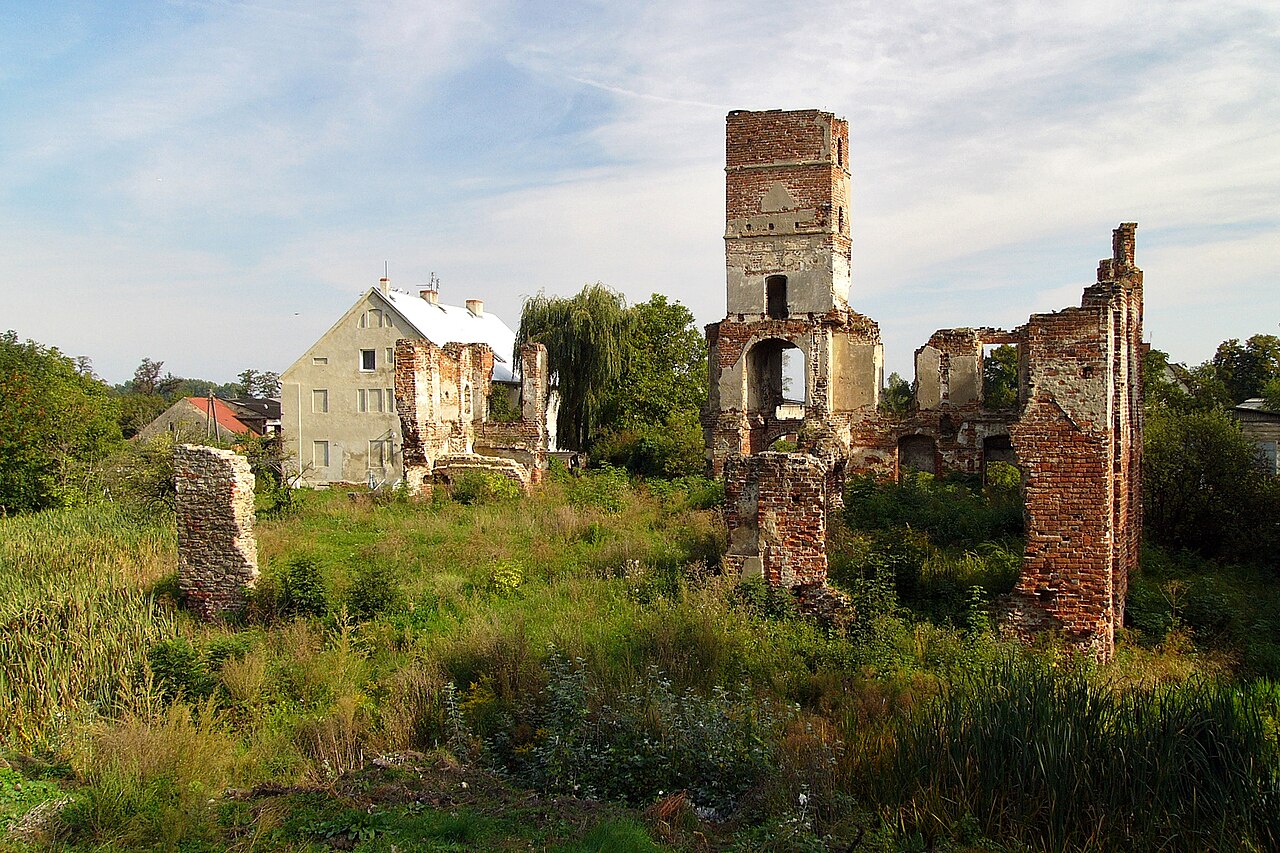
In the 1970s, efforts were initiated to adapt the manor for use as a training center for sheep breeders. However, these works were never completed, and the manor gradually fell into disrepair. Today, the Komorowice manor is in a state of ruin, with only partial elements of its former grandeur remaining.
Despite its dilapidated condition, surviving features include Renaissance stonework, late Gothic vaulting, and the heraldic portal bearing the Hirsch family crest. These remnants offer valuable insights into the manor's architectural heritage and the lifestyle of Silesian burgher nobility during the early modern period.
Architectural and cultural importance
The Komorowice manor house ruins serve as an important example of a Renaissance residence built for wealthy burghers in Silesia, blending defensive medieval elements with Renaissance aesthetics. The manor’s design, including the water moat, vaulted halls, and heraldic decorations, illustrates the fusion of functionality and status symbolism in noble architecture.
As a privately owned property, the manor remains a subject of interest for historians, architects, and cultural heritage enthusiasts. It stands as a testament to the region's layered history and the architectural developments that shaped Silesian noble estates from the medieval era through the 19th century.
Frequently asked questions (FAQ)
- What is the best time to visit Komorowice manor ruins?
- The best time to visit Komorowice manor ruins is during late spring to early autumn when weather conditions are favorable for exploring the site and its surroundings.
- Is it possible to access the interior of the manor ruins?
- Access to the interior of Komorowice manor ruins may be limited due to its private ownership and current condition. Visitors should check local guidelines and permissions before planning a visit.
- What architectural styles are visible at Komorowice manor?
- Komorowice manor features a blend of Renaissance architecture with elements of late Gothic design, evident in its window frames, vaulting, and heraldic portal.
- Who were some notable owners of Komorowice manor?
- Notable owners include Melchior Hirsch von Kaltenbrunn, Heinrich von Logau, the von Lüttwitz family, and the descendants of August von Schönberg.
- Are there any defensive features at Komorowice manor?
- Yes, the manor was originally surrounded by a water-filled moat, providing both defense and aesthetic appeal typical of Renaissance residences.
Information
Current owner
Private owner
Loading map...
Visitor reviews
No reviews yet. Been here? Write the first review and help other travelers!
Write the first reviewVisited this castle? Share your experience
Your review helps other travelers and adds first-hand knowledge to our encyclopedia.