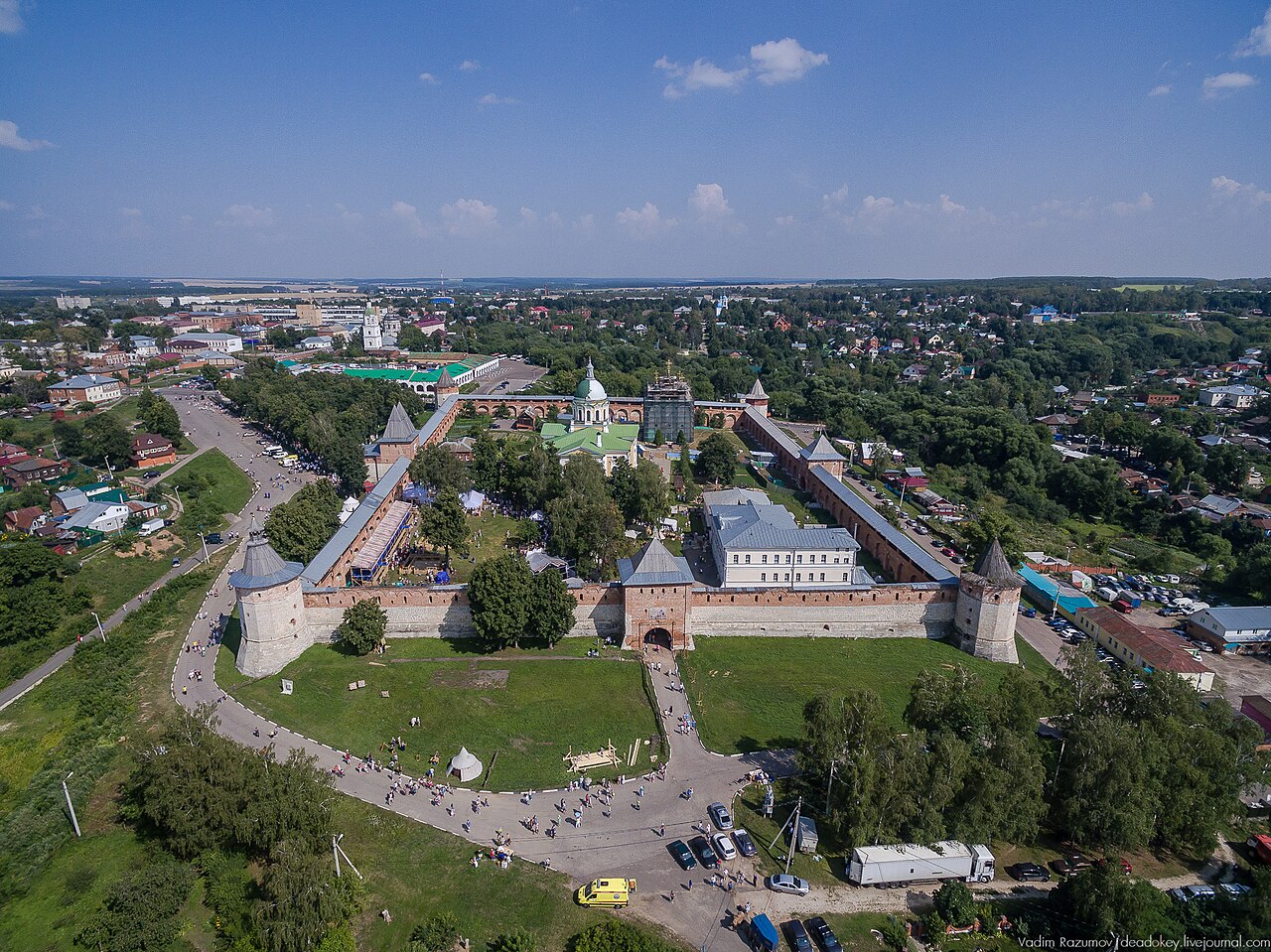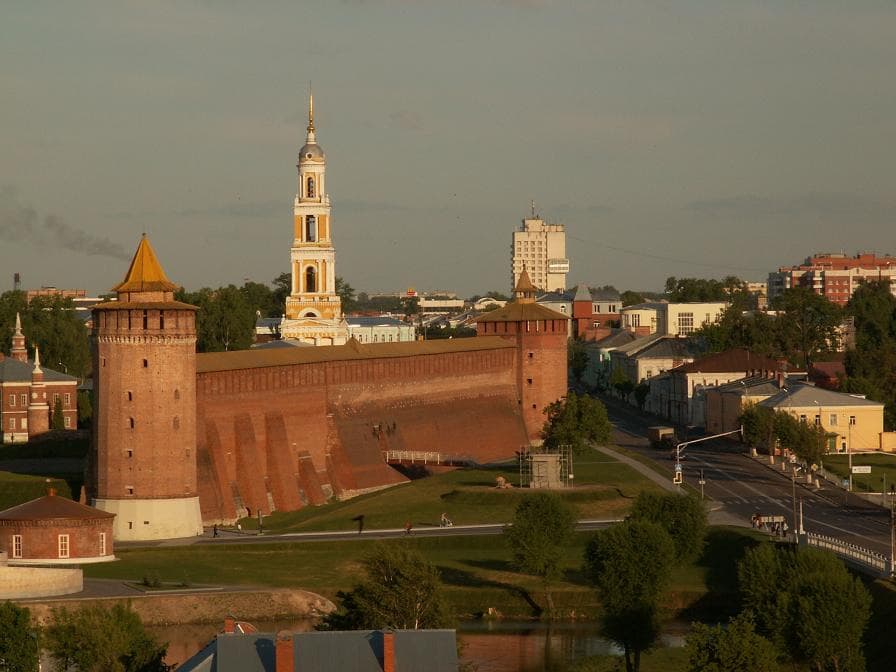
Kolomna Kremlin (Russian: Коломенский Кремль) is a historic fortress located in the city of Kolomna, within the Moscow Oblast of the Russian Federation. Constructed primarily during the early 16th century, this bastioned fortress represents a significant example of Russian military architecture from the Renaissance period. The fortress was built between 1525 and 1531 under the order of Tsar Vasily III, replacing an earlier wooden fortification that had previously guarded the area.
The Kolomna Kremlin was strategically designed to protect the southern approaches to Moscow and served as a critical defensive stronghold against invasions. Its walls are characterized by thick, high stone ramparts, reinforced with bastions that allowed defenders to cover all angles of attack. The fortress's design reflects the transition in military architecture influenced by the advent of gunpowder artillery, which necessitated the development of angled bastions and lower, thicker walls to better withstand cannon fire.
Architectural features and layout
The fortress walls of the Kolomna Kremlin stretch approximately 2 kilometers and include around 17 towers of varying shapes and sizes. These towers served multiple purposes, including watchtowers, artillery platforms, and defensive strongpoints. The walls are constructed from limestone and brick, materials chosen for their durability and defensive properties.
Among the towers, the Marinkina Tower and the Pyatnitskaya Tower stand out for their historical significance and architectural detail. The fortress also features several gates, with the Marinkina Gate being the main entrance, historically guarded and fortified to control access.
Religious structures within the Kremlin
The Kremlin's interior hosts several important religious buildings, reflecting the close relationship between military and spiritual life in medieval Russia. The Assumption Cathedral (Uspensky Cathedral) is one of the most prominent churches within the Kremlin walls, showcasing traditional Russian Orthodox architecture with its distinctive onion domes and frescoed interiors.
Other notable religious edifices include the Resurrection Church (Voskresensky Church) and the Spassky Monastery, which dates back to the 14th century, predating the stone fortress itself. These buildings served both religious functions and as places of refuge during sieges.
Historical significance and military role
The Kolomna Kremlin played a vital role in the defense of the Russian state during the turbulent periods of the 16th and 17th centuries. It was a key point of resistance during invasions by the Crimean Tatars and other adversaries. The fortress's robust construction and strategic location helped secure the region and protect the approaches to Moscow.
Throughout its history, the Kremlin underwent several modifications to adapt to evolving military technologies and threats. Despite these changes, much of the original Renaissance-era fortification remains intact, offering valuable insights into the military engineering of the period.
Preservation and current status
Today, the Kolomna Kremlin is well-preserved and serves as a cultural and historical monument. It attracts visitors interested in Russian history, architecture, and Orthodox heritage. The Kremlin complex is managed by local authorities and includes museums that exhibit artifacts related to its military and religious history.
Visitors can explore the fortress walls, towers, and the interior religious buildings, gaining a comprehensive understanding of the site's historical importance. The Kremlin also hosts various cultural events and festivals, reinforcing its role as a living monument of Russian heritage.
Frequently asked questions (FAQ)
- How do I get to Kolomna Kremlin?
- You can reach Kolomna Kremlin by taking a train or bus from Moscow, which is approximately 100 kilometers away. Once you arrive in Kolomna, the Kremlin is easily accessible by foot or local transportation.
- What is the historical significance of Kolomna Kremlin?
- Kolomna Kremlin dates back to the 16th century and served as a defensive stronghold during the time of the Russian Tsars. It played a crucial role in protecting Moscow from invasions and is a testament to the architectural and military strategies of its era.
- When was Kolomna Kremlin built?
- The construction of Kolomna Kremlin began in 1525 under the orders of Tsar Vasily III and was completed in the early 17th century. Its walls and towers were designed to defend against potential attacks, showcasing the military architecture of the time.
- Can I take guided tours of Kolomna Kremlin?
- Yes, guided tours are available at Kolomna Kremlin, offering visitors in-depth insights into its history and architecture. These tours can enhance your experience, allowing you to learn more about the fascinating stories behind the fortress.
- Why is Kolomna Kremlin an architectural landmark?
- Kolomna Kremlin is considered an architectural landmark due to its unique combination of Russian medieval and Renaissance styles. Its well-preserved towers, walls, and cathedrals reflect the artistry and craftsmanship of the period, making it a must-visit for architecture enthusiasts.
- Is it possible to visit Kolomna Kremlin year-round?
- Yes, Kolomna Kremlin is open to visitors throughout the year, although certain areas may have limited access during winter months. Each season offers a different perspective of the Kremlin, with beautiful scenery and various cultural events taking place.
- What are the opening hours of Kolomna Kremlin?
- Kolomna Kremlin generally opens at 10 AM and closes at 6 PM, with extended hours during the summer months. It is advisable to check the official website for any changes in hours during holidays or special events.
- What are the ticket prices for Kolomna Kremlin?
- Ticket prices for Kolomna Kremlin are quite affordable, typically ranging from 150 to 300 RUB for adults. Discounts are often available for students, seniors, and children, making it accessible for all visitors.
- What nearby attractions can I visit while in Kolomna?
- While visiting Kolomna Kremlin, you can explore other nearby attractions such as the Kolomna Museum of Samovar and the Church of Nikolai in the Marsh. The charming streets of Kolomna also offer various cafes and shops to enjoy local cuisine and crafts.
Photo gallery

Photo by No machine-readable author provided. Pavelegorov assumed (based on copyright claims).•Public domain
Information
Loading map...
Visitor reviews
No reviews yet. Been here? Write the first review and help other travelers!
Write the first reviewVisited this castle? Share your experience
Your review helps other travelers and adds first-hand knowledge to our encyclopedia.