Koerich Castle
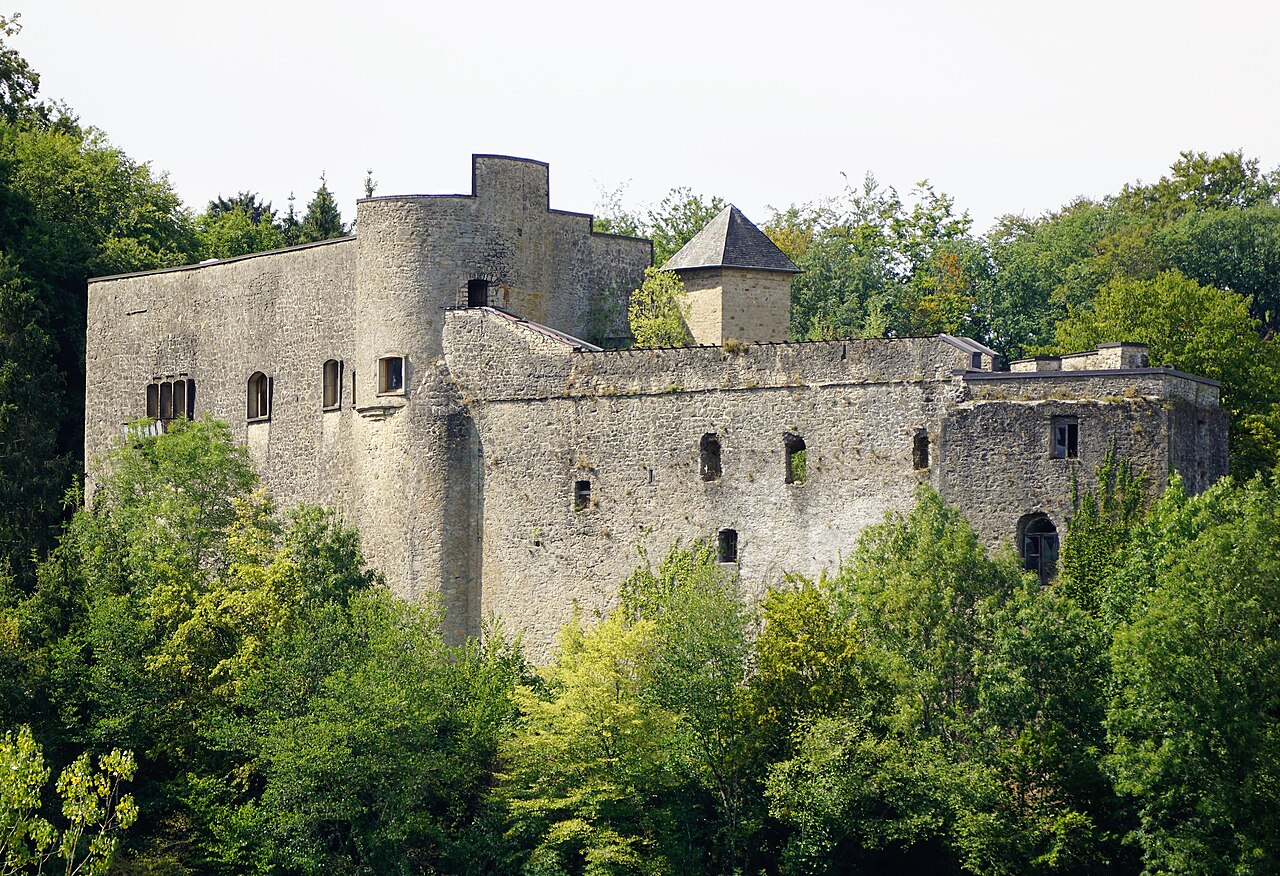
Koerich Castle is a striking example of medieval military architecture situated in the tranquil village of Koerich, Luxembourg. Nestled in the scenic Valley of the Seven Castles along the Eisch stream, this castle is part of a unique cluster of historic fortifications including Septfontaines, Ansembourg, New Ansembourg, Hollenfels, Schoenfels, and Mersch. The castle's rich history and architectural evolution reflect the changing needs and tastes of its noble owners from the early 13th century through the Baroque period.
Originally constructed in the early 13th century, Koerich Castle was first documented in 1259. It was likely commissioned by Wirich I, Lord of Koerich and Seneschal of Luxembourg, embodying the late Romanesque style prevalent at the time. The castle’s initial design featured a robust square layout surrounded by a defensive moat and accessed by a drawbridge, a common defensive feature in medieval fortifications. The centerpiece was a massive keep with walls up to 3 meters thick, originally soaring between 25 and 30 meters high, designed to withstand sieges and provide a last refuge for its inhabitants.
Medieval origins and fortifications
The castle’s keep remains one of the most impressive in the region, with a base measuring approximately 12 by 11.6 meters and walls up to 3.5 meters thick. A spiral staircase embedded within the wall thickness provided access to multiple floors, a typical feature in medieval keeps for defense and space efficiency. The castle was fortified with a portcullis and a moat, emphasizing its military function during the turbulent high medieval period.
In 1304, Godefroid of Koerich expanded the castle, adding Gothic elements that softened the fortress’s austere Romanesque appearance. This expansion likely included enhancements to living quarters and defensive structures, reflecting the evolving architectural styles and the increasing importance of comfort alongside defense.
Transition to a residential palace
By the late 14th century, the castle began its transformation from a purely defensive stronghold into a more comfortable noble residence. Around 1380, Gilles of Autel and Koerich undertook significant modifications, including the construction of two square towers at either end of the south wall. These towers, each about 12 meters tall, served both defensive and residential purposes. The southwestern tower notably housed a chapel on its ground floor, indicating the castle’s dual role as a home and a place of worship.
Renaissance and baroque modifications
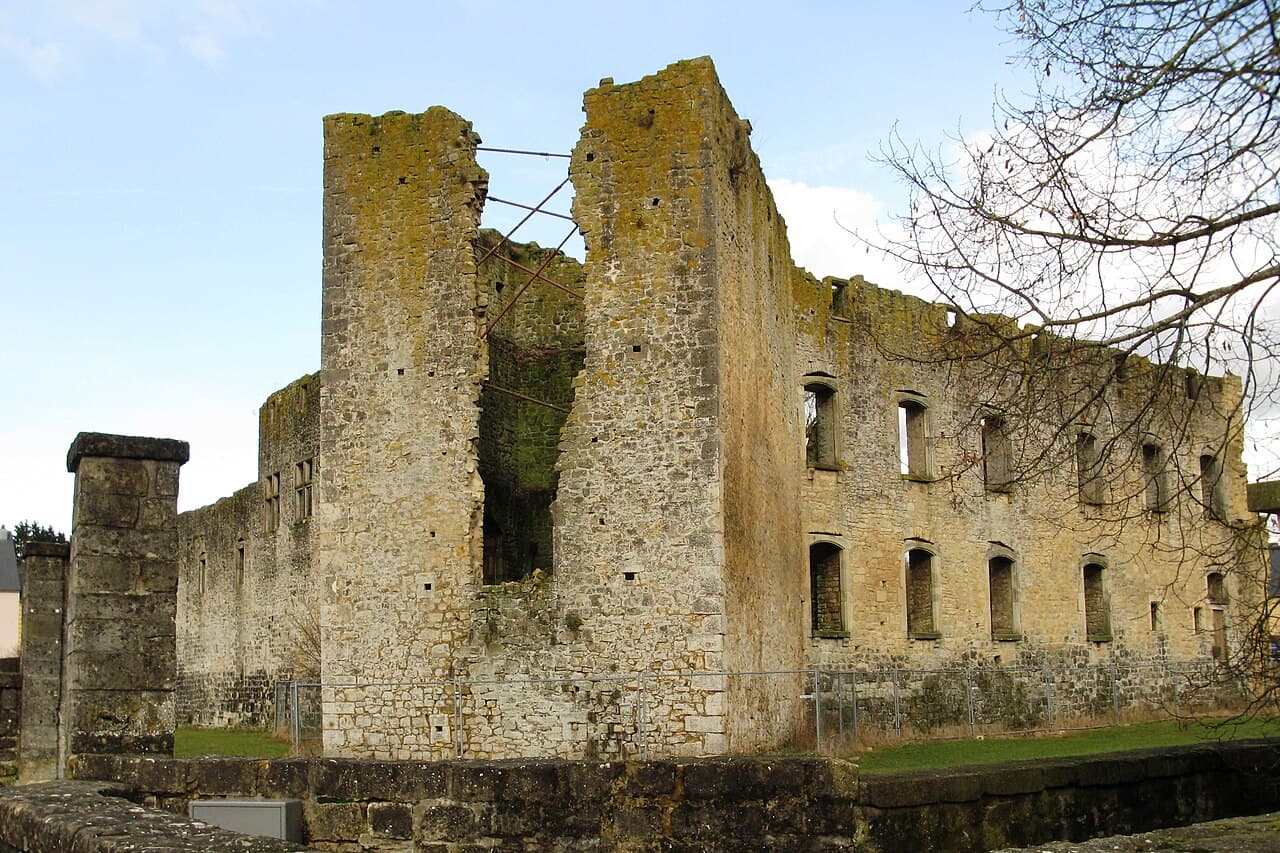
The castle underwent further significant changes in 1580 under the ownership of Jacques II de Raville (also known as Jakob von Rollingen). He demolished parts of the medieval structure to add two Renaissance-style wings, reflecting contemporary tastes for grandeur and comfort. Large rectangular windows and a stately fireplace on the first floor exemplify the Renaissance influence, emphasizing light and domestic luxury over fortification.
In 1728, Lothar-Friedrich von Rollingen introduced Baroque elements to the south wing, further enhancing the castle’s residential appeal. These additions included ornate architectural details characteristic of the Baroque period, marking a clear departure from the castle’s original military purpose.
Decline and preservation efforts
Following the death of the Raville family in the late 18th century, Koerich Castle fell into decline due to neglect and lack of maintenance. By the early 19th century, the castle was repurposed as a farm, accelerating its deterioration. The once formidable fortress gradually became a ruin, its walls and towers succumbing to the ravages of time.
In the 1950s, the castle was acquired by the state, marking the beginning of preservation efforts. Prior to this, the last private owner, Pierre Flammang, conducted essential structural repairs to stabilize the ruins. Today, Koerich Castle stands as a well-known ruin, symbolizing Luxembourg’s medieval heritage and architectural evolution. Although restoration work continues, the site is accessible to visitors free of charge, offering a glimpse into the region’s feudal past and the castle’s layered history.
Architectural significance and visitor experience
Koerich Castle is notable for its blend of architectural styles, from its late Romanesque origins through Gothic, Renaissance, and Baroque modifications. The castle’s massive keep and defensive features illustrate the military priorities of the early medieval period, while the later additions reflect changing tastes and the increasing importance of comfort and status in noble residences.
The castle’s location in the Valley of the Seven Castles enhances its appeal, as visitors can explore a unique concentration of historic fortresses within a scenic Luxembourg valley. The juxtaposition of the castle’s ruins with the nearby Baroque church and traditional village houses creates a picturesque setting that highlights the region’s rich cultural heritage.
Visitors to Koerich Castle can appreciate the impressive scale and craftsmanship of the surviving structures, including the thick walls of the keep, the chapel tower, and the Renaissance wings. Although some areas may be restricted during ongoing repairs, the castle remains a popular destination for history enthusiasts, architectural scholars, and tourists seeking to experience Luxembourg’s medieval legacy.
Frequently asked questions (FAQ)
- How do I get to Koerich Castle?
- Koerich Castle is located in the village of Koerich in the Mersch region of Luxembourg. It is accessible by car and public transport, with nearby parking and walking paths leading to the castle ruins.
- What is the historical significance of Koerich Castle?
- Koerich Castle is a prime example of a medieval fortress that evolved into a noble residence, showcasing architectural styles from Romanesque to Baroque. It played a key role in the region's feudal history and is part of the Valley of the Seven Castles.
- Can I visit the interior of Koerich Castle?
- While the castle is a ruin, visitors can explore the exterior walls, keep, and towers. Some interior areas may be closed during restoration work, so checking current access information before visiting is recommended.
- When is the best time to visit Koerich Castle?
- The castle is best visited during the warmer months from late spring to early autumn when the weather is favorable for walking and exploring the surrounding valley and village.
- Are there guided tours available at Koerich Castle?
- Guided tours may be available through local tourist offices or during special events. Visitors should inquire locally for tour schedules and availability.
Photo gallery

Information
Current owner
State
Address
Rue de l'École, Luxembourg
Loading map...
Visitor reviews
No reviews yet. Been here? Write the first review and help other travelers!
Write the first reviewVisited this castle? Share your experience
Your review helps other travelers and adds first-hand knowledge to our encyclopedia.