Knepp Castle
Knepp Castle stands as a significant relic of Norman military architecture and medieval aristocratic life in West Sussex, England. Established in 1125 by Robert de Harcourt le Fort, stepson of William de Braose I, the castle was strategically positioned to defend a vulnerable gap in the northern part of the Rape of Bramber, a historic Norman administrative division. Although initially constructed primarily for defense, Knepp Castle evolved into a distinguished hunting manor set within a deer park, reflecting the shift in its role from military stronghold to noble residence.
Medieval origins and strategic importance
The castle's foundation in the early 12th century corresponds with the period of Norman consolidation following the conquest of England. The Braose family, particularly William de Braose, 1st Lord of Bramber, were instrumental in establishing control over Sussex. Knepp Castle was part of this broader network of fortifications designed to secure Norman authority and manage local territories.
Its location on an oval-shaped motte, a raised earthwork mound, provided a natural defensive advantage. The motte was artificially enhanced and surrounded by a ditch and ramparts, with a water-filled moat supplied by a nearby pond. This moat remained functional until the early 18th century, underscoring the castle's sustained defensive design. The surviving causeway crossing the moat allowed controlled access, a typical feature of motte-and-bailey castles.
Royal connections and historical events
Knepp Castle holds notable royal associations. Between 1206 and 1216, King John visited the castle on four separate occasions, using it as a hunting lodge and administrative base. Historical records show that King John ordered the castle's destruction twice during the First Barons’ War (1215–1216), instructing Roland Bloett to remove valuables before setting it ablaze. Despite these destructive orders, the castle endured and continued to serve as a royal residence.
King Henry III used Knepp Castle as his address on land charters in 1218, while King Edward II and King Richard II visited in 1324 and 1384 respectively. These visits highlight the castle's ongoing strategic and administrative relevance through the High and Late Medieval periods.
The castle also experienced political turmoil. It was seized by the rebel leader Simon de Montfort during the Barons' Wars but was later returned to the Braose family. The castle's fortunes waned over the centuries, with its military importance diminishing and its structure falling into disrepair.
Decline, destruction, and later history
During the English Civil War in 1648, Parliamentary troops destroyed Knepp Castle to prevent its use by Royalist forces. This event marked the beginning of the castle's final decline. By 1729, the ruins were quarried for stone used in local road construction, notably the Horsham-Steyning road, significantly reducing the visible remains.
In the 18th and 19th centuries, the castle ruins were noted by antiquarians who lamented the loss of much of the structure. Efforts to preserve the site were initiated by Sir Charles Burrell, who fenced and reinforced the remaining earthworks and stone walls to prevent further decay.
It is important to differentiate the medieval castle from a nearby Gothic Revival mansion also named Knepp Castle, designed by architect John Nash in the early 19th century for Sir Charles Merrik Burrell. This mansion is a separate entity and reflects the Romantic architectural movement rather than medieval fortification.
Architectural features and archaeological remains
Knepp Castle is principally characterized by its motte, an oval-shaped earth mound enhanced for defense, surrounded by a ditch and ramparts. The moat, once water-filled, and the surviving causeway are key features illustrating the castle's defensive design.
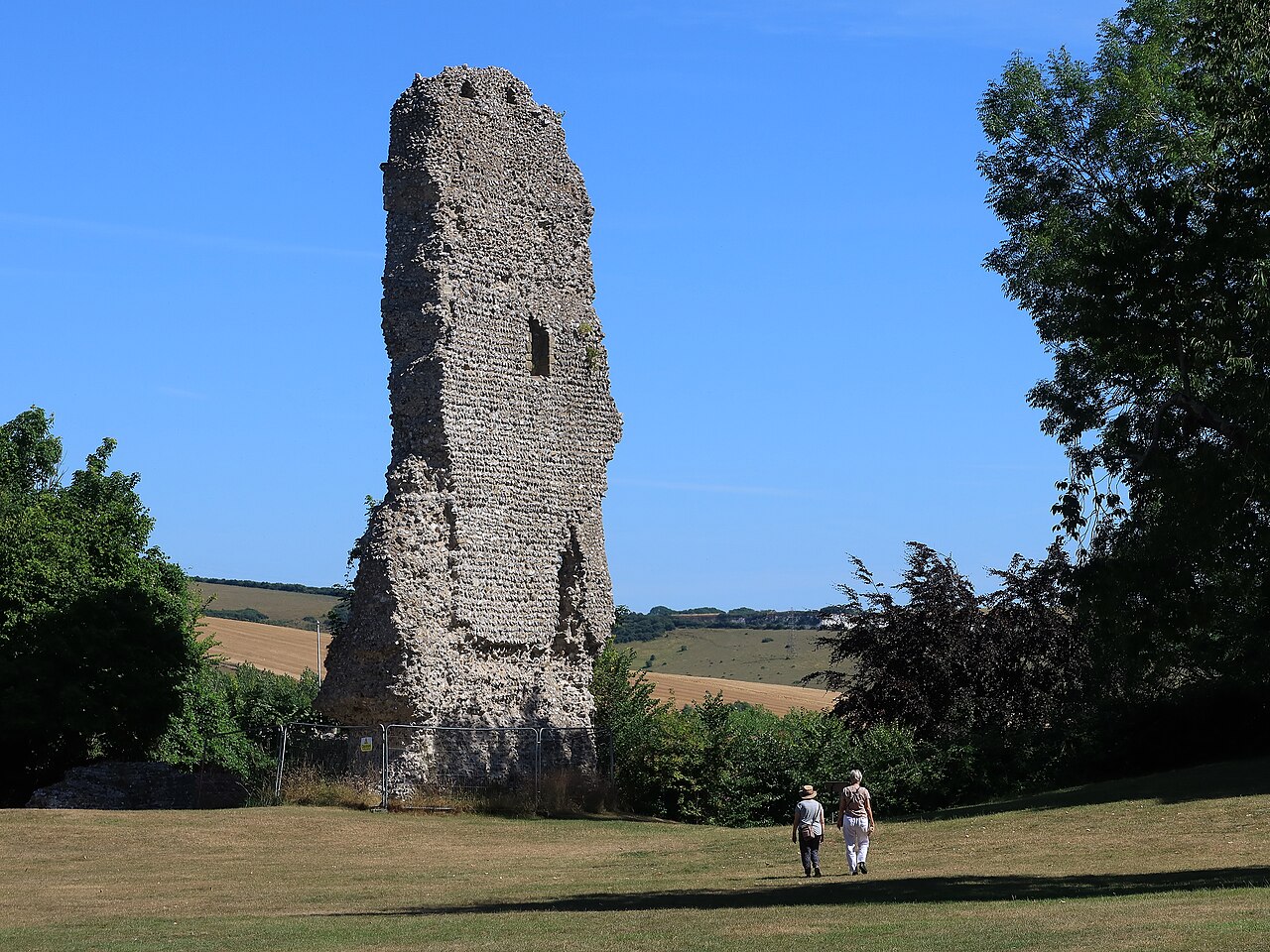
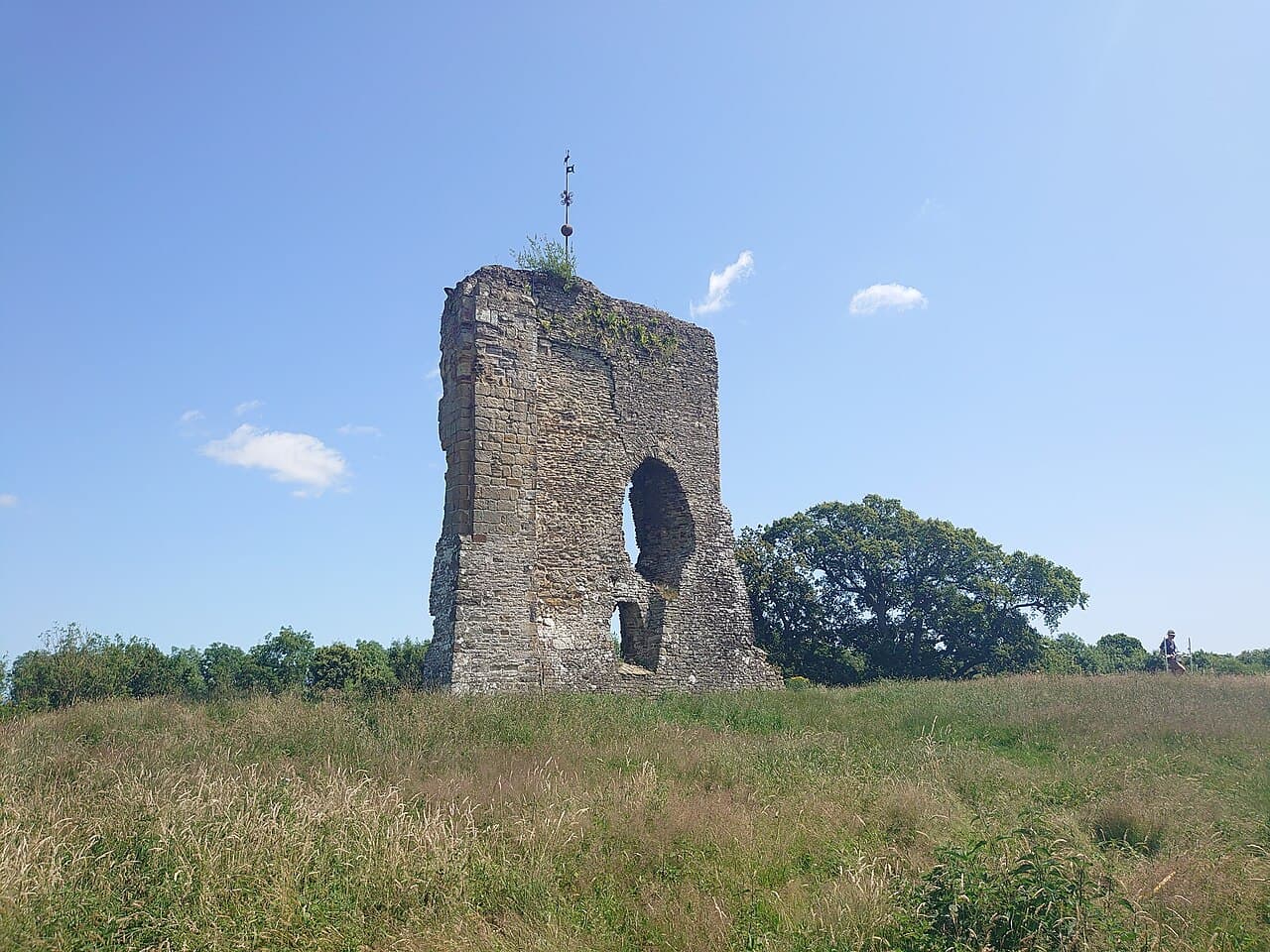
The most prominent surviving structure is a substantial stone wall approximately 11 meters high, 9.5 meters long, and 2.5 meters thick, constructed from local Horsham Stone. This wall likely formed part of a tower or keep, with a doorway at its base and an opening above, indicative of vertical defensive architecture.
Historical documents reference additional domestic buildings within the castle precincts, including a chapel, main hall, and stables, demonstrating the castle's role as a residential and administrative center. However, the precise layout and connections between these structures remain unclear due to the fragmentary nature of the ruins.
Recent archaeological investigations funded by the Society for Medieval Archaeology in 2021 and 2022 aimed to detect signs of burning from King John's destruction orders but found no conclusive evidence. These surveys did reveal possible buried remains beneath the surface, suggesting further undiscovered archaeological potential.
Modern significance and preservation
Today, Knepp Castle is a scheduled monument, with its motte and surviving wall protected as a Grade II listed structure. The site is freely accessible via a public footpath and is visible from the nearby A24 road, offering visitors a glimpse into England's Norman past amid a verdant landscape.
The surrounding land is part of the Knepp Wildland project, a pioneering ecological restoration initiative transforming former farmland into a rewilded natural habitat. This modern conservation effort links the site's rich medieval heritage with contemporary environmental stewardship.
While the castle remains a ruin, its enduring earthworks and stone fragments provide valuable insight into medieval fortification techniques, Norman aristocratic lifestyles, and the complex history of royal power in Sussex.
Frequently asked questions (FAQ)
- How do I get to Knepp Castle and is it accessible to the public?
- Knepp Castle is accessible via a public footpath near Castle Lane in West Grinstead, West Sussex. The site is open to visitors free of charge and can be viewed from the nearby A24 road.
- What is the historical significance of Knepp Castle?
- Knepp Castle was a Norman hill castle built in 1125 to defend the Rape of Bramber and later served as a royal hunting lodge visited by kings such as John, Henry III, Edward II, and Richard II.
- Can I see the original structures of Knepp Castle?
- The castle remains primarily consist of earthworks including a motte, ditch, and ramparts, along with a substantial surviving stone wall likely part of a keep. Most other buildings are no longer visible due to stone removal over centuries.
- When was Knepp Castle destroyed and why?
- Knepp Castle was destroyed in 1648 by Parliamentary troops during the English Civil War to prevent its use by Royalist forces, marking the beginning of its decline into ruins.
- Are there any ongoing archaeological efforts at Knepp Castle?
- Yes, recent archaeological investigations in 2021 and 2022 funded by the Society for Medieval Archaeology have explored the site, revealing possible buried remains but no conclusive evidence of medieval burning.
Photo gallery

Information
Address
Near Castle Lane, West Grinstead, West Sussex, United Kingdom
Loading map...
Visitor reviews
No reviews yet. Been here? Write the first review and help other travelers!
Write the first reviewVisited this castle? Share your experience
Your review helps other travelers and adds first-hand knowledge to our encyclopedia.