Amberley Castle
Amberley Castle stands as a remarkable example of a medieval fortified residence with deep ecclesiastical roots, located in the village of Amberley, West Sussex, England. Its history spans nearly a millennium, beginning as a timber lodge and evolving into a stone fortress that served as the summer palace of the Bishops of Chichester. Today, it functions as a luxury hotel, welcoming guests to experience its rich heritage and architectural grandeur.
Early origins and medieval development
The site of Amberley Castle was first established in 1103 by Bishop Ralph de Luffa who constructed a timber-framed lodge. This initial structure reflected the modest beginnings of what would become a significant ecclesiastical stronghold. In 1140, Bishop Seffrid I replaced the timber lodge with a more durable stone hall, marking the transition from a simple manor to a fortified residence. This stone construction laid the foundation for the castle's medieval architecture.
Further expansions were made in 1200 by Bishop Seffrid II, who added an east wing to the building, enhancing its residential capacity and reflecting the growing importance of the site as a bishop's retreat. Between 1305 and 1337, Bishop John Langton commissioned the construction of a larger Great Hall, elevating Amberley's status to that of the Bishop of Chichester's summer palace. This hall served both ceremonial and administrative functions, embodying the castle's dual role as a residence and a center of ecclesiastical power.
Fortification and architectural enhancements in the 14th century
During the late 14th century, amid the backdrop of the Hundred Years' War and threats of French incursions, Amberley Castle underwent significant fortifications. In 1337, Bishop William Reade secured a license to crenelate from King Richard II, allowing him to strengthen the castle's defenses. The enhancements included the construction of high curtain walls, a formidable gatehouse, and an oubliette—a dungeon designed for solitary confinement.
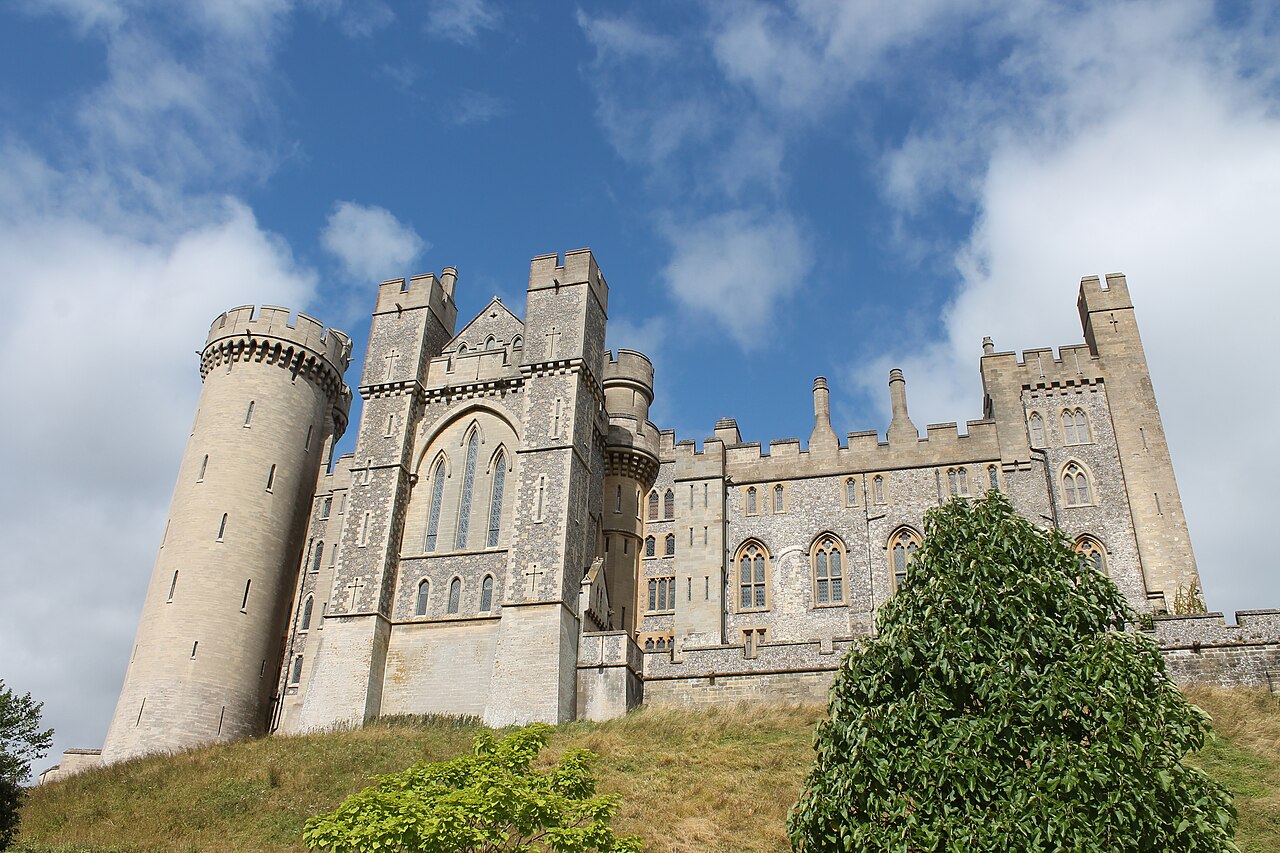
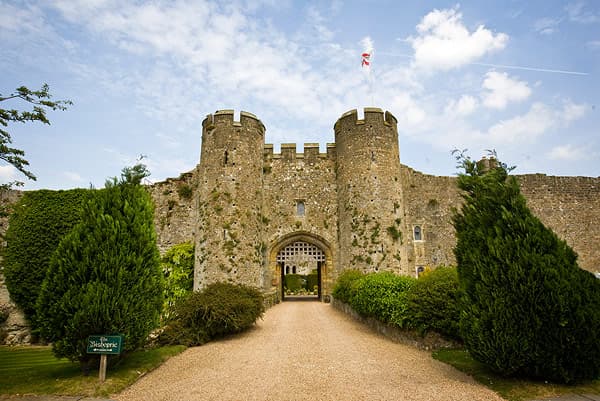
These fortifications transformed the manor house into a stronghold capable of withstanding military threats. The castle's walls, rising approximately 40 feet, were built using squared stone masonry, a technique that provided both strength and aesthetic regularity. The south wall is distinguished by two semicircular towers flanking the main gatehouse, which served as a critical defensive choke point.
The castle's natural defenses were augmented by sandstone outcrops along the north and west walls, rising between 10 and 20 feet. These natural rock formations provided a sturdy foundation for the masonry and enhanced the castle's defensive capabilities. A dry moat surrounded the enclosure, adding an additional layer of protection without the use of water or a drawbridge.
Changes in ownership and impact of the english civil war
Amberley Castle's role as a bishop's residence ended in the 16th century, with Bishop Robert Sherborne being the last to occupy it until his death in 1536. After this period, the castle was leased to various tenants, reflecting a shift away from ecclesiastical ownership. This transition marked the beginning of a new chapter in the castle's history, characterized by private tenancy rather than religious governance.
In 1644, during the English Civil War, the castle was held by a Royalist tenant, making it a target for Parliamentary forces. Led by General William Waller under Oliver Cromwell's command, Parliamentary troops attacked and captured Amberley Castle. This assault caused severe damage, including the destruction of the Great Hall and the reduction of the castle walls by approximately 20 feet in height.
Following the war, the castle was sold but was restored to the Bishop of Chichester in 1660 after the monarchy was reinstated. Restoration efforts included the construction of a new main staircase dating from the mid-1600s, reflecting the castle's gradual adaptation from a military fortress to a noble residence.
19th and 20th century restorations and modern use
In 1893, Henry Fitzalan-Howard, the 15th Duke of Norfolk, acquired Amberley Castle and undertook significant restoration work to preserve its historical features. His efforts helped maintain the castle's architectural integrity and ensured its survival into the modern era. Throughout the 20th century, the castle passed through several private owners before being converted into a luxury hotel after 1988.
Today, Amberley Castle operates as a prestigious hotel, offering guests the opportunity to immerse themselves in its historic ambiance. The castle is a Grade I listed building, a designation it has held since 1955, recognizing its exceptional architectural and historical significance.
Architectural features and interior highlights
The castle's layout is based on a roughly rhomboid quadrilateral plan, enclosed by robust stone curtain walls and corner towers. Of the original towers, only the northwest and southeast remain intact, providing visitors with a glimpse into the castle's defensive architecture. The south wall's semicircular towers and gatehouse are prominent features that exemplify medieval military design.
Inside Amberley Castle, a small building likely served as a private chapel, underscoring the site's ecclesiastical function. The "Queen's Room" contains early 16th-century frescoes attributed to Lambert or possibly Theodore Bernardi, an Amsterdam artist active during Bishop Robert Sherborne's tenure. These frescoes are rare survivals of period wall painting and highlight the castle's cultural importance.
The roofs are covered with traditional clay tiles, consistent with regional construction practices. The castle's position adjacent to the village church of St. Michael situates it within a historic landscape that combines religious, residential, and defensive elements.
Visitor experience and cultural significance
Visitors to Amberley Castle today can explore its well-preserved medieval fortifications and enjoy the blend of historical ambiance and modern luxury. The castle's transformation into a hotel allows guests to experience firsthand the architectural grandeur and layered history of a site that has played multiple roles over centuries.
The castle's location in West Sussex, with its mix of flatlands and hills, offers picturesque views that complement its historical setting. Amberley Castle remains an important cultural landmark, reflecting the evolution of English medieval architecture, the history of the Church of England, and the impact of national conflicts such as the English Civil War.
Frequently asked questions (FAQ)
- What is the historical significance of Amberley Castle?
- Amberley Castle, originally built in the 11th century, served as a defensive structure and has a rich history tied to the English monarchy. It has witnessed numerous battles and transformations, reflecting the architectural styles of various periods.
- When was Amberley Castle built?
- Amberley Castle was constructed in 1103 as a fortified manor house. Over the centuries, it has been expanded and renovated, showcasing a blend of medieval and Victorian architecture.
- What are the opening hours for Amberley Castle?
- Amberley Castle is typically open to visitors from 10 AM to 5 PM during the week and may have extended hours on weekends. It's advisable to check the official website for seasonal variations and any special events that might affect these hours.
- Can I visit Amberley Castle year-round?
- Yes, Amberley Castle is open for visitors throughout the year, although certain areas may have restricted access during winter months. Always check the castle's website or contact them directly for any seasonal closures or specific visiting guidelines.
- Is Amberley Castle accessible for people with disabilities?
- Amberley Castle strives to be accessible to all visitors. While some areas may have limitations due to the historical nature of the site, there are provisions for wheelchair access and assistance available upon request.
- What is the best time to visit Amberley Castle?
- The best time to visit Amberley Castle is during the spring and summer months when the weather is pleasant, and the gardens are in full bloom. Additionally, visiting during weekdays may provide a quieter experience compared to weekends.
- Are there any nearby attractions to Amberley Castle?
- Yes, nearby attractions include the picturesque village of Amberley, the South Downs National Park, and the River Arun, which offer opportunities for hiking and exploring the natural beauty of the area. Visitors can also enjoy local shops and cafes in the vicinity.
- How much do tickets cost to enter Amberley Castle?
- Ticket prices for Amberley Castle vary, with concessions available for children, seniors, and groups. It is recommended to purchase tickets in advance online for the best rates and to ensure availability during peak visiting times.
Photo gallery

Information
Website
Visit websiteSources & official resources
Verify the information above using these authoritative references.
Loading map...
Visitor reviews
No reviews yet. Been here? Write the first review and help other travelers!
Write the first reviewVisited this castle? Share your experience
Your review helps other travelers and adds first-hand knowledge to our encyclopedia.