Klusenstein Castle
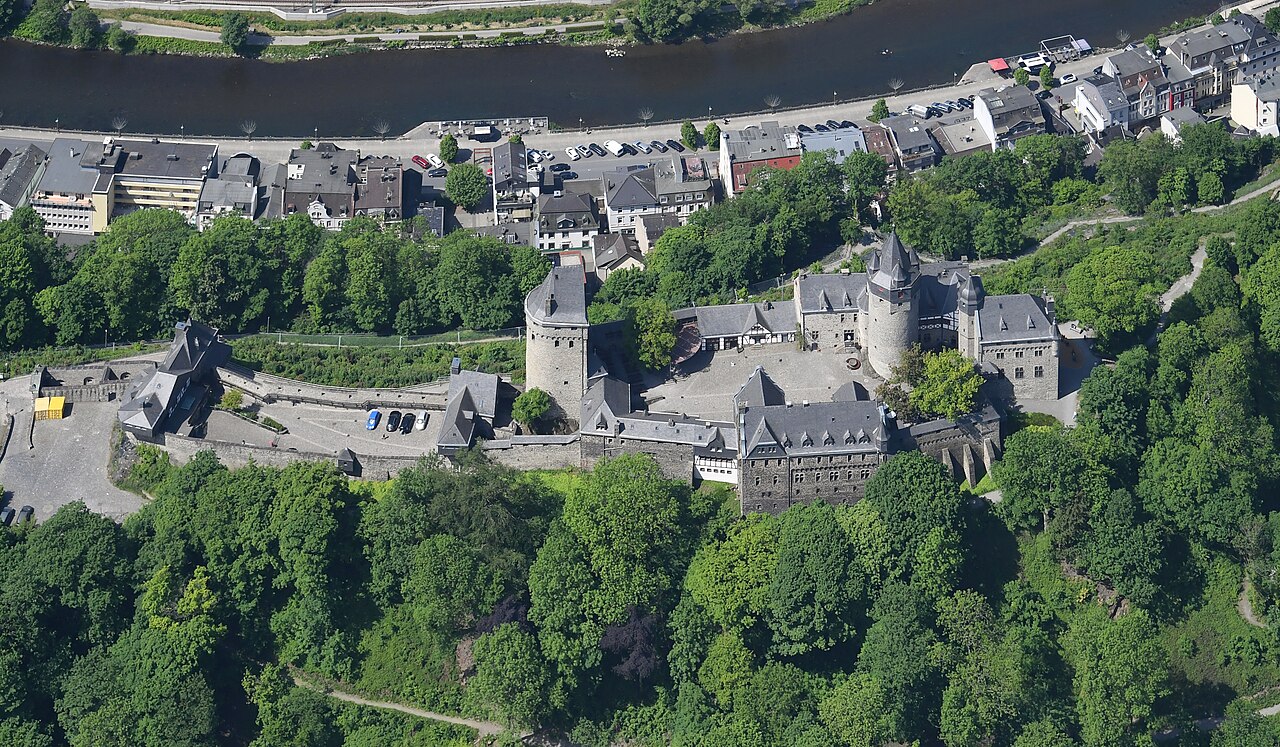
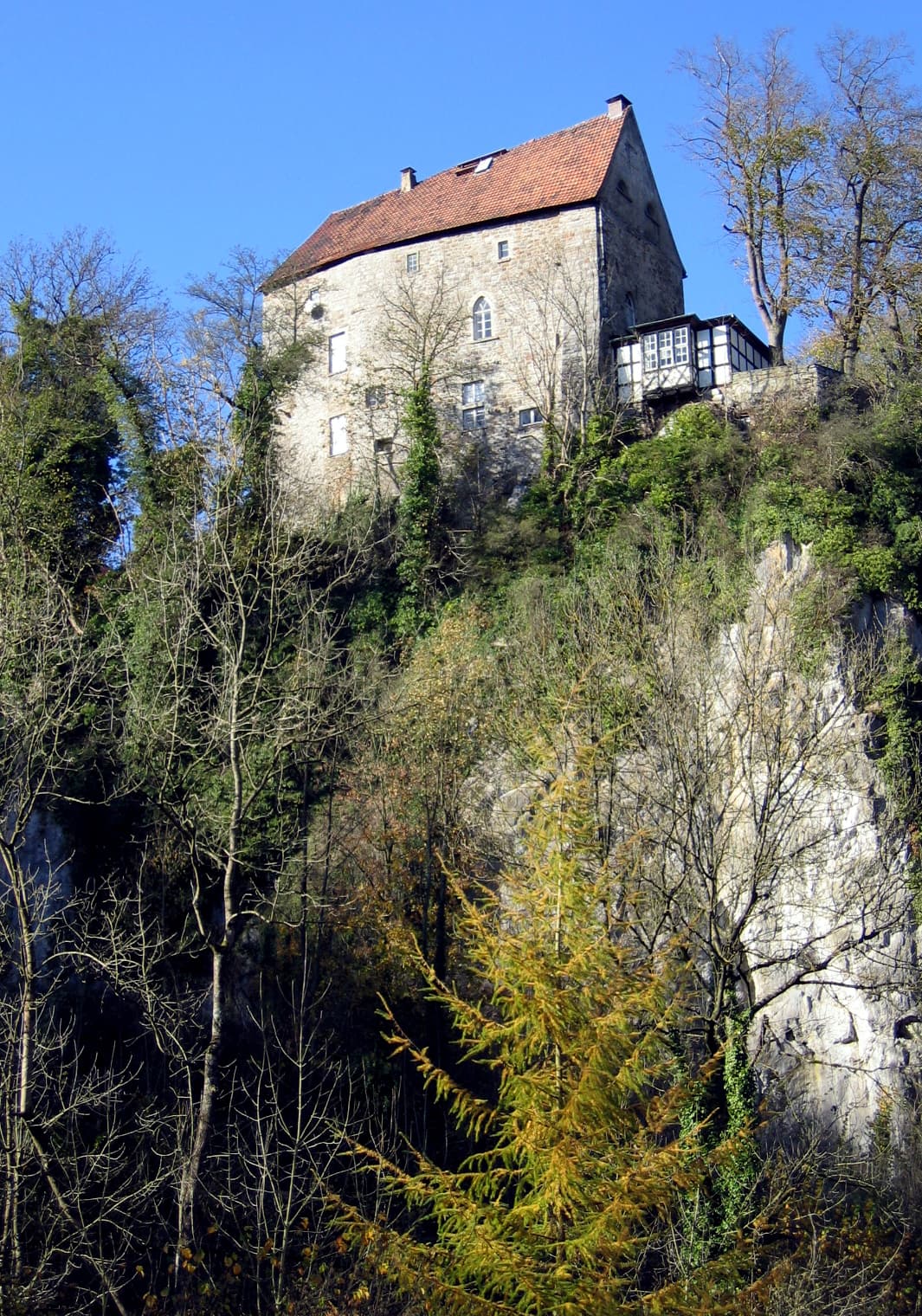
Klusenstein Castle stands prominently on a 60-meter high cliff overlooking the narrow valley of the Hönne river in Hemer, Germany. Constructed in 1353 by Gerhard of Plettenberg, a vassal of Earl Engelbrecht III of the Mark, the castle was strategically positioned to serve as a boundary fortification between the earldom of Mark, the Bishopric state of Cologne, and the earldom of Arnsberg. These three territories converged at the valley, with the castle overseeing an important old road crossing through the region.
Historical significance and military role
The castle's primary function was to protect and control the borderlands during the Late Medieval period. In 1366, during a feud between Earl Engelbrecht III and Gottfried IV of Arnsberg, Klusenstein Castle was besieged but successfully withstood the attack, emphasizing its defensive strength. The castle’s importance diminished after the sale of the earldom of Arnsberg to the Bishop of Cologne, which altered the political landscape of the region.
The castle remained in the hands of the Werminghausen family until the 17th century. During the Thirty Years' War (1618-1648), Klusenstein Castle hosted troops from both the Swedish and Hessian armies, reflecting its continued military relevance even as warfare evolved.
Ownership and structural changes through the centuries
In 1695, the castle was acquired by the Brabeck family, who held it until it was sold in 1812 to the Löbbecke family. The industrial era brought new ownership when the Hoesch company purchased the castle in 1904. Today, it is owned by the Rheinkalk company, illustrating the transition from feudal stronghold to private industrial possession.
While the castle itself has undergone various changes, a notable loss occurred in 1840 when the eastern palais was destroyed. Despite these alterations, the castle remains a significant architectural and historical monument.
Architectural features and natural setting
Klusenstein Castle is classified as a hill castle due to its elevated position on a cliff, which provided natural defense advantages. The castle overlooks the Hönne river valley at one of its narrowest points, controlling access through the valley and the adjacent old road.
At the base of the cliff lies a small cave system extending approximately 51 meters. The cave includes a corridor that ascends toward the plateau but is blocked about 30 meters below the castle by stone debris. Local legends spoke of a secret escape route from the castle through this cave. In 2003, the upper entrance to the cave was rediscovered beneath the site of the destroyed eastern palais, providing tangible evidence for these stories.
Below the castle is a mill known as the Klusenstein mill, which, despite its name, was never part of the castle's estate. Since 1912, a railway line connecting Balve and Menden runs directly beneath the castle, highlighting the blend of historical and modern infrastructure in the area.
Preservation and current status
Klusenstein Castle remains a well-preserved example of a Late Medieval hill castle. Although parts of it, such as the eastern palais, have been lost, the main structures still convey its original defensive purpose and architectural style. The castle's ownership by industrial companies has helped maintain its condition, though it is not primarily a public tourist site.
Architectural style and construction details
The castle’s construction reflects typical Late Medieval military architecture with robust stone walls, defensive towers, and strategic positioning. The cliff location enhanced its natural defenses, supplemented by man-made fortifications designed to withstand sieges such as the one in 1366. The castle’s layout included residential areas, defensive battlements, and service buildings, though detailed architectural plans are scarce.
Defensive features
The castle’s elevated position on a cliff provided a formidable natural barrier. It likely featured thick curtain walls, battlements for archers, and a gatehouse controlling access. The presence of a secret cave escape route suggests advanced defensive planning to ensure the safety of its occupants during prolonged sieges.
Residential and service structures
Besides its military function, Klusenstein Castle served as a noble residence. The destroyed eastern palais was part of the living quarters, indicating the castle’s dual role as a fortress and home. Service buildings such as kitchens, stables, and storage facilities would have supported the daily needs of its inhabitants.
Geographical and strategic importance
Located in the North Rhine-Westphalia region, Klusenstein Castle’s position was crucial for controlling the Hönne river valley, a natural corridor through the landscape. The castle’s proximity to the borders of three medieval territories made it a key point for monitoring and defense.
The nearby old road crossing the valley was an important trade and military route, further emphasizing the castle’s strategic role in regional power dynamics during the Late Middle Ages.
Visiting Klusenstein Castle
While not a major tourist destination, Klusenstein Castle attracts visitors interested in medieval history and architecture. Its dramatic cliffside setting and the nearby cave system offer unique exploration opportunities. Visitors can appreciate the castle’s historical context and its role in the complex territorial conflicts of medieval Germany.
The surrounding landscape of the Hönne valley provides scenic views and hiking possibilities, making the area appealing for outdoor enthusiasts as well.
Frequently asked questions (FAQ)
- What is the historical significance of Klusenstein Castle?
- Klusenstein Castle, located in Hemer, Germany, dates back to the 13th century and is a remarkable example of medieval architecture. It played a significant role in the region's defense and has witnessed numerous historical events, reflecting the tumultuous history of the area.
- When was Klusenstein Castle built?
- The castle was constructed in the early 1200s, making it one of the oldest structures in Hemer. Over the centuries, it has undergone various renovations, preserving its historical essence while adapting to modern needs.
- Can I visit Klusenstein Castle?
- Yes, Klusenstein Castle is open to the public for visits. Guests can explore its rich history, stunning architecture, and enjoy guided tours that provide insight into the castle's past.
- What are the opening hours for Klusenstein Castle?
- Klusenstein Castle typically opens from 10 AM to 6 PM during the summer months and has reduced hours in the winter. It is advisable to check the official website for any seasonal changes or special events that might affect opening hours.
- Is it possible to access Klusenstein Castle with mobility aids?
- While Klusenstein Castle has made efforts to be accessible, some areas may present challenges due to the castle's historical structure. Visitors are encouraged to contact the castle administration in advance to inquire about specific accessibility options.
- When is the best time to visit Klusenstein Castle?
- The best time to visit Klusenstein Castle is during the spring and summer months when the weather is pleasant, and the surrounding gardens are in full bloom. Additionally, special events and festivals often take place during this period, enhancing the visitor experience.
- What are the ticket prices for Klusenstein Castle?
- Ticket prices for Klusenstein Castle are generally modest, making it an affordable destination for families and individuals. Discounts may be available for students, seniors, and groups, so it's advisable to check the official website for the latest pricing information.
- Are there any nearby attractions to visit when at Klusenstein Castle?
- Yes, there are several nearby attractions, including the scenic Hemer Park and the local museum that showcases the region's history. Additionally, visitors can enjoy hiking trails and other cultural sites in the surrounding area, making it a perfect day trip.
Photo gallery

Information
Loading map...
Visitor reviews
No reviews yet. Been here? Write the first review and help other travelers!
Write the first reviewVisited this castle? Share your experience
Your review helps other travelers and adds first-hand knowledge to our encyclopedia.