Altena Castle
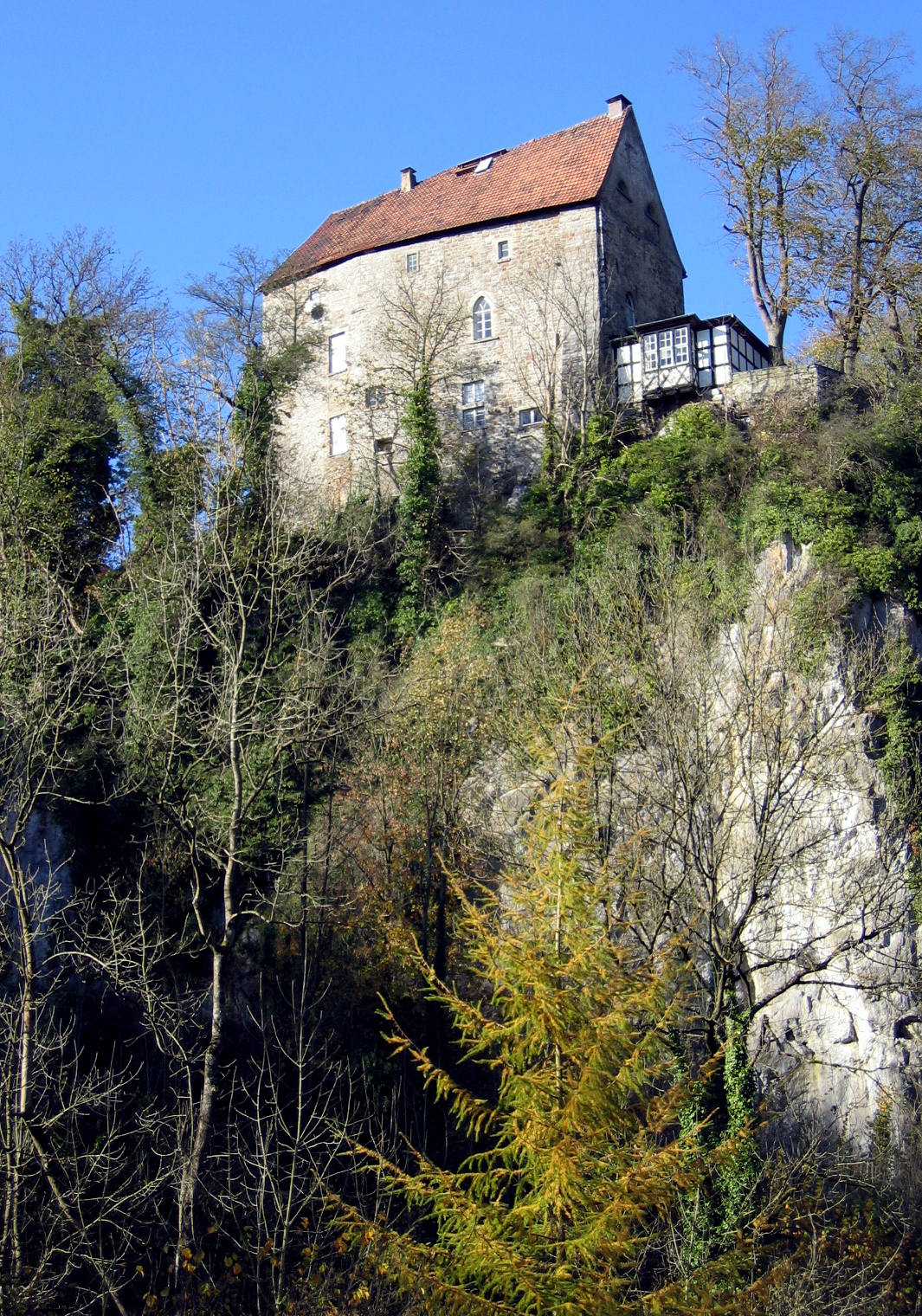
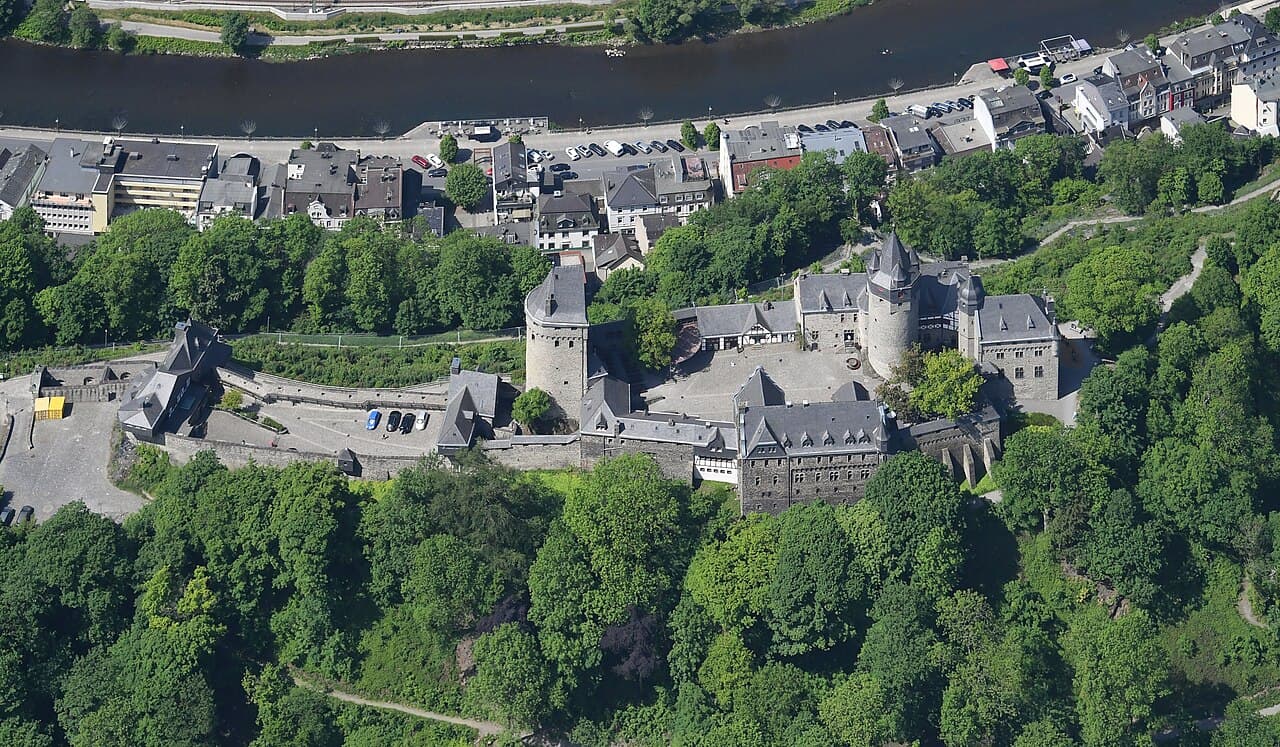
Altena Castle stands as a remarkable example of a high medieval hill castle in the Sauerland region of North Rhine-Westphalia, Germany. Founded in the early 12th century by the brothers Adolf and Everhard von Berg, the castle was originally named Wulfeshagen and strategically built on the rocky promontory of Klusenberg hill overlooking the Lenne River. This location provided natural defenses and control over important trade routes, particularly those linked to the region's burgeoning iron industry.
The castle's initial construction around 1108 marked the establishment of the County of Altena, which later evolved into the County of Mark after the ruling family expanded their territory near Hamm in the late 12th century. The counts shifted their primary residence to Mark Castle but continued to use Altena Castle as an administrative center and residence for their stewards from the late 14th century onward.
Medieval origins and strategic importance
Altena Castle's foundation by the von Berg brothers was part of a broader pattern of territorial consolidation in the Holy Roman Empire during the high medieval period. The castle's elevated position on a spur of the Klusenberg hill allowed it to dominate the surrounding landscape and protect vital trade routes through the Sauerland, a region known for its iron mining and metalworking industries. The castle's fortifications included stone curtain walls, towers, and a gatehouse, typical of early 12th-century military architecture.
By 1161, Altena Castle had become the seat of the County of Altena under Count Eberhard I von Berg-Altena. The counts expanded their influence by acquiring the County of Mark near Hamm by 1198. This acquisition prompted a shift in the family's main residence but did not diminish Altena's administrative and strategic roles.
Architectural evolution and functions
Over the centuries, Altena Castle underwent various modifications reflecting changes in military technology and residential needs. After a significant fire in 1455, the castle was only partially rebuilt, which contributed to its gradual decline as a noble residence. From the early 17th century, it served as a garrison for Brandenburg troops and later housed a criminal court and prison, illustrating its adaptation to administrative and judicial functions.
The castle complex includes a keep (donjon), inner courtyard, and remnants of the outer bailey. While some sections were lost or fell into ruin, restoration efforts in the early 20th century aimed to preserve and reinterpret the castle's medieval character. The restoration introduced elements of romantic neo-Gothic Tudor style, which, while not strictly historically accurate, enhanced the castle's picturesque appeal.
The world's first youth hostel and cultural significance
One of Altena Castle's most notable contributions to modern culture is its role as the site of the world's first permanent youth hostel. In 1912, educator Richard Schirrmann established this pioneering institution within the castle walls, providing affordable accommodation for young travelers and promoting cultural exchange and outdoor education. The youth hostel continues to operate today, maintaining its historic rooms and welcoming visitors from around the world.
In addition to the youth hostel, Altena Castle houses several museums that celebrate the region's history and heritage. These include the Museum of the County of Mark, which traces local history from early times through the medieval period to modernity, the Märkisches Smithy Museum showcasing traditional metalworking, and the German Hiking Museum, reflecting the area's natural landscape and hiking culture.
Modern restoration and visitor experience
Restoration efforts in the 20th and 21st centuries have focused on preserving Altena Castle's structural integrity and enhancing visitor access. A notable addition is the visitor elevator installed in 2014, which connects the town's pedestrian zone with the castle courtyard, featuring an interpretive experience path that narrates the castle's 900-year history.
Between 2016 and 2018, the castle gates underwent meticulous restoration, recognized by heritage authorities for their historical and architectural significance. Today, visitors can explore the castle's medieval halls, fortified walls, and courtyards, enjoy exhibitions, and dine in the castle's restaurant, which offers a scenic setting within the historic walls.
Educational programs and family activities
Altena Castle places a strong emphasis on museum pedagogy, particularly for children. Interactive programs allow young visitors to engage with medieval history through activities such as treasure hunts, knightly training exercises, and demonstrations of armor and weaponry. These educational offerings make the castle a popular destination for school groups and families seeking an immersive historical experience.
Overall, Altena Castle remains a vital cultural landmark that bridges its high medieval origins with contemporary educational and tourism functions. Its unique combination of historical architecture, pioneering youth hostel legacy, and diverse museums makes it a significant destination for those interested in German history, medieval castles, and cultural heritage.
Frequently asked questions (FAQ)
- When was Altena Castle originally built?
- Altena Castle was originally constructed around 1108 by the brothers Adolf and Everhard von Berg.
- What is the significance of Altena Castle in youth hostel history?
- Altena Castle is renowned as the site of the world's first permanent youth hostel, established by Richard Schirrmann in 1912, which remains operational today.
- What museums can be visited at Altena Castle?
- Visitors can explore the Museum of the County of Mark, the Märkisches Smithy Museum, and the German Hiking Museum, all located within Altena Castle.
- Is Altena Castle accessible to visitors with mobility issues?
- Yes, Altena Castle installed a visitor elevator in 2014 that connects the town's pedestrian zone with the castle courtyard, improving accessibility for visitors with mobility challenges.
- What architectural style characterizes Altena Castle today?
- The castle features a romantic neo-Gothic Tudor style from early 20th-century restorations, blending medieval elements with stylistic reinterpretations.
Photo gallery

Information
Sources & official resources
Verify the information above using these authoritative references.
Loading map...
Visitor reviews
No reviews yet. Been here? Write the first review and help other travelers!
Write the first reviewVisited this castle? Share your experience
Your review helps other travelers and adds first-hand knowledge to our encyclopedia.