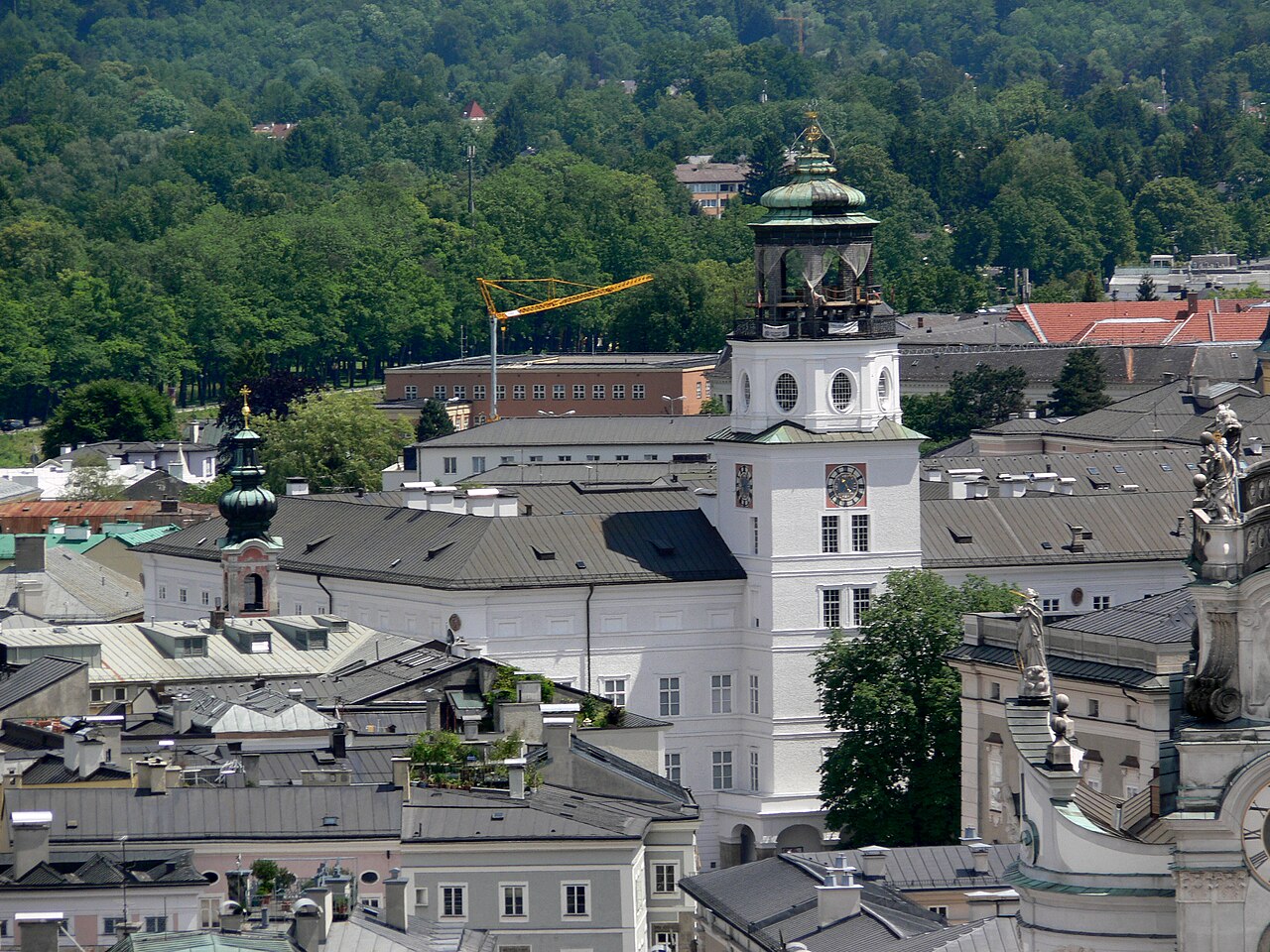
Klessheim Castle
Klessheim Castle stands as a magnificent example of Baroque architecture located just four kilometers west of Salzburg's city center in the Austrian state of Salzburg. Originally conceived as a peaceful retreat and pleasure palace for the prince-archbishops of Salzburg, the castle today serves as the home of the Salzburg casino, blending historical grandeur with modern entertainment. Its rich history, architectural significance, and beautifully designed gardens make it a notable cultural landmark in the region.
Origins and early construction
The site of Klessheim Castle was once occupied by a smaller stately home known as "Kleshof." In 1690, Archbishop Johann Ernst Graf Thun acquired the property and initiated plans to build a grand pleasure palace called "Favorita." The renowned Austrian architect Johann Bernhard Fischer von Erlach, a leading figure in Baroque architecture, was commissioned to design the palace. Construction began in 1700, showcasing Fischer von Erlach's mastery of the north Italian Mannerist style blended with Baroque elements.
Work proceeded until 1709, when Archbishop Thun's death abruptly halted construction. His successor, Archbishop Franz Anton von Harrach, shifted focus to the development of Schloss Mirabell, leaving Klessheim incomplete for several years. It was not until the reign of Prince-Archbishop Count Leopold Anton von Firmian that the palace was completed in 1732, albeit with a scaled-back design compared to the original ambitious plans.
Architectural features and design
Exterior and gardens
The exterior of Klessheim Castle is renowned for its elegant Baroque gardens and the striking Fontana del Tritone fountain, which serves as a focal point at the entrance. The main driveway is flanked by pedestals adorned with sculptures of reclining deer, their antlers decorated with golden stars symbolizing the coat of arms of Prince-Archbishop Firmian. The castle's facade presents a harmonious balance of grandeur and refinement, featuring a ceremonial hall with an extended terrace and a gently sloping ramp that leads visitors into the meticulously planned gardens.
The gardens themselves are divided into distinct sections: the Meierhofgarten, the Ornamental Garden, and the Garden of Pheasants. These areas are separated by walls that have survived to the present day, enclosing the grounds and adding to the sense of seclusion and exclusivity typical of Baroque pleasure palaces. The gardens also include a high enclosing wall with eleven small guardhouses, underscoring the blend of leisure and security.
Interior details
Inside, the castle boasts a grand entrance hall and a magnificent staircase that exemplify the Baroque style's emphasis on dramatic spatial effects. The large banquet hall is crowned with a high dome and decorated with exquisite stuccowork crafted by the artists Paolo d'Allio and Diego Francesco Carlone, following Fischer von Erlach's designs. These interiors reflect the luxury and artistic sophistication of the early 18th century Salzburg elite.
Later developments and ownership
In the late 18th century, under Archbishop Count Hieronymus von Colloredo, the castle's grounds were enhanced with an English landscape park, reflecting changing tastes in garden design away from formal Baroque layouts towards more naturalistic styles.
Following the secularization of Salzburg in 1803, Klessheim Castle became property of the Austrian House of Habsburg-Lorraine. In 1866, it became the permanent residence of Archduke Ludwig Viktor of Austria, brother of Emperor Franz Joseph I. The Archduke commissioned architect Heinrich von Ferstel to build the Kavalierhaus, a winter palace connected to the main building by a tree-lined avenue, further expanding the complex.
Archduke Ludwig Viktor resided at Klessheim until his death in 1919. Subsequently, his heirs sold the palace to the State of Salzburg, marking a transition from private aristocratic residence to public ownership.
Role during the 20th century and World War II
During the period of the Third Reich, Schloss Klessheim gained prominence as a site for Nazi parades and military displays. Adolf Hitler used the palace for conferences and to host high-profile guests such as Benito Mussolini, Miklós Horthy, Ion Antonescu, and Jozef Tiso. Notably, on 19 March 1944, Hitler issued secret orders for Operation Margarethe at Klessheim, initiating the occupation of Hungary and the deportation of Hungarian Jews to Auschwitz.
In July 1944, the castle was the setting for a planned assassination attempt on Hitler by General Helmuth Stieff during a uniform display, but the attempt was ultimately aborted. The palace remained largely undamaged by Allied bombings until October 1944. After the war, American military authorities seized the building, and the Nazi-era Reichsadler statues that adorned the entrance were removed as reminders of the regime's oppressive history.
Post-war use and modern function
Following World War II, Schloss Klessheim was restored to the State of Salzburg. During the Cold War, the castle served as a venue for diplomatic conferences and hosted international dignitaries, including US President Richard Nixon, who met Austrian Chancellor Bruno Kreisky there in 1972 en route to Moscow.
Since 1993, Klessheim Castle has housed the Salzburg casino, an innovative adaptation that blends the castle's Baroque art and architecture with the modern world of gaming. Visitors are drawn not only by the casino's offerings but also by the unique atmosphere created by the historic surroundings, making Schloss Klessheim a distinctive cultural and entertainment destination.
Architectural significance and cultural heritage
Klessheim Castle is a prime example of early 18th-century Austrian Baroque architecture, showcasing the work of one of the period's most important architects, Johann Bernhard Fischer von Erlach. Its design reflects the artistic trends of the time, with influences from Italian Mannerism and the grandeur typical of ecclesiastical patrons like the prince-archbishops of Salzburg.
The castle's gardens and landscape design demonstrate the evolution of European garden styles, transitioning from formal Baroque layouts to English landscape parks. The addition of the Kavalierhaus by Heinrich von Ferstel in the 19th century adds a layer of historic architectural development, reflecting the tastes of the Austro-Hungarian aristocracy.
Today, Schloss Klessheim stands as a well-preserved monument to Salzburg's rich history, blending artistic heritage with contemporary use. Its role in significant historical events, from ecclesiastical residence to Nazi headquarters and Cold War diplomatic site, adds to its cultural importance.
Visiting Schloss Klessheim
Visitors to Klessheim Castle can explore the magnificent gardens, admire the Baroque architecture, and experience the unique setting of the Salzburg casino. The castle's location near Salzburg makes it accessible for day trips, offering a blend of history, art, and entertainment.
The castle's interiors, including the banquet hall and stucco decorations, provide insight into Baroque design and the lifestyle of Salzburg's prince-archbishops. The surrounding gardens offer a peaceful retreat with historical significance, making Schloss Klessheim a multifaceted destination for tourists interested in architecture, history, and culture.
Frequently asked questions (FAQ)
- What is Klessheim Castle known for?
- Klessheim Castle is renowned for its stunning Baroque architecture and exquisite gardens. Originally built as a summer residence for Prince-Archbishop Colloredo in the 18th century, it now serves as a historical landmark and a popular destination for visitors exploring the rich heritage of Salzburg.
- When was Klessheim Castle constructed?
- Klessheim Castle was constructed between 1700 and 1705, showcasing the grandeur of Baroque design. Its historical significance is tied to its use by various nobility and its connection to the cultural development of the region.
- Can I visit Klessheim Castle?
- Yes, Klessheim Castle is open to the public for visits. Guests can explore its beautiful grounds and gardens, and there are guided tours available to learn more about its history and architecture.
- What are the opening hours for Klessheim Castle?
- Klessheim Castle typically opens from 9 AM to 5 PM during the tourist season. However, it is advisable to check the official website or local tourism information for any changes in hours or special events.
- Is there an admission fee for visiting Klessheim Castle?
- Admission to the grounds of Klessheim Castle is usually free, but there may be a fee for guided tours and special exhibitions. Always check ahead for the latest information on ticket prices and any special events that may have additional costs.
- When is the best time to visit Klessheim Castle?
- The best time to visit Klessheim Castle is during spring and early fall when the gardens are in full bloom and the weather is pleasant. Summer is also a popular time, but it can be crowded with tourists.
- What nearby attractions can I explore when visiting Klessheim Castle?
- Visitors to Klessheim Castle can also explore the nearby Mirabell Palace and Gardens, which is a UNESCO World Heritage site. Other attractions include the historic center of Salzburg, offering a variety of museums, shops, and restaurants.
- Is Klessheim Castle accessible for visitors with mobility challenges?
- Klessheim Castle is designed to be accessible for visitors with mobility challenges, including ramps and pathways in the gardens. However, it is advised to contact the castle administration in advance for specific accessibility options and facilities available during your visit.
Information
Website
Visit websiteSources & official resources
Verify the information above using these authoritative references.
Loading map...
Visitor reviews
No reviews yet. Been here? Write the first review and help other travelers!
Write the first reviewVisited this castle? Share your experience
Your review helps other travelers and adds first-hand knowledge to our encyclopedia.