Edmundsburg
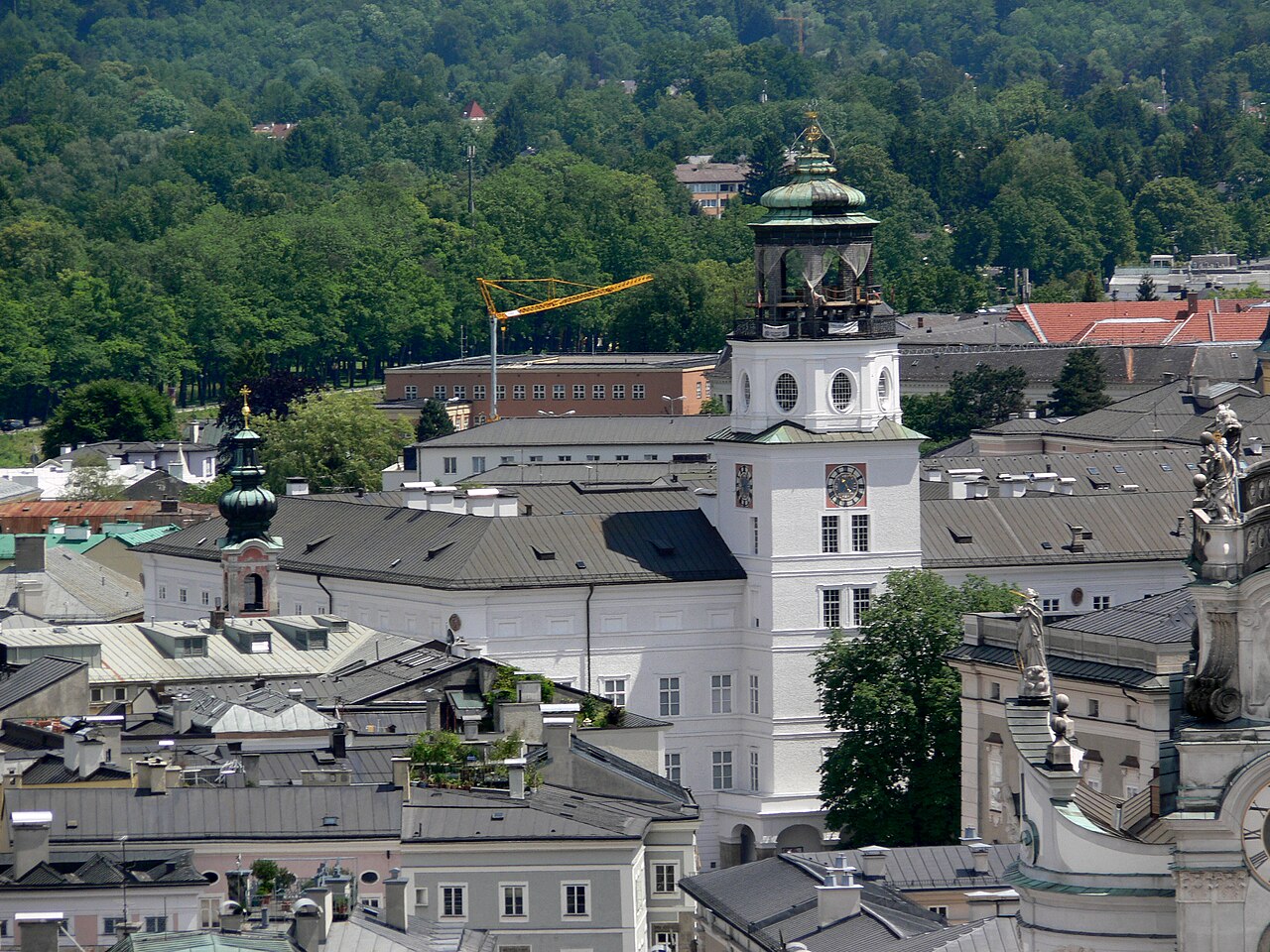
Edmundsburg castle is a notable example of Renaissance architecture located in the historic city of Salzburg, Austria. Constructed in 1696 under the direction of Abbot Edmund Sinnhuber of St. Peter's Abbey, this castle stands out for its distinctive cubic form and central dome, which is visible from many vantage points in the old town, including the prominent Salzburger Dom.
Architectural design and structure
The castle spans over three floors and is characterized by its cubic shape, a style that reflects the Renaissance emphasis on symmetry and proportion. The small, centrally placed dome crowns the structure, adding a unique vertical accent to the otherwise geometric mass. Its design is both functional and symbolic, serving as a visual landmark within Salzburg's urban fabric.
Exterior features
The exterior walls are robust and plain, typical of the Renaissance period's restrained elegance. The castle's location within the old town allows it to be easily spotted from various points, making it a key piece of Salzburg's architectural heritage. The castle's silhouette against the skyline is especially notable when viewed from the grounds of the Salzburger Dom.
Interior layout
While detailed descriptions of the interior are limited, the three-floor layout suggests a clear hierarchical arrangement of spaces, likely including reception rooms, private chambers, and service areas. The castle's use over time as a school and later as offices and a private library indicates adaptable interior spaces suited to various functions.
Historical context and ownership
Edmundsburg castle was commissioned by Abbot Edmund Sinnhuber, a significant figure in the religious community of Salzburg during the late 17th century. The castle remained under the ownership of St. Peter's Abbey until 1834, reflecting its ecclesiastical origins.
Transition to educational use
After leaving the abbey's possession, the castle became the site of a well-known boys' school. This educational function continued for many years, highlighting the building's role in the community beyond its original religious purpose.
Modern usage and renovation
Until 2008, Edmundsburg housed offices and a private library managed by a foundation. In that year, the castle was leased on a long-term basis to the University of Salzburg. This transition prompted an extensive renovation to adapt the historic structure for academic use while preserving its architectural integrity.
Significance in Salzburg's heritage
Edmundsburg castle holds an important place in Salzburg's architectural and cultural landscape. Its Renaissance style and historical associations with St. Peter's Abbey contribute to the city's rich tapestry of religious and secular buildings. The castle's visibility from key landmarks and its adaptive reuse over centuries underscore its lasting relevance.
Preservation status
The castle is currently well preserved following the renovations undertaken after 2008. Its maintenance and use by the university ensure that Edmundsburg remains an active part of Salzburg's urban environment and cultural memory.
Visiting Edmundsburg castle
While Edmundsburg is primarily used by the University of Salzburg, its exterior can be appreciated by visitors exploring the old town. Its proximity to the Salzburger Dom and other historic sites makes it a worthwhile point of interest for those interested in Renaissance architecture and Salzburg's history.
Access and tours
Public access to the interior may be limited due to its current institutional use. Visitors are encouraged to view the castle from surrounding public spaces and to explore nearby landmarks to gain a fuller understanding of Salzburg's architectural heritage.
Frequently asked questions (FAQ)
- What is the historical significance of Edmundsburg?
- Edmundsburg is a notable castle in Salzburg, Austria, dating back to the 12th century. It served as a strategic stronghold and residence for various noble families throughout the centuries, reflecting the turbulent history of the region.
- When was Edmundsburg built?
- Construction of Edmundsburg began in the early 12th century, with significant modifications and expansions occurring over the following centuries. The castle showcases architectural styles from various periods, making it a fascinating site for history enthusiasts.
- What are the opening hours for visiting Edmundsburg?
- Edmundsburg is typically open to visitors from 9 AM to 5 PM daily, although hours may vary seasonally. It is advisable to check their official website for the most current information before planning your visit.
- Can I access the castle grounds with a wheelchair?
- Yes, Edmundsburg is committed to making the castle accessible to all visitors. There are paths and facilities designed for wheelchair users, although some areas may have limited access due to historical preservation.
- What are the ticket prices for visiting Edmundsburg?
- Tickets to Edmundsburg are reasonably priced, with adult tickets typically costing around €10, while discounts are available for students and seniors. Children under a certain age can often enter for free, making it a great family destination.
- When is the best time to visit Edmundsburg?
- The best time to visit Edmundsburg is during the spring and early autumn months when the weather is mild, and the surrounding landscapes are particularly beautiful. Additionally, visiting during these times may help you avoid the larger tourist crowds typical of summer.
- Are there any nearby attractions to visit in Salzburg?
- Yes, there are several nearby attractions to explore, including the historic Old Town of Salzburg and the famous Hohensalzburg Fortress. These sites, along with beautiful gardens and museums, make for a well-rounded day of sightseeing.
- How do I get to Edmundsburg from Salzburg city center?
- Edmundsburg is easily accessible from Salzburg city center by public transportation or a short taxi ride. There are also well-marked walking paths for those who prefer to enjoy a scenic stroll through the city.
Information
Loading map...
Visitor reviews
No reviews yet. Been here? Write the first review and help other travelers!
Write the first reviewVisited this castle? Share your experience
Your review helps other travelers and adds first-hand knowledge to our encyclopedia.