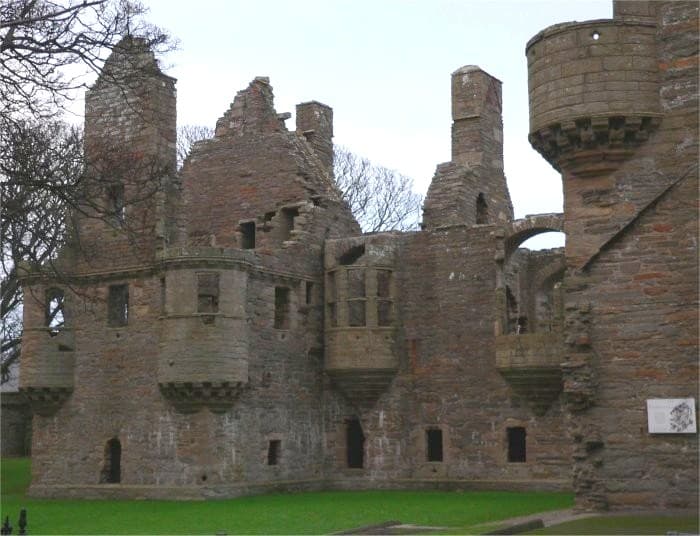
Kirkwall Earl's Palace
Kirkwall Earl's Palace stands as a significant example of Renaissance architecture in the Orkney Islands, Scotland. Located near the historic St Magnus's Cathedral in the heart of Kirkwall, this palace was constructed in the early 17th century, beginning in 1607, under the direction of Patrick, Earl of Orkney. The palace's design and imposing structure reflect the ambitions and authority of the Earl during a period marked by political tension and social upheaval.
Historical context and construction
The palace was commissioned by Patrick Stewart, 2nd Earl of Orkney, a powerful and controversial figure in Scottish history. His tenure as Earl was characterized by efforts to consolidate power and assert control over Orkney and Shetland. The construction of the palace was not only a statement of wealth and status but also a strategic move to fortify his presence in Kirkwall.
The building process was notably harsh; much of the labor was carried out through forced labor imposed on the local population, which contributed to the Earl's notoriety. The palace was built on the site of an earlier castle or fortified residence, utilizing local stone and materials. Its design incorporated elements typical of Renaissance palatial architecture, including symmetrical layouts and classical details, adapted for a northern Scottish setting.
Architectural features and layout
The palace is a three-story stone structure arranged around a central courtyard. It features tall corner towers that provided defensive advantages and symbolized the Earl's power. The walls are thick, with narrow windows and gun loops designed for defense against attackers. The main entrance was fortified, with a gatehouse that controlled access to the courtyard.
Inside, the palace contained a great hall, private chambers, and service rooms. The great hall was the social and administrative center, where the Earl would have held court and entertained guests. The layout reflects both residential comfort and military functionality, blending Renaissance elegance with practical fortification.
Decline and current state
After Patrick Stewart's downfall and imprisonment for treason in 1615, the palace fell into disuse and gradually deteriorated. Over the centuries, it suffered from neglect, weathering, and partial dismantling. Today, the site remains a ruined archaeological site that offers valuable insight into early 17th-century Scottish noble residences.
Visitors to the ruins can explore the remnants of the courtyard, the surviving walls, and the bases of the towers. Interpretive signage and guided tours provide historical context, helping visitors understand the palace's role in Orkney's history and its architectural significance.
Cultural significance and tourism
The Earl's Palace is a prominent heritage site managed by Historic Environment Scotland. It is an important cultural landmark in Kirkwall, attracting tourists interested in Scottish history, Renaissance architecture, and the dramatic stories of the Orkney Earls. The proximity to St Magnus's Cathedral creates a historical precinct that enriches the visitor experience.
Open to the public, the ruins are accessible year-round, offering a tangible connection to Orkney's past. The site is often included in heritage trails and educational programs, emphasizing its value as a monument to the complex history of power, architecture, and society in early modern Scotland.
Frequently asked questions (FAQ)
- What is the historical significance of Kirkwall Earl's Palace?
- Kirkwall Earl's Palace is a significant example of Renaissance architecture in Scotland, built in the early 17th century for the Earl of Orkney, Robert Stewart. This grand structure reflects the power and wealth of the earldom during the period and serves as a symbol of the political history of the Orkney Islands.
- When was Kirkwall Earl's Palace built?
- Construction of the Kirkwall Earl's Palace began in 1600 and was completed in 1607. It was designed to impress visitors and demonstrate the authority of the Earl, showcasing the wealth of the region during that time.
- What are the opening hours of Kirkwall Earl's Palace?
- Kirkwall Earl's Palace typically opens from 9:30 AM to 5:30 PM during the summer months, with reduced hours in the winter. It is advisable to check the official website for specific dates and any seasonal variations in opening hours.
- Can I visit Kirkwall Earl's Palace with a mobility aid?
- Yes, Kirkwall Earl's Palace is accessible to visitors with mobility aids, though some areas may present challenges due to the historic nature of the site. It is recommended to contact the visitor center in advance for detailed accessibility information and assistance.
- What is the best time to visit Kirkwall Earl's Palace?
- The best time to visit Kirkwall Earl's Palace is during the summer months, from June to August, when the weather is generally milder and the gardens are in full bloom. Additionally, longer daylight hours allow visitors to fully explore the site and its surroundings.
- Are there any nearby attractions to Kirkwall Earl's Palace?
- Yes, visitors can explore several nearby attractions, including St. Magnus Cathedral and the Orkney Museum, which are both within walking distance. These sites offer a deeper insight into the rich history and culture of the Orkney Islands.
- How much does it cost to enter Kirkwall Earl's Palace?
- Ticket prices for Kirkwall Earl's Palace are generally affordable, with discounts available for children, students, and seniors. For the most accurate and up-to-date pricing information, it’s best to visit the official website or contact the site directly.
Photo gallery

Information
Loading map...
Visitor reviews
No reviews yet. Been here? Write the first review and help other travelers!
Write the first reviewVisited this castle? Share your experience
Your review helps other travelers and adds first-hand knowledge to our encyclopedia.



