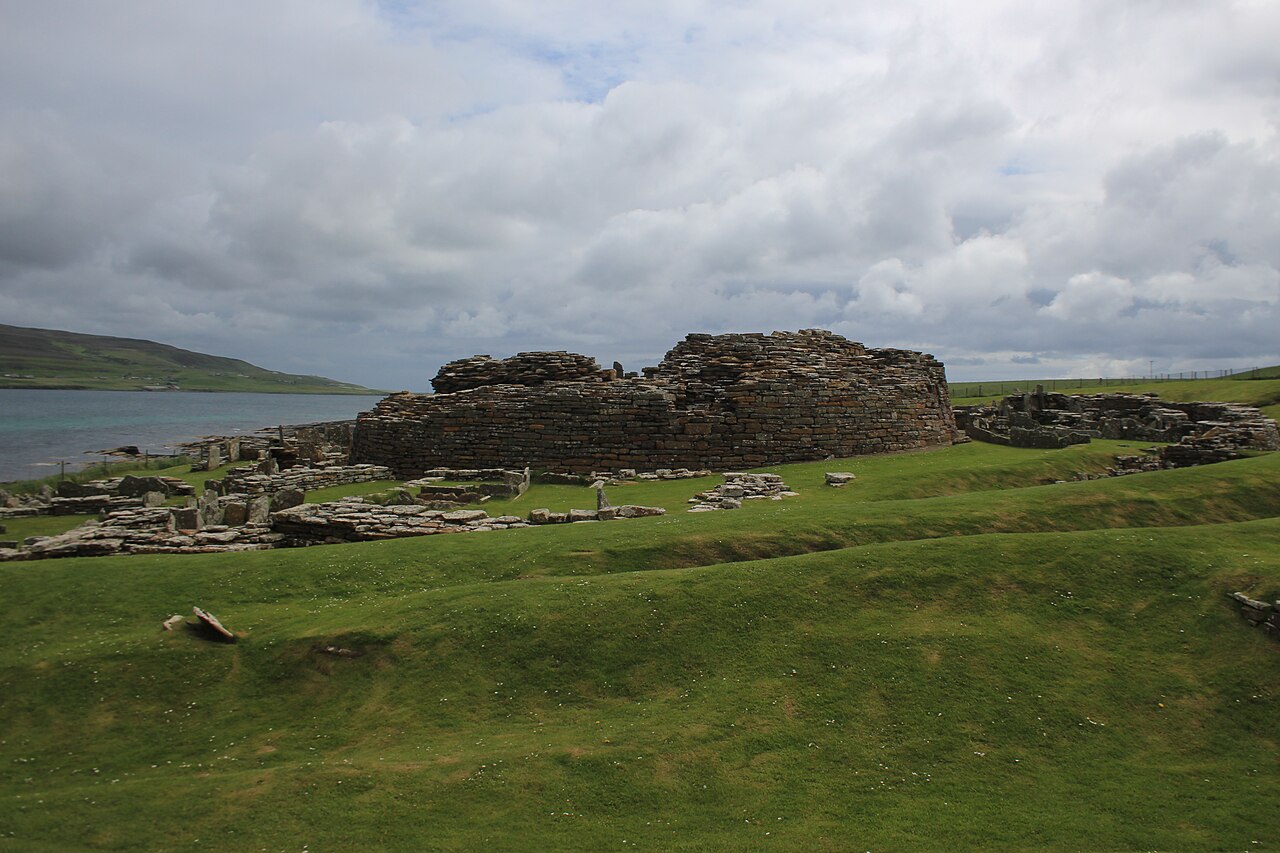
Cubbie Roo's Castle Ruins
Cubbie Roo's Castle, located on the island of Wyre in the Orkney archipelago, is recognized as one of the earliest stone castles in Scotland, dating back to around 1150. This high medieval fortress is notable for its direct connections to the Norse heritage of Orkney, prominently featured in the Orkneyinga Saga. The castle is named after Kolbein Hruga (also known as Cubbie Roo), a Norse chieftain believed to have commissioned its construction. Its strategic position on Wyre allowed it to serve as a formidable defensive stronghold during a turbulent period marked by Norse rule and clan conflicts.
Historical significance and saga connections
The castle's mention in the Orkneyinga Saga highlights its importance in the medieval Norse world. It was a residence of Kolbein Hruga, a powerful Norse landowner, and later played a role in the violent power struggles that characterized Orkney's history. According to King Haakon's saga, after the murder of the last Norse Earl of Orkney, Earl John, in Thurso, the perpetrators fled to Wyre and sought refuge in Cubbie Roo's Castle. The fortress's strength was such that the besieging forces could not easily capture it, leading to a negotiated surrender rather than a direct assault.
Architectural features and construction
Cubbie Roo's Castle is a classic example of an early stone castle in Scotland, constructed during the high medieval period. Unlike many later castles that feature concentric defenses or elaborate curtain walls, this castle is characterized by its simple yet robust design. The main structure is a rectangular tower house built from locally quarried stone, with thick walls designed to withstand attacks and sieges. The castle's elevated position on a rocky outcrop provided natural defensive advantages, complemented by man-made fortifications.
The castle's interior likely included a great hall, private chambers, and storage areas, typical of Norse stone fortifications of the time. While much of the original structure is now in ruins, archaeological studies have revealed the foundation layout and some surviving wall sections, offering insights into medieval Norse castle-building techniques.
Role in regional defense and politics
During the 12th century, Orkney was a Norse earldom, and fortifications like Cubbie Roo's Castle were crucial for asserting control over the islands and protecting against rival clans and external threats. The castle's robustness is evidenced by its successful defense during the siege following Earl John's murder. Its presence on Wyre also indicates the strategic importance of the smaller islands within Orkney for controlling maritime routes and local governance.
Later history and decline
After the Norse period, the castle gradually lost its military significance as political power shifted and newer fortifications were established elsewhere in Orkney. Over the centuries, it fell into ruin, with much of the stone repurposed for other buildings on Wyre. Today, the remains of Cubbie Roo's Castle stand as an archaeological site, attracting visitors interested in medieval history and Norse heritage.
Visiting Cubbie Roo's Castle
The ruins are accessible by a short walk from the main settlement on Wyre. Visitors can explore the site and appreciate the castle's historical context within the Orkney islands. Interpretive signs provide information about the castle's construction, its role in Norse history, and the sagas that mention it. The site offers scenic views of the surrounding sea and landscape, enhancing its appeal for history enthusiasts and tourists alike.
Preservation and archaeological efforts
Efforts have been made to preserve the remaining stonework and to protect the site from natural erosion. Archaeological investigations have helped clarify the castle's layout and construction methods, contributing valuable knowledge to Scotland's medieval architectural history. The castle is recognized for its cultural significance as one of the earliest examples of stone castle construction in Scotland and for its ties to Norse rule in the region.
Frequently asked questions (FAQ)
- How do I get to Cubbie Roo's Castle on Wyre?
- Cubbie Roo's Castle is located on the island of Wyre in Orkney. Visitors can reach Wyre by ferry from the Orkney Mainland, followed by a short walk to the castle ruins.
- What is the historical significance of Cubbie Roo's Castle?
- Cubbie Roo's Castle is one of Scotland's oldest stone castles, built around 1150 and linked to Norse chieftain Kolbein Hruga. It is mentioned in the Orkneyinga Saga and played a role in Norse-era conflicts.
- Can I explore the interior of the castle ruins?
- The castle is mostly in ruins, but visitors can walk around the foundations and remaining walls. There are interpretive signs to help understand the castle's layout and history.
- When is the best time to visit Cubbie Roo's Castle?
- The best time to visit is during the late spring through early autumn months when weather conditions are more favorable for walking and sightseeing in Orkney.
- Is there an admission fee to visit Cubbie Roo's Castle?
- There is no admission fee to visit the ruins of Cubbie Roo's Castle, making it accessible for all visitors interested in Scotland's medieval heritage.
Information
Loading map...
Visitor reviews
No reviews yet. Been here? Write the first review and help other travelers!
Write the first reviewVisited this castle? Share your experience
Your review helps other travelers and adds first-hand knowledge to our encyclopedia.