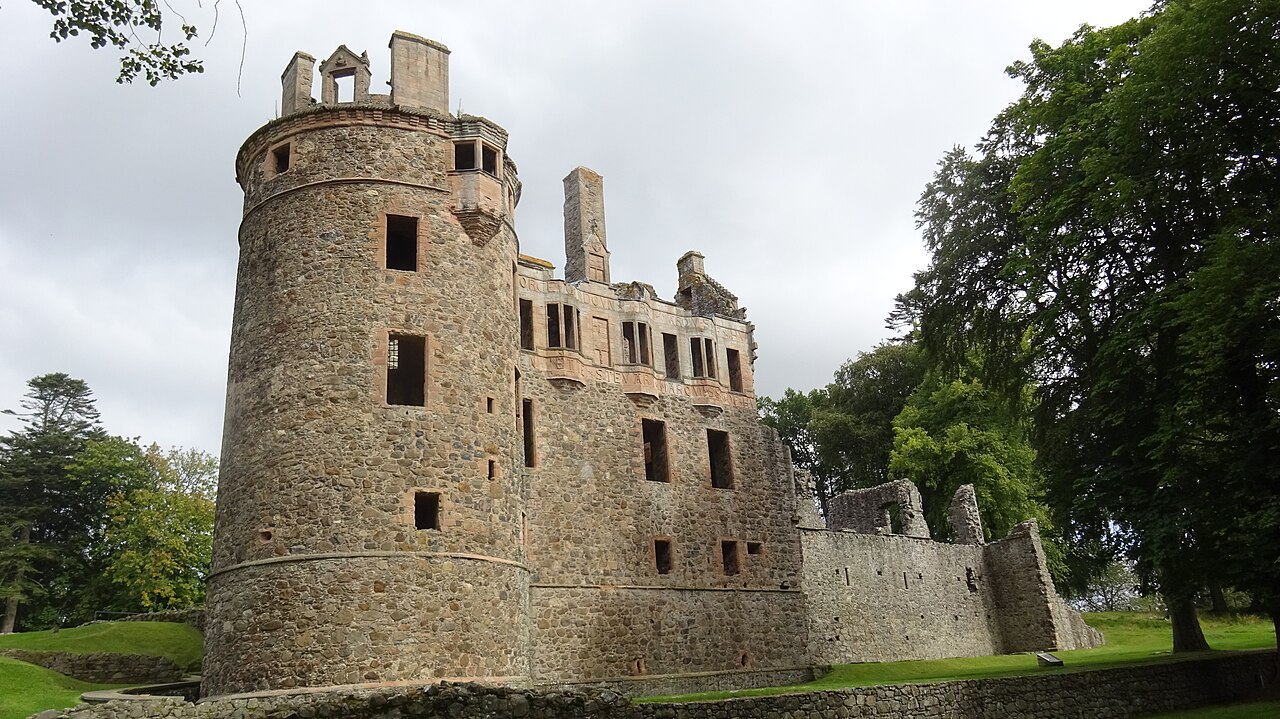
Kinnairdy Castle
Kinnairdy Castle stands as a remarkable example of a late medieval L-plan tower house located near Aberchirder in Scotland. The castle occupies land historically owned by the Innes family since the late 14th century, with the earliest stone tower believed to have been constructed around 1420. This stone structure replaced an earlier wooden motte and bailey castle, typical of the medieval period, marking a transition to more durable and defensible architecture.
Early history and ownership
The property was under the stewardship of the Innes family for centuries, reflecting the typical Scottish landed gentry's castle ownership. In 1629, the castle was sold to Sir James Crichton of Frendraught, a notable figure of the time. Later, in 1647, ownership passed to the Reverend John Gregory, and subsequently to his brother David Gregory, a physician credited with inventing the first barometer. David Gregory's use of this instrument to forecast weather was so advanced that it aroused suspicion of witchcraft, though he was never convicted. This anecdote links the castle to early scientific innovation in the 17th century.
Architectural features and modifications
Kinnairdy Castle is primarily an L-plan tower house, a common Scottish castle design that combines a main rectangular block with a smaller wing, often containing the stair tower. The stair tower at Kinnairdy is a later addition, enhancing access and defense. The original entrance was located on the first floor and was accessed by a removable wooden bridge from the parapet wall, a defensive feature designed to prevent easy access by attackers.
The basement level is vaulted and accessed by a straight stair, typical of the period's robust construction techniques. To the east of the main tower lies a two-storey hall range dating from the late 16th century, which was altered in 1857. This hall contains an oak-paneled aumbry, a recessed cabinet used for storing valuables or religious items. The aumbry is notable for its finely carved heads of Sir Alexander Innes and his wife, Christian Dunbar, dated 1493. This paneling reflects the wealth and status of the Innes family, though Sir Alexander reportedly faced financial difficulties due to his expensive taste in Flemish panelling.
The castle is surrounded by a courtyard to the south and east, enclosed by outbuildings and curtain walls, which would have provided additional protection and space for domestic activities. The north and west sides are naturally defended by steep banks, integrating the castle into the landscape for enhanced defense.
Restoration and later history
In the 18th century, the castle underwent significant restoration and re-roofing under Thomas Donaldson, a merchant from Elgin who purchased the property from the Gregory family. Donaldson transformed Kinnairdy Castle into a country house, adapting the medieval structure to more comfortable domestic use while preserving many original features.
The property returned to the Innes family in 1923, who initiated further restoration efforts to preserve the castle's historic character. These restorations aimed to maintain the castle's architectural integrity while ensuring its survival into the modern era.
Historical significance and cultural heritage
Kinnairdy Castle is a valuable example of Scottish late medieval architecture that illustrates the evolution from wooden fortifications to stone tower houses. Its association with notable historical figures such as the Innes family, Sir James Crichton, and David Gregory provides insights into Scotland's social and scientific history. The castle's oak paneling and carved aumbry are significant artistic features, reflecting the craftsmanship and cultural influences of the time.
The castle's defensive features, including its elevated entrance and natural landscape defenses, demonstrate typical strategic considerations in Scottish castle design. The combination of residential comfort and fortification at Kinnairdy exemplifies the dual roles castles played during the medieval and early modern periods.
Visiting kinnairdy castle and surroundings
While Kinnairdy Castle is a private property, its historical and architectural importance makes it a point of interest for those studying Scottish castles and heritage. The castle's setting near Aberchirder offers visitors a glimpse into rural Scotland's historical landscape, with natural features complementing the castle's defensive design.
The castle's courtyard and surrounding curtain walls provide a tangible sense of the scale and layout of a late medieval Scottish stronghold. Visitors interested in medieval architecture, Scottish history, or early scientific instruments may find Kinnairdy Castle particularly engaging.
Frequently asked questions (FAQ)
- What is the historical significance of Kinnairdy Castle?
- Kinnairdy Castle is a significant historical site dating back to the late 15th century, showcasing the rich heritage of Scottish architecture. It served as a stronghold for the Clan Gordon and offers insights into the feudal system and life in medieval Scotland.
- When was Kinnairdy Castle built?
- Kinnairdy Castle was constructed in the late 1400s, with its architecture reflecting the style prevalent during that period. Over the centuries, it has undergone various modifications, retaining much of its original charm while embodying elements of Scottish history.
- How do I visit Kinnairdy Castle?
- Visiting Kinnairdy Castle can be arranged through guided tours, which are available during the warmer months. It’s advisable to check with local tourism offices for tour schedules and any special events that may enhance your visit.
- Is it possible to enter the castle grounds?
- Yes, visitors can access the castle grounds, but entry to the interior may be restricted as it is a private property. Always check in advance for any specific visiting guidelines or restrictions that may be in place.
- What are the opening hours for Kinnairdy Castle?
- Kinnairdy Castle is typically open from April to October, although specific opening hours can vary. It's recommended to verify the current hours before your visit to ensure you can explore the site fully.
- Can I take photographs at Kinnairdy Castle?
- Yes, photography is allowed on the castle grounds, making it a perfect spot for capturing memorable moments. However, please be respectful of the site and its surroundings while taking photos.
- What is the best time to visit Kinnairdy Castle?
- The best time to visit Kinnairdy Castle is during the spring and summer months when the weather is pleasant and the gardens are in full bloom. This season also allows for a more enjoyable exploration of the castle’s surroundings.
- Are there any nearby attractions to Kinnairdy Castle?
- Yes, there are several attractions near Kinnairdy Castle, including local walking trails and historical sites. Visitors can also explore the charming village of Aberchirder, which offers additional insights into the region's history.
- What are the ticket prices for visiting Kinnairdy Castle?
- Ticket prices for Kinnairdy Castle vary depending on the type of tour or event. It's best to check the official website or contact local tourism offices for up-to-date pricing information before planning your visit.
Information
Loading map...
Visitor reviews
No reviews yet. Been here? Write the first review and help other travelers!
Write the first reviewVisited this castle? Share your experience
Your review helps other travelers and adds first-hand knowledge to our encyclopedia.