Kinlough Castle
Kinlough Castle stands as an important example of a 16th-century Irish tower house located in County Mayo, Ireland. This Renaissance period structure exhibits architectural features characteristic of the transitional era in Irish castle construction, blending medieval defensive elements with more domestic comforts. The castle is part of a designated National Monument site that also includes the nearby Kinlough Church, underscoring the historical significance of the area.
Architectural evolution and construction history
The core of Kinlough Castle is a four-storey tower house originally constructed in the 16th century. However, archaeological and architectural studies suggest that the site may have hosted an earlier fortification dating back to the 13th century. This earlier structure likely formed the basis for the later tower house. The most significant modifications occurred in 1574 under the direction of Sir John MacOliver Burke, who added two additional storeys to the original tower. These additions included corner fireplaces—a feature that reflects the shift towards greater domestic comfort and the Renaissance influence on Irish castle design.
Structural features
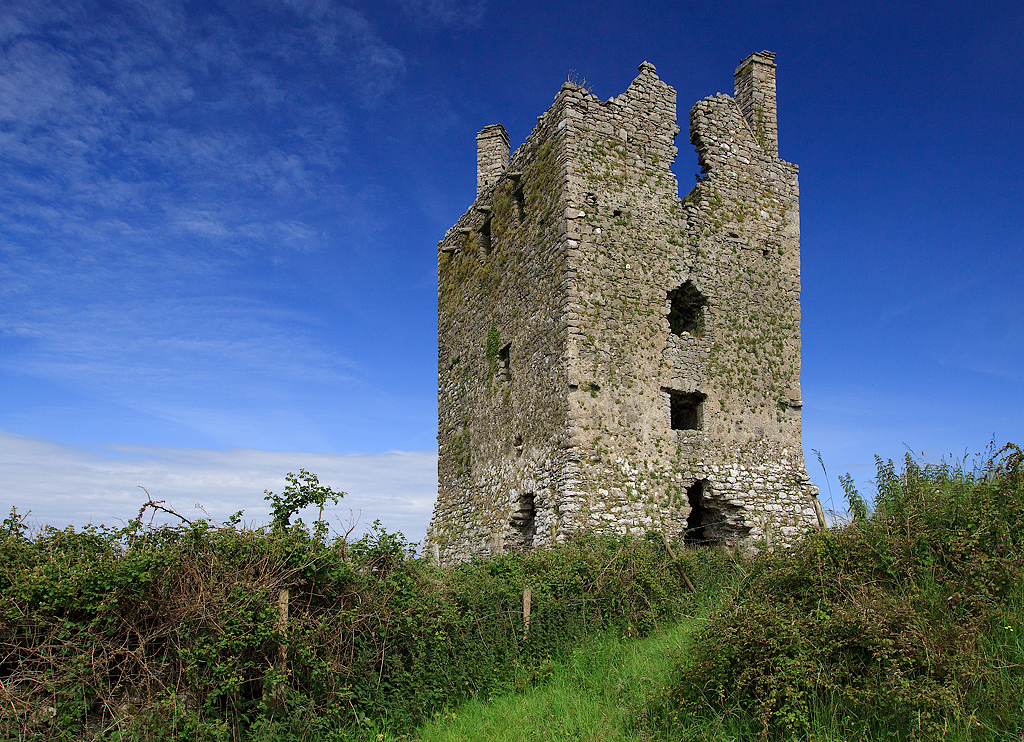
The tower is constructed with thick stone walls typical of Irish tower houses, designed for defense as well as residence. Notably, the castle has gabled ends on the east and west walls, which is somewhat unusual for tower houses that often have flat parapets or crenellations. Kinlough Castle lacks crenellations, which may reflect its later Renaissance style or adaptations for improved living conditions rather than pure military defense.
One of the castle’s distinctive defensive features is the presence of a bartizan on the west wall, although only traces remain today. Bartizans are small overhanging turrets that allowed defenders to observe and fire upon attackers from a protected vantage point. The castle also features three chimney stacks, indicative of multiple fireplaces inside, which would have provided heat and comfort in the various chambers.
Historical context and ownership
Kinlough Castle was associated with the Burke family, a prominent Anglo-Norman lineage that played a significant role in the history of Connacht and western Ireland. The 1574 remodelling by Sir John MacOliver Burke reflects the family's wealth and status during this period, as well as their adaptation to changing architectural trends. The castle served as both a defensive stronghold and a residence, illustrating the dual military and domestic functions typical of Irish tower houses.
Site and surroundings
The castle is located near the village of Shrule in County Mayo, positioned strategically to oversee the surrounding landscape. The proximity of Kinlough Church adds to the historical and cultural significance of the site, indicating a community center of both spiritual and defensive importance. The surrounding landscape features typical Irish rural terrain, which would have supported the castle's occupants through agriculture and local resources.
Preservation and condition
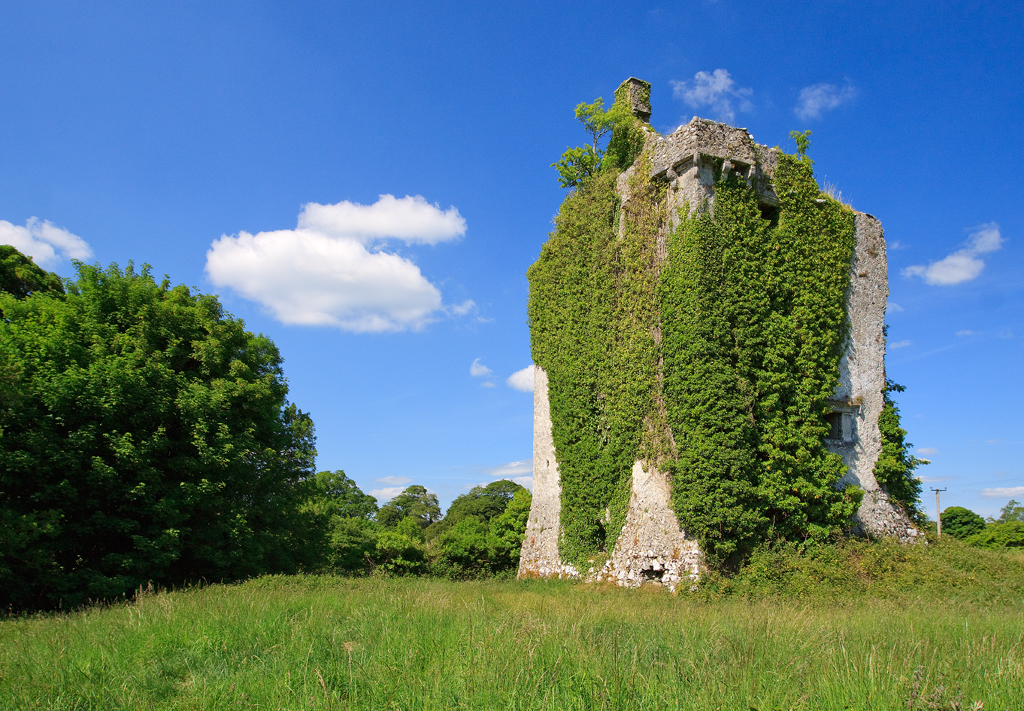
Today, Kinlough Castle is partially preserved, with much of its original stone structure intact, allowing visitors and researchers to appreciate its architectural details and historical context. The castle’s condition reflects centuries of weathering and historical events, but it remains a valuable example of Irish Renaissance tower house architecture.
Architectural significance in Irish castle tradition
Kinlough Castle exemplifies the evolution of the Irish tower house during the Renaissance, when purely defensive castles began incorporating more comfortable living spaces. The addition of corner fireplaces and multiple chimney stacks illustrates the shift from fortification to habitation. The presence of gables instead of crenellations marks a stylistic departure, aligning with Renaissance architectural influences spreading through Ireland in the 16th century.
Its bartizan, though only partially surviving, connects Kinlough Castle to the defensive architectural vocabulary common in Irish castles, providing insight into the military considerations of the time. The castle’s design balances the need for protection with the desire for status and comfort, making it a significant study subject for historians and architects interested in late medieval and Renaissance Ireland.
Frequently asked questions (FAQ)
- What is the historical significance of Kinlough Castle?
- Kinlough Castle, located in Shrule, has a rich history dating back to the medieval period. It served as a strategic fortification in the region and is a testament to the architectural styles and defensive needs of its time.
- When was Kinlough Castle built?
- Kinlough Castle was constructed in the 16th century, reflecting the turbulent times of its era. Its design incorporates elements typical of the period, showcasing both function and aesthetic appeal.
- Can I visit Kinlough Castle?
- Yes, Kinlough Castle is open to visitors, allowing them to explore its historical grounds and learn about its past. However, it's advisable to check local guidelines and any specific visiting hours before planning your trip.
- What are the opening hours for Kinlough Castle?
- Kinlough Castle is typically open from 10 AM to 5 PM, but these hours may vary seasonally or for special events. Visitors should verify current hours prior to their visit to ensure they have ample time to explore.
- Is it possible to access Kinlough Castle with mobility issues?
- Kinlough Castle may present challenges for those with mobility issues due to its historical architecture. It is recommended to contact the castle management in advance to inquire about accessibility options and any available accommodations.
- When is the best time to visit Kinlough Castle?
- The best time to visit Kinlough Castle is during the spring and early autumn months when the weather is mild and the landscape is particularly scenic. These seasons also tend to attract fewer crowds, allowing for a more enjoyable experience.
- What nearby attractions can I visit while at Kinlough Castle?
- While visiting Kinlough Castle, you can explore nearby attractions such as the picturesque Shrule village and the scenic banks of the River Clare. Additionally, the surrounding countryside offers numerous walking trails and opportunities for outdoor activities.
- What are the ticket prices for visiting Kinlough Castle?
- Ticket prices for Kinlough Castle are generally affordable, with discounts available for children, seniors, and families. It is advisable to check the official website for the most current pricing and any special offers that may be available.
Loading map...
Visitor reviews
No reviews yet. Been here? Write the first review and help other travelers!
Write the first reviewVisited this castle? Share your experience
Your review helps other travelers and adds first-hand knowledge to our encyclopedia.