Kinlough Castle — Ireland castle

Kinlough Castle

Kinlough Castle, County Mayo: a 13th-century Irish tower house
High Medieval (11th–13th c.)
Well Preserved

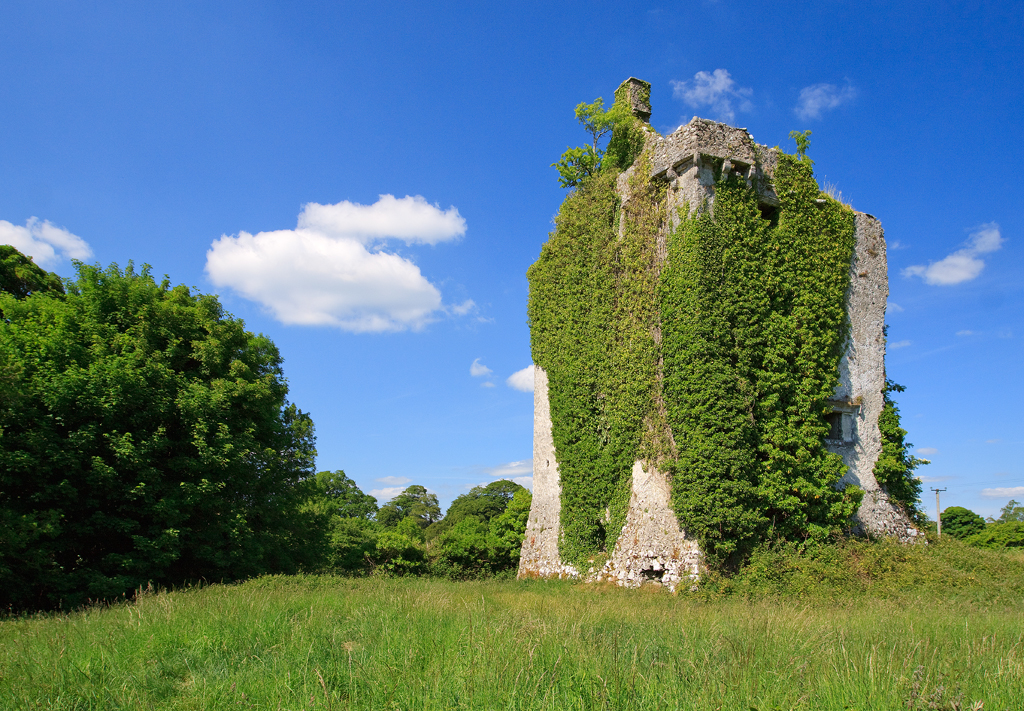
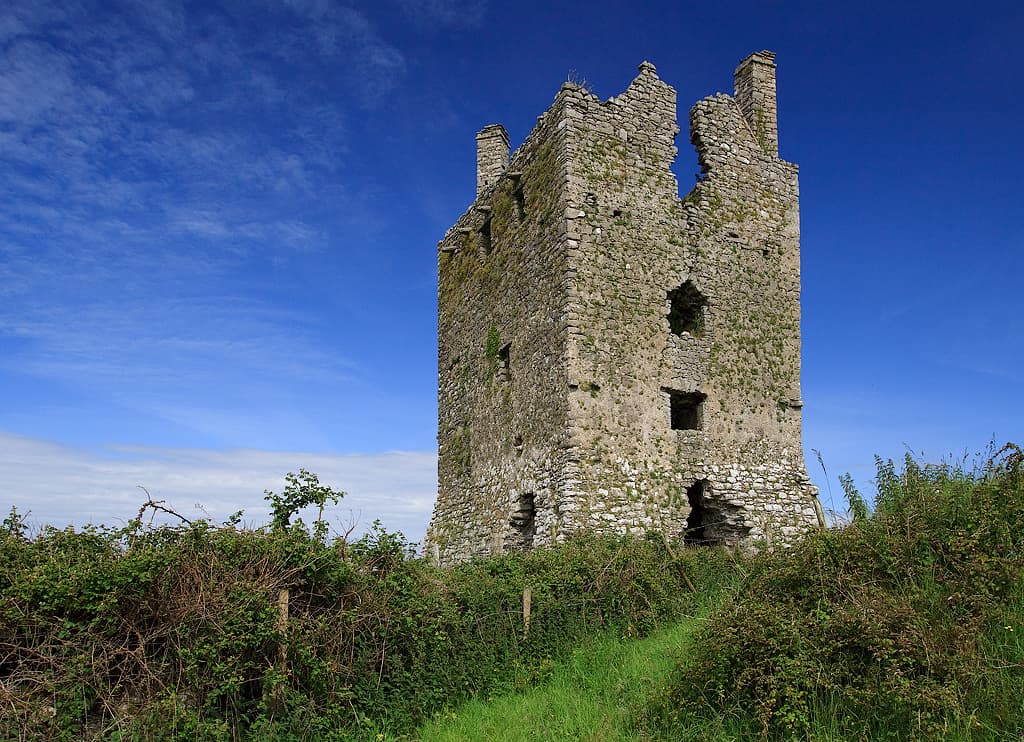
Kinlough Castle is a well-preserved 13th-century tower house situated in County Mayo, Ireland. This high medieval structure stands as a significant example of the fortified residences built by Gaelic and Anglo-Norman lords during the period. The castle is recognized as a National Monument, highlighting its cultural and historical importance within Ireland's rich medieval heritage.

Architectural features of Kinlough Castle

The castle is classified as a hill castle, constructed on elevated ground to maximize defensive advantage and visibility over the surrounding landscape. As a tower house, Kinlough Castle exhibits the typical vertical emphasis of such structures, designed primarily for residential defense rather than large-scale military operations.

The castle's main structure is a tall, rectangular stone tower with thick walls, narrow slit windows, and battlements at the roof level. These features were intended to provide protection against attackers while allowing defenders to observe and repel assaults. The entrance is typically fortified, often with a heavy wooden door reinforced by iron, sometimes accompanied by a murder hole or machicolations above to defend the doorway.

Inside, the castle would have contained a great hall, living quarters, storage rooms, and possibly a vaulted basement or dungeon. The compact design reflects the dual purpose of tower houses as both noble residences and defensive strongholds.

Historical context and significance

Kinlough Castle was built during the high medieval period, a time when Ireland saw the construction of many tower houses across the country. These structures served as fortified homes for local chieftains and Anglo-Norman settlers, providing security in a landscape marked by frequent conflict and shifting allegiances.

The proximity of Kinlough Church, also part of the National Monument, suggests the castle's integration within a wider ecclesiastical and community setting. The church likely served the spiritual needs of the castle's inhabitants and the surrounding population, reflecting the close relationship between secular and religious life in medieval Ireland.

Preservation and current status

Today, Kinlough Castle remains well preserved, allowing visitors to appreciate its medieval architecture and defensive features. As a National Monument, it is protected under Irish heritage laws, ensuring its conservation for future generations.

The castle and nearby church are accessible to the public, offering insight into the lifestyle and defensive strategies of medieval Irish nobility. The site is a valuable resource for historians, archaeologists, and tourists interested in Ireland's medieval past.

Visiting Kinlough Castle

Visitors to Kinlough Castle can explore the tower house's exterior and surrounding grounds, gaining a sense of the castle's strategic location and architectural design. The nearby Kinlough Church adds to the historical experience, providing context to the religious and social environment of the time.

While the interior may have limited access due to preservation concerns, the castle's imposing silhouette and setting offer excellent photographic opportunities and a tangible connection to Ireland's medieval heritage.

Frequently asked questions (FAQ)

How do I get to Kinlough Castle?
Kinlough Castle is located in County Leitrim, Ireland, and is easily accessible by car. If you’re using public transportation, the nearest train station is in Sligo, which is about a 30-minute drive from the castle. Local buses may also operate between Sligo and Kinlough, providing options for visitors.
What is the historical significance of Kinlough Castle?
Kinlough Castle dates back to the 16th century and is steeped in history, reflecting the tumultuous past of Ireland. It served as a stronghold for local chieftains and has witnessed many historical events over the centuries. Today, it stands as a testament to Ireland's rich architectural heritage and its feudal past.
When was Kinlough Castle built?
Kinlough Castle was constructed in the late 1500s, showcasing the architectural styles of the period. Its design features typical elements of Irish tower houses, which were popular during the time. The castle has undergone various restorations to preserve its historic charm.
Can I visit Kinlough Castle?
Yes, visitors are welcome to explore Kinlough Castle. Guided tours are often available, allowing guests to learn about the castle's history and architecture. It’s advisable to check in advance for any special events or restrictions that may affect access.
Why is Kinlough Castle an important architectural site?
Kinlough Castle is an important example of a 16th-century Irish tower house, showcasing traditional building techniques and design elements. Its well-preserved structure provides insight into the medieval lifestyle and defensive strategies of its time. The castle's unique architectural features make it a valuable site for both history enthusiasts and architecture lovers.
Is it possible to hold events at Kinlough Castle?
Yes, Kinlough Castle can be rented for private events, including weddings and parties. Its historical ambiance and picturesque setting make it a popular choice for memorable occasions. Interested parties should contact the castle's management for availability and pricing details.
What are the opening hours for Kinlough Castle?
Kinlough Castle typically opens to visitors from April to October, with varying hours depending on the season. It's recommended to check the official website or contact the management for the most current opening hours before your visit. Special tours may also be available outside regular hours by appointment.
What are the ticket prices for visiting Kinlough Castle?
Ticket prices for Kinlough Castle vary based on age and group size, with discounts often available for children and seniors. Group rates may also apply for larger parties. For the latest pricing information, it’s best to check the castle's official website or contact their visitor services.
What are some nearby attractions to Kinlough Castle?
Nearby attractions include the stunning Lough Melvin, known for its scenic beauty and outdoor activities. Visitors can also explore the historic village of Kinlough and enjoy local dining options. The surrounding area offers various hiking trails and opportunities to experience the natural beauty of Ireland.

Photo gallery

Kinlough Castle
Click to view

Photo by Mike Searle•CC BY-SA 2.0

1 photo • Click any image to view in full screen

Information

Hill Castle

Loading map...

Visitor reviews

No reviews yet. Been here? Write the first review and help other travelers!

Write the first review

Visited this castle? Share your experience

Your review helps other travelers and adds first-hand knowledge to our encyclopedia.

Write a review

(5/5)

0/2000 characters

Your review will be visible after admin approval

Nearby castles

0 km

Kinlough Castle

Shrule, United Kingdom

Kinlough Castle stands as an important example of a 16th-century Irish tower house located in County Mayo, Ireland. This Renaissance period structure exhibits architectural features characteristic of the transitional era in Irish castle construction, blending medieval defensive elements with more domestic comforts. The castle is part of a designated National Monument site that also includes the nearby Kinlough Church, underscoring the historical significance of the area. Architectural evolution and construction history The core of Kinlough Castle is a four-storey tower house originally constructed in the 16th century. However, archaeological and architectural studies suggest that the site may have hosted an earlier fortification dating back to the 13th century. This earlier structure likely formed the basis for the later tower house. The most significant modifications occurred in 1574 under the direction of Sir John MacOliver Burke, who added two additional storeys to the original tower. These additions included corner fireplaces—a feature that reflects the shift towards greater domestic comfort and the Renaissance influence on Irish castle design. Structural features The tower is constructed with thick stone walls typical of Irish tower houses, designed for defense as well as residence. Notably, the castle has gabled ends on the east and west walls, which is somewhat unusual for tower houses that often have flat parapets or crenellations. Kinlough Castle lacks crenellations, which may reflect its later Renaissance style or adaptations for improved living conditions rather than pure military defense. One of the castle’s distinctive defensive features is the presence of a bartizan on the west wall, although only traces remain today. Bartizans are small overhanging turrets that allowed defenders to observe and fire upon attackers from a protected vantage point. The castle also features three chimney stacks, indicative of multiple fireplaces inside, which would have provided heat and comfort in the various chambers. Historical context and ownership Kinlough Castle was associated with the Burke family, a prominent Anglo-Norman lineage that played a significant role in the history of Connacht and western Ireland. The 1574 remodelling by Sir John MacOliver Burke reflects the family's wealth and status during this period, as well as their adaptation to changing architectural trends. The castle served as both a defensive stronghold and a residence, illustrating the dual military and domestic functions typical of Irish tower houses. Site and surroundings The castle is located near the village of Shrule in County Mayo, positioned strategically to oversee the surrounding landscape. The proximity of Kinlough Church adds to the historical and cultural significance of the site, indicating a community center of both spiritual and defensive importance. The surrounding landscape features typical Irish rural terrain, which would have supported the castle's occupants through agriculture and local resources. Preservation and condition Today, Kinlough Castle is partially preserved, with much of its original stone structure intact, allowing visitors and researchers to appreciate its architectural details and historical context. The castle’s condition reflects centuries of weathering and historical events, but it remains a valuable example of Irish Renaissance tower house architecture. Architectural significance in Irish castle tradition Kinlough Castle exemplifies the evolution of the Irish tower house during the Renaissance, when purely defensive castles began incorporating more comfortable living spaces. The addition of corner fireplaces and multiple chimney stacks illustrates the shift from fortification to habitation. The presence of gables instead of crenellations marks a stylistic departure, aligning with Renaissance architectural influences spreading through Ireland in the 16th century. Its bartizan, though only partially surviving, connects Kinlough Castle to the defensive architectural vocabulary common in Irish castles, providing insight into the military considerations of the time. The castle’s design balances the need for protection with the desire for status and comfort, making it a significant study subject for historians and architects interested in late medieval and Renaissance Ireland.

Renaissance (15th–17th c.)
Details
3.1 km

Shrule Castle

Shrule, United Kingdom

Shrule Castle stands as a significant example of a medieval tower house located in County Mayo, Ireland, near the border with County Galway. Constructed around 1238 by the influential de Burgh family, this castle occupies a strategic position close to the Black River. Its location was crucial for controlling the surrounding lands during the High Medieval period. Origins and construction The castle was built as a fortified residence typical of the High Medieval era, reflecting the architectural and defensive needs of Anglo-Norman settlers in Ireland. The de Burgh family, one of the most powerful Anglo-Norman dynasties in Ireland, established Shrule Castle to secure their territorial claims along the Mayo-Galway frontier. The structure was originally a tower house, a common form of fortified dwelling in Ireland from the 13th century onwards, characterized by a tall, narrow stone tower designed for defense and habitation. Historical significance and ownership In 1308, the castle was granted to John de Burgh by his father, Richard Óg de Burgh, 2nd Earl of Ulster, cementing its importance within the de Burgh family holdings. Over the centuries, Shrule Castle was a focal point in regional conflicts, especially during the turbulent 16th century. Siege and battle of 1570 The castle was captured in 1570 by a formidable force led by Sir Edward Fitton, the President of Connaught and Vice Treasurer of Ireland. This military expedition notably included the McDonnells of Knocknacloy's gallowglass warriors, elite mercenary soldiers of Scottish origin renowned for their combat skills. In response, a coalition of local powers including Mac William Uachtar, the Lord of Thomond, the de Burghs of Mayo, and the McDonnells of Mayo attempted to retake the castle but were unsuccessful. The battle was fierce and costly; Calvagh McDonnell, chief of the McDonnells of Knocknacloy, was killed on 18 June 1570. Sir Edward Fitton himself was unhorsed and suffered severe facial wounds during the engagement. Following the siege, the castle was occupied by William Burke, who later passed it to his son John Burke in 1574. Later history and leasing By the early 17th century, the castle and its surrounding lands were leased by Richard Burke, 4th Earl of Clanricarde to Pierce Lynch of Galway in 1610. This transition reflects the changing political and social landscape of Ireland during the period, as Gaelic and Anglo-Norman noble families negotiated control over land and power. Architectural features and current condition Shrule Castle is classified as a tower house, a defensive residential structure typical of the Irish medieval landscape. Its design would have included thick stone walls, narrow windows for archers, and a vertical layout with multiple floors accessed by narrow staircases. Such castles were built both for defense and as symbols of lordly status. Today, Shrule Castle remains in a ruined state. Though much of the structure has succumbed to time and neglect, the remnants still convey the castle's original form and defensive purpose. The ruins offer valuable insights into medieval military architecture and the turbulent history of the region. Location and strategic importance Situated near the border of County Mayo and County Galway, close to the Black River, Shrule Castle's position was strategically chosen to control movement and trade routes between these territories. This location also placed it at the heart of several military conflicts during the medieval and early modern periods. Visiting Shrule Castle While the castle is in ruins, it remains an important heritage site for visitors interested in medieval Irish history and architecture. Its remote location offers a glimpse into the rugged landscape of western Ireland and the legacy of Anglo-Norman influence in the region.

High Medieval (11th–13th c.)
Details
9.8 km
Castle Hackett — Ireland castle

Castle Hackett

Tuam, Ireland

Castle Hackett is a notable example of a 13th-century medieval tower house located in the west of Ireland, specifically in County Galway. Situated at the base of Knockma Hill, approximately 10 kilometres southwest of Tuam in the parish of Caherlistrane, this castle stands near the village of Belclare in the townland known as Castlehacket (Irish: Caisleán an Haicéadaigh). Historical context and significance The castle was constructed during the High Medieval period, a time when tower houses were commonly built across Ireland as fortified residences for local lords and chieftains. These structures served both defensive and domestic purposes, reflecting the turbulent political landscape of medieval Ireland. Castle Hackett was likely the seat of the Hackett family, a Gaelic-Irish lineage prominent in the region. Architectural features and layout As a tower house, Castle Hackett was designed as a vertical defensive structure, typically several stories tall. The surviving ruins indicate a rectangular plan with thick stone walls, characteristic of Irish tower houses of the 13th century. The construction utilized locally sourced stone, providing robust fortification against attacks. The castle would have originally included narrow slit windows for archers, a battlemented roofline for defense, and a strong entrance secured by a heavy wooden door and possibly a murder hole or machicolation above. Internally, the tower likely contained a great hall, private chambers, and storage areas arranged vertically. Location and strategic importance Positioned at the base of Knockma Hill, the castle occupied a strategic location overseeing the surrounding countryside. This vantage point allowed the occupants to monitor movements and defend against potential invaders. The proximity to Tuam, an important ecclesiastical and market town, further enhanced its significance. Current condition and preservation Today, Castle Hackett remains a ruin, classified as an archaeological site. The structure has suffered from centuries of weathering and neglect, with only portions of the original tower house walls still standing. Despite this, it retains enough architectural elements to provide insight into medieval Irish defensive residences. Efforts to preserve the site have been limited, but it remains accessible to visitors interested in Ireland's medieval heritage and castle architecture. The ruins offer a tangible connection to the region's past and the lifestyle of its medieval inhabitants. Visiting Castle Hackett Visitors to Castle Hackett can explore the ruins and enjoy the scenic landscape of County Galway. The site is open year-round, although no formal visitor facilities are available on-site. It is advisable to wear suitable footwear and take care when navigating the uneven terrain of the ruins. Nearby attractions The castle's location near Knockma Hill also provides opportunities for hiking and exploring local folklore associated with the hill, including tales of the legendary Queen Maeve. The nearby town of Tuam offers additional historical sites, shops, and accommodations for visitors. Frequently asked questions What is the historical significance of Castle Hackett? Castle Hackett is a 13th-century tower house that served as a fortified residence for a local Gaelic family during the High Medieval period, reflecting the defensive architecture of the time. Can visitors enter the castle? The castle is a ruin and open to the public for exploration, but there are no formal visitor facilities or guided tours, so visitors should exercise caution. When was Castle Hackett built? The castle dates back to the 13th century, during the High Medieval period in Ireland. Is the site accessible year-round? Yes, Castle Hackett is accessible throughout the year, though weather conditions may affect ease of access. Are there other historical sites nearby? Yes, the nearby town of Tuam and Knockma Hill offer additional historical and cultural attractions for visitors.

High Medieval (11th–13th c.)
Details