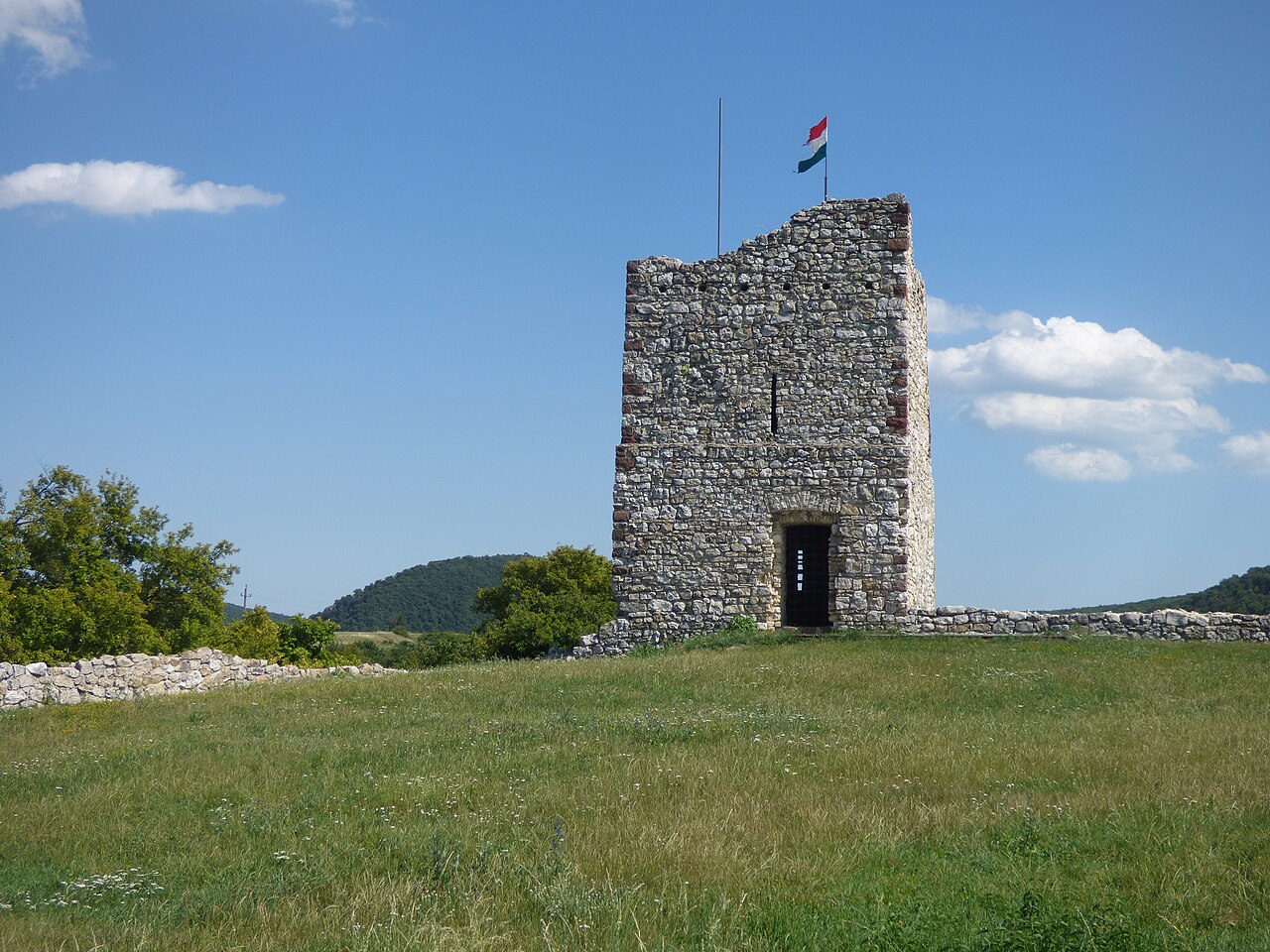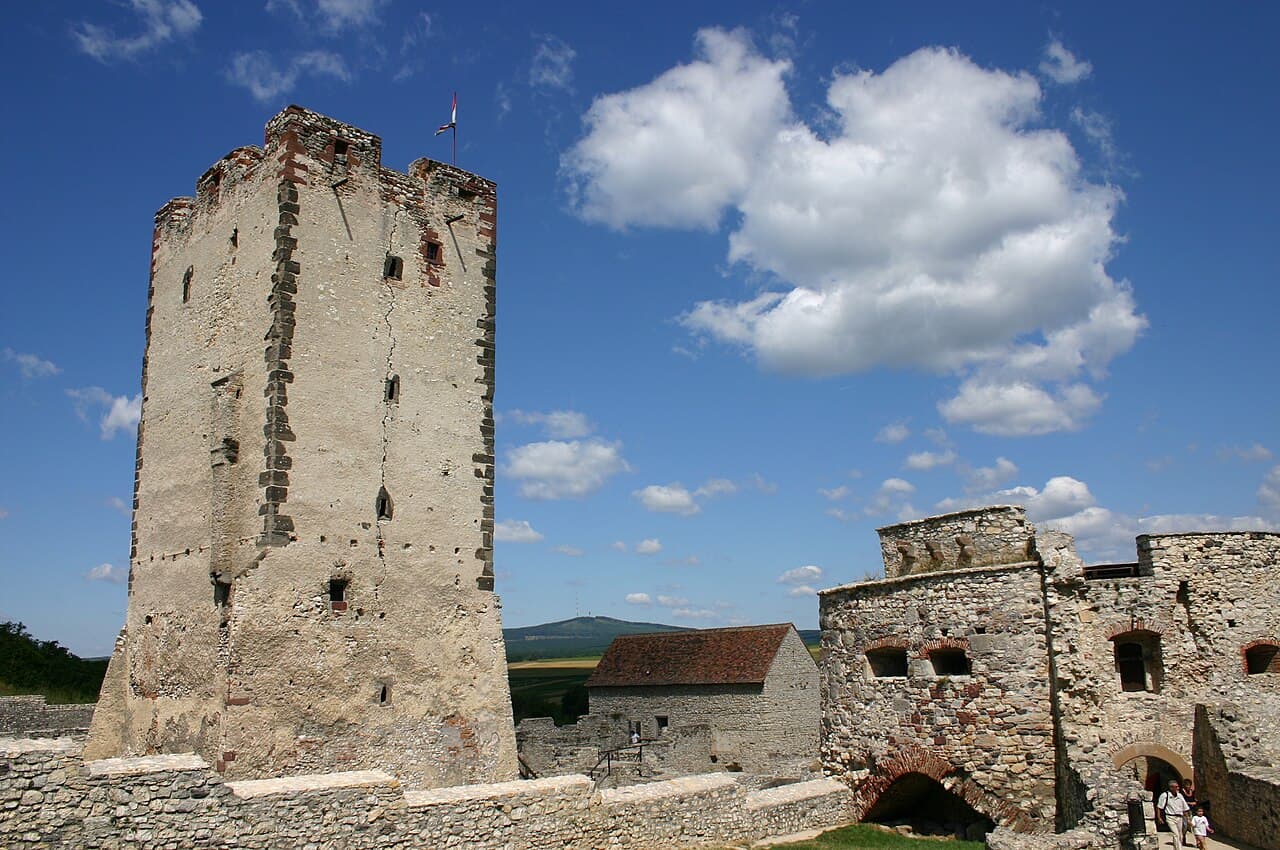
Kinizsi Castle
Kinizsi Castle in Nagyvázsony, Hungary, stands as a remarkable example of a late medieval hill castle with a rich history deeply intertwined with Hungarian military and noble heritage. Originally constructed in the late 14th century, the castle's strategic location near vital routes and a fresh water spring allowed it to serve both defensive and residential purposes. Its enduring legacy is closely linked to Pál Kinizsi, a celebrated military leader under King Matthias Corvinus, who expanded and fortified the castle in the late 15th century, leaving a lasting imprint on its architecture and historical significance.
Early origins and construction
The foundations of Kinizsi Castle trace back to the Vezsenyi family, who initiated the fortress's development after choosing not to complete another nearby fortification. The initial authorization for construction came from Queen Mary of Anjou in 1384, with nobleman Vezsenyi László overseeing the early works. The castle's main residential tower, a dominant feature of the complex, was completed by the early 1400s. This tower, built in the Gothic architectural style, served as the core defensive and living structure, reflecting the military and domestic needs of the period.
Strategic location and design
Kinizsi Castle occupies a hilltop site near the source of the Vázsonyi-Séd stream, chosen for its proximity to a reliable fresh water spring within the castle courtyard. This location allowed control over two significant travel routes, enhancing the castle's defensive capabilities. The placement near water also facilitated natural defenses, including a deep moat that originally surrounded the fortress, complicating enemy approaches.
Pál kinizsi's influence and expansions
In 1472, Pál Kinizsi, renowned for his military prowess, was granted ownership of the castle by King Matthias Corvinus as a reward for his service. Under Kinizsi's stewardship, the castle underwent significant expansions and fortifications. These included the addition of several smaller corner towers, thickening of the outer walls, and the construction of a multi-level palace wing that enclosed an inner courtyard. A chapel was also incorporated, which later became the resting place of Kinizsi himself.
Defensive enhancements
One of the most notable architectural features added during this period was the barbican gatehouse, designed around 1491 to withstand cannon fire, reflecting advancements in military technology. This horseshoe-shaped gatehouse served as an additional defensive barrier protecting the main entrance. The castle's walls and towers were reinforced using stones repurposed from a nearby dismantled Pauline monastery, demonstrating adaptive reuse of local materials to strengthen defenses against the growing threat of the Ottoman Empire.
Historical military significance
Kinizsi Castle played a strategic role in Hungary's border defense system during the turbulent 16th century, particularly against Ottoman incursions. Although it was not a primary military bastion, its position allowed for effective surveillance and control of the surrounding region. In 1490, the castle was briefly captured by mercenary forces loyal to Habsburg Maximilian but was soon retaken by Kinizsi's forces.
Later military and noble ownership
Following Kinizsi's death in 1494, the castle passed through several noble families, including the Horváth and Zichy families. The Horváth family enhanced the fortifications in the mid-16th century by dismantling the Pauline monastery to reuse its stones. The Zichy family, acquiring the estate in 1649, settled hajdús (military colonists) on the property and reconsecrated the castle chapel in 1727, underscoring the site's ongoing religious and community importance.
Architectural features and remnants
The castle's most prominent surviving structure is the 25-meter tall late Gothic residential tower, originally constructed in the early 1400s and subsequently modified in the 16th and 17th centuries. The tower faces north, overlooking water defenses formed by the stream and mill dams, with large window openings that balance natural light and security.
Fortifications and layout
Surrounding the residential tower was a quadrangular outer wall with four smaller corner towers, all reinforced in the 1500s with stones from the dismantled monastery. The multi-story palace wing enclosed the inner courtyard, providing living and administrative spaces. The castle chapel, located in one corner of the complex, was the only Catholic church in Nagyvázsony during the 18th century and remains a significant religious monument.
Defensive structures
The barbican gatehouse, a distinctive horseshoe-shaped fortification, is recognized today as a protected monument and exemplifies late medieval military architecture adapted for cannon defense. The original deep moat surrounding the castle added an extra layer of protection, although much of it has since been filled or altered.
Damage, preservation, and modern restoration
In 1857, the residential tower suffered severe damage from an earthquake and a subsequent fire, destroying its roof and causing structural cracks, particularly on the eastern facade. These events marked the beginning of the castle's decline as a residence, although preservation efforts were later initiated thanks to the advocacy of 19th-century archaeologist Flóris Rómer.
Archaeological research and conservation
Between 1954 and 1960, archaeological excavations led by Zákonyi Ferenc and Vajkai Aurél uncovered significant parts of the ruins, documenting the castle's original extent and architectural details. Further excavations in 2005 expanded knowledge of the site, revealing additional structural elements and artifacts.
Recent restoration and cultural use
From 2017 to 2022, restoration efforts under Hungary's National Castle Program, supported by European Union funding, focused on stabilizing and partially rebuilding the castle. Modern amenities such as climate-controlled exhibition rooms, a cinema hall, and interactive displays have been sensitively integrated, allowing public engagement while preserving the medieval fabric. The addition of a gift shop and café has enhanced the castle's role as a cultural and tourist destination.
Cultural significance and visitor experience
Today, Kinizsi Castle is owned by the local municipality and managed by a cultural nonprofit organization dedicated to preserving its heritage. The site hosts festivals and events celebrating the legacy of Pál Kinizsi and the region's history, attracting visitors interested in medieval architecture, Hungarian history, and military heritage. The castle's combination of well-preserved structures, historical artifacts, and modern visitor facilities offers a comprehensive experience that highlights its enduring importance.
Frequently asked questions (FAQ)
- When was Kinizsi Castle originally built?
- Kinizsi Castle's initial construction began in the late 14th century, with the main residential tower completed by the early 1400s. The castle was significantly expanded in 1472 under Pál Kinizsi.
- What architectural style is Kinizsi Castle known for?
- The castle is primarily known for its late Gothic architectural style, especially evident in the tall residential tower and defensive structures like the barbican gatehouse.
- Can visitors explore the restored parts of Kinizsi Castle?
- Yes, the castle has undergone restoration and now features exhibition rooms, a cinema hall, and interactive displays, making it accessible and engaging for visitors.
- What is the significance of Pál Kinizsi in the castle's history?
- Pál Kinizsi was a prominent military leader who owned and expanded the castle in the late 15th century, enhancing its defenses and residential quarters, and is buried in the castle chapel.
- Is Kinizsi Castle involved in any cultural events?
- Yes, the castle hosts festivals and events that celebrate Pál Kinizsi's legacy and the local history, providing cultural enrichment for visitors.
Photo gallery

Information
Sources & official resources
Verify the information above using these authoritative references.
Loading map...
Visitor reviews
No reviews yet. Been here? Write the first review and help other travelers!
Write the first reviewVisited this castle? Share your experience
Your review helps other travelers and adds first-hand knowledge to our encyclopedia.