Esseg Castle
Esseg Castle stands as a remarkable example of a medieval hill castle in Hungary, located near the village of Bánd in Veszprém County. Established around 1270, the castle originated as a wooden complex before transitioning into a robust stone fortress during the 14th and 15th centuries. Its strategic position on a natural limestone rise overlooking the Séd stream provided both defensive advantages and control over the surrounding region.
Early history and construction
The castle first appears in historical records in 1309 under the name Castrum Scegh. Initially, it consisted of wooden residential and service buildings arranged around an irregular courtyard approximately 60 by 70 meters in size. The transition from wood to stone began in the early 14th century, reflecting evolving defensive needs and architectural trends. A significant addition was the Saint George chapel to the north, documented in 1332, which underscores the castle's role not only as a military stronghold but also as a center of religious life.
Architectural evolution and fortifications
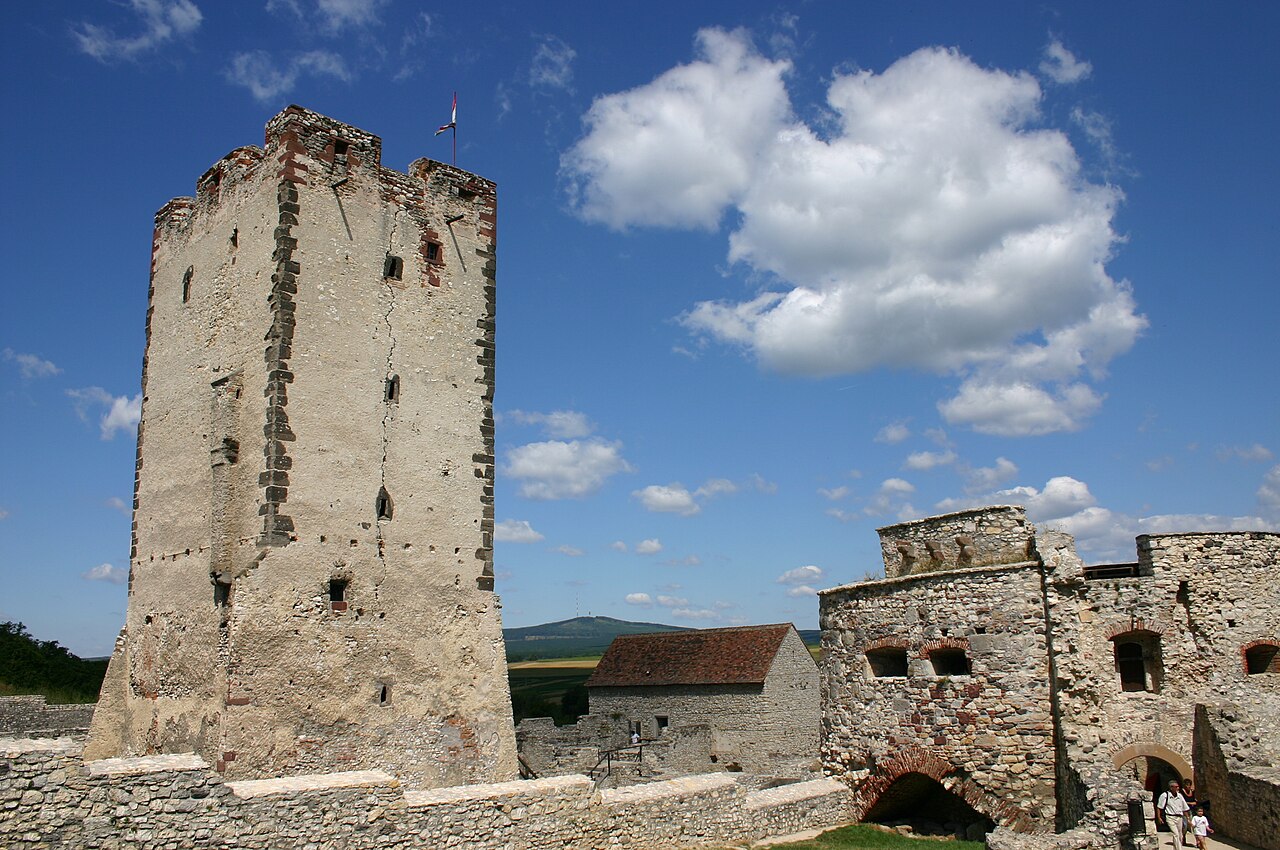
Throughout the 15th century, Esseg Castle underwent extensive expansions and fortifications. The original wooden structures were replaced by stone buildings, including larger residential quarters along the eastern and western curtain walls. Outer towers projecting beyond the main walls were constructed to enhance the defensive perimeter. Among these, the rectangular eastern tower, known as the "old tower," remains one of the most prominent surviving elements, featuring preserved defensive features such as arrow slits.
The castle's irregular layout encloses a central courtyard, which housed a cistern on the northern side, vital for collecting and storing water during sieges. The presence of a knights’ hall is also suggested, indicative of the castle's role as a noble residence and military hub.
Historical significance and ownership struggles
Esseg Castle was deeply entwined in the regional power dynamics of medieval Hungary. After its capture by the oligarch Ivan Kőszegi, who executed the then-owner, royal forces reclaimed the fortress after four years, restoring it to the Essegvári family. The family played a significant role in supporting Ladislaus of Naples during the Hungarian throne disputes, which led to King Sigismund confiscating the castle and assigning it to the ispán of Bakony.
The castle also featured in the civil wars following King Albert's death in the 1440s, briefly falling under the control of Bishop Thomas Himfy. Legal contests over ownership continued until George Essegvári secured definitive control in 1472. The union of the Essegvári and Himfy families through marriage in the late 15th century marked a turning point, as the family shifted residence and the castle gradually declined.
Decline and ruin
The castle's destruction is believed to have occurred during a Turkish raid in 1552, after which it was abandoned. Local inhabitants repurposed its stones, accelerating its deterioration. Despite this, the castle remained a point of reference in regional disputes as late as 1641. Modern archaeological investigations and conservation efforts began in 2003, aiming to preserve the remaining structures and reveal more about its historical layout.
Architectural remains and archaeological work
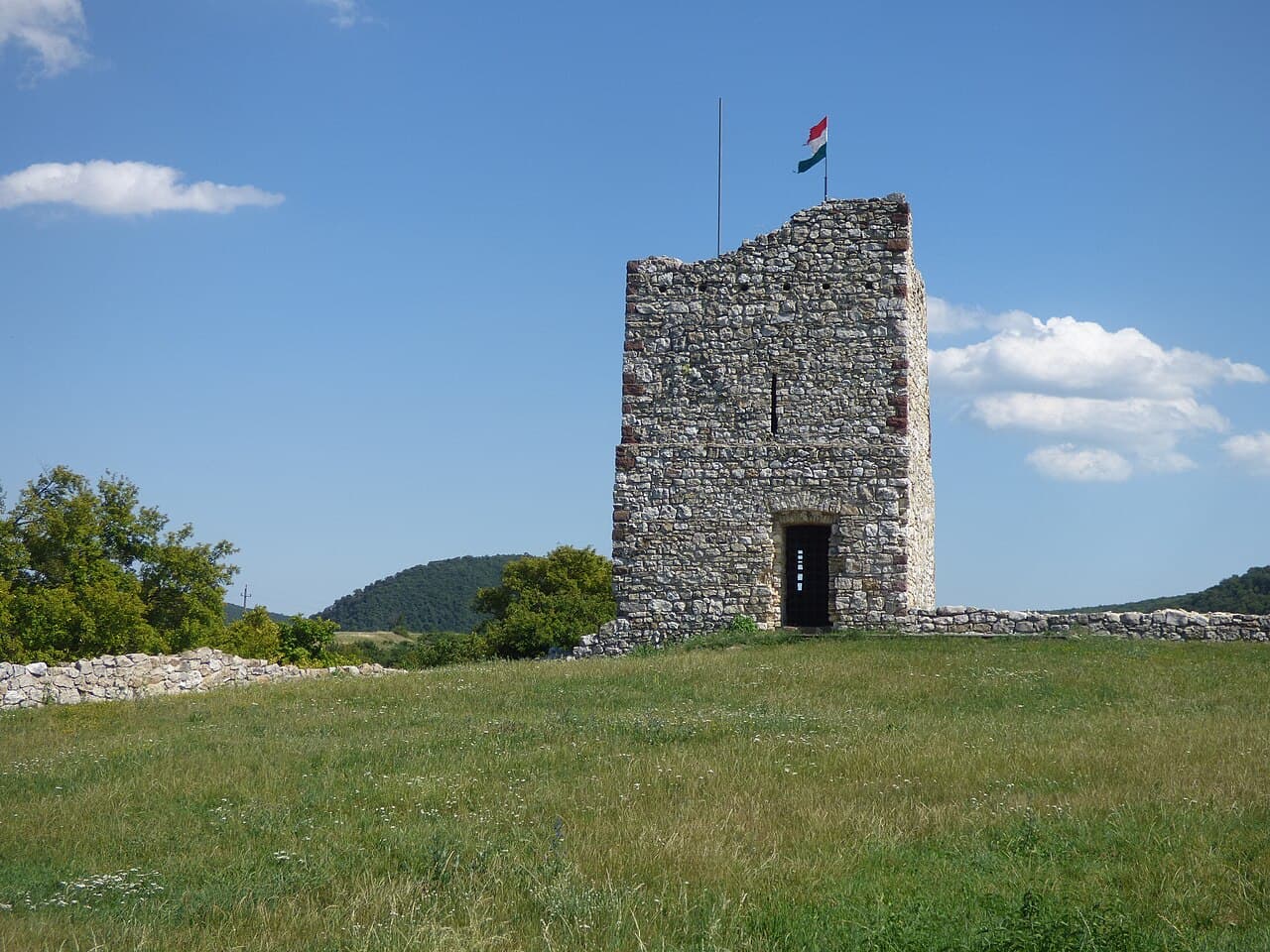
Today, the ruins of Esseg Castle offer valuable insights into Gothic military architecture of the 14th and 15th centuries. The castle's surviving elements include the substantial eastern tower with its defensive arrow slits, sections of the eastern and southern curtain walls, and foundations of residential buildings. Excavations have revealed the layout of the courtyard, the location of the cistern, and the footprint of outer towers added during the castle's expansion.
Conservation efforts have focused on stabilizing the ruins, particularly the southeastern tower and exposed wall segments. The site is registered as a protected Gothic monument under identifier 9788 in Veszprém County, reflecting its cultural and historical importance.
Cultural and heritage significance
Esseg Castle is a significant heritage site exemplifying the evolution of medieval Hungarian fortifications from wooden to stone construction. Its history encapsulates the turbulent political landscape of medieval Hungary, marked by noble family rivalries, royal interventions, and external threats such as the Ottoman incursions. The castle's ruins serve as a tangible link to this past, offering scholars and visitors alike a glimpse into the architectural and historical fabric of the region.
Visitors to the site can explore the remains of the defensive structures and appreciate the strategic location that once made Esseg Castle a formidable fortress. The ongoing archaeological work continues to enrich understanding of the castle's role and development over centuries.
Frequently asked questions (FAQ)
- When was Esseg Castle originally constructed?
- Esseg Castle was originally constructed around 1270, beginning as a wooden fortress before evolving into a stone castle in the 14th century.
- What architectural style characterizes Esseg Castle?
- The castle primarily exhibits Gothic architectural features, especially evident in its stone fortifications and defensive elements added during the 14th and 15th centuries.
- What led to the decline of Esseg Castle?
- The castle fell into decline after the Essegvári family moved to another estate in 1499 and was likely destroyed during a Turkish raid in 1552, leading to its abandonment.
- Are there any notable surviving structures at Esseg Castle?
- Yes, notable surviving structures include the rectangular eastern tower with arrow slits, sections of the eastern and southern walls, and foundations of residential buildings.
- Is Esseg Castle open to visitors and are there archaeological efforts ongoing?
- While specific visiting hours are not widely published, archaeological excavations and conservation efforts have been ongoing since 2003 to preserve and study the ruins.
Photo gallery

Information
Loading map...
Visitor reviews
No reviews yet. Been here? Write the first review and help other travelers!
Write the first reviewVisited this castle? Share your experience
Your review helps other travelers and adds first-hand knowledge to our encyclopedia.