Hegyesdi Castle
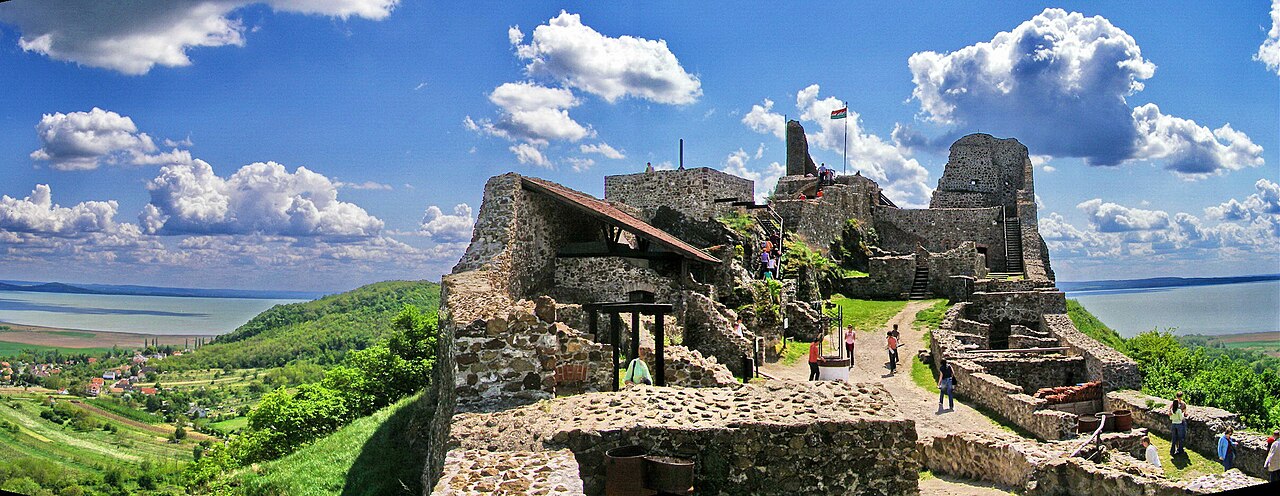
Hegyesdi Castle is a historic medieval fortress located near the village of Hegyesd in modern-day Hungary. Built in the latter half of the 13th century, the castle was originally established as part of a defensive network designed to protect the Kingdom of Hungary from renewed Mongol incursions. Its strategic position atop a volcanic hill rising to 281 meters provided commanding views of the surrounding landscape, including the entrance to the Tapolca Basin, making it a valuable military outpost.
The earliest documented reference to Hegyesdi Castle appears in 1282 within the records of the Veszprém chapter. The fortress was initially constructed by the Atyusz clan, one of Hungary's founding noble families. However, following the extinction of the Atyusz lineage by 1276, the castle passed under royal control. By 1329, it was functioning as a royal stronghold, administered by a castellan who governed the castle and seven nearby serf villages.
Ownership and political significance in the medieval period
Throughout the 14th and 15th centuries, Hegyesdi Castle changed hands among several prominent noble families. The Kőszegi family held the fortress in the early 1300s until their authority was suppressed by King Charles I of Anjou. Subsequently, King Louis I granted the castle to the sons of Mikcsi Ákos. The fortress was later pledged to the Rozgonyi family from 1433 until it was redeemed by Miklós Újlaki in 1451. The Újlaki family maintained control until 1524, after which the castle was bestowed by King Louis II to Ambrus Sárkány of Ákosháza in 1525. It passed by marriage to the Mezőlaky family in 1543, who retained it as a pledged property following ownership disputes in 1544.
Military role during the ottoman-hungarian conflicts
Hegyesdi Castle gained significant military importance during the turbulent Ottoman-Hungarian wars in the mid-16th century. On the night of April 16-17, 1561, Ottoman forces stationed in nearby Veszprém launched a surprise assault, capturing the castle under the command of Pajazit. Following the conquest, the Ottomans undertook substantial fortification efforts, including the construction of a lower palisade fortification known as a huszárvár or "hussar fort" at the base of the hill. This defensive structure, built by armed local Christian serfs under Ottoman orders, was completed before the end of 1561 and served to strengthen the castle's defenses against counterattacks.
In response to the Ottoman occupation, Hungarian forces launched several operations to reclaim the fortress. On July 18, 1561, a Hungarian contingent of approximately 400 cavalry and infantry engaged Ottoman raiders near Lesencefalu, inflicting heavy casualties and killing several commanders. The following year, in March 1562, a larger Hungarian army exceeding 2,100 men, led by multiple captains and supported by artillery under Salm Eck, laid siege to Hegyesdi Castle. After a week-long blockade and unsuccessful negotiations, the Hungarians stormed the fortress on April 8, 1562, successfully recapturing it by evening.
Demolition and decline
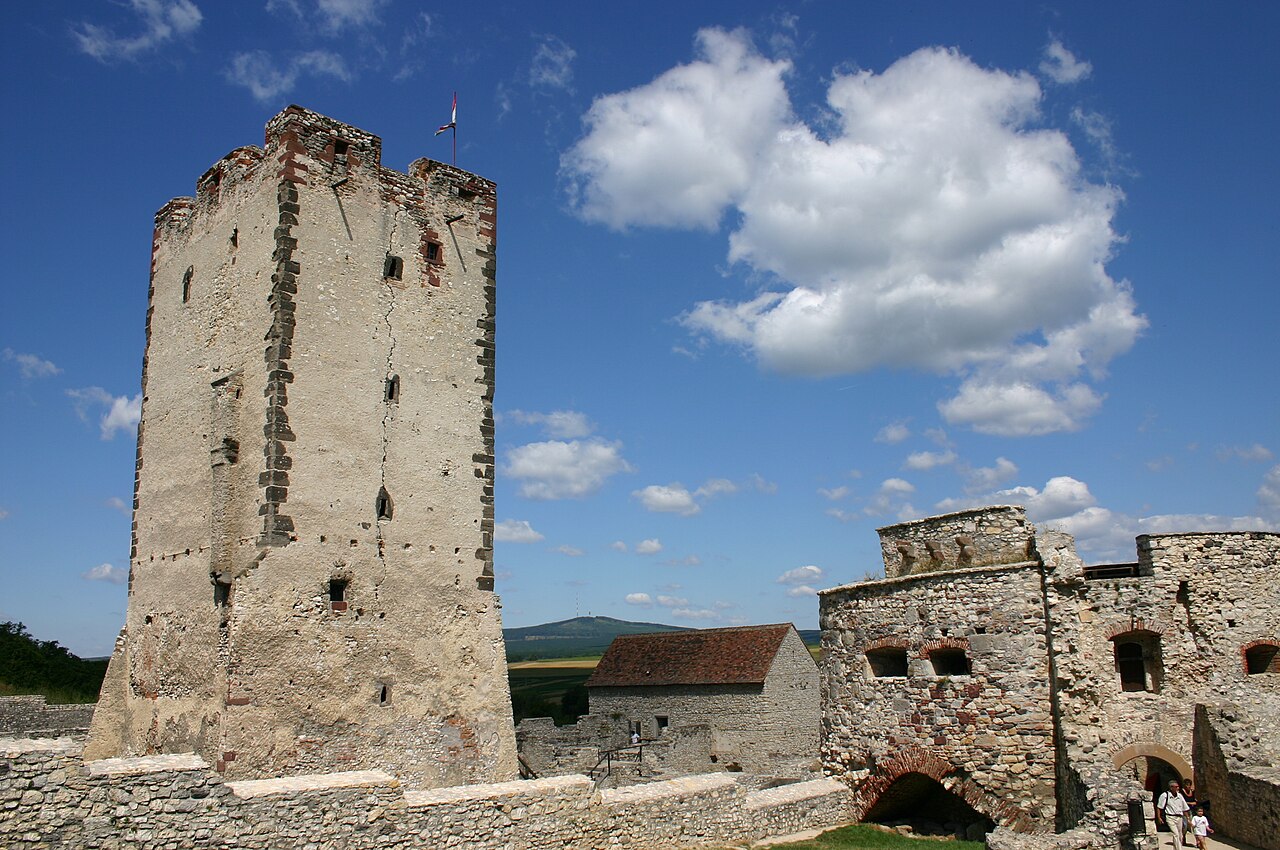
Following the recapture, Salm Eck assessed the fortress as unsuitable for restoration due to its outdated defenses and structural condition. Consequently, a demolition order was issued, and the castle was dismantled over the subsequent days. It was never rebuilt, gradually falling into ruin over the following centuries. Today, Hegyesdi Castle remains a heavily deteriorated ruin, with only scant remnants visible in the landscape near the modern main road 77.
Architectural features and site layout
Hegyesdi Castle originally occupied approximately 190 square meters atop its volcanic hill. Access to the fortress was via a winding path ascending the hillside, leading to an upper fortification protected by a slender defensive wall punctuated by small towers at intervals. This modest stronghold was designed primarily to accommodate a considerable infantry presence rather than large garrisons or heavy artillery.
The Ottoman addition of the huszárvár at the hill's base represents a significant adaptation to the castle's defenses. Constructed of thick wooden stakes, this palisade fortification was intended to provide an additional layer of protection against Hungarian counterattacks. The use of local Christian serfs as builders and defenders under Ottoman command illustrates the complex social dynamics during this period of occupation.
Despite the limited physical remains, the site preserves the tangible footprint of a medieval stronghold that witnessed notable historical episodes involving Hungarian nobles, Ottoman forces, and royal armies along the shifting frontier of Central Europe. No inscriptions, decorative stonework, or detailed archaeological finds have been reported at the site, and no restoration or conservation efforts have been undertaken, leaving the castle in a fragmentary state reflective of centuries of decay.
Cultural significance and literary mentions
Beyond its historical and military importance, Hegyesdi Castle holds a place in Hungarian cultural memory. It is featured as a setting in Péter Bogáti's novel "Halló, itt Mátyás király", where a fictionalized lord named Drágffy Bertalan is portrayed as the castle's owner. This literary association contributes to the castle's enduring presence in the national imagination despite its ruined condition.
Frequently asked questions (FAQ)
- How do I get to Hegyesdi Castle?
- Hegyesdi Castle is located near the village of Hegyesd in Veszprém County, Hungary. Visitors can reach the site by car via main road 77, with the ruins situated close to this road. Due to the castle's ruined condition, access may involve walking on uneven terrain.
- What is the historical significance of Hegyesdi Castle?
- Hegyesdi Castle played a key role in the medieval defense network of the Kingdom of Hungary and was a focal point during the Ottoman-Hungarian conflicts in the 16th century. It witnessed multiple changes in ownership among noble families and was the site of a notable siege and recapture in 1562.
- Can I visit the ruins of Hegyesdi Castle?
- Yes, visitors can explore the ruins of Hegyesdi Castle, although the remains are heavily deteriorated and not developed as a tourist site. There are no visitor facilities or conservation efforts on site, so caution is advised when exploring the area.
- When was Hegyesdi Castle built?
- Hegyesdi Castle was constructed in the latter half of the 13th century, initially by the Atyusz clan as part of Hungary's defensive network against Mongol invasions.
- Why was Hegyesdi Castle demolished?
- After Hungarian forces recaptured Hegyesdi Castle in 1562, the fortress was deemed unsuitable for restoration by military commander Salm Eck. Consequently, it was ordered to be demolished to prevent its future military use, leading to its ruinous state today.
Information
Website
Visit websiteSources & official resources
Verify the information above using these authoritative references.
Loading map...
Visitor reviews
No reviews yet. Been here? Write the first review and help other travelers!
Write the first reviewVisited this castle? Share your experience
Your review helps other travelers and adds first-hand knowledge to our encyclopedia.