Kindlestown Castle
Kindlestown Castle is a significant late 13th-century Anglo-Norman hill castle located near Greystones in County Wicklow, Ireland. Constructed as part of the English colonial frontier known as the Pale, the castle served as a fortified residence and military stronghold during a period of intense conflict between Anglo-Norman settlers and native Gaelic clans, particularly the O’Byrnes. Its strategic position on the slopes of Kindlestown Hill afforded commanding views over the surrounding countryside and the Irish Sea, enhancing its defensive role in controlling the region.
Historical background and ownership
The origins of Kindlestown Castle may trace back to the early 13th century, with some records suggesting that Walter de Bendeville initiated construction around 1225. However, the castle as it is primarily recognized today is attributed to Albert de Kenley, the Sheriff of Kildare in 1301. Albert married Joan, widow of Sir Ralph FitzDermot, in 1292 and managed lands around Kindlestown, including stewardship for his stepson John FitzDermot. The castle was likely built or significantly rebuilt by de Kenley to defend English-controlled territories against the persistent threat posed by the native Irish clans.
During the early 14th century, Kindlestown Castle played a crucial defensive role amid frequent hostilities. After the O’Byrnes attacked and burned Rathdown Castle in 1301, Kindlestown became a refuge for displaced settlers. By 1305, ongoing pressures forced John FitzDermot to surrender Rathdown lands to Nigel le Brun, the Escheator of Ireland, underscoring the volatility of the region.
The castle changed hands during the late 14th century following military confrontations with the O’Byrne clan. In 1377, the O’Byrnes captured Kindlestown Castle, but it was soon retaken by Robert Wikeford, Lord Chancellor of Ireland. Subsequently, the estate passed to the Archbold family, who retained possession through the 15th and early 17th centuries. An attempted siege led by Donnacha O’Byrne around 1402 was repulsed by the Archbold defenders.
Records from inquisitions during the reign of King James I in 1621 reveal the estate included a manor with 400 acres and a water mill, indicating its economic importance. Financial difficulties later compelled Edward Archbold to sell Kindlestown and its lands to William Brabazon, 1st Earl of Meath, in 1630.
Architectural features and remains
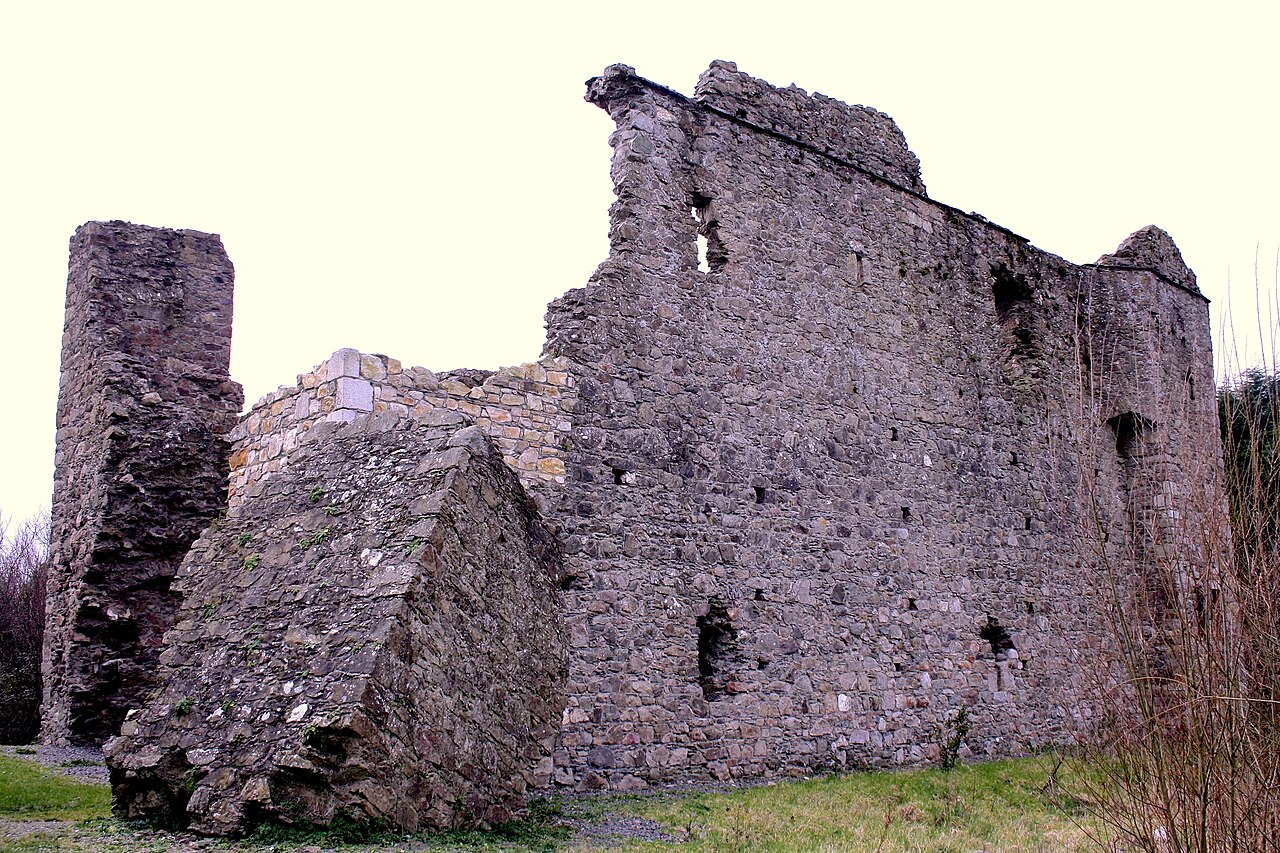
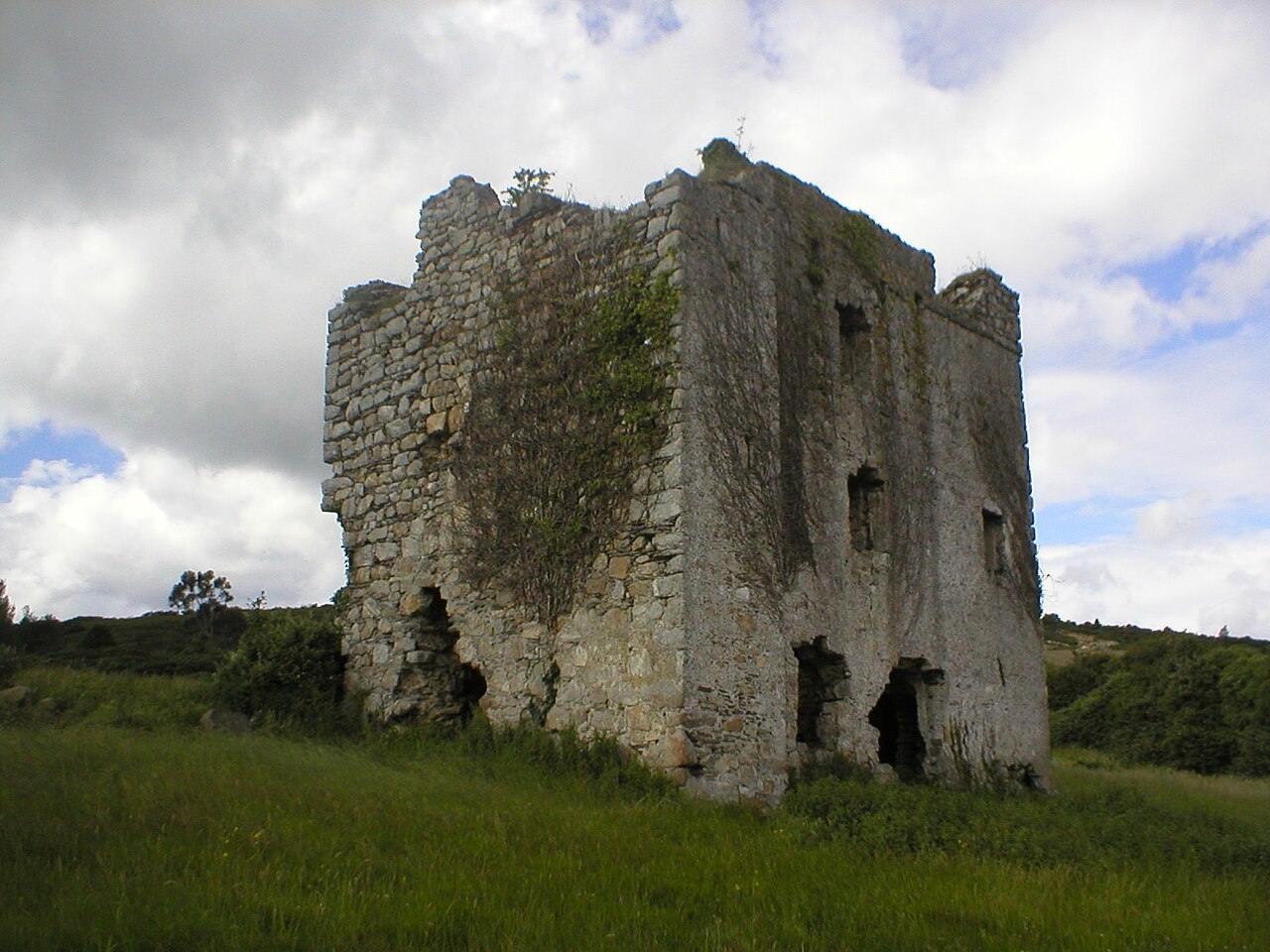
Kindlestown Castle survives as a two-storey hall house typical of late 13th-century Anglo-Norman architecture. The building measures approximately 21 meters in length and just under 10 meters in width externally, with robust limestone walls about 1.5 meters thick rising to roughly 8 meters high. Constructed mainly from rough, locally sourced limestone, the castle combined residential comfort with defensive strength.
The northern and eastern walls remain almost entirely intact up to the parapet, a low protective wall at roof level, while the southern and western walls were dismantled after the medieval period. At the northwest corner, a small projecting tower survives, likely serving as an additional defensive lookout.
Inside, the ground floor features the original barrel vault, a curved stone ceiling that reinforced the structure and provided fire resistance. The main entrance is located in the eastern wall, adjacent to which is a mural staircase built within the wall thickness, leading to the upper floor. Narrow defensive arrowslits punctuate the walls, widening internally into segmental-arched window seats on the first floor, providing both defense and comfort.
Traces of a stone string-course, a horizontal molding that may have separated floors or reinforced the walls, are visible on the façade, along with remnants of a slated parapet that once crowned the building. The battlements and arrow slits emphasize the castle’s military purpose during a turbulent era.
Strategic location and defensive role
Perched on the slopes of Kindlestown Hill, the castle’s location was carefully chosen for its commanding views over the surrounding landscape and the Irish Sea. This vantage point allowed the castle’s occupants to monitor movements and defend the English-controlled Pale against incursions by native Irish clans, especially the O’Byrnes, who were a persistent threat throughout the medieval period.
The castle’s role as a refuge and stronghold during frequent conflicts highlights its importance in the Anglo-Norman defensive network in Ireland. Its robust construction and defensive features reflect the need for security in a frontier zone marked by ongoing warfare and political instability.
Kindlestown castle today
Today, Kindlestown Castle stands as a ruined but well-preserved example of a late medieval Anglo-Norman hall house. It is recognized as a National Monument of Ireland, preserving the legacy of the English colonial presence in County Wicklow and the turbulent history of the Pale.
Visitors to the site can observe the surviving walls, battlements, vaulted ceilings, and tower remains, which together provide a tangible connection to the castle’s medieval past. The site offers insight into the architectural style, defensive strategies, and social history of Anglo-Norman Ireland during the late 13th to early 17th centuries.
Preservation efforts have focused on maintaining the structural integrity of the castle’s remaining fabric, allowing it to serve as a valuable educational and cultural resource. Its setting on Kindlestown Hill continues to offer impressive views, linking visitors with the landscape that shaped its historical role.
Frequently asked questions (FAQ)
- When was Kindlestown Castle built and by whom?
- Kindlestown Castle was constructed in the late 13th century, likely initiated by Walter de Bendeville around 1225 and significantly built or rebuilt by Albert de Kenley in the early 14th century.
- What architectural features characterize Kindlestown Castle?
- The castle is a two-storey hall house with thick limestone walls, a barrel vaulted ground floor, narrow defensive arrowslits, a mural staircase, and a small projecting tower at the northwest corner.
- What was the strategic importance of Kindlestown Castle?
- Located on Kindlestown Hill, the castle commanded wide views over the surrounding countryside and the Irish Sea, serving as a defensive stronghold against native Irish clans, particularly the O’Byrnes.
- Who owned Kindlestown Castle during the 15th and 17th centuries?
- The Archbold family owned the castle during the 15th and early 17th centuries before financial difficulties led to its sale to William Brabazon, 1st Earl of Meath, in 1630.
- Is Kindlestown Castle accessible to visitors today?
- Kindlestown Castle remains a ruin and a National Monument of Ireland. While specific visiting hours and ticket prices are not widely advertised, the site is accessible for those interested in medieval architecture and history.
Information
Loading map...
Visitor reviews
No reviews yet. Been here? Write the first review and help other travelers!
Write the first reviewVisited this castle? Share your experience
Your review helps other travelers and adds first-hand knowledge to our encyclopedia.