Puck's Castle
Puck's Castle, located in Rathmichael, County Dublin, is a fascinating example of a 16th-century fortified homestead steeped in legend and mystery. Built around 1500, this castle is part of a network of defensive structures erected during the late medieval period to secure the region. Though now largely in ruins, Puck's Castle remains a significant cultural landmark, notable for its evocative folklore and its proximity to other historic sites such as ancient ringforts and medieval church ruins.
Historical context and origins
The origins of Puck's Castle are shrouded in local legend and scarce historical records. It is traditionally believed that the castle was constructed using stones from the nearby Bearna Dhearg ringfort, a fortified circular settlement typical of early medieval Ireland. This connection to the ringfort ties the castle to a much older tradition of fortification in the area, emphasizing continuity in defensive architecture from the early medieval period through to the late medieval era.
The name "Puck" derives from the Gaelic word "púca" or "pooka", meaning a ghost or spirit, reflecting the castle's association with supernatural folklore. This term has linguistic cousins across various Celtic and Germanic languages, such as "puki" in Icelandic, "piskey" in Cornish, "pwcca" in Welsh, and "pawkey" in Scottish dialects. The name was famously popularized by William Shakespeare in his play A Midsummer Night's Dream, where "Puck" is a mischievous fairy. This rich linguistic heritage highlights the cultural significance of the castle's name and its place in Irish folklore.
Architectural features and structure
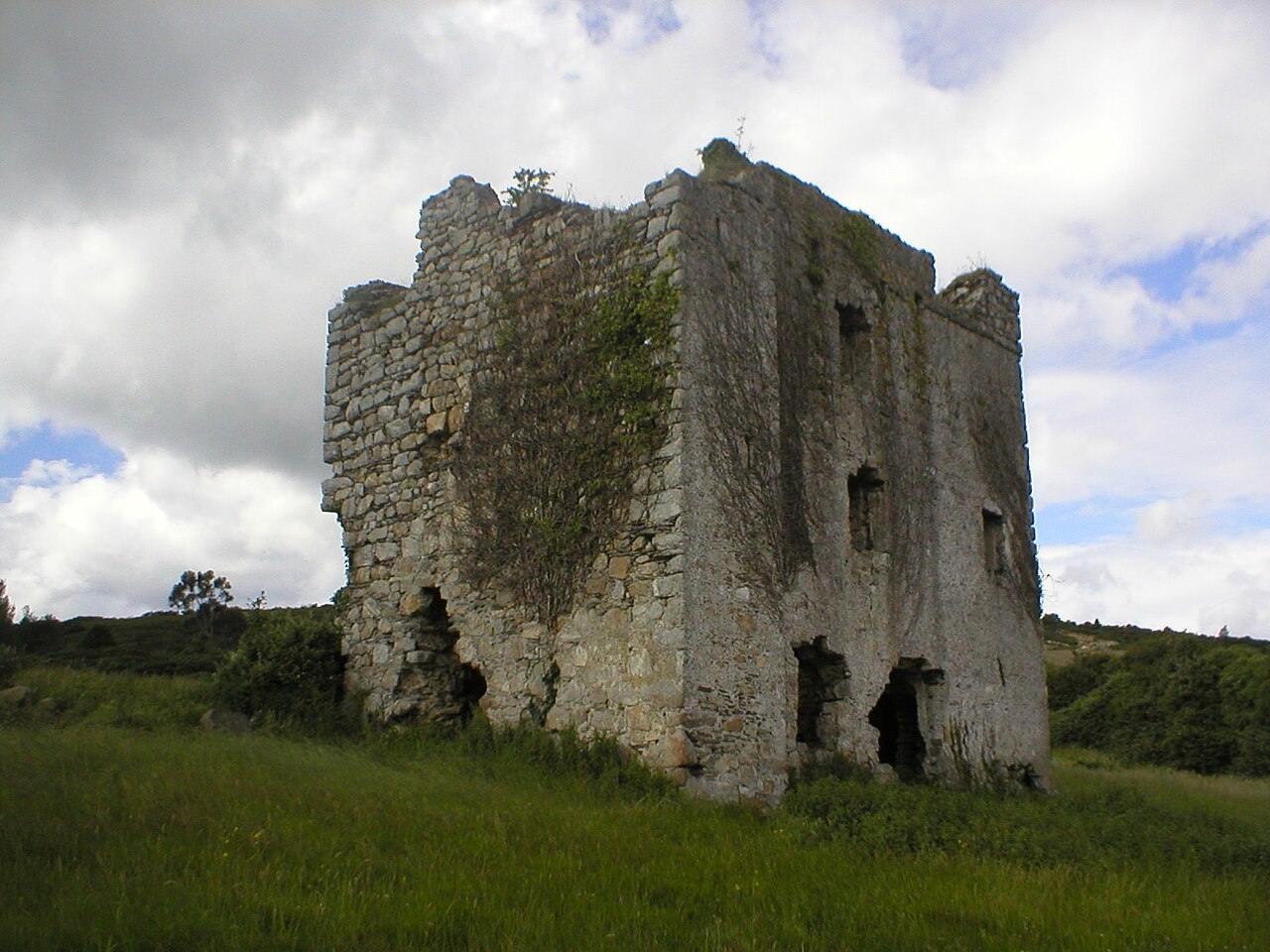
Puck's Castle was constructed as a fortified homestead rather than a large military fortress. Its design reflects typical late medieval defensive architecture intended for local gentry or landowners. The castle originally featured thick stone walls, narrow windows for archery defense, and a simple rectangular plan. Although much of the structure has succumbed to time and neglect, remnants of the walls and some architectural details remain visible, offering insight into its original defensive purpose.
The castle's location in a rural setting near Dun Laoghaire-Rathdown provided strategic advantages, including visibility over surrounding lands and proximity to the ancient ringforts that dotted the landscape. These ringforts, circular fortified settlements from the early medieval period, were common in Ireland and served as centers of local power and protection. The castle's construction near such a ringfort suggests a deliberate continuation of defensive presence in the area.
Local folklore and supernatural associations
The name Puck's Castle is inseparable from the folklore that surrounds it. The belief that the castle was built from "sacred stones" taken from the Bearna Dhearg ringfort imbues the site with a mystical aura. Local tradition holds that the castle is haunted by spirits or fairies, in keeping with the meaning of "púca". This has made the castle a subject of ghost stories and supernatural speculation, attracting visitors intrigued by its eerie reputation.
Such folklore is common in Irish culture, where ancient sites often carry stories of the supernatural. The castle's association with the "púca" connects it to a broader Celtic tradition of spirit beings that inhabit natural and man-made landscapes. Whether these tales reflect actual historical events or are purely mythological, they contribute to the castle's enduring mystique.
Surrounding historical landscape
The area around Puck's Castle is rich in historical and archaeological significance. Rathmichael itself is named after a nearby medieval church, possibly dedicated to a saint named Mac Táil (Michael), giving the Irish name Ráth Mhic Táil, meaning "ringfort of Mac Táil." This name underscores the importance of ringforts in the local landscape and their connection to early Christian sites.
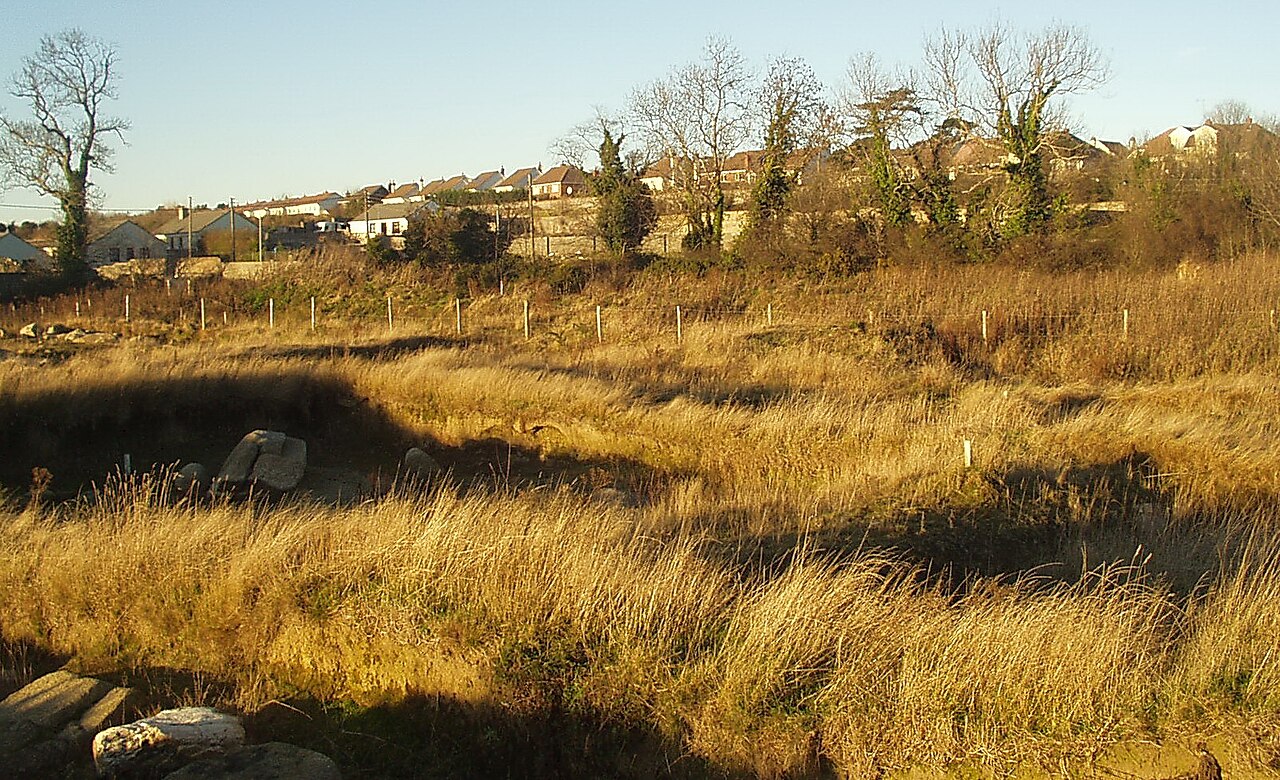
In addition to the castle and the church ruins, the vicinity contains the remains of several ringforts, which were common defensive and domestic structures in early medieval Ireland. These sites collectively illustrate the layered history of settlement and defense in the region, spanning from the early medieval period through the late medieval era when Puck's Castle was built.
Current condition and preservation
Today, Puck's Castle stands as ruins, its walls partially collapsed and overgrown with vegetation. The site is not formally maintained as a tourist attraction and is often visited by local residents, walkers, and grazing cattle. Despite its dilapidated state, the castle remains an evocative symbol of Ireland's medieval past and a point of interest for those fascinated by history and folklore.
There are no formal visitor facilities or guided tours available, and access is generally informal. The castle's remote and quiet setting adds to its atmospheric appeal but also means that preservation efforts are limited. The ruins serve as a poignant reminder of the passage of time and the blending of history with legend.
Frequently asked questions (FAQ)
- How do I get to Puck's Castle in Rathmichael?
- Puck's Castle is located in Rathmichael, County Dublin, accessible by local roads from Dun Laoghaire-Rathdown. Visitors typically reach the site by car or on foot from nearby public areas, as there is no formal public transport directly to the castle.
- What is the historical significance of Puck's Castle?
- Puck's Castle is a late medieval fortified homestead dating from around 1500. It is historically significant for its connection to local defensive networks and its association with ancient ringforts in the Rathmichael area.
- Is Puck's Castle open to the public?
- Yes, Puck's Castle is accessible to the public, but it is in ruins and there are no visitor facilities or guided tours. Visitors should exercise caution when exploring the site due to its condition.
- Why is Puck's Castle associated with ghosts and folklore?
- The castle's name derives from the Gaelic 'púca,' meaning ghost or spirit, and local legends claim it was built from sacred stones taken from a nearby ringfort. These stories contribute to its reputation as a haunted site.
- When was Puck's Castle built?
- Puck's Castle was constructed around the year 1500, during the late medieval period, as part of a series of fortified homesteads in the region.
Information
Loading map...
Visitor reviews
No reviews yet. Been here? Write the first review and help other travelers!
Write the first reviewVisited this castle? Share your experience
Your review helps other travelers and adds first-hand knowledge to our encyclopedia.