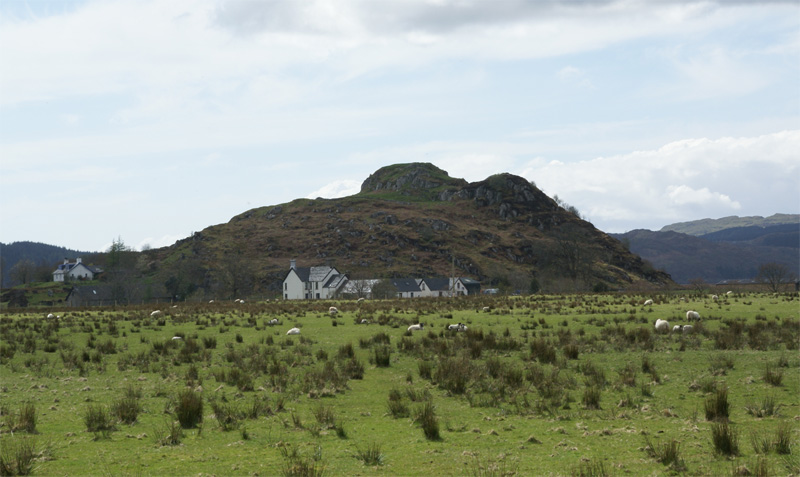
Kilmory Castle
Kilmory Castle is a prominent 19th-century Gothic mansion situated just south of Lochgilphead in Scotland. Today, it functions as the headquarters for Argyll and Bute Council, while its extensive gardens remain open to the public as part of a country park on the former estate. The castle's history reflects centuries of Scottish architectural evolution, landownership, and civic use.
Early history and landownership
The area around Kilmory has a long-standing historical significance, with records indicating the presence of a church in ancient times. By the 1550s, the church and lands of Kilmory were under the control of the Abbot of Paisley, illustrating the ecclesiastical influence in the region during the late medieval period. The estate transitioned to secular ownership in 1575 when it was acquired by Donald Campbell of Kilmory. The Campbell family maintained possession of the estate for over 250 years, establishing a lasting legacy in the area.
Although the current castle dates primarily from the 19th century, there is evidence suggesting a house existed on the site as early as the 14th century. This earlier structure likely served as the ancestral home of the Campbell family before the extensive rebuilding that transformed it into the present mansion.
19th-century reconstruction and architectural style
Between 1816 and 1820, the Campbells either built a new house or significantly extended the existing one. This phase marked the beginning of the estate’s transformation into a grand residence. The most substantial changes came after Eliza Campbell, eldest daughter and co-heir of Peter Campbell, married Sir John Orde, 2nd Baronet, in 1824. Following the deaths of Peter Campbell in 1828 and Eliza in 1829, Sir John Orde purchased the estate.
Sir John Orde commissioned architect Joseph Gordon Davis to design a new mansion in the Gothic Revival style, a popular architectural movement in 19th-century Britain that sought to revive medieval Gothic elements. The new design incorporated the core of the older Campbell house but expanded it into an L-plan layout. A distinctive feature was the addition of a large octagonal tower at the southwest corner, enhancing the building’s silhouette and grandeur.
The Gothic style is evident in the castle's pointed arches, decorative tracery, and battlement-like parapets, which contribute to its romantic and imposing appearance. This architectural approach reflected the 19th century’s fascination with medieval aesthetics and the desire to evoke historical continuity and prestige.
Garden and estate improvements
Alongside the architectural enhancements, Sir John Orde invested in improving the estate grounds. In 1830, he engaged William Hooker, a notable landscape gardener, to extend and refine the gardens. These improvements included formal planting schemes, walkways, and ornamental features that complemented the Gothic mansion and provided a picturesque setting.
Further extensions and modifications to the house were undertaken in the 1860s, reflecting ongoing adaptation to the needs and tastes of the owners. The estate remained in the hands of the Campbell-Orde baronets until 1938, when it passed through several private owners.
20th-century uses and preservation
During the 20th century, Kilmory Castle served various roles including a hotel, hostel, and conference centre. These changes in use illustrate the challenges of maintaining large historic estates and the need to adapt them for modern functions.
In 1974, the castle was purchased by Argyll County Council to serve as the headquarters for the newly formed Argyll and Bute District Council in 1975. This marked a significant shift from private residence to public administrative use. The castle continued as the headquarters after the local government reorganization in 1995, becoming the center for the unitary authority of Argyll and Bute.
Between 1980 and 1982, an office block extension was added to the castle to increase workspace. Unfortunately, a fire in 1983 caused damage to the main house, necessitating extensive interior refurbishment. These restoration efforts have preserved the castle’s architectural integrity while accommodating its role as a modern administrative building.
Architectural features and layout
Kilmory Castle’s L-plan design integrates the older house core with the 19th-century Gothic additions. The large octagonal tower at the southwest corner is a prominent architectural feature, providing both aesthetic appeal and functional space. The exterior displays characteristic Gothic elements such as pointed windows, decorative stonework, and crenellated parapets.
The interior, while altered by the fire and subsequent restoration, retains elements of 19th-century design, including ornate plasterwork, wood paneling, and period fireplaces. The castle’s layout includes formal reception rooms, private chambers, and service areas arranged to suit both residential and administrative functions.
Gardens and parkland
The surrounding gardens, originally expanded by William Hooker, remain a significant aspect of the estate. They combine formal and informal landscaping, featuring mature trees, flower beds, and pathways. The gardens are accessible to the public as part of a country park, offering visitors an opportunity to experience the historic landscape setting of Kilmory Castle.
Historical significance and heritage
Kilmory Castle exemplifies the adaptation of a historic estate through centuries of Scottish history. Its connection to the Campbell family and later the Campbell-Orde baronets reflects the continuity of landed gentry in the region. The castle’s Gothic Revival architecture represents 19th-century tastes and the romanticization of medieval styles.
Today, Kilmory Castle’s role as a council headquarters ensures its preservation and continued use, integrating heritage with contemporary civic life. The public access to its gardens further enhances its cultural value, making it a notable landmark in Argyll and Bute.
Visiting information
The gardens of Kilmory Castle are open to the public, providing a scenic and historic environment for visitors. While the castle itself functions as a government building and is not generally open for tours, the exterior can be viewed from the grounds. Visitors interested in Scottish history, Gothic architecture, and landscaped gardens will find the estate a rewarding destination near Lochgilphead.
Frequently asked questions (FAQ)
- What is the historical significance of Kilmory Castle?
- Kilmory Castle is a notable example of 19th-century Scottish architecture and serves as a reminder of the region's feudal past. Originally built as a private residence, it has witnessed various historical events and changes in ownership, reflecting the rich cultural heritage of the area.
- When was Kilmory Castle built?
- Kilmory Castle was constructed in the early 1800s, specifically around 1817. Its design integrates elements of both classical and Gothic architecture, showcasing the stylistic trends of the time.
- What are the opening hours for Kilmory Castle?
- Kilmory Castle is open to visitors from 10 AM to 5 PM daily, although hours may vary during public holidays. It’s advisable to check the official website for any seasonal changes or special events that might affect visiting hours.
- Can I access Kilmory Castle with a wheelchair?
- Yes, Kilmory Castle aims to be accessible to all visitors. There are designated paths and ramps to help those with mobility challenges navigate the grounds, although some areas of the castle may have limited access due to their historical nature.
- When is the best time to visit Kilmory Castle?
- The best time to visit Kilmory Castle is during the spring and summer months when the weather is mild and the gardens are in full bloom. This period also coincides with local festivals and events that enhance the visitor experience.
- What are the ticket prices for Kilmory Castle?
- Ticket prices for Kilmory Castle are typically £10 for adults, £5 for children, and family packages are available at discounted rates. Check the official site for any special promotions or group rates before your visit.
- Are there any nearby attractions to explore after visiting Kilmory Castle?
- Yes, visitors to Kilmory Castle can explore several nearby attractions, including the stunning Kilmory Woodland and the charming village of Kilmory itself. Additionally, the coastline offers beautiful scenic walks and opportunities for outdoor activities.
Information
Loading map...
Visitor reviews
No reviews yet. Been here? Write the first review and help other travelers!
Write the first reviewVisited this castle? Share your experience
Your review helps other travelers and adds first-hand knowledge to our encyclopedia.