Killiney Castle
Killiney Castle stands as a remarkable example of an 18th-century Georgian mansion that evolved through centuries into a striking Gothic revival residence. Located in the coastal area of Killiney, Ireland, the castle's history is deeply intertwined with notable families, architectural transformations, and significant events in Irish history.
Early history and original construction
The origins of Killiney Castle trace back to 1740 when Colonel John Malpas constructed the original house known as Mount Malpas. This estate was situated on lands historically linked to the Talbot family of Malahide, who had owned property in the region since the 13th century. The original building was a classic Georgian country house featuring two floors above a basement, with a practical layout including six rooms and two large closets per floor. The design emphasized symmetry and proportion, hallmarks of Georgian architecture, and was surrounded by a substantial estate of approximately 150 acres.
Ownership changes and landscaping enhancements
Throughout the 18th century, the estate passed through several hands, including Captain Maunsell in 1755 and Colonel Loftus in 1770. Under Loftus, the property was renamed Loftus Hill, after Henry Loftus, Viscount Ely, a prominent member of parliament. Loftus invested in the estate's grounds, improving access roads and planting ornamental trees and shrubs, which enhanced the demesne's aesthetic appeal. These landscaping efforts contributed to the estate's picturesque setting overlooking the sea.
19th-century transformations and architectural enhancements
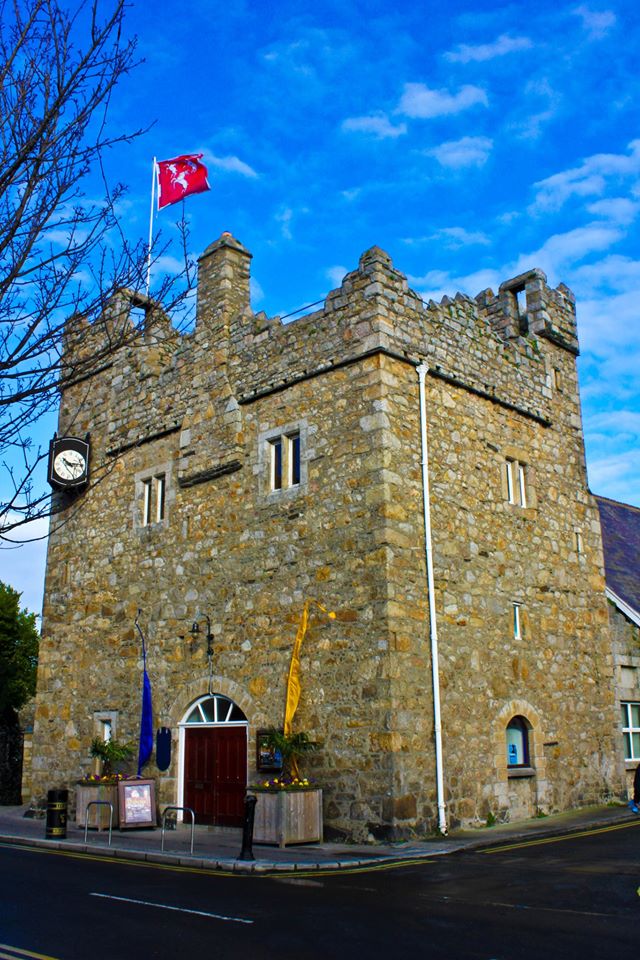
The early 19th century saw the arrival of the Bourchier family, with Thomas Bourchier serving as Clerk of the Crown and Usher of the Black Rod in the Irish House of Commons. The family erected the Bourchier Obelisk on Killiney Hill, a prominent memorial that remains a protected historic structure. By the 1830s, the estate was acquired by Robert Warren, who renamed it Killiney Castle and undertook significant architectural modifications around 1840. Assisted by architect Sandham Symes, Warren added decorative battlements, faux medieval corner towers, turrets, and a Gothic style porch, transforming the simple Georgian mansion into a fortress-like residence reflecting the Gothic revival style popular in the Victorian era.
Additional architectural features by Thomas Chippendall Higgin
Following Warren's tenure, Thomas Chippendall Higgin became the owner and introduced further distinctive elements. He added a half-octagonal tower with castellated battlements and a finely crafted cut-stone entrance featuring a carved plaque inspired by 17th-century architectural motifs. These additions enriched the castle’s historic character and visual complexity, blending different periods and styles harmoniously.
Role in irish conflicts and military use
Killiney Castle's history is marked by its involvement in Ireland's turbulent 20th-century conflicts. During the Irish War of Independence and Irish Civil War (1919–1923), the castle was occupied alternately by the Black and Tans and the Irish Republican Army (IRA). It sustained fire damage and periods of neglect during this time. In the 1930s, it resumed use as an IRA base. During World War II, known in Ireland as The Emergency, the Irish Army requisitioned the castle for military purposes, further embedding it in the nation's defense history.
20th-century restoration and modern use
After decades of conflict and abandonment, the castle entered a new phase in 1970 when the Fitzpatrick family acquired the property and converted it into a hotel. This restoration preserved many of the castle’s historic architectural features, including its battlements, towers, and Gothic elements, while adapting the interior for hospitality use. Today, Killiney Castle operates as a hotel, offering visitors a unique blend of historic ambiance and modern comfort.
Architectural features and estate grounds
The castle’s architecture is a layered tapestry reflecting its evolution from a Georgian mansion to a Gothic revival castle. The original Georgian structure provided a solid foundation with its balanced proportions and functional layout. The mid-19th century additions introduced castellated battlements, turrets, and Gothic porches that dramatically altered its appearance, giving it the character of a romantic medieval fortress.
The later addition of the half-octagonal tower and cut-stone entrance by Higgin added further architectural interest and historical references. Surrounding the house, the estate was carefully landscaped with ornamental gardens, fruit trees, and flowering plants, enclosed by high stone walls except along the seaward side. A carriage road encircled Killiney Hill, bordered by planted trees and shrubs, enhancing the scenic quality of the grounds.
The Church of Ireland parish church dedicated to the Holy Trinity, built in 1859 partly funded by Robert Warren, stands within the estate, underscoring the estate’s historical role in the local community.
Cultural and heritage significance
Killiney Castle embodies the rich history of Irish country houses and their adaptation over centuries. Its transformation from a Georgian mansion to a Gothic revival castle reflects broader architectural trends in Ireland and Britain during the 18th and 19th centuries. The castle’s involvement in key historical events, including Ireland’s struggle for independence and its use during World War II, adds layers of cultural significance.
Today, the castle is a cherished heritage site that offers insight into the social, political, and architectural history of the region. Its preservation as a hotel allows public access to experience its historic interiors and picturesque estate, contributing to local tourism and cultural education.
Frequently asked questions (FAQ)
- What is the historical significance of Killiney Castle?
- Killiney Castle, built in the late 19th century, is a striking example of Victorian architecture. It served as a private residence for the wealthy, showcasing the opulence of the era and the lifestyle of its inhabitants. Today, it stands as a testament to the rich history of the region, attracting history enthusiasts and tourists alike.
- When was Killiney Castle constructed?
- Killiney Castle was constructed in 1865, designed by the renowned architect Sir John Macneill. Its construction marked an important development in the architectural landscape of the area, reflecting the wealth and status of the family who commissioned it. The castle has since been preserved and restored to maintain its historical charm.
- What are the opening hours for Killiney Castle?
- Killiney Castle is open to visitors from 10 AM to 5 PM, Tuesday through Sunday. It is advisable to check the castle's official website for any seasonal variations in hours or special events that might affect access. Planning your visit during these hours ensures you have ample time to explore its grounds and learn about its history.
- Can I visit Killiney Castle with children?
- Yes, Killiney Castle is family-friendly and welcomes visitors of all ages. There are spacious grounds for children to explore, and educational materials available to enhance their understanding of the castle's history. However, adult supervision is recommended to ensure a safe and enjoyable visit for younger guests.
- Is it possible to book guided tours at Killiney Castle?
- Yes, guided tours of Killiney Castle are available and can be booked in advance. These tours provide an in-depth look at the castle's history, architecture, and significance. Booking a guided tour enhances the experience, allowing visitors to engage with knowledgeable guides who can answer questions and share fascinating stories.
- What are the ticket prices for Killiney Castle?
- Ticket prices for Killiney Castle vary based on age and type of tour selected, with discounts available for children and seniors. Generally, adult tickets are priced at £10, while children under 12 can enter for £5. It's best to check the official website for the most current pricing and any special promotions.
- When is the best time to visit Killiney Castle?
- The best time to visit Killiney Castle is during the spring and early autumn months when the weather is pleasant and the gardens are in full bloom. Visiting during these seasons provides a beautiful backdrop for photography and outdoor exploration. Additionally, weekdays tend to be less crowded, allowing for a more relaxed experience.
- What nearby attractions can I visit while at Killiney Castle?
- While visiting Killiney Castle, you can explore the stunning Killiney Hill, which offers panoramic views of Dublin Bay and the surrounding countryside. The nearby Dalkey village, known for its charming streets and historical sites, is also worth a visit. Both attractions enhance your experience, allowing you to enjoy the natural beauty and cultural heritage of the area.
- How do I reach Killiney Castle using public transport?
- Killiney Castle is accessible via public transport, with the DART train service being the most convenient option. The nearest station is Killiney, which is just a short walk from the castle. Regular bus services also operate in the area, providing additional options for visitors traveling from Dublin or other nearby locations.
Information
Website
Visit websiteSources & official resources
Verify the information above using these authoritative references.
Loading map...
Visitor reviews
No reviews yet. Been here? Write the first review and help other travelers!
Write the first reviewVisited this castle? Share your experience
Your review helps other travelers and adds first-hand knowledge to our encyclopedia.