Dalkey Castle
Dalkey Castle stands as a remarkable example of a medieval fortified merchant warehouse located in the coastal town of Dalkey, Ireland. Constructed in the late 14th century, around 1390, by Anglo-Norman merchants, the castle was part of a strategic network designed to secure valuable cargoes arriving by sea. Its position near Dublin made it an essential hub for goods transferred from ships too large to navigate the shallow and muddy River Liffey, which otherwise limited direct access to the city.
The castle's historical significance is deeply tied to its role within the medieval maritime trade system. Dalkey was home to seven fortified merchant castles, each serving as a secure storage and defense point for goods before their onward journey to Dublin. Among these, Dalkey Castle is the only structure to survive with such comprehensive restoration and preservation, offering a unique window into the commercial and defensive architecture of the period.
Historical background and ownership
Initially built by wealthy Anglo-Norman merchants, the castle's primary function was to protect valuable merchandise from piracy and theft. Over time, the castle passed into the hands of prominent local families, notably the Chevers family in the 17th century. The castle earned the nickname "Goat Castle" during this era, derived from the French word "Chevre," meaning goat, reflecting the family's name. Walter Chevers, a notable resident, lived in the castle until his death in 1678.
Subsequent ownership included the Allen family and later Sir William Mayne in the mid-18th century. These transitions reflect the castle's evolving role from a commercial stronghold to a symbol of local prestige and governance.
Architectural features and defensive design
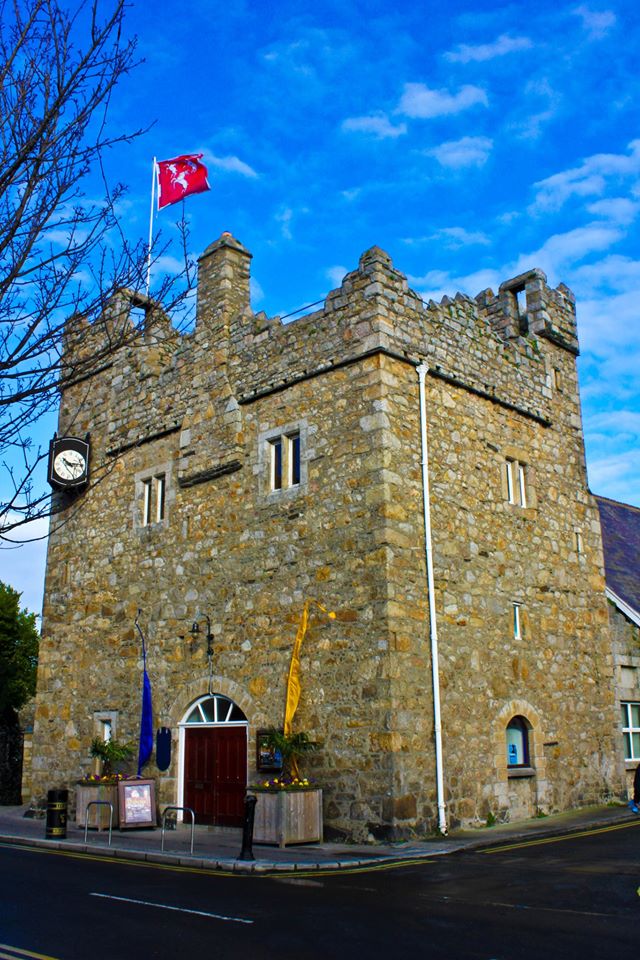
Dalkey Castle is a three-storey structure built in a typical Norman style using rubble masonry. Its design incorporates numerous defensive features characteristic of medieval fortifications. The castle faces onto Castle Street, with battlements or castellation crowning the roofline, providing guard positions for defenders. The presence of machicolations—openings above the walls—allowed defenders to drop stones or boiling liquids on attackers attempting to scale the walls.
The castle's narrow, pointed lancet windows were designed to admit light and air while minimizing vulnerabilities. Defensive loopholes for muskets and small cannon are strategically placed in the walls, highlighting the importance of active defense during periods of conflict.
Inside, the vaulted chamber on the ground floor was constructed to support heavy loads and provide secure storage space. The upper floors contain large rooms likely used for managing goods and conducting administrative tasks. Wall niches within the interior were utilized for storing merchandise safely, emphasizing the castle's commercial function.
The town hall extension
In the late 19th century, as Dalkey evolved into a suburban town, the castle adapted to new civic roles. Around 1890, a single-storey extension with six bays was added behind the castle along White's Villas. This addition served as the Dalkey Town Hall, providing space for municipal meetings and public events. The extension connected directly to the castle's ground floor, integrating the medieval structure into the town's administrative life.
Dalkey castle's civic and cultural significance
From 1863, when town commissioners were established, the castle's first floor was adapted for use as a council chamber starting in 1869. This role continued under the urban district council formed in 1899 until 1930, when Dalkey was incorporated into the borough of Dún Laoghaire. Although no longer serving as a seat of local government, the castle and its adjoining town hall remained important venues for community gatherings.
Notably, the castle hosted a political rally featuring Éamon de Valera in the 1930s, a pivotal figure in Irish history. The 1940s saw theatrical performances held within the space, influencing renowned playwright Hugh Leonard. These cultural activities underscore the castle's enduring role as a focal point for public life in Dalkey.
Restoration and heritage centre
After a period of decline, Dalkey Castle underwent careful restoration in the mid-1990s. It was subsequently incorporated into the Dalkey Heritage Centre, which opened officially on 18 June 1998. Today, the castle and its town hall extension function as a cultural and historical museum, showcasing exhibitions on Ireland's maritime trade, medieval architecture, and local history.
The preservation of Dalkey Castle as the sole surviving merchant castle in the area offers visitors an exceptional opportunity to explore a well-maintained example of medieval commercial fortification. Its combination of defensive architecture, historical layers of civic use, and cultural significance make it a vital heritage site in coastal Ireland.
Architectural context and significance
The castle exemplifies the typical features of Norman military architecture adapted for commercial purposes. Its three-storey layout, vaulted storage chambers, and defensive elements such as battlements, machicolations, and loopholes reflect a blend of practicality and security. The use of rubble masonry was common in the period, providing robust walls capable of withstanding attack.
Dalkey Castle's strategic location near Dublin's port and its role in safeguarding merchant goods highlight the economic importance of fortified warehouses in medieval Ireland. The castle's survival and restoration provide valuable insight into the intersection of commerce, defense, and urban development during the late medieval period.
Comparison with other dalkey merchant castles
While seven merchant castles once stood in Dalkey, Dalkey Castle is unique in its preservation and restoration. The others have largely disappeared or remain in ruins, making Dalkey Castle a critical resource for understanding the medieval maritime trade infrastructure and defensive strategies employed by Anglo-Norman merchants.
Visitor experience and cultural offerings
Today, visitors to Dalkey Castle can explore the medieval architecture alongside exhibitions detailing the castle's history and the broader context of Dalkey's maritime heritage. The adjoining town hall space hosts cultural events, educational programs, and community activities, continuing the castle's long tradition as a center of local life.
The castle's well-preserved defensive features, such as the machicolations and battlements, provide a tangible connection to its medieval past, while the vaulted chambers and storage niches illustrate the commercial functions that defined its original purpose.
Dalkey Castle remains an essential destination for those interested in medieval architecture, Irish history, and the evolution of coastal trade in the British Isles.
Frequently asked questions (FAQ)
- When was Dalkey Castle built and by whom?
- Dalkey Castle was built around 1390 by Anglo-Norman merchants as a fortified warehouse to protect valuable goods arriving by sea.
- What architectural features make Dalkey Castle unique?
- Dalkey Castle features typical Norman defensive elements such as battlements, machicolations, narrow lancet windows, vaulted chambers, and loopholes for muskets and cannon.
- Can visitors explore the interior of Dalkey Castle?
- Yes, visitors can explore the castle's three-storey interior, including the vaulted ground floor chamber and upper rooms, as well as the adjoining town hall extension housing exhibitions.
- What is the significance of the town hall extension at Dalkey Castle?
- The late 19th-century town hall extension provided space for municipal meetings and cultural events, reflecting the castle's evolving civic role in Dalkey.
- Is Dalkey Castle accessible year-round?
- Dalkey Castle is open daily from 10:00 to 17:00, making it accessible year-round for visitors interested in medieval history and heritage.
- Are there any notable historical events associated with Dalkey Castle?
- Dalkey Castle hosted a political rally featuring Éamon de Valera in the 1930s and theatrical performances in the 1940s that influenced playwright Hugh Leonard.
Information
Opening hours
10:00-17:00, daily
Ticket prices
€7 adult, €4 child, €18 family
Current owner
Dalkey Heritage Centre
Website
Visit websiteSources & official resources
Verify the information above using these authoritative references.
Loading map...
Visitor reviews
No reviews yet. Been here? Write the first review and help other travelers!
Write the first reviewVisited this castle? Share your experience
Your review helps other travelers and adds first-hand knowledge to our encyclopedia.