Kildrummy Castle
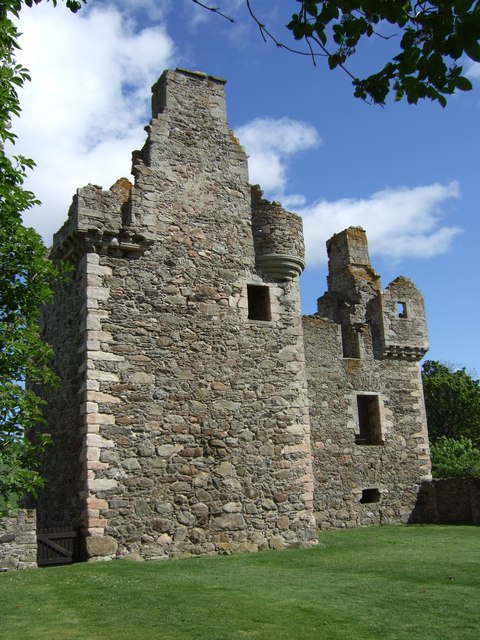
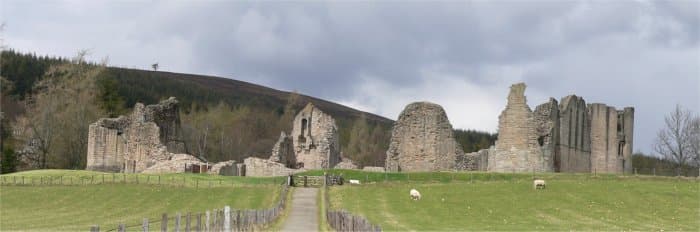
Kildrummy Castle stands as one of the most extensive and historically significant hill castles from the 13th century to survive in eastern Scotland. Located in the parish of Kildrummy, this castle was the principal seat of the Earls of Mar and played a crucial role in Scotland's medieval history. Today, the castle is managed by Historic Environment Scotland and is open to the public, offering a remarkable glimpse into medieval fortification and noble life.
Strategic location and early history
Kildrummy Castle was likely constructed in the mid-13th century, with its origins tied to influential figures such as Gilbert de Moravia or Uilleam, Mormaer of Mar. Its siting was carefully chosen near key ancient trackways including the Elsick Mounth and Cryne Corse Mounth, which were vital routes across the Grampian Mountains. This strategic position allowed the castle to control movement and assert the power of the Earls of Mar in the northeast of Scotland.
Commissioned after 1260, the castle was built under royal authority to reinforce the Mar family's influence. The castle's design reflects the military and administrative needs of the High Medieval period, combining strong defensive features with residential and ceremonial spaces.
Sieges and medieval conflicts
Kildrummy Castle witnessed several significant sieges that underscore its military importance. In 1306, during the Wars of Scottish Independence, it served as a refuge for the family of Robert the Bruce. The castle was besieged by English forces, resulting in the capture and execution of Nigel Bruce and other defenders. This event marked a tragic chapter in the castle's history and highlighted its role as a stronghold for Scottish resistance.
In 1335, the castle endured another siege led by David of Strathbogie, a supporter of the English crown. The defense was notably led by Christina Bruce, Robert the Bruce's sister, who held the castle until her husband, Sir Andrew Murray, arrived to relieve the siege. This successful defense further cemented Kildrummy's reputation as a formidable fortress.
Later, in the reign of David II, the castle was under the wardenship of Walter Maule of Panmure. In 1374, the castle's heiress, Isobel, was seized and married by Alexander Stewart, who claimed the castle and the title of Earl of Mar. These events illustrate the castle's continued political significance throughout the medieval period.
Ownership changes and decline
In 1435, James I confiscated Kildrummy Castle, transforming it into a royal fortress. This marked the end of its role as a noble seat. Nearly a century later, in 1507, the castle was granted to Lord Elphinstone, beginning a new chapter under the Clan Elphinstone. Ownership later passed to the Clan Erskine.
During the 16th century, the castle also functioned as a place of imprisonment. In 1538, it suffered a raid by John Strachan, who stripped the castle of iron fittings for reuse elsewhere. By 1585, records show it serving custodial functions, reflecting its administrative role. The castle's decline accelerated in the 17th century, with the last known keeper recorded in 1645. Following the failed Jacobite rebellion of 1715, Kildrummy was abandoned and gradually fell into ruin.
Architectural features and layout
Castle plan and defenses
Kildrummy Castle is distinctive for its irregular pentagonal, shield-shaped plan, measuring approximately 60 by 70 meters. One side of the castle runs flat along a steep ravine, providing a natural defensive barrier. The opposite end tapers to a point, defended by a massive twin-towered gatehouse that served as the main fortified entrance.
This gatehouse was protected by a wooden drawbridge and a 15th-century forework, an outer defensive wall that added an extra layer of security. Surrounding the castle are extensive earthworks including a dry moat up to 25 meters wide and 5 meters deep, particularly visible on the eastern side, enhancing the castle's defenses.
Towers and internal structures
The castle contained several independent towers, each serving specific functions. The most prominent was the Snow Tower, a tall French-style keep similar in design to that at Bothwell Castle. The Snow Tower housed a well dug directly into its base, ensuring a water supply during sieges. Although it collapsed in 1805, its foundations remain visible today.
Other towers included the Warden Tower, which uniquely featured a prison at its base and was accessed by wooden external staircases, and the Elphinstone Tower, a later addition built as a three-story tower house. Many towers had projecting bases containing guardrooms equipped with fireplaces and latrines, designed for the comfort and efficiency of the garrison.
The Great Hall was a central feature, built over vaulted cellars used for storage. External buildings such as the kitchen and bakehouse supported the daily life of the castle's inhabitants.
Archaeological discoveries and preservation
Excavations conducted in 1925 revealed decorative stone flooring and evidence of battle damage, attesting to the castle's former grandeur and turbulent history. The high-quality stone used in construction was quarried nearby, and after abandonment, much of it was repurposed elsewhere, contributing to the castle's current ruined state.
Today, the castle's foundations and lower walls remain largely intact, providing valuable insight into medieval Scottish castle architecture. The site has been under state care since 1951 and is a protected cultural heritage site. From 1981 to 1997, the grounds hosted the Scottish Sculpture Open, highlighting the site's ongoing cultural significance.
Visiting kildrummy castle
Visitors to Kildrummy Castle can explore the extensive ruins, including the visible remains of the gatehouse, Snow Tower foundations, and defensive earthworks. The dramatic setting overlooking a steep ravine adds to the castle's atmospheric appeal. The site offers a tangible connection to Scotland's medieval past and the turbulent history of the Earls of Mar.
Managed by Historic Environment Scotland, the castle is accessible to the public with informative signage explaining its history and architecture. Nearby accommodations, including a hotel built on the former estate, provide convenient options for visitors wishing to immerse themselves in the region's heritage.
Frequently asked questions (FAQ)
- How do I get to Kildrummy Castle?
- Kildrummy Castle is located near the village of Kildrummy in Aberdeenshire, Scotland. It is accessible by car via local roads from nearby towns such as Huntly and Alford. Parking is available close to the site.
- What are the opening hours of Kildrummy Castle?
- The castle grounds are generally open to visitors during daylight hours year-round. It is advisable to check the Historic Environment Scotland website for any seasonal changes or special closures before planning your visit.
- Is there an entry fee to visit Kildrummy Castle?
- Entry to Kildrummy Castle is free of charge. Donations to help with site maintenance are welcome but not required.
- What is the historical significance of Kildrummy Castle?
- Kildrummy Castle was a principal stronghold of the Earls of Mar and played a key role in the Wars of Scottish Independence, enduring several important sieges. Its architecture reflects the military and noble functions of a 13th-century Scottish castle.
- Can I explore all areas of the castle?
- Visitors can explore the visible ruins including the gatehouse, towers, and defensive earthworks. Some areas may be restricted for safety reasons, but ample paths and signage provide a comprehensive experience of the site.
- Why is Kildrummy Castle important in Scottish history?
- The castle's strategic location near ancient trackways and its role as a refuge during the Wars of Scottish Independence highlight its importance. It was also a seat of the Earls of Mar and witnessed significant political and military events through the medieval period.
Photo gallery

Information
Sources & official resources
Verify the information above using these authoritative references.
Loading map...
Visitor reviews
No reviews yet. Been here? Write the first review and help other travelers!
Write the first reviewVisited this castle? Share your experience
Your review helps other travelers and adds first-hand knowledge to our encyclopedia.