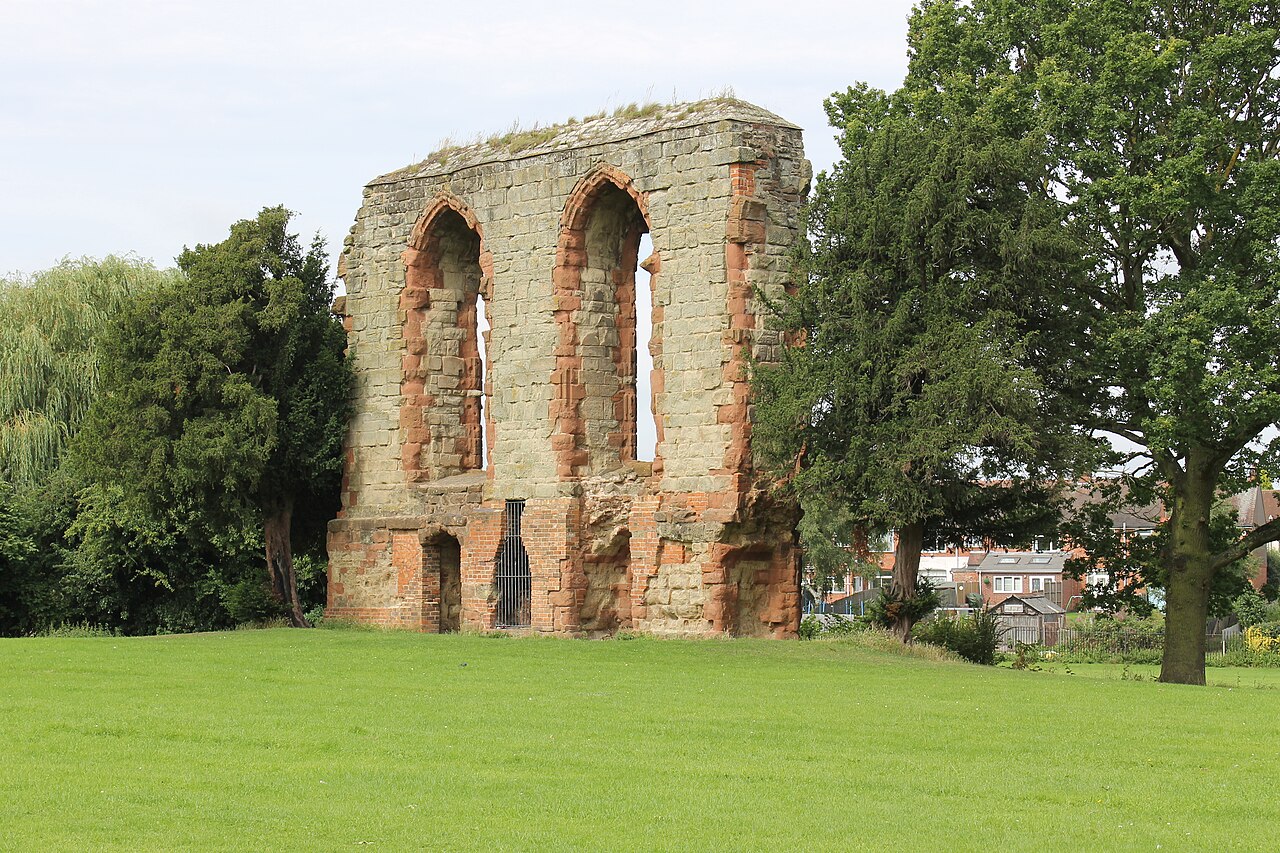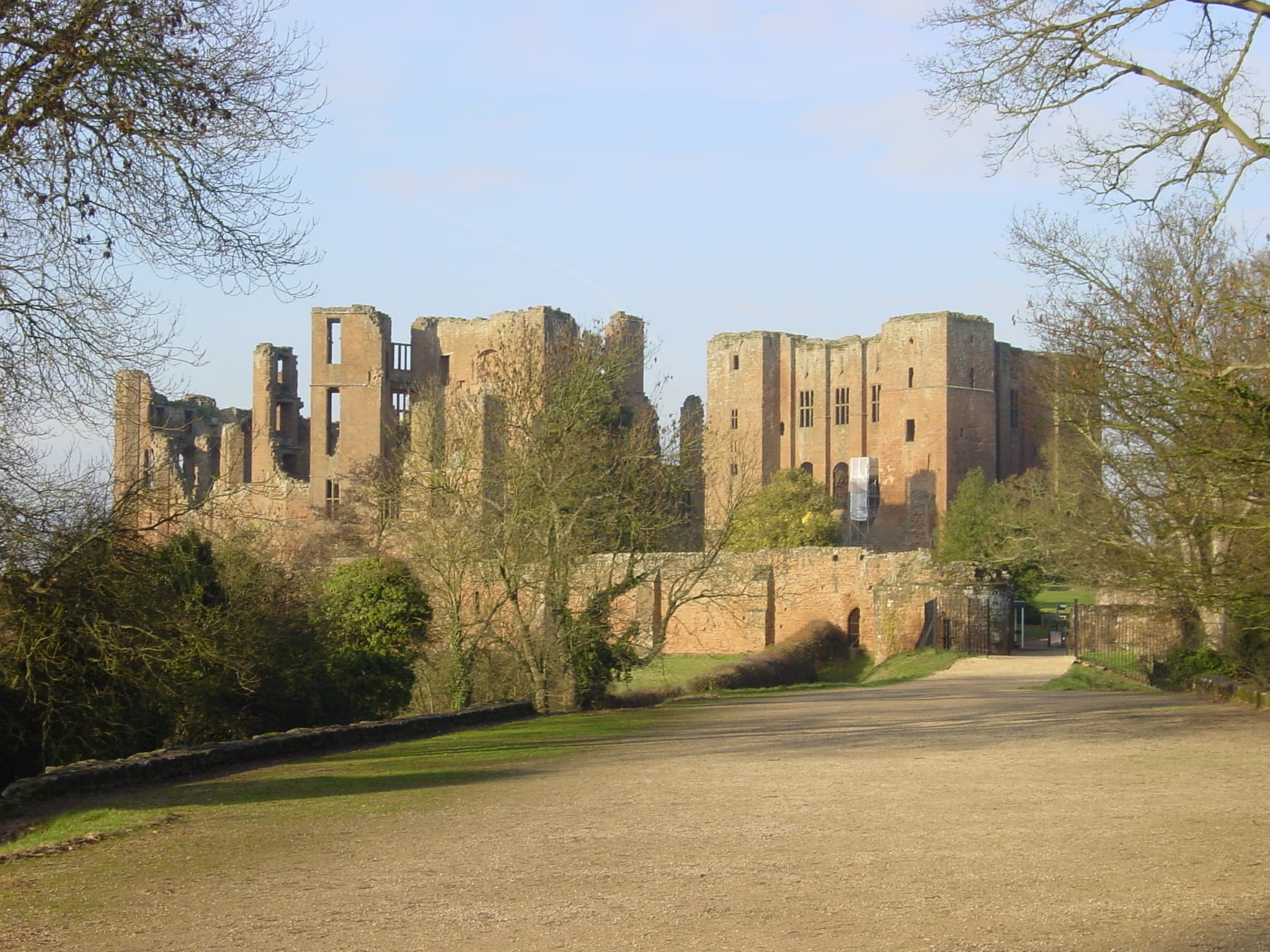
Kenilworth Castle
Kenilworth Castle stands as a monumental example of English medieval and Tudor architecture, showcasing a rich history that spans nearly a millennium. Located in Kenilworth, Warwickshire, this imposing fortress evolved from a Norman stronghold into a grand semi-royal palace, reflecting the architectural and political shifts of England from the 12th century through the Renaissance.
Founded in the early 1120s by Geoffrey de Clinton, a key official under King Henry I, the castle began as a stone great tower atop a motte, marking a strategic defensive position. Over the centuries, its scale and complexity grew dramatically, incorporating multiple baileys, extensive water defenses, and lavish residential quarters. The castle's construction primarily utilized local New Red Sandstone, lending a distinctive warm hue to its formidable walls.
Early medieval origins and norman foundations
The initial phase of Kenilworth Castle's construction centered on establishing a defensible stone keep with thick walls and corner turrets, characteristic of Norman military architecture. This great tower, or hall keep, featured walls approximately five meters thick and rose to about 30 meters in height, with a sloping stone base designed to resist siege engines. The motte supported wooden buildings initially, which were gradually replaced by stone structures as the castle expanded.
Expansion under king john and the creation of the great mere
During the early 13th century, King John undertook significant enhancements to Kenilworth's defenses and infrastructure. He constructed a stone outer bailey wall, reinforced by buttresses but relatively low in height, relying heavily on the natural and artificial water defenses. Key towers such as Mortimer’s Tower, Lunn’s Tower, and the Swan Tower were added or expanded during this period.
A defining feature of King John's improvements was the damming of local streams to create the Great Mere, an extensive artificial lake covering approximately 100 acres. This water defense system surrounded much of the castle, making it one of the most formidable fortresses in England. The mere not only served defensive purposes but also enhanced the castle’s status and aesthetic appeal.
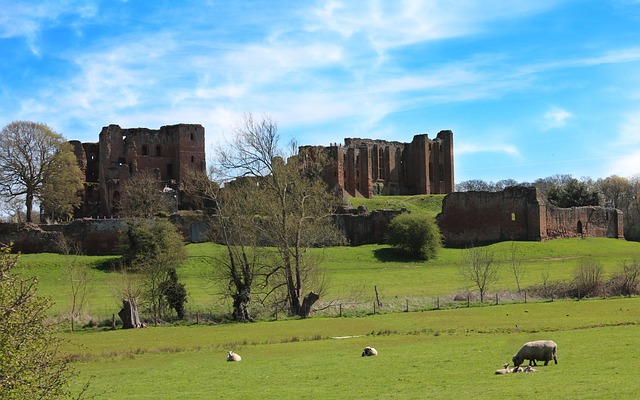
Photo by jLasWilson
The siege of kenilworth and medieval conflicts
Kenilworth Castle played a pivotal role in the Second Barons’ War, enduring the longest siege in medieval English history. The six-month siege of 1266 tested the castle’s formidable defenses, particularly the water barriers of the Great Mere. Despite sustained attacks by royal forces, the castle held out until the rebels negotiated the Dictum of Kenilworth, allowing a peaceful surrender under agreed terms.
This siege highlighted the strategic significance of Kenilworth and its advanced defensive engineering, influencing castle design and military tactics in subsequent centuries.
Transition to a semi-royal palace and gothic architecture
Between the 14th and 15th centuries, Kenilworth Castle transitioned from a purely military fortress to a luxurious semi-royal residence. Ownership passed through notable figures including Simon de Montfort, Edmund Crouchback, Thomas, Earl of Lancaster, and John of Gaunt. The latter was responsible for significant architectural developments in the perpendicular Gothic style.
John of Gaunt’s contributions included the construction of a grand great hall in 1376, boasting the widest unsupported roof in England at the time, designed by William Wintringham. The hall featured large windows overlooking the Great Mere and an impressive stone-vaulted Strong Tower. Gaunt’s buildings favored rectangular layouts, separating service areas on the ground floor from opulent upper chambers, reflecting the evolving needs of courtly life.
The castle also served as a political stage, notably as the site of Edward II’s deposition in 1327. Under the Lancastrian kings, Kenilworth remained a royal stronghold and played a role during the Wars of the Roses.
Tudor modernization and the elizabethan era
The 16th century brought extensive modernization under John Dudley and his son Robert Dudley, Earl of Leicester. They introduced Tudor architectural elements and Renaissance-inspired palace features, transforming Kenilworth into a fashionable noble residence.
Robert Dudley famously hosted Queen Elizabeth I in 1575 for a lavish 19-day visit, during which the castle’s gardens and interiors were showcased in their full splendor. The addition of Leicester’s building, a four-storey Tudor guest wing with large window grids and thin walls, complemented the ancient great tower’s imposing presence.
The castle garden, restored to reflect the 1575 Elizabethan knot garden layout, features a steep terrace, eight square knot gardens, wooden obelisks painted to mimic porphyry stone, a marble fountain with Greek mythological figures, and a timber aviary. This garden exemplifies the Italianate style popular in Tudor England and underscores the castle’s shift from fortress to stately home.
Civil war damage and later history
Following the English Civil War, Kenilworth Castle was deliberately slighted by Parliamentary forces in 1649 to prevent its further military use. This partial destruction affected one wall of the great tower, sections of the outer bailey wall, and battlements, leaving the castle in a state of ruin.
Despite this, the castle remained a site of cultural interest. Antiquarian William Dugdale surveyed and documented the castle in the mid-17th century, preserving knowledge of its medieval form. In the 18th and 19th centuries, Kenilworth became a popular tourist destination, inspired by Sir Walter Scott’s 1821 novel Kenilworth and various artistic works.
In 1937, industrialist Sir John Siddeley acquired the site and later transferred management to the Commissioner of Works. Since 1984, English Heritage has overseen the castle’s preservation and archaeological exploration, including excavations that uncovered 13th-century catapult projectiles from the 1266 siege and restorations of the Elizabethan garden.
Architectural features and castle layout
Kenilworth Castle is a sprawling complex built almost entirely from local New Red Sandstone, reflecting five centuries of English military and domestic architecture. The castle’s layout comprises an outer bailey, an inner court, and several distinct courts and gardens that illustrate its evolution from fortress to palace.
The outer bailey includes the Brays, remnants of a 13th-century barbican featuring earthworks and masonry fragments. The Gallery Tower, a 15th-century gatehouse, guards a 152-metre-long walled causeway known as the Tiltyard. This causeway functioned as a jousting arena and also acted as a dam for the Great Mere.
Notable towers in the outer bailey include Mortimer’s Tower, a Norman gatehouse; Swan Tower, dating from the late 13th century with Tudor-era additions; Lunn’s Tower from the early 13th century; and the 14th-century Water Tower overlooking the Lower Pool.
The inner court sits on a natural knoll and contains the 12th-century great tower with its massive walls and corner turrets. Tudor-era tall windows were added in the 1570s, blending medieval fortification with Renaissance elegance.
John of Gaunt’s late 14th-century buildings in the inner court include the great hall with its expansive roof and ceremonial rooms, the Strong Tower with stone vaulting, and the southern range of state apartments. The large kitchen, measuring 19 by 8 metres, was notably twice the size of kitchens in comparable castles.
Leicester’s building, added by Robert Dudley, extends beyond the bailey wall and features a loggia leading to formal gardens in the Italianate style. The castle’s interior is divided into the base court, left-hand court, and right-hand court, each serving different functions from public to private spaces.
The stable block, built by John Dudley in the 1550s, contrasts with the castle’s other buildings through its vernacular timber-framed upper storey with decorative panelling, visible from Leicester’s building.
To the north-west of the castle lie earthworks marking the site of the Pleasance, a 1414 banqueting house designed as a miniature castle surrounded by diamond-shaped moats. The Pleasance had its own dock on the Great Mere and was accessible only by boat. It was dismantled in the 16th century and finally destroyed in the 1650s.
Current status and visitor experience
Today, Kenilworth Castle is managed by English Heritage and is open to the public. It is a Grade I listed building and a Scheduled Monument, recognized for its architectural and historical significance. Visitors can explore extensive ruins and restored gardens, gaining insight into the castle’s military, political, and cultural past.
The site offers a unique glimpse into medieval fortification, Tudor grandeur, and Elizabethan garden design. Interpretive displays and ongoing archaeological work continue to enhance understanding of this remarkable castle’s legacy.
Frequently asked questions (FAQ)
- How do I get to Kenilworth Castle?
- Kenilworth Castle is located in Warwickshire, England, and is accessible by car, bus, and train. The nearest train station is Kenilworth, which is a short taxi or bus ride from the castle. Parking is available on site for visitors traveling by car.
- What are the opening hours of Kenilworth Castle?
- Kenilworth Castle is typically open daily from 10:00 AM to 5:00 PM, with last admission around 4:30 PM. Hours may vary seasonally, so it is advisable to check the official English Heritage website before visiting.
- Is there an admission fee to visit Kenilworth Castle?
- Admission fees apply to Kenilworth Castle, with prices varying for adults, children, and concessions. English Heritage members usually have free entry. Tickets can be purchased online or at the entrance.
- What is the historical significance of Kenilworth Castle?
- Kenilworth Castle is historically significant for its role in medieval military history, including the longest siege in English history during the Second Barons’ War. It also served as a royal residence and was the site of important political events such as the deposition of Edward II.
- Can I explore the Elizabethan gardens at Kenilworth Castle?
- Yes, visitors can explore the restored Elizabethan gardens, which feature a 16th-century knot garden layout, terraces, fountains, and ornamental structures. The gardens offer insight into Tudor-era landscape design and complement the castle ruins.
- Is Kenilworth Castle accessible for visitors with mobility issues?
- While much of Kenilworth Castle is in ruins with uneven ground, English Heritage strives to make the site accessible. Some areas may be challenging to navigate, but there are designated paths and facilities to assist visitors with mobility issues.
- When is the best time to visit Kenilworth Castle?
- The best time to visit Kenilworth Castle is during late spring to early autumn when the gardens are in full bloom and the weather is favorable for exploring the extensive grounds. Special events and guided tours are often scheduled during these months.
Photo gallery


Information
Sources & official resources
Verify the information above using these authoritative references.
Loading map...
Visitor reviews
No reviews yet. Been here? Write the first review and help other travelers!
Write the first reviewVisited this castle? Share your experience
Your review helps other travelers and adds first-hand knowledge to our encyclopedia.