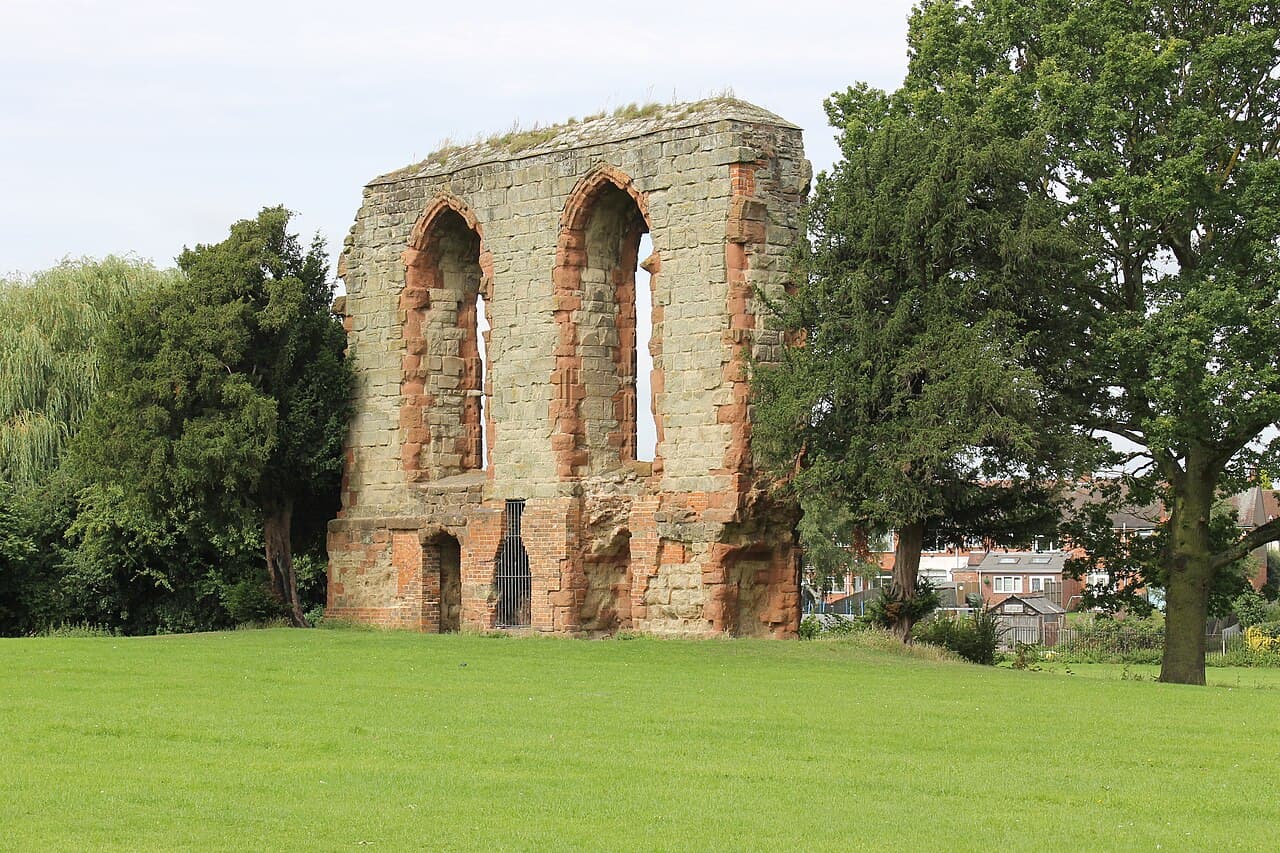
Caludon Castle Ruins
Caludon Castle Ruins in Coventry, England, stand as a testament to the rich medieval heritage and legendary history of the region. The site, now part of Caludon Castle Park, is steeped in stories dating back to the pre-Norman era, notably connected to the famous Lady Godiva, the noblewoman renowned for her legendary naked ride through Coventry's streets before the Norman invasion of 1066. This early association imbues the site with cultural and historical significance that resonates through the centuries.
The earliest major construction on the site was a moated manor house built in 1279, which was later fortified and transformed into what became known as Caludon Castle. This transformation marked the site’s evolution from a noble residence to a fortified structure typical of the late medieval period. The castle's strategic design included a moat and defensive walls, reflecting the architectural and military trends of the time. The moat not only served defensive purposes but also enhanced the aesthetic and status of the manor.
Architectural evolution and the berkeley family's influence
In the 15th century, Caludon Castle passed into the hands of the influential Berkeley family of Gloucestershire. This family was prominent in English nobility and brought significant changes to the castle’s structure and landscape. They undertook a major rebuilding project that not only reinforced the castle’s defenses but also introduced a large lake adjacent to the moat. This lake was created by damming a water source, with the approach road visible today following the remains of the dam, showcasing the integration of natural and man-made features in the castle’s design.
The castle under the Berkeleys was not just a military stronghold but also a center of cultural life. Between 1592 and 1605, the family’s lifestyle was marked by opulence and patronage of the arts. They hosted performances by renowned musicians and staged important theatrical productions, reflecting the Renaissance cultural flowering in England. Local tradition holds that in 1595, William Shakespeare's A Midsummer Night's Dream was first performed at Caludon Castle, commissioned by the Berkeleys to celebrate the marriage of Lord Thomas Berkeley and Elizabeth Carey. This connection to Shakespeare adds a remarkable literary significance to the site, linking it to the golden age of English drama.
The castle's decline and present state
Following its period of prominence, Caludon Castle gradually fell into decline. Like many medieval castles, it lost its military importance and was eventually abandoned as a residence. Over the centuries, much of the castle structure deteriorated, leaving behind only ruins today. These ruins, however, still reveal important architectural elements such as sections of the moat, remnants of fortified walls, and traces of the manor house foundations.
Today, the site is preserved as part of Caludon Castle Park, a public green space that offers visitors a glimpse into medieval life and the layered history of the region. The park’s landscape, including the remains of the moat and lake, continues to reflect the castle’s historical layout and its integration with the natural environment. Interpretive signage and local heritage initiatives help to educate visitors about the castle’s storied past and its significance in English medieval history.
Historical context and significance
Caludon Castle represents a fascinating example of a medieval fortified manor that evolved through centuries of English history. Its links to Lady Godiva connect it to early medieval legends, while the later ownership by the Berkeley family situates it within the social and cultural elite of the late medieval and early Renaissance periods. The castle’s architectural features, including its moat, fortified walls, and the engineered lake, illustrate the defensive and aesthetic priorities of its successive owners.
The castle’s association with Shakespearean theatre and high Renaissance culture further enhances its importance, making it a site of literary as well as architectural and historical interest. While much of the original structure no longer stands, the ruins provide valuable insights into medieval castle construction, noble lifestyles, and the cultural milieu of the time.
Visiting caludon castle ruins today
Visitors to Caludon Castle Ruins can explore the peaceful surroundings of Caludon Castle Park, where the remnants of the castle’s moat and earthworks are visible. The park offers walking trails, open green spaces, and interpretive displays that highlight the site’s historical significance. Although the castle is in a state of ruin, its evocative remains provide a tangible connection to England’s medieval past.
The site is accessible year-round, making it a popular destination for history enthusiasts, families, and those interested in England’s rich cultural heritage. Nearby Coventry also offers additional attractions related to medieval history and the legacy of Lady Godiva, enriching the visitor experience.
Frequently asked questions (FAQ)
- How do I get to Caludon Castle Ruins?
- Caludon Castle Ruins is located in Coventry, easily accessible by car and public transport. If you're traveling by train, the nearest station is Coventry Railway Station, from where you can take a bus or taxi to the site.
- What is the historical significance of Caludon Castle?
- Caludon Castle dates back to the 13th century and played a crucial role during the medieval period as a fortified residence. It is known for its association with the influential de Vere family and its strategic location in the region's history.
- When was Caludon Castle built?
- Caludon Castle was originally constructed in the early 13th century, with significant modifications made in the following centuries. The ruins you see today reflect the castle's rich history and architectural evolution over time.
- Can I explore the ruins of Caludon Castle?
- Yes, visitors are welcome to explore the ruins of Caludon Castle. While some areas may be restricted for safety reasons, you can enjoy the surrounding parkland and take in the historical atmosphere of this ancient site.
- Why is Caludon Castle a popular tourist attraction?
- Caludon Castle Ruins attract visitors due to their historical significance, picturesque setting, and architectural remains. The site offers a glimpse into medieval life and is a peaceful spot for walks and photography.
- Is it possible to take guided tours of the castle ruins?
- Currently, Caludon Castle does not offer formal guided tours, but information boards on-site provide insights into its history. Visitors are encouraged to explore at their own pace and enjoy the tranquil surroundings.
- What are the opening hours for Caludon Castle Ruins?
- Caludon Castle Ruins are open to the public year-round, but specific hours may vary by season. It's best to check local listings or the official Coventry tourist information website for the most up-to-date details.
- What is the best time to visit Caludon Castle Ruins?
- The best time to visit Caludon Castle Ruins is during the spring and summer months when the weather is pleasant and the gardens are in bloom. Autumn also offers beautiful scenery with changing foliage, making it a lovely time for a visit.
- Are there any nearby attractions to visit after Caludon Castle?
- Yes, after visiting Caludon Castle, you can explore other nearby attractions such as the Coventry Transport Museum and the historic Coventry Cathedral. Both sites are easily reachable and offer a deeper insight into Coventry's rich heritage.
- What are the ticket prices for visiting Caludon Castle Ruins?
- Entry to Caludon Castle Ruins is free, making it an accessible outing for all visitors. However, donations are appreciated to help maintain the site and its surroundings.
Photo gallery

Information
Website
Visit websiteSources & official resources
Verify the information above using these authoritative references.
Loading map...
Visitor reviews
No reviews yet. Been here? Write the first review and help other travelers!
Write the first reviewVisited this castle? Share your experience
Your review helps other travelers and adds first-hand knowledge to our encyclopedia.



