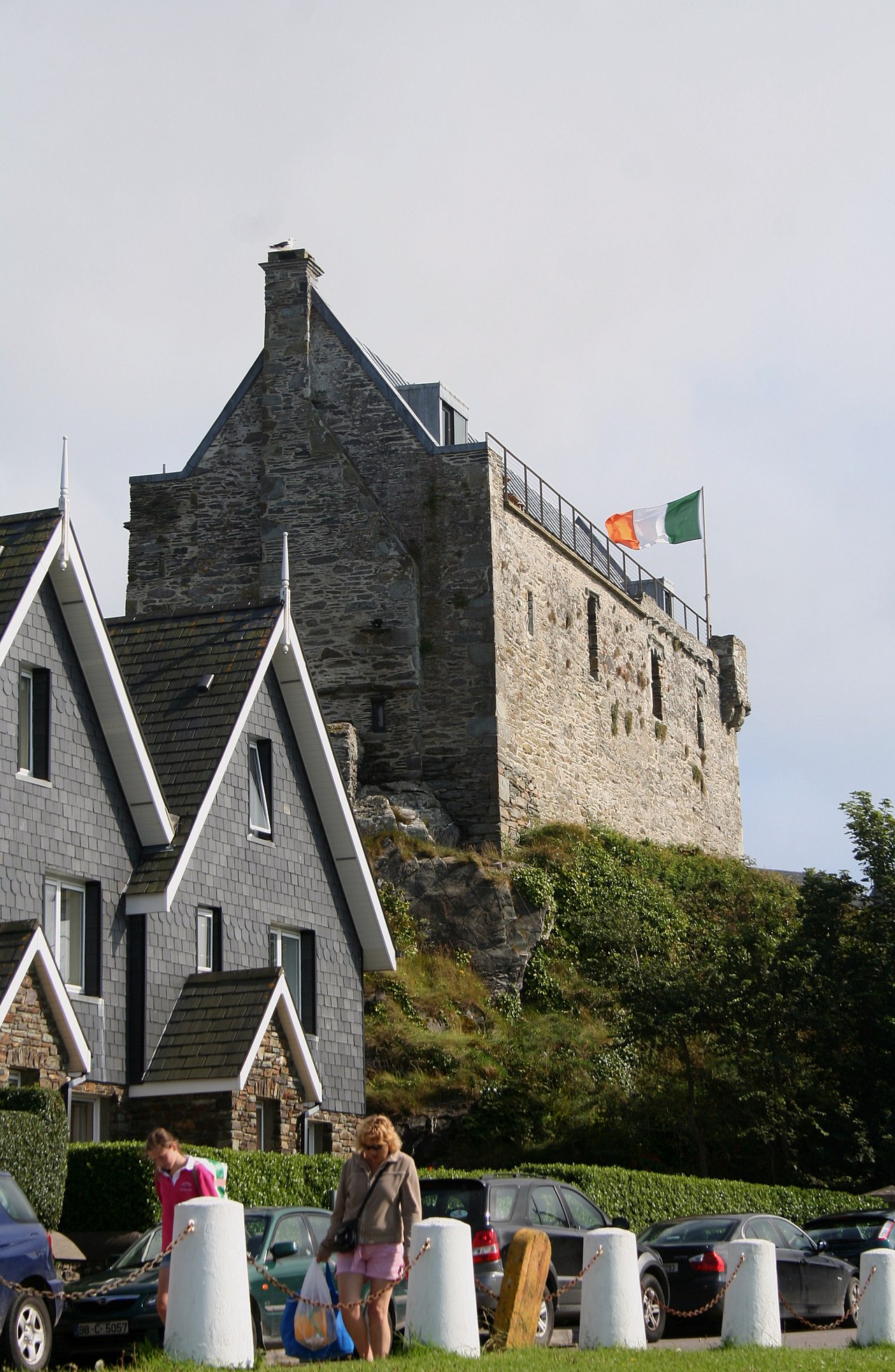
Kedge Point Signal Tower
Kedge Point Signal Tower is a notable example of early 19th-century coastal defense architecture located on a prominent headland south of the hamlet of Ballylinchy in County Cork, Ireland. Constructed during a period of heightened military vigilance, this tower was part of a wider network of signal towers built along the Irish coastline to provide early warning of potential invasions, particularly from Napoleonic France.
Historical context and purpose
At the dawn of the 19th century, Ireland faced the real threat of invasion by French forces allied with Napoleon Bonaparte. In response, the British government initiated a defensive strategy in 1803 to establish a chain of signal towers around the coast. These towers were designed to detect and relay messages about incoming enemy fleets to the government in Dublin using a system of visual signals such as flags and balls hoisted on masts.
Between 1804 and 1805, a total of 81 such towers were constructed, each strategically positioned on elevated and exposed coastal sites to maximize visibility. The towers were intervisible, allowing messages to be passed rapidly along the coastline, forming an early warning network that was crucial to national defense.
Architectural features and design
Kedge Point Signal Tower exemplifies the typical design of these early 19th-century signal towers. The structure is square in plan and rises two stories high, though some towers in the network reached three stories. It features a flat roof with a parapet, providing a vantage point for observation and signaling.
The entrance is located on the first floor on the seaward side, a defensive feature that made direct assault more difficult. The tower also includes machicolations above the entrance and on the landward side, allowing defenders to repel attackers. Inside, fireplaces were incorporated to provide warmth for the signaling crew, who typically numbered between 8 and 12 men.
The exterior was often rendered or covered with weather slates to protect against the harsh coastal climate. Ancillary structures may have existed to support the crew, including small gardens for growing food, and the entire complex was usually enclosed by a wall or sloping bank for additional protection.
Operational history and decline
The towers were manned continuously during the period of threat, serving as both lookout posts and defensive structures. However, following the decisive defeat of Napoleon at the Battle of Waterloo in 1815, the perceived threat of French invasion diminished significantly.
Consequently, the upkeep of these remote and exposed towers became unjustifiable due to their high maintenance costs and the reduced strategic necessity. Most signal towers, including Kedge Point Signal Tower, were subsequently abandoned and fell into ruin over time.
Current condition and accessibility
Today, Kedge Point Signal Tower remains as a ruin on private farmland. Its weather-beaten stonework and characteristic architectural elements are still visible, providing insight into early 19th-century coastal defense measures.
Because it is situated on private property, the tower is not freely accessible to the public. Visitors interested in viewing the site should seek permission from the landowners or explore nearby public vantage points to appreciate its coastal setting.
Significance in military architecture
The network of signal towers, including Kedge Point, represents an important phase in the evolution of military communication and coastal defense. These towers combined functional military architecture with early telecommunication methods, predating modern electronic systems.
Their design balances the need for visibility, defense, and habitability, reflecting the strategic priorities of the early modern period. Kedge Point stands as a tangible reminder of Ireland's role in the broader geopolitical conflicts of the Napoleonic Wars.
Frequently asked questions (FAQ)
- What was the primary purpose of Kedge Point Signal Tower?
- Kedge Point Signal Tower was built to detect and signal the approach of enemy fleets, particularly during the Napoleonic Wars, to warn the government in Dublin of an invasion threat.
- Can visitors freely access Kedge Point Signal Tower?
- No, the tower is located on private farmland and is not freely accessible to the public. Visitors should seek permission from landowners or view it from nearby public areas.
- When was Kedge Point Signal Tower constructed?
- The tower was constructed in the early 19th century, specifically between 1804 and 1805, as part of a network of coastal signal towers around Ireland.
- What architectural features characterize Kedge Point Signal Tower?
- The tower is square, two stories high, with a flat roof and parapet, a first-floor entrance on the seaward side, machicolations for defense, and fireplaces for the signaling crew.
- Why were the signal towers abandoned after 1815?
- After Napoleon's defeat at Waterloo in 1815, the threat of French invasion diminished, making the costly maintenance of the towers unnecessary, leading to their abandonment.
Information
Current owner
Private owner
Loading map...
Visitor reviews
No reviews yet. Been here? Write the first review and help other travelers!
Write the first reviewVisited this castle? Share your experience
Your review helps other travelers and adds first-hand knowledge to our encyclopedia.