Dunalong Castle

Dunalong castle on sherkin island
Harboursmouth, United Kingdom
Late Medieval (14th–15th c.)
Ruins

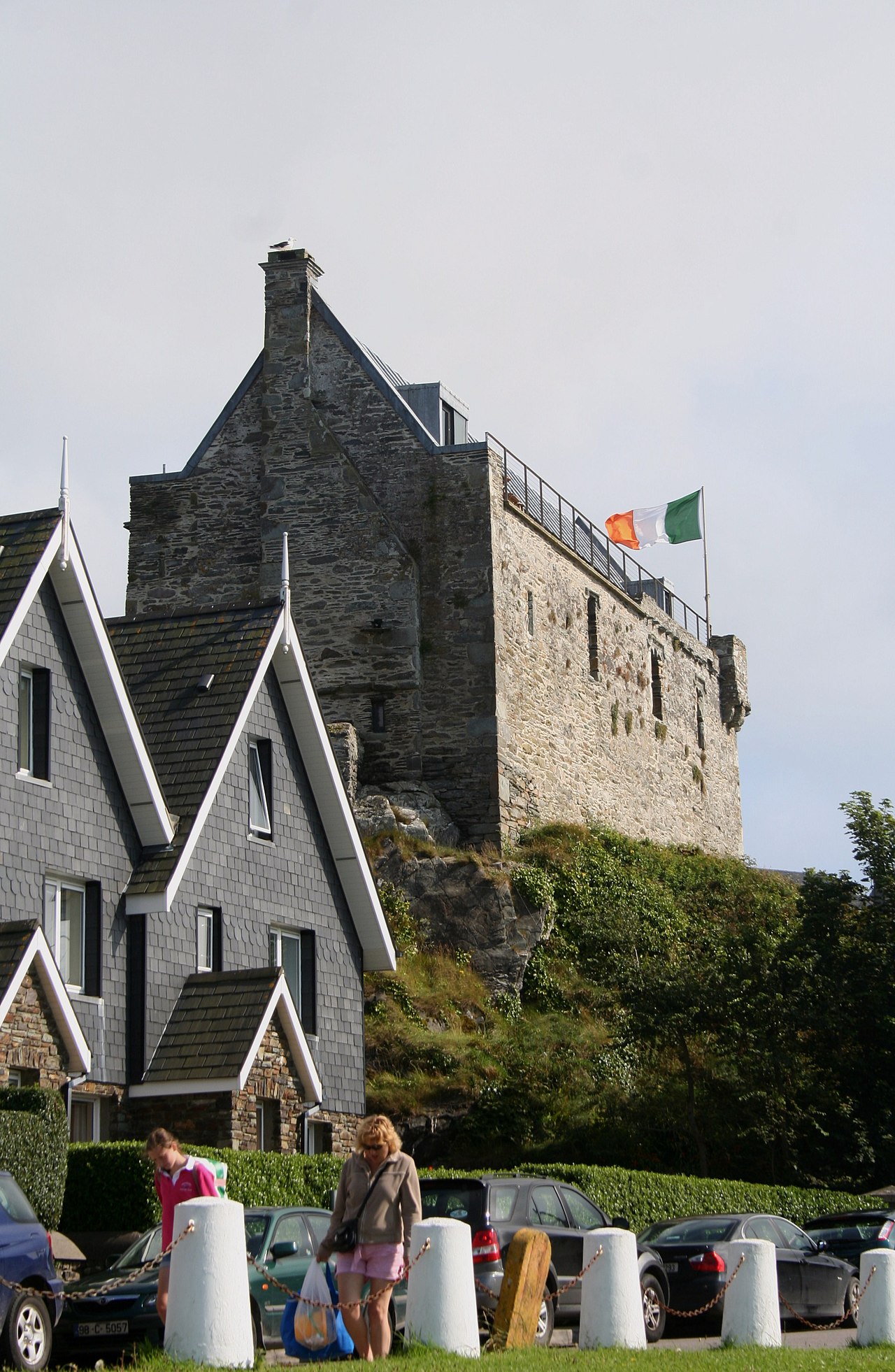
Dunalong Castle is located on the east side of Sherkin Island in County Cork, Ireland. This castle was historically an important stronghold of the O'Driscoll clan, a prominent Gaelic family in the region. It is reputed to have been constructed around 1460 by Florence O'Driscoll, placing its origins in the late medieval period rather than the Renaissance era. The castle's strategic coastal location allowed it to control maritime traffic and local fishing waters, which were vital to the O'Driscolls' power and wealth.

Historical significance and ownership

The castle's history is marked by several notable events reflecting the turbulent times in Ireland during the 16th and 17th centuries. In 1537, Dunalong Castle was attacked by the citizens of Waterford as retribution for the O'Driscolls' theft of a cargo of wine, illustrating the frequent conflicts between local powers and trading cities.

During the Battle of Kinsale in 1602, a pivotal conflict in Irish history, the castle was garrisoned by Spanish forces allied with the Irish against English rule. The Spanish used Dunalong Castle along with other O'Driscoll strongholds such as Dunasead Castle in Baltimore. Following the defeat of the Spanish and Irish alliance, control of Dunalong passed to Captain Roger Harvey, an English officer, and the O'Driscolls were dispossessed. Sir Fineen O'Driscoll, the last of the family to hold the castle, fled to Spain after surrendering it.

Later, in 1645, during the Cromwellian conquest of Ireland, the castle was surrendered to Captain Bennett of Cromwell's forces. This event further diminished the O'Driscolls' influence in the region.

By the late 17th century, the Beecher family took possession of Dunalong Castle and maintained it until around 1768. This transition from Gaelic to English ownership reflects the broader political and social changes occurring in Ireland at the time.

Architectural features and condition

Dunalong Castle was originally constructed as a defensive coastal fortress typical of Gaelic lordship residences of the 15th century. While detailed architectural records are limited, it likely featured a tower house design common in Irish castles of the period, characterized by thick stone walls, narrow windows for defense, and battlements. Its position on Sherkin Island provided natural protection with surrounding waters acting as a moat-like barrier.

Today, Dunalong Castle survives only as a ruin. The remains are not extensive or architecturally spectacular, but they offer insight into the castle's former role and setting. Visitors cannot enter the structure itself, but partial access around the site is possible, allowing views of its coastal environment and ruins.

Cultural and regional context

The castle is part of a network of O'Driscoll fortifications along the southwest coast of Ireland, including Dunasead Castle and others on Sherkin Island and nearby mainland. These castles formed a defensive system controlling maritime routes and protecting the clan's fishing and trading interests. The O'Driscolls were known as seafarers and pirates at times, which is reflected in the castle's history of conflict and alliances.

Sherkin Island itself is a place of scenic beauty and historical interest, attracting visitors for its natural landscapes and heritage sites. Dunalong Castle contributes to this cultural landscape as a marker of the island's medieval past and the Gaelic aristocracy's presence in the region.

Visiting information and accessibility

As a ruin, Dunalong Castle does not have formal visitor facilities or guided tours. Access to the site is limited to walking around the exterior, and there are no internal passages open to the public. The castle's remote island location means visitors typically reach it by boat from the mainland.

While the castle itself may not offer dramatic architectural remains, its setting on Sherkin Island provides a unique experience combining history with coastal scenery. Visitors interested in Irish medieval castles and Gaelic history will find Dunalong Castle a noteworthy, if modest, site.

Frequently asked questions (FAQ)

When was Dunalong Castle built and by whom?
Dunalong Castle was built around 1460 by Florence O'Driscoll, a member of the O'Driscoll clan in County Cork, Ireland.
What role did Dunalong Castle play during the Battle of Kinsale?
During the Battle of Kinsale in 1602, the castle was garrisoned by Spanish forces allied with the Irish against the English. After their defeat, the castle was handed over to Captain Roger Harvey.
Can visitors enter Dunalong Castle today?
No, Dunalong Castle is currently a ruin and cannot be entered. Visitors can only walk around the exterior of the site.
Who owned Dunalong Castle after the O'Driscolls?
After the O'Driscolls lost control, the Beecher family took possession in the late 17th century and remained there until around 1768.
Where is Dunalong Castle located?
Dunalong Castle is situated on the east side of Sherkin Island, County Cork, Ireland, overlooking the Atlantic Ocean.

Information

Tower House

Loading map...

Visitor reviews

No reviews yet. Been here? Write the first review and help other travelers!

Write the first review

Visited this castle? Share your experience

Your review helps other travelers and adds first-hand knowledge to our encyclopedia.
Write a review

(5/5)

0/2000 characters

Your review will be visible after admin approval

Nearby castles

2 km
Dunasead Castle — Ireland castle

Dunasead Castle

Baltimore, Ireland

Dunasead Castle (Irish: Dún na Séad, meaning 'fort of the jewels') is a notable 17th-century fortified house located in the coastal town of Baltimore, County Cork, Ireland. This castle stands on a site steeped in history, having been successively occupied since the Bronze Age. The current structure is a prominent example of a fortified house from the Renaissance period, reflecting the architectural and defensive needs of the era. Historical background and site evolution The site of Dunasead Castle has a long history of occupation and fortification. Originally, it was the location of a Bronze Age ringfort, a type of circular fortified settlement common in Ireland during that period. This early fortification was succeeded by a Norman-era structure, indicating the strategic importance of the location through successive centuries. The present castle was constructed in the 17th century as a fortified house, a common form of residence for Irish chieftains and gentry during this time. It was traditionally associated with the O'Driscoll clan, a powerful maritime family who controlled much of the surrounding coastal area and were influential in local politics and trade. Architectural features and design Dunasead Castle is classified as a hill castle, situated on elevated ground overlooking the harbor of Baltimore. This location provided both a defensive advantage and a commanding view of the surrounding landscape and sea routes. The castle's design reflects the transitional nature of fortified houses during the Renaissance, combining elements of medieval defensive architecture with more comfortable residential features. The castle consists of a central tower house with thick stone walls, narrow windows designed for defense, and battlements. It includes a number of internal chambers, including a great hall, private chambers, and storage areas. The presence of defensive features such as a bawn (enclosed courtyard) and gun loops indicates the need to defend against both land and sea attacks during a turbulent period in Irish history. Restoration and modern use By the late 20th century, Dunasead Castle had fallen into a state of partial ruin. In the 1990s, it was purchased by members of the McCarthy family, who undertook significant restoration efforts to stabilize and preserve the structure. These efforts included repairing masonry, restoring interior spaces, and making the castle accessible to visitors. Since 2005, Dunasead Castle has been partially open to the public, serving as a cultural and historical attraction. Visitors can explore the castle's rooms and learn about the history of the O'Driscoll clan and the broader maritime heritage of Baltimore. The castle's location near the harbor also makes it a focal point for understanding the region's historical connections to fishing, trade, and piracy. Significance in Irish history and heritage Dunasead Castle holds an important place in Irish heritage as a well-preserved example of a 17th-century fortified house that illustrates the social and political dynamics of the period. The castle's association with the O'Driscoll clan highlights the role of Gaelic families in coastal defense and maritime activities. The castle's layered history, from its Bronze Age origins through Norman occupation to its Renaissance form, reflects the complex history of Ireland's changing political and cultural landscape. Its preservation allows for ongoing study and appreciation of Irish medieval and early modern architecture. Visiting Dunasead Castle Today, visitors to Dunasead Castle can enjoy exploring the restored interiors and the surrounding grounds. The castle's elevated position offers scenic views of Baltimore harbor and the Atlantic Ocean beyond. Guided tours provide insights into the castle's history, architecture, and the lives of its former inhabitants. The castle is accessible from the town of Baltimore, which itself is a destination known for its maritime heritage, including connections to the Spanish Armada and local fishing traditions. Visitors often combine a trip to Dunasead Castle with exploring the nearby harbor and coastal walks.

Renaissance (15th–17th c.)
Details
2 km

Dunasead Castle

The Square, United Kingdom

Dunasead Castle, also known as Dún a Séad, Dunashad, or Baltimore Castle, is a historic fortified house located in the coastal village of Baltimore in County Cork, Ireland. Perched on a sandstone ridge overlooking the harbor, the castle occupies a site with a long history of fortification dating back to the early medieval period. Its strategic position made it a key defensive and residential stronghold through centuries of regional conflict and shifting control. Early fortifications and medieval history The earliest known fortification on the site of Dunasead Castle was likely a celtic ringfort, dating from the Bronze or Iron Age. This ancient defensive enclosure was eventually replaced in the early 13th century when the anglo-norman FitzStephens family constructed the first castle here around 1215. This initial structure consisted of a tower house accompanied by a defensive bawn, a walled courtyard typical of Anglo-Norman castles in Ireland. In 1305, the castle was attacked and destroyed by the MacCarthy clan, a powerful Gaelic family asserting dominance in the region. Following this, the O'Driscoll clan, a smaller but influential Gaelic family, took control of the site and rebuilt the castle. Throughout the late medieval period, the O'Driscolls faced constant pressure from rival Gaelic clans and Anglo-Norman settlers, leading to frequent attacks and damage to the castle and its surrounding lands. Conflicts and rebuilding in the late medieval and renaissance periods The O'Driscolls were embroiled in ongoing conflicts, notably with merchants from Waterford, which escalated into a prolonged feud beginning in 1368. This feud led to retaliatory raids, including a significant attack in 1537 when Waterford forces sacked Dunasead and other O'Driscoll properties. Despite this devastation, the castle was rebuilt and continued to serve as a stronghold. During the early 17th century, the present-day structure of Dunasead Castle was constructed by the O'Driscolls around the 1620s. This Renaissance-period fortified house featured a two-storey rectangular main building with an attic, enclosed within a surrounding bawn wall. The castle's design reflected a transition from purely military fortress to a fortified residence, balancing defense with domestic comfort. In 1631, the castle narrowly escaped destruction during a raid by pirates from Algiers who attacked Baltimore and captured over 100 inhabitants for slavery in North Africa. This event is a notable episode in the castle's history, illustrating the turbulent maritime threats of the era. 17th-century turmoil and decline During the Irish Confederate Wars in the 1640s, Dunasead Castle was surrendered to Oliver Cromwell's forces and subsequently passed into the hands of the Coppinger family. The O'Driscolls attempted to retake the castle by force in 1642, but their efforts were unsuccessful. By the end of the 17th century, the Coppingers were forfeited, and the castle gradually fell into ruin. Architectural features and restoration The surviving structure of Dunasead Castle comprises the main rectangular house measuring approximately 6 by 18 meters (20 by 59 feet), integrated into the south-west section of the enclosing bawn wall. The building is constructed primarily from local masonry set on the natural sandstone ridge. Defensive features include narrow slit windows on the ground floor and a bartizan turret on the south-west corner, emphasizing protection while maintaining residential functionality. The surrounding bawn walls provide an enclosed courtyard but are less heavily fortified than earlier medieval castles, reflecting the castle's evolution into a fortified residence rather than a military fortress. No significant decorative stonework or inscriptions have been recorded on the current fabric of the castle. Between 1997 and 2005, the castle underwent extensive restoration led by the McCarthy family, transforming the ruined structure into a restored historic site. Initially rebuilt as a private residence, Dunasead Castle now functions as a small museum open to visitors, offering insights into its rich history and architectural evolution. Visiting dunasead castle today Today, Dunasead Castle stands as a well-preserved example of a 17th-century fortified house with layers of history visible in its architecture and location. Visitors can explore the castle for a small fee, enjoying its scenic views over Baltimore Harbor and learning about the turbulent history of the O'Driscoll clan and the wider region. The castle's setting on a rocky cliff provides a dramatic backdrop, and its restoration allows for appreciation of both its defensive features and domestic aspects. Dunasead Castle remains a significant cultural heritage site in County Cork, reflecting the complex history of Anglo-Norman and Gaelic interactions in Ireland. Frequently asked questions about dunasead castle What is the historical significance of Dunasead Castle?Dunasead Castle is significant for its long history as a fortified site from the early 13th century, reflecting the turbulent interactions between Anglo-Norman settlers and Gaelic clans in Ireland. When was Dunasead Castle built?The present castle dates from the early 17th century, built around the 1620s by the O'Driscoll family on the site of earlier medieval fortifications. Can I visit Dunasead Castle?Yes, Dunasead Castle is open to visitors for a small fee, offering tours that highlight its history and architecture. What architectural style is Dunasead Castle?The castle is a Renaissance-period fortified house featuring defensive elements such as slit windows and a bartizan turret, reflecting a blend of military and residential design. Is Dunasead Castle well preserved?After extensive restoration between 1997 and 2005, Dunasead Castle is well preserved and functions as a museum today. What happened during the 1631 pirate raid?In 1631, pirates from Algiers raided Baltimore, capturing 107 inhabitants for slavery. The castle itself narrowly escaped destruction during this attack. Where is Dunasead Castle located?It is located in Baltimore, County Cork, Ireland, on a sandstone ridge overlooking Baltimore Harbor.

Renaissance (15th–17th c.)
Details
3.3 km

Kedge Point Signal Tower

South of Ballylinchy, United Kingdom

Kedge Point Signal Tower is a notable example of early 19th-century coastal defense architecture located on a prominent headland south of the hamlet of Ballylinchy in County Cork, Ireland. Constructed during a period of heightened military vigilance, this tower was part of a wider network of signal towers built along the Irish coastline to provide early warning of potential invasions, particularly from Napoleonic France. Historical context and purpose At the dawn of the 19th century, Ireland faced the real threat of invasion by French forces allied with Napoleon Bonaparte. In response, the British government initiated a defensive strategy in 1803 to establish a chain of signal towers around the coast. These towers were designed to detect and relay messages about incoming enemy fleets to the government in Dublin using a system of visual signals such as flags and balls hoisted on masts. Between 1804 and 1805, a total of 81 such towers were constructed, each strategically positioned on elevated and exposed coastal sites to maximize visibility. The towers were intervisible, allowing messages to be passed rapidly along the coastline, forming an early warning network that was crucial to national defense. Architectural features and design Kedge Point Signal Tower exemplifies the typical design of these early 19th-century signal towers. The structure is square in plan and rises two stories high, though some towers in the network reached three stories. It features a flat roof with a parapet, providing a vantage point for observation and signaling. The entrance is located on the first floor on the seaward side, a defensive feature that made direct assault more difficult. The tower also includes machicolations above the entrance and on the landward side, allowing defenders to repel attackers. Inside, fireplaces were incorporated to provide warmth for the signaling crew, who typically numbered between 8 and 12 men. The exterior was often rendered or covered with weather slates to protect against the harsh coastal climate. Ancillary structures may have existed to support the crew, including small gardens for growing food, and the entire complex was usually enclosed by a wall or sloping bank for additional protection. Operational history and decline The towers were manned continuously during the period of threat, serving as both lookout posts and defensive structures. However, following the decisive defeat of Napoleon at the Battle of Waterloo in 1815, the perceived threat of French invasion diminished significantly. Consequently, the upkeep of these remote and exposed towers became unjustifiable due to their high maintenance costs and the reduced strategic necessity. Most signal towers, including Kedge Point Signal Tower, were subsequently abandoned and fell into ruin over time. Current condition and accessibility Today, Kedge Point Signal Tower remains as a ruin on private farmland. Its weather-beaten stonework and characteristic architectural elements are still visible, providing insight into early 19th-century coastal defense measures. Because it is situated on private property, the tower is not freely accessible to the public. Visitors interested in viewing the site should seek permission from the landowners or explore nearby public vantage points to appreciate its coastal setting. Significance in military architecture The network of signal towers, including Kedge Point, represents an important phase in the evolution of military communication and coastal defense. These towers combined functional military architecture with early telecommunication methods, predating modern electronic systems. Their design balances the need for visibility, defense, and habitability, reflecting the strategic priorities of the early modern period. Kedge Point stands as a tangible reminder of Ireland's role in the broader geopolitical conflicts of the Napoleonic Wars.

Modern (19th–20th c.)
Details

