Kaunas Fortress
Kaunas Fortress is a monumental bastioned fortress complex located in Kaunas, Lithuania, built primarily to defend the western borders of the Russian Empire during the late 19th and early 20th centuries. Construction began in 1879 following the approval of Russian Emperor Alexander II, who recognized the strategic importance of Kaunas as a military stronghold against potential German invasion. The fortress was part of a vast defensive system designed to protect the empire's western frontier and was officially designated a "first-class" fortress in 1887.
Strategic design and construction
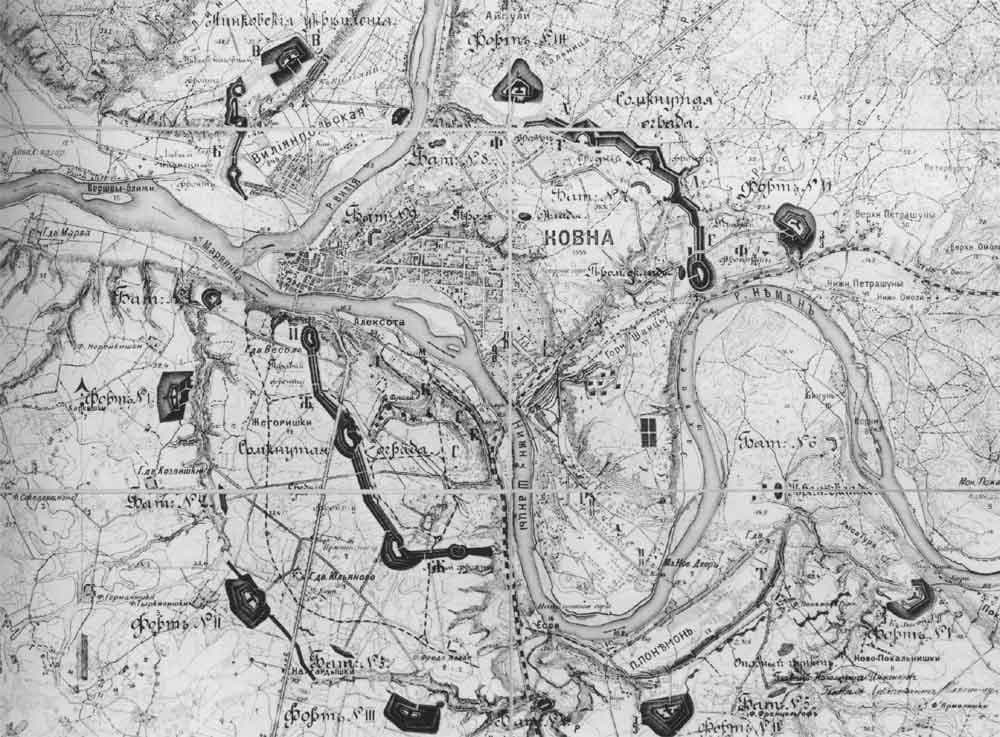
The fortress complex was conceived as a large-scale military installation, consisting of a ring of seven fortresses and nine interjacent artillery batteries arranged in an almost regular oval shape around Kaunas, spaced approximately 2 to 2.5 kilometers apart. This arrangement created a formidable defensive perimeter that covered an area of about 65 square kilometers. The construction involved the labor of around 4,000 workers annually, resulting in the erection of approximately 250 wooden and 200 stone buildings dedicated to military purposes, including defensive centers, workshops, storage facilities, and a military train station.
Architectural features and fortifications
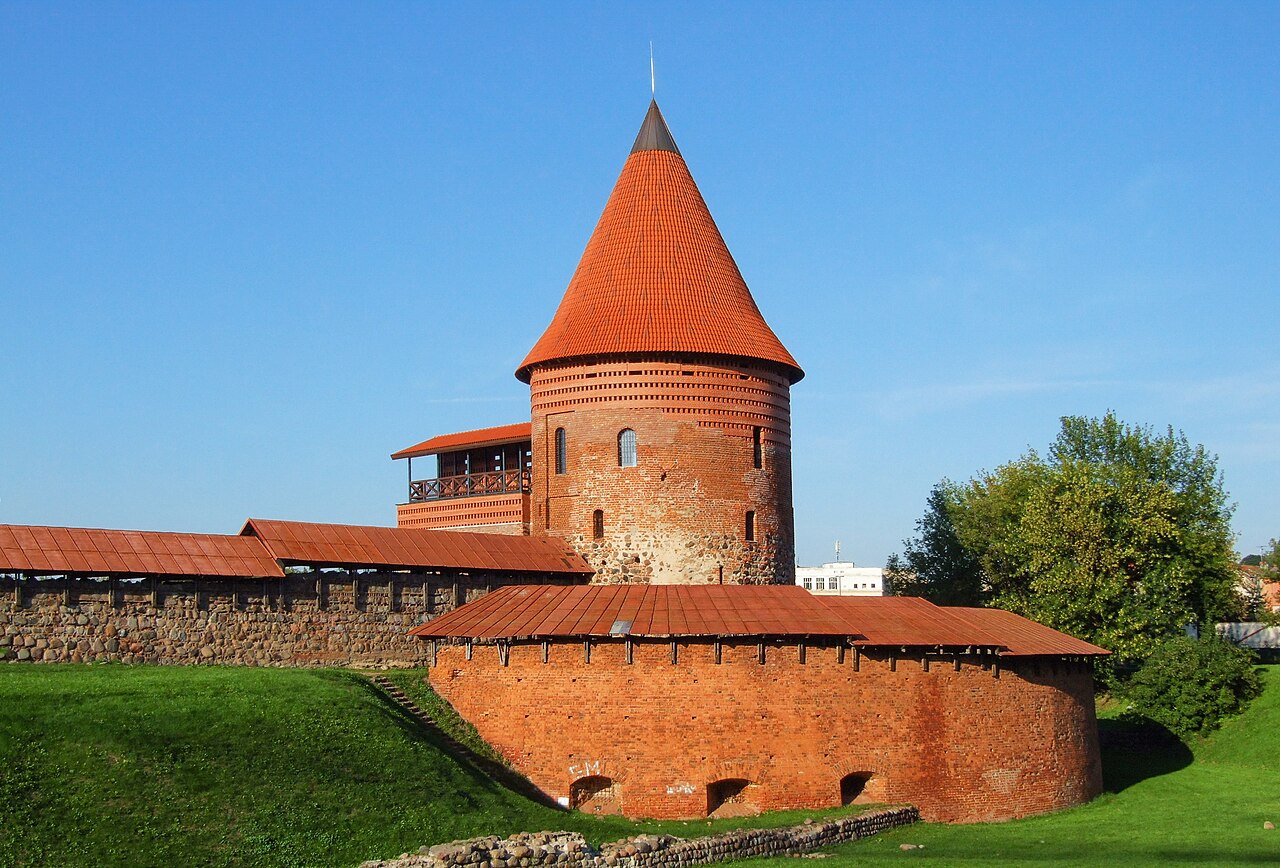
The fortress was designed as a bastioned fortress, a style characterized by angular bastions projecting outward from curtain walls, enabling defenders to cover all approaches with overlapping fields of fire. The fortifications included thick walls, moats, artillery batteries, and underground passages. The defensive structures were modernized multiple times to keep pace with evolving military technology. Notably, in 1912, plans were made to double the fortress's size, but the outbreak of World War I halted these expansions.
Kaunas fortress in world war i
During World War I, the fortress became a key battleground. In 1915, it was garrisoned by an army of approximately 90,000 soldiers tasked with withstanding a siege by German forces. Despite its formidable defenses, after eleven days of intense fighting, German troops breached the fortress. The battle resulted in heavy casualties, with around 4,000 defenders and more than 4,000 German soldiers killed. Approximately 20,000 defenders were taken prisoner, and the Germans captured a large cache of military equipment, including over 1,300 cannons and guns.
Interwar period and world war ii
Following World War I, the fortress's military significance declined as advancements in weaponry made traditional fortifications less effective. Some parts of the fortress were dismantled, while others continued to serve military and civil functions within Kaunas. During World War II, the fortress was no longer used for defense but took on a grim role under Nazi occupation. Several forts within the complex, notably the Sixth, Seventh, and Ninth forts, were converted into concentration camps. These sites became places of mass execution, where approximately 50,000 people were killed, including over 30,000 Jewish victims of the Holocaust.
Postwar use and preservation
After the war, the Soviet military utilized many of the forts as bases, often demolishing older structures and rebuilding to suit their needs. Following the withdrawal of Soviet forces, military operations ceased, and many forts became integrated into the expanding urban environment of Kaunas. Some forts have been preserved or restored, with the Ninth Fort now hosting a museum and memorial dedicated to the victims of the Holocaust and other atrocities committed there. The complex remains one of the most complete examples of a Russian Empire fortress system.
Cultural and historical significance
Kaunas Fortress stands as a significant historical monument reflecting the military architecture and turbulent history of the Baltic region. Its development illustrates the evolution of fortress design in response to changing military technologies and geopolitical threats. The fortress's role in both world wars and its association with tragic events during the Holocaust contribute to its importance as a site of memory and education. Today, it attracts visitors interested in military history, architecture, and the somber legacy of 20th-century conflicts.
Frequently asked questions (FAQ)
- When was Kaunas Fortress built and for what purpose?
- Kaunas Fortress was built starting in 1879 by the Russian Empire to defend its western border against potential German invasion.
- What is the architectural style of Kaunas Fortress?
- Kaunas Fortress is a bastioned fortress, featuring angular bastions and thick walls designed for artillery defense typical of late 19th-century military architecture.
- How was Kaunas Fortress used during World War I?
- During World War I, Kaunas Fortress was garrisoned by 90,000 soldiers and withstood an eleven-day siege by German forces in 1915 before being captured.
- What tragic events occurred at Kaunas Fortress during World War II?
- Several forts within Kaunas Fortress were used as Nazi concentration camps where about 50,000 people, including over 30,000 Jewish victims, were executed.
- Can visitors explore Kaunas Fortress today?
- Parts of Kaunas Fortress, including the Ninth Fort museum, are open to visitors, offering insights into its military history and Holocaust memorial.
Photo gallery

Photo by Unknown authorUnknown author•Public domain
Information
Loading map...
Visitor reviews
No reviews yet. Been here? Write the first review and help other travelers!
Write the first reviewVisited this castle? Share your experience
Your review helps other travelers and adds first-hand knowledge to our encyclopedia.