Katuwana Fort
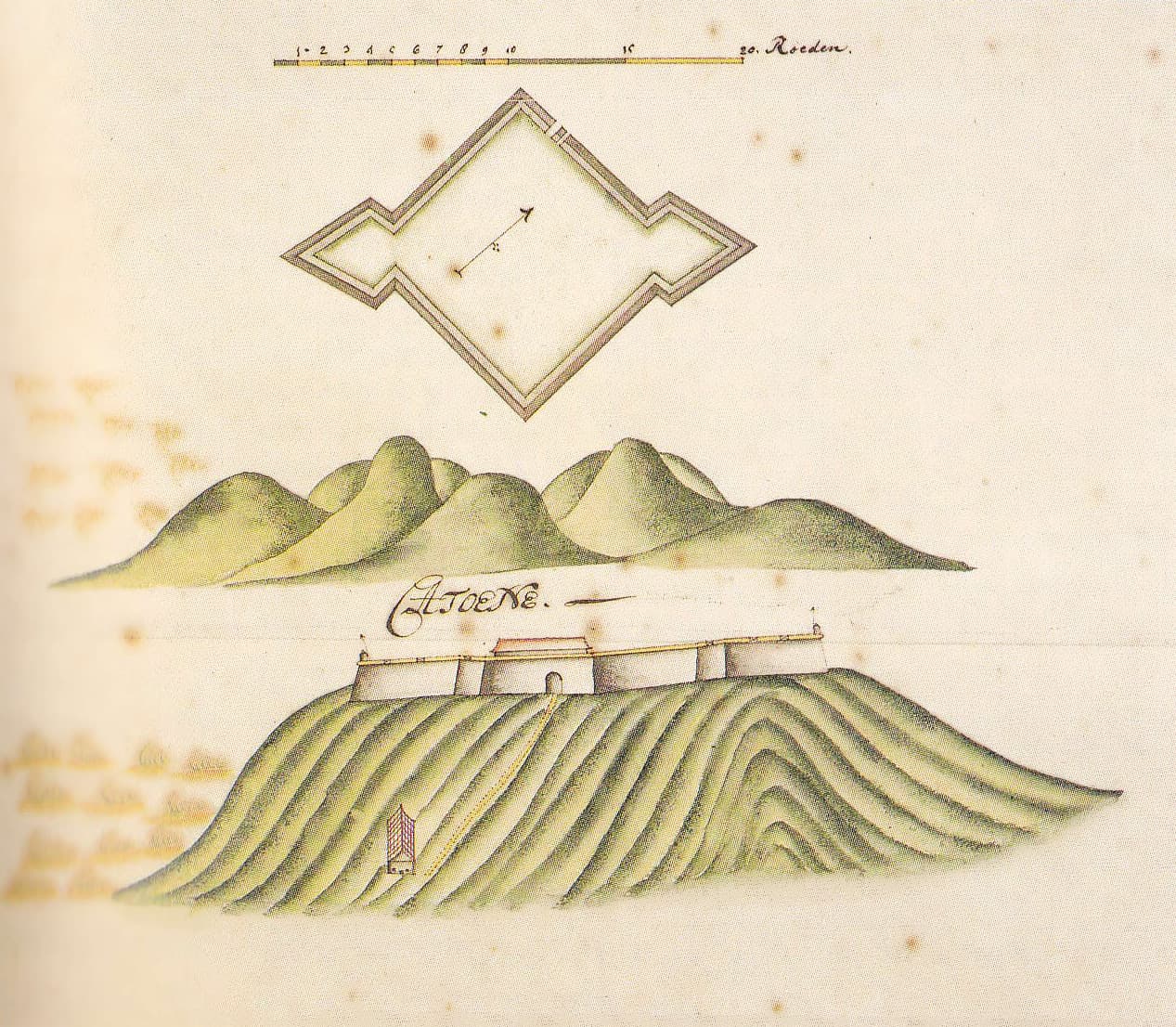
Katuwana Fort (Sinhala: කටුවන බලකොටුව Katuwana Balakotuwa; Tamil: கட்டுவனைக் கோட்டை, romanized: Kaṭṭuvaṉaik Kōṭṭai; also known as Fort Catuna or Fort Catoene) is a 17th-century bastioned fortress constructed by the Dutch East India Company in 1646. Unlike most Dutch forts in Sri Lanka, which were primarily built along the coast to protect strategic harbours and anchorages from European rivals such as the Portuguese, Katuwana Fort was established inland. It was part of a defensive network designed to secure the coastal lowlands from incursions by the Kingdom of Kandy, situated approximately 40 km (25 miles) from Matara in the Kandyan foothills at the northern edge of Dutch-controlled territory.
Strategic location and historical context
The fort's location on the slope of a hill provided a tactical advantage in monitoring and controlling movement between the interior highlands and the coastal regions. This positioning was crucial during the 17th century when the Dutch sought to consolidate their hold over southern Sri Lanka against both Portuguese forces and the resilient Kandyan kingdom. Katuwana Fort functioned as a frontier post to deter and delay attacks from the Kandyan forces, who frequently launched raids into Dutch-held areas.
Architectural features and design
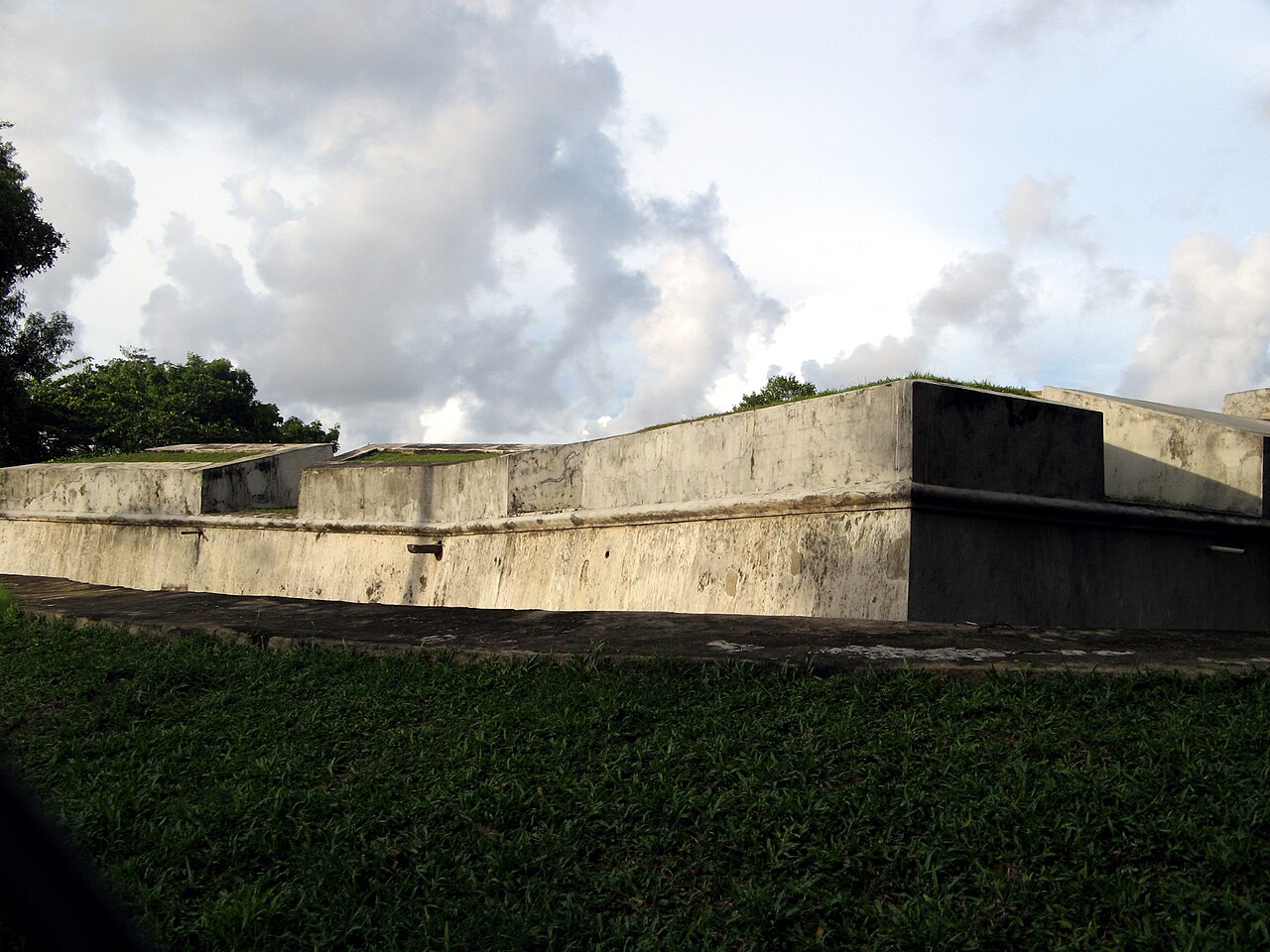
Katuwana Fort was constructed with 5-meter-high ramparts enclosing the fortification and featured a single gateway that controlled access. The fort's overall plan was diagonal in shape, a design choice that enhanced its defensive capabilities by reducing blind spots and allowing better coverage of the surrounding terrain. It included two bastions, each equipped to mount six cannons, enabling the defenders to cover multiple angles of approach with artillery fire.
The fort also had a 4-meter-wide walkway along the top of the ramparts, facilitating troop movement and the operation of the artillery. Due to its relatively small size and the limited number of bastions, Katuwana was often described as a redoubt rather than a large-scale fortress, serving as a fortified outpost rather than a major stronghold.
The fort in conflict and decline
During the Matara Rebellion of 1761, the fort was captured by forces loyal to Kirti Sri Rajasinha, the king of Kandy. This event marked a significant moment in the fort's history, as the Kandyan forces partially destroyed the structure during their assault. The rebellion was part of ongoing resistance by the Kandyan kingdom against Dutch colonial expansion.
Following the British annexation of the Kingdom of Kandy in 1815, the strategic importance of Katuwana Fort diminished considerably. With the entire island under British control, the fort lost its military function and was subsequently abandoned. Over time, the fort fell into ruin, with much of its original structure deteriorating or being reclaimed by the surrounding landscape.
Legacy and current condition
Today, Katuwana Fort remains an important historical site, representing the Dutch colonial military architecture adapted for inland defense in Sri Lanka. Although only ruins remain, the surviving ramparts and bastions provide valuable insight into 17th-century bastioned fortress design and the colonial conflicts that shaped the region.
Its location in the Kandyan foothills offers a glimpse into the complex geopolitical dynamics between the coastal European powers and the inland Kandyan kingdom during the Renaissance period of Sri Lankan history. The fort's remains are a testament to the Dutch efforts to extend their control beyond the coast and manage threats from the interior.
Frequently asked questions (FAQ)
- What is the historical significance of Katuwana Fort?
- Katuwana Fort was built by the Dutch in 1646 as an inland bastioned fortress to defend the coastal lowlands of Sri Lanka from the Kingdom of Kandy's attacks. It played a key role in the 17th-century colonial conflicts between the Dutch and the Kandyan kingdom.
- Can visitors access Katuwana Fort today?
- Katuwana Fort is currently in ruins, and while the site can be visited, there are limited facilities or restoration. Visitors should prepare for uneven terrain and limited signage when exploring the remains.
- When was Katuwana Fort captured and damaged?
- The fort was captured and partly destroyed in 1761 during the Matara Rebellion by forces loyal to Kirti Sri Rajasinha of the Kingdom of Kandy.
- What are the main architectural features of Katuwana Fort?
- Katuwana Fort features 5-meter-high ramparts, a single gateway, a 4-meter-wide walkway on top, and two bastions each equipped with six cannons, reflecting typical Dutch bastioned fortress design adapted for inland defense.
- Why was Katuwana Fort built inland rather than on the coast?
- Unlike most Dutch forts built along the coast for maritime defense, Katuwana Fort was constructed inland to protect the coastal lowlands from inland attacks by the Kingdom of Kandy, securing the northern limits of Dutch territory.
Photo gallery

Photo by AnonymousUnknown author•Public domain
Information
Loading map...
Visitor reviews
No reviews yet. Been here? Write the first review and help other travelers!
Write the first reviewVisited this castle? Share your experience
Your review helps other travelers and adds first-hand knowledge to our encyclopedia.