Kastelholm Castle, located on a small island in the municipality of Sund, Åland, Finland, stands as one of the most significant medieval fortresses in the region. Its origins trace back to the late 14th century, with the earliest recorded mention in 1388 when the castle became part of the inheritance transferred to Queen Margaret I of Denmark. This late-medieval hill castle played a pivotal role in the political and military history of the Baltic Sea area, particularly under Danish and Swedish rule.
Historical significance and ownership
The castle's heyday spanned the 15th and 16th centuries when it served as the administrative center for the Åland Islands. Initially constructed by Swedish nobles in the 1380s, Kastelholm's strategic position made it a coveted stronghold. It was involved in numerous historical events, including the 1433 siege during the Engelbrecht rebellion and the 1599 civil war tied to the War against Sigismund. Ownership frequently shifted between Danish and Swedish monarchs and their stewards, reflecting the turbulent political landscape of the time.
Notably, in 1571, King John III of Sweden imprisoned his deposed brother, Eric XIV, within Kastelholm's walls. Later, in 1599, King Eric XIV's forces captured the castle after a brutal siege, resulting in significant damage. The castle was repaired by 1631, but its administrative importance declined after Åland was incorporated into the County of Turku and Pori in 1634. Subsequently, Kastelholm was repurposed as a prison and witnessed darker episodes such as witch trials in the 1660s.
Architectural features and layout
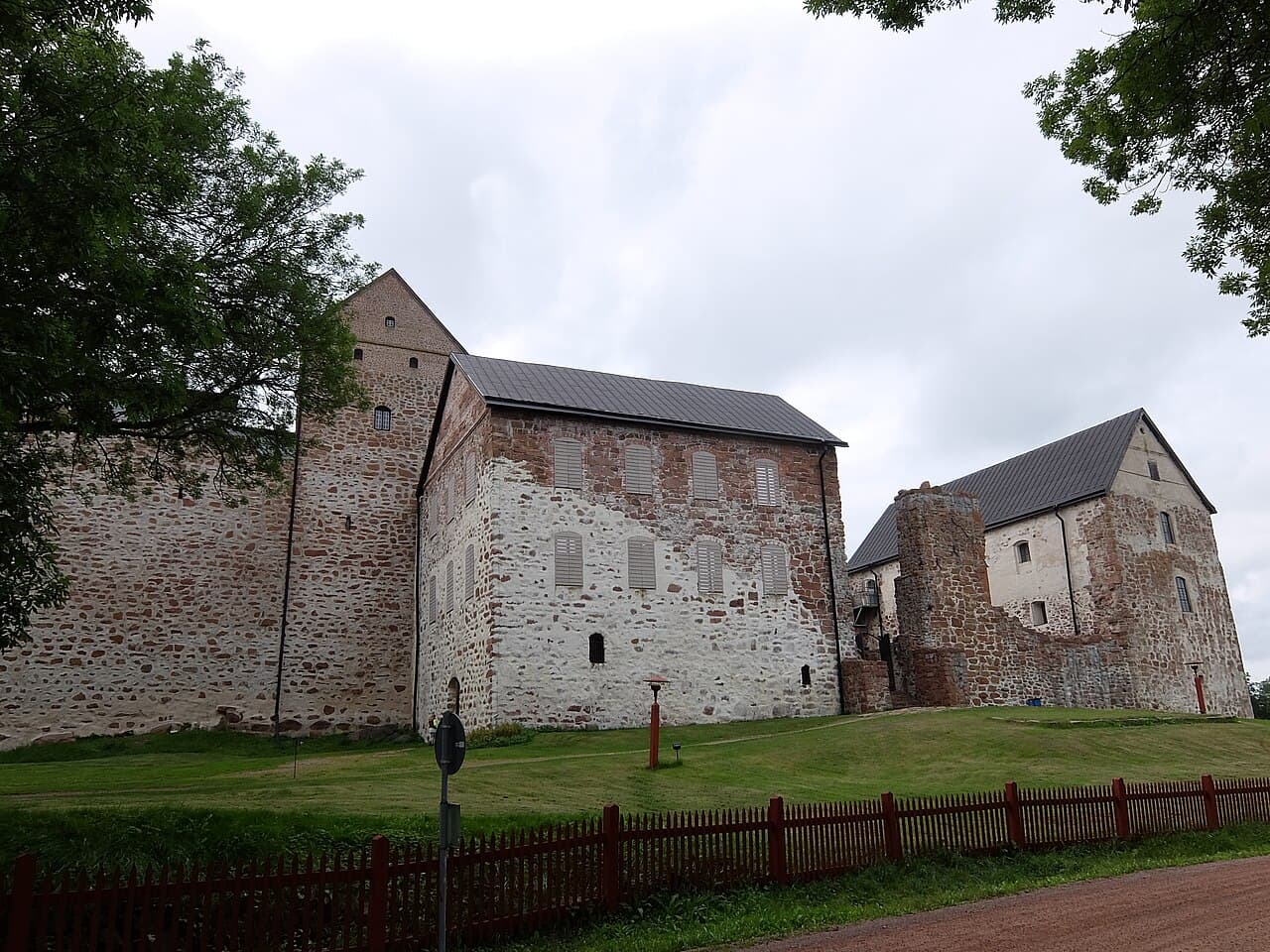
Kastelholm Castle occupies an island of approximately 1.7 hectares, naturally surrounded by water, which enhanced its defensive capabilities. The fortress was fortified with moats lined with wooden poles to prevent enemy boats from landing. The core structure is a rectangular stone keep measuring about 30 by 20 meters, encased by a thick defensive wall roughly three meters wide. Adjacent to this keep is a three-story residential wing or palace, providing living quarters within the fortified complex.
To the north lies an outer bailey, an enclosed courtyard approximately 45 by 25 meters, about twice the width of the keep. This area was connected to the main castle via a gate tower constructed in the 15th century. A second gate tower was added in the 16th century between the outer bailey and the outer perimeter defenses. These two towers were later merged into a large donjon known as the Kuuritorni or Curtain Tower, which includes a prison room on its third floor.
The castle was primarily built using brick and mortar, typical materials for medieval fortifications in Northern Europe. Wooden palisades supplemented the stone walls and water defenses, adding layers of protection. Within the complex stood a chapel dedicated to Berard of Carbio and four Moroccan martyrs, although its exact location remains unidentified by archaeologists.
Decline, damage, and restoration
After its administrative role diminished in the 17th century, Kastelholm Castle's condition declined. It was used as a prison and became the site of witch trials in the 1660s. In 1745, a devastating fire destroyed much of the castle, sparing primarily the northern wing, which was converted into a granary and used until the 1930s. The castle was abandoned by the 1770s.
Archaeological excavations and restoration efforts in the 1980s helped preserve Kastelholm as a cultural heritage site. Today, it functions as a museum and tourist attraction, showcasing artifacts such as early stove tiles and reconstructed architectural elements. The castle hosts an annual medieval festival each July, featuring jousting, traditional food, and dance, drawing visitors interested in experiencing medieval culture firsthand.
Cultural and tourist significance
Kastelholm Castle is one of only five surviving medieval fortresses in Finland, making it a unique historical monument. Its accessibility from Mariehamn by car or bus adds to its appeal as a major tourist destination. The surrounding area, including the royal estate and a nearby golf course, enhances the visitor experience, combining history with leisure activities.
The castle's rich history, architectural features, and annual cultural events contribute significantly to the heritage of Åland and Finland. Preservation efforts ensure that Kastelholm remains a vital link to the medieval past, offering educational and recreational opportunities for locals and tourists alike.
Frequently asked questions (FAQ)
- How do I get to Kastelholm Castle from Mariehamn?
- Kastelholm Castle is easily accessible by car or bus from Mariehamn, the capital of Åland. The journey typically takes around 20 minutes, making it convenient for day trips.
- What historical events is Kastelholm Castle known for?
- Kastelholm Castle played a key role during the 15th and 16th centuries, including the 1433 siege during the Engelbrecht rebellion and the 1599 civil war. It was also the prison of King Eric XIV in 1571.
- Is Kastelholm Castle open to visitors year-round?
- The castle is generally open to visitors during the warmer months, with peak activity in summer. It is advisable to check the official website or local tourist information for exact opening hours and seasonal variations.
- What can I see inside Kastelholm Castle today?
- Visitors can explore the castle ruins, view archaeological exhibits such as early stove tiles, and learn about the castle's history through informative displays. The annual medieval festival offers a vibrant cultural experience.
- Are there guided tours available at Kastelholm Castle?
- Guided tours are often available during the tourist season, providing detailed insights into the castle's architecture, history, and significance. Booking in advance is recommended for groups.
Photo gallery

Information
Sources & official resources
Verify the information above using these authoritative references.
Loading map...
Visitor reviews
No reviews yet. Been here? Write the first review and help other travelers!
Write the first reviewVisited this castle? Share your experience
Your review helps other travelers and adds first-hand knowledge to our encyclopedia.