Kastel Fortress
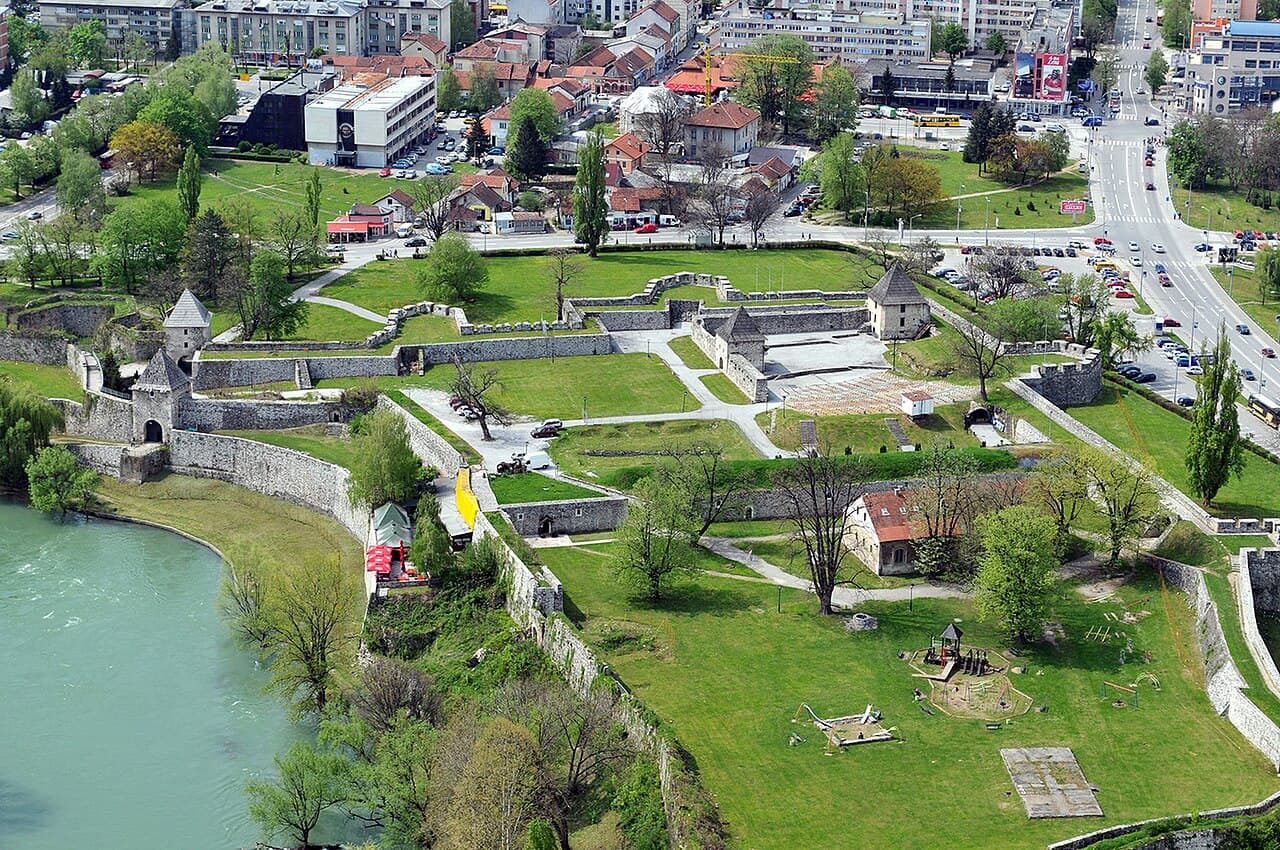
Kastel Fortress in Banja Luka, Bosnia and Herzegovina, is a significant medieval bastioned fortress located on the left bank of the Vrbas river in the heart of the city. This fortress stands on a site with a long history of fortification, dating back to Roman times and even earlier pre-Roman settlements, making it a place of strategic importance for centuries.
Historical background and strategic importance
The site of Kastel Fortress has been continuously fortified since antiquity, initially serving as a Roman military outpost due to its commanding position overlooking the river and surrounding terrain. The current fortress, however, primarily dates from the late medieval period, specifically the 15th century, when it was constructed and expanded under the Ottoman Empire after their capture of the region in 1527. The fortress was built on the foundations of earlier fortifications, incorporating and reinforcing the existing defensive structures to adapt to the evolving military technologies of the time.
Architectural features and fortifications
Kastel Fortress is classified as a bastioned fortress, a style that became prominent in the late medieval and early modern periods as a response to the increasing use of artillery in warfare. The fortress features thick stone walls with bastions projecting outward to provide overlapping fields of fire against attackers. The bastions are angular and robust, designed to deflect cannonballs and to provide platforms for defensive artillery.
The fortress layout is roughly rectangular, with multiple bastions positioned at the corners and along the walls. Inside, there are remnants of residential quarters, armories, and storage facilities, indicating its role not only as a military stronghold but also as a center of local administration and control.
Defensive structures and river location
The location on the Vrbas riverbank was strategic for controlling river traffic and defending the city. The fortress walls extend close to the river, and there are remains of a moat or water defenses that further enhanced its protection. The river also provided a natural barrier on one side, reducing the number of directions from which an assault could be launched.
Historical events and cultural significance
Throughout its history, Kastel Fortress witnessed numerous military engagements, especially during the Ottoman period, serving as a key defensive point against incursions from rival powers in the Balkans. Its capture by the Ottomans in 1527 marked a significant shift in the region's political landscape, as it became part of the expanding Ottoman frontier in Europe.
Today, Kastel Fortress is one of Banja Luka’s main cultural and historical landmarks. It has been relatively well-preserved compared to many other fortresses in the region, maintaining much of its original structure and form. The fortress is a popular destination for tourists and locals alike, offering insights into the military architecture of the late medieval and early Ottoman periods.
Preservation and current status
The fortress is currently classified as well preserved, with ongoing efforts to maintain and restore its structural integrity. Its position in the city center makes it accessible and a focal point for cultural activities and historical education in Banja Luka.
Visitor experience and accessibility
Visitors to Kastel Fortress can explore the extensive walls, bastions, and inner courtyards. The site offers panoramic views of the Vrbas river and the surrounding cityscape. Informational displays and guided tours provide historical context, detailing the fortress's construction, military significance, and role in regional history.
Architectural style and construction details
The fortress exhibits architectural elements typical of late medieval military construction with bastioned defenses adapted to withstand artillery attacks. The stone masonry is robust, with thick walls and angular bastions designed to minimize blind spots and maximize defensive coverage. The design reflects the transition from medieval fortifications to early modern bastioned systems influenced by evolving warfare tactics.
Frequently asked questions (FAQ)
- How do I get to Kastel Fortress?
- Kastel Fortress is located in the heart of Banja Luka, making it easily accessible by foot from the city center. Public transport options, such as buses and taxis, are also available for those coming from further away.
- What is the historical significance of Kastel Fortress?
- Kastel Fortress has a rich history dating back to the Roman era, serving as a strategic defensive structure. It has witnessed numerous battles and changes in governance, reflecting the cultural shifts in the region over centuries.
- When was Kastel Fortress built?
- Kastel Fortress was originally constructed in the 16th century, although its foundations date back to earlier periods. The fortress has undergone various renovations that highlight the architectural styles of different eras.
- Can I take guided tours of Kastel Fortress?
- Yes, guided tours are available and highly recommended for visitors looking to learn more about the fortress's history and architecture. These tours typically include insightful anecdotes and access to areas that may not be open to the general public.
- Why is Kastel Fortress considered an architectural gem?
- Kastel Fortress showcases a blend of medieval and Ottoman architectural styles, with its impressive stone walls and towers. The design reflects both defensive needs and aesthetic considerations, making it a fascinating site for architecture enthusiasts.
- Is it possible to visit Kastel Fortress year-round?
- Yes, Kastel Fortress is open to visitors throughout the year, although hours may vary depending on the season. It's advisable to check the fortress's official website for any seasonal changes in opening times.
- What are the ticket prices for visiting Kastel Fortress?
- Ticket prices for Kastel Fortress are quite reasonable, making it accessible for all visitors. Discounts are often available for students and groups, so be sure to inquire at the entrance.
- What is the best time to visit Kastel Fortress?
- The best time to visit Kastel Fortress is during the spring and early autumn months when the weather is mild and conducive for exploring. Additionally, these seasons often feature fewer crowds, allowing for a more enjoyable experience.
- Are there any nearby attractions to visit after Kastel Fortress?
- Yes, after exploring Kastel Fortress, you can visit nearby attractions such as the Banja Luka Cathedral and the Vrbas River promenade. These sites provide additional insights into the rich cultural heritage of Banja Luka.
Photo gallery

Information
Loading map...
Visitor reviews
No reviews yet. Been here? Write the first review and help other travelers!
Write the first reviewVisited this castle? Share your experience
Your review helps other travelers and adds first-hand knowledge to our encyclopedia.