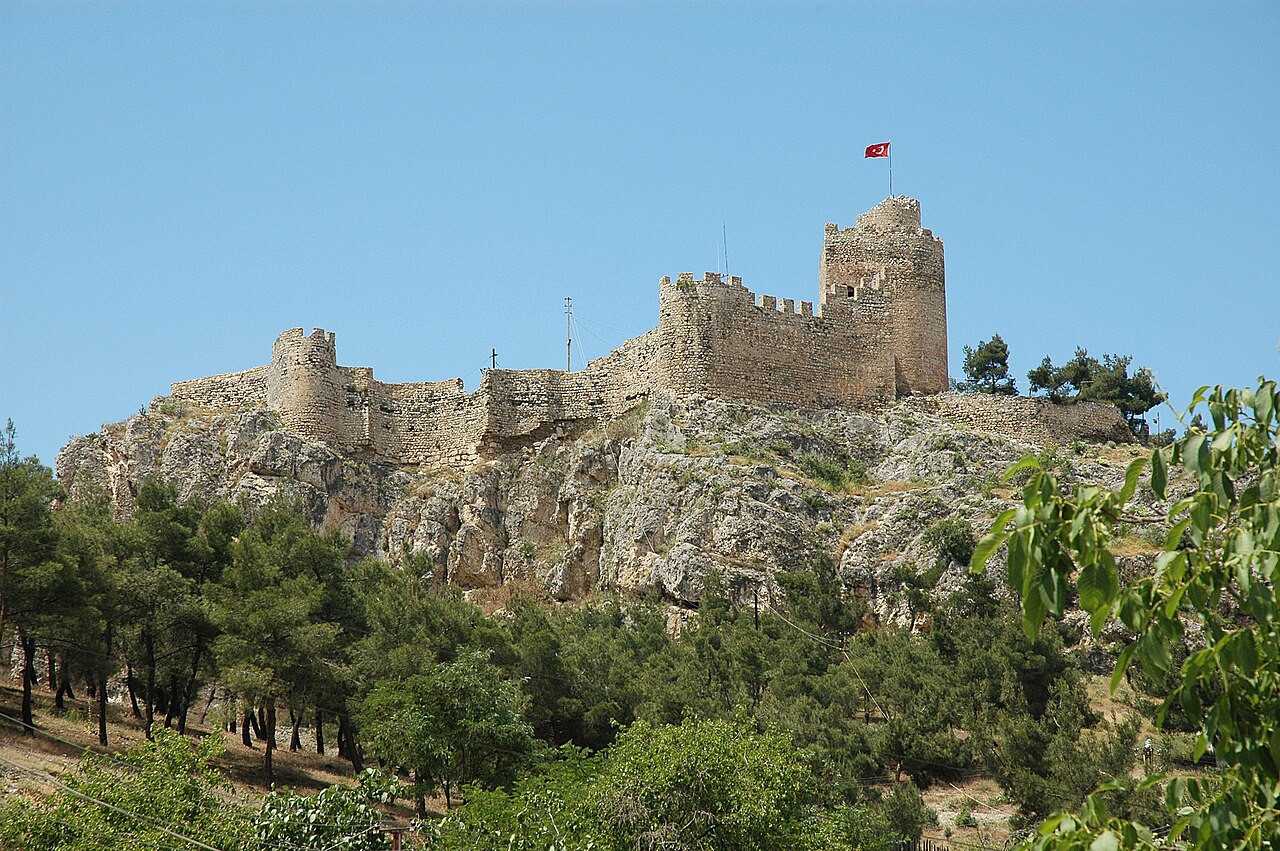
Kastamonu Castle
Kastamonu Castle, locally known as Kastamonu Kalesi, is a historic fortress located in the city of Kastamonu in Turkey's Kastamonu Province. The castle stands prominently on a rocky outcrop in the city center, offering commanding views of the surrounding area and serving as a reminder of the region's layered history.
The city of Kastamonu itself has ancient origins, with settlement dating back to the 18th century BC. During the Roman period, it was known as Timonion. The castle's origins trace back to the Byzantine Empire, with significant developments occurring in the 12th century. It is believed that Emperor Alexios I Komnenos, grandson of the notable Byzantine general Manuel Erotikos Komnenos, founded the castle, probably building upon an earlier fortification. The castle and city were originally known as Kastra Komnenon, a name that evolved over centuries into Kastamonu.
Historical context and ownership transitions
In the 10th century, Manuel Erotikos Komnenos was granted lands around Kastamonu by Emperor Basil II after his defense of Nicaea. The Byzantine hold on the region lasted until 1227, when control passed to local Turkic beyliks. First, the Chobanids controlled the area, followed by the Isfendiyarids, two prominent Turkic principalities. The castle finally came under Ottoman rule in 1461, marking a new chapter in its architectural and strategic significance.
Architectural features and construction phases
Kastamonu Castle was originally part of a larger fortification system that encircled the entire city, although the outer walls have not survived. The current visible structure represents the inner castle, which exhibits mainly Turkic architectural influences from the post-Byzantine period. The castle's design includes stone walls adapted to the rocky terrain, with defensive towers and battlements characteristic of medieval fortresses in the region.
The castle's construction spans several periods, with the earliest foundations likely Byzantine, followed by significant modifications during the rule of the Turkic beyliks and the Ottomans. The 18th century saw further restorations and rebuilding, which is reflected in some of the surviving architectural elements.
Damage and restoration efforts
The fortress suffered severe damage during the 1943 Tosya–Ladik earthquake, which affected much of the Kastamonu region. Subsequent conservation and restoration work began in the early 21st century, with a notable partial restoration completed in 2005. These efforts aimed to stabilize the remaining structures and preserve the castle as a cultural and historical monument.
Visitor experience and cultural significance
Today, Kastamonu Castle is freely accessible to visitors during daytime hours. The site offers a scenic blend of historic ruins and natural surroundings, with the contrast between the stone walls and the green landscape providing a striking visual impression. The castle is a popular destination for tourists interested in medieval architecture, Byzantine and Ottoman history, and the cultural heritage of northern Turkey.
The castle's location and preserved features provide insight into the defensive strategies and architectural styles employed by successive rulers in this strategically important region. It remains a valuable site for understanding the transition from Byzantine to Turkic and Ottoman control in Anatolia.
Frequently asked questions (FAQ)
- How do I visit Kastamonu Castle?
- Kastamonu Castle is freely accessible during daytime hours. Visitors can explore the ruins without an entrance fee, making it an easy and affordable destination to visit.
- What is the historical significance of Kastamonu Castle?
- The castle dates back to the Byzantine era, founded likely in the 12th century by Emperor Alexios I Komnenos. It played a key role in the region's defense through Byzantine, Turkic beylik, and Ottoman periods.
- When was Kastamonu Castle built?
- The castle's origins trace to the 12th century Byzantine period, with significant modifications and restorations occurring in the 18th century.
- Can I see the entire original fortifications of Kastamonu?
- No, the original outer walls that once encircled the city have completely disappeared. Only the inner castle remains visible today.
- Why was Kastamonu Castle partially restored?
- The castle was severely damaged in the 1943 Tosya–Ladik earthquake. Partial restoration was carried out in 2005 to preserve the remaining structures and prevent further deterioration.
Information
Opening hours
Daytime, freely accessible
Ticket prices
Free
Current owner
Municipality
Address
Atabeygazi, Kastamonu, Turkey
Loading map...
Visitor reviews
No reviews yet. Been here? Write the first review and help other travelers!
Write the first reviewVisited this castle? Share your experience
Your review helps other travelers and adds first-hand knowledge to our encyclopedia.