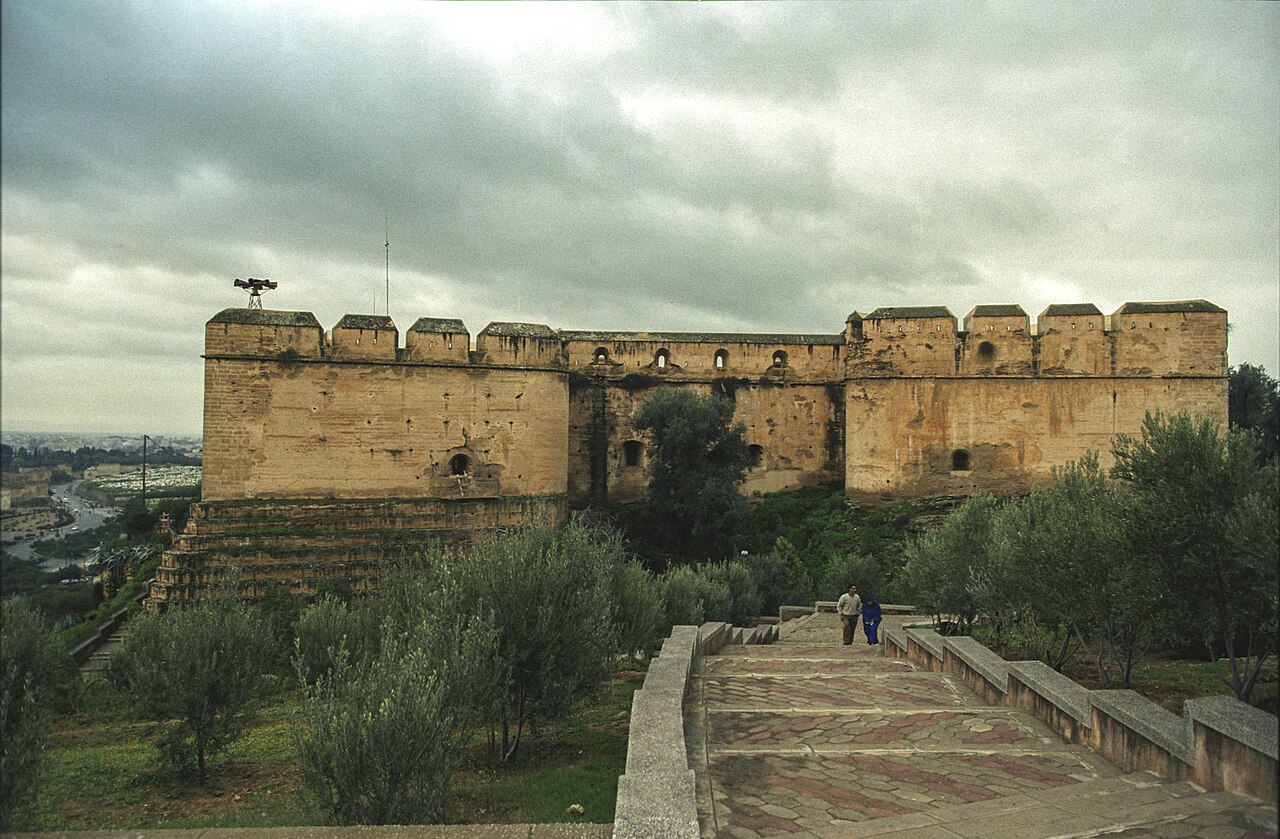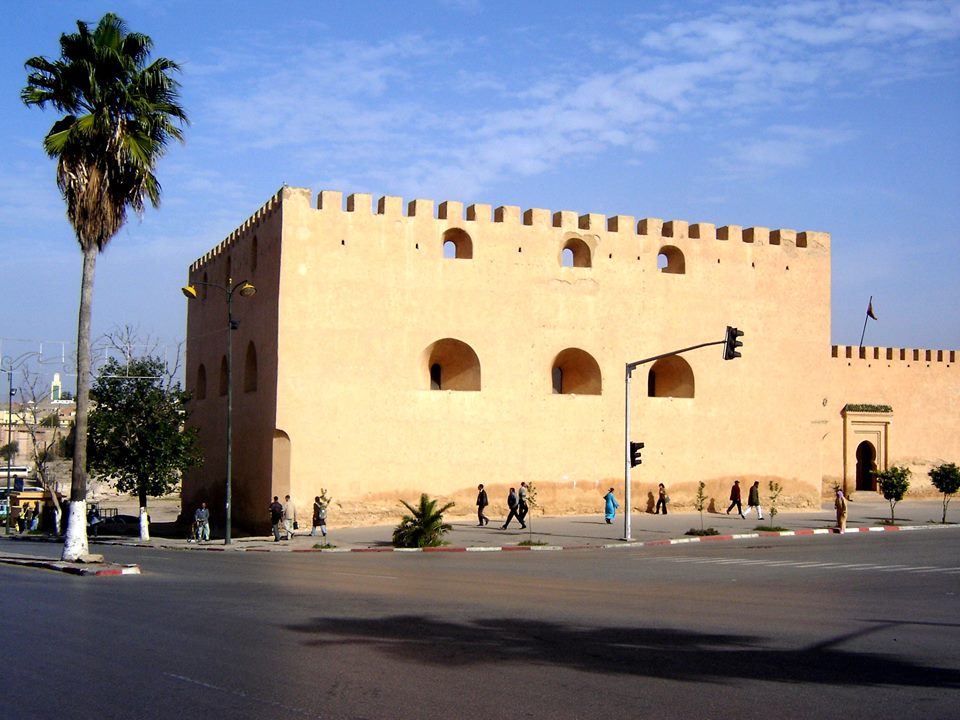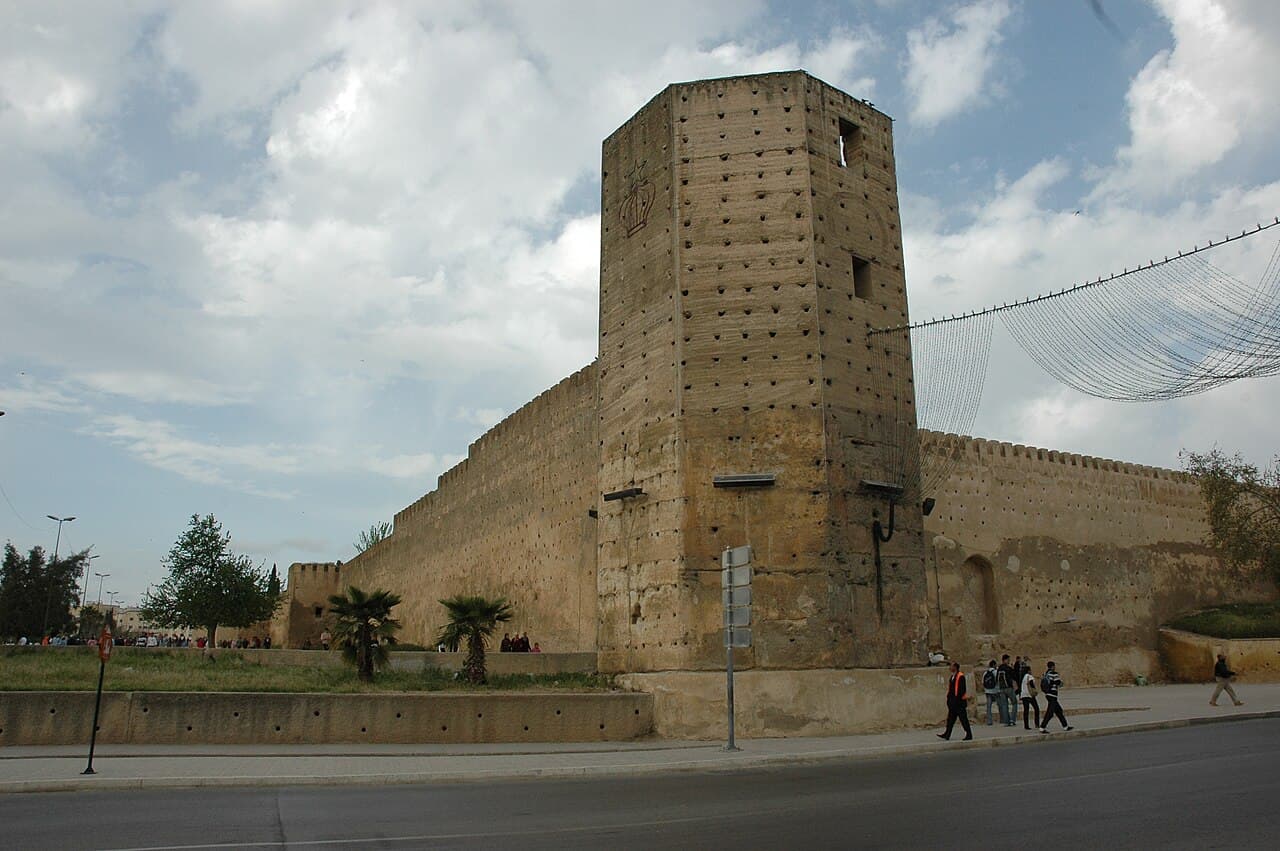
Kasbah Cherarda (Arabic: قصبة شراردة, romanized: Qaṣbat Sharārda) is a significant hill castle located on the northern outskirts of Fes el-Jdid, within the historic city of Fez, Morocco. Constructed in the 17th century during the reign of the Alaouite Sultan Mulay al-Rashid, it served primarily as a military garrison fort to house tribal troops known as the guich or "army" tribes. The kasbah's strategic position on elevated ground allowed it to oversee and protect the surrounding areas, including the vital granaries and markets of the city.
The origin and historical context of Kasbah Cherarda
The name "Cherarda" originates from an Arab tribe whose qaid (tribal leader) initially built a kasbah on this site to safeguard the tribe's granaries. Before being known as Kasbah Cherarda, it was referred to as Kasbah el-Khemis (Arabic: قصبة الخميس, romanized: Qaṣbat al-Khamīs), meaning "Thursday Fort," named after the weekly open market held every Thursday outside its walls. This market was a crucial economic and social event for the local population.
Following Sultan Mulay al-Rashid's conquest of Fez in 1666, he ordered the construction of the current kasbah. His intent was to establish a fortified base for his loyal tribal troops, reinforcing his control over the city. The kasbah was part of a network of similar fortifications built around Fez throughout its history to protect the city from internal and external threats.
Architectural features and layout
The kasbah covers a substantial rectangular area measuring approximately 400 by 550 meters. Its design reflects the military architecture typical of Moroccan kasbahs of the period, combining defensive functionality with the capacity to house a significant number of troops and support facilities. The walls are robust and high, constructed to withstand sieges and assaults.
Within the kasbah, there would have been various military structures such as barracks, storage areas for weapons and supplies, and possibly stables. The fortifications likely included towers and battlements for surveillance and defense. The kasbah's location on a hill enhanced its defensive capabilities, allowing defenders to monitor the surrounding region effectively.
The kasbah's role in regional conflicts and tribal dynamics
During the internal conflicts between Sultan Mulay al-Rashid and his brother Mohammed, the kasbah was occupied by the Ashrafah tribe. This tribe played a significant role in the power struggles of the period but was eventually deported, illustrating the kasbah's importance as a military and political stronghold.
The kasbah's establishment was part of a broader strategy by the Alaouite dynasty to consolidate power by garrisoning loyal tribal forces in key locations around Fez. These garrisons helped maintain order and deter rebellion, reinforcing the sultan's authority over the city and surrounding regions.
Modern use and preservation
Today, Kasbah Cherarda is no longer a military fortress but has been repurposed for civic and educational functions. It houses a hospital and a high school, serving the local community. Since 1959–60, part of the kasbah has been used as an annex of the University of al-Qarawiyyin, one of the oldest continuously operating universities in the world.
While the kasbah has undergone changes to accommodate these new functions, its substantial walls and overall layout remain evident, preserving its historical and architectural significance. It stands as a testament to the military and urban history of Fez and the Alaouite dynasty's efforts to secure their rule.
Kasbah Cherarda in the context of Moroccan fortifications
Kasbah Cherarda is one of several fortified complexes built around Fez to protect the city and its inhabitants. These kasbahs and forts illustrate the strategic importance of Fez as a political, economic, and cultural center in Morocco. The kasbah's design and function reflect broader trends in Moroccan military architecture from the early modern period, combining traditional defensive features with adaptations to the needs of tribal garrisons.
The kasbah's continued use and adaptation over centuries highlight its resilience and the enduring legacy of Moroccan fortification architecture. It remains a notable example of a hill castle serving both military and later civic purposes in Morocco's historic urban landscape.
Frequently asked questions (FAQ)
- What is the historical significance of Kasbah Cherarda?
- Kasbah Cherarda was built in 1666 by Sultan Mulay al-Rashid as a military garrison to house tribal troops, playing a key role in securing Fez during the Alaouite dynasty's consolidation of power.
- Can visitors access Kasbah Cherarda?
- Kasbah Cherarda is currently used for civic and educational purposes, including a hospital and a university annex, so public access may be limited and is generally not focused on tourism.
- What architectural features characterize Kasbah Cherarda?
- The kasbah features robust defensive walls, a large rectangular layout measuring 400 by 550 meters, and was designed as a fortified military complex typical of 17th-century Moroccan hill castles.
- Why was Kasbah Cherarda also called Kasbah el-Khemis?
- It was originally called Kasbah el-Khemis, or 'Thursday Fort,' due to a weekly market held every Thursday outside its walls, which was an important local economic event.
Photo gallery

Information
Loading map...
Visitor reviews
No reviews yet. Been here? Write the first review and help other travelers!
Write the first reviewVisited this castle? Share your experience
Your review helps other travelers and adds first-hand knowledge to our encyclopedia.