Karsholm Castle

Karsholm Castle in Kristianstad, Sweden
Kristianstad, Sweden
Modern (19th–20th c.)
Well Preserved

Karsholm Castle, located near Kristianstad in Sweden, is a historic estate with origins tracing back to the early 14th century. The castle was first documented in 1336, marking it as a site of considerable medieval heritage. Over the centuries, Karsholm has undergone various transformations, reflecting the architectural tastes and social status of its owners.

Historical background and ownership

The earliest records mention Karsholm Castle in the context of medieval Swedish nobility, though detailed accounts of its initial construction are scarce. The estate has passed through several noble families, each contributing to its development and upkeep. By the 19th century, the castle was owned by the Stjernswärd family, who played a significant role in its modernization.

19th-century reconstruction and architectural style

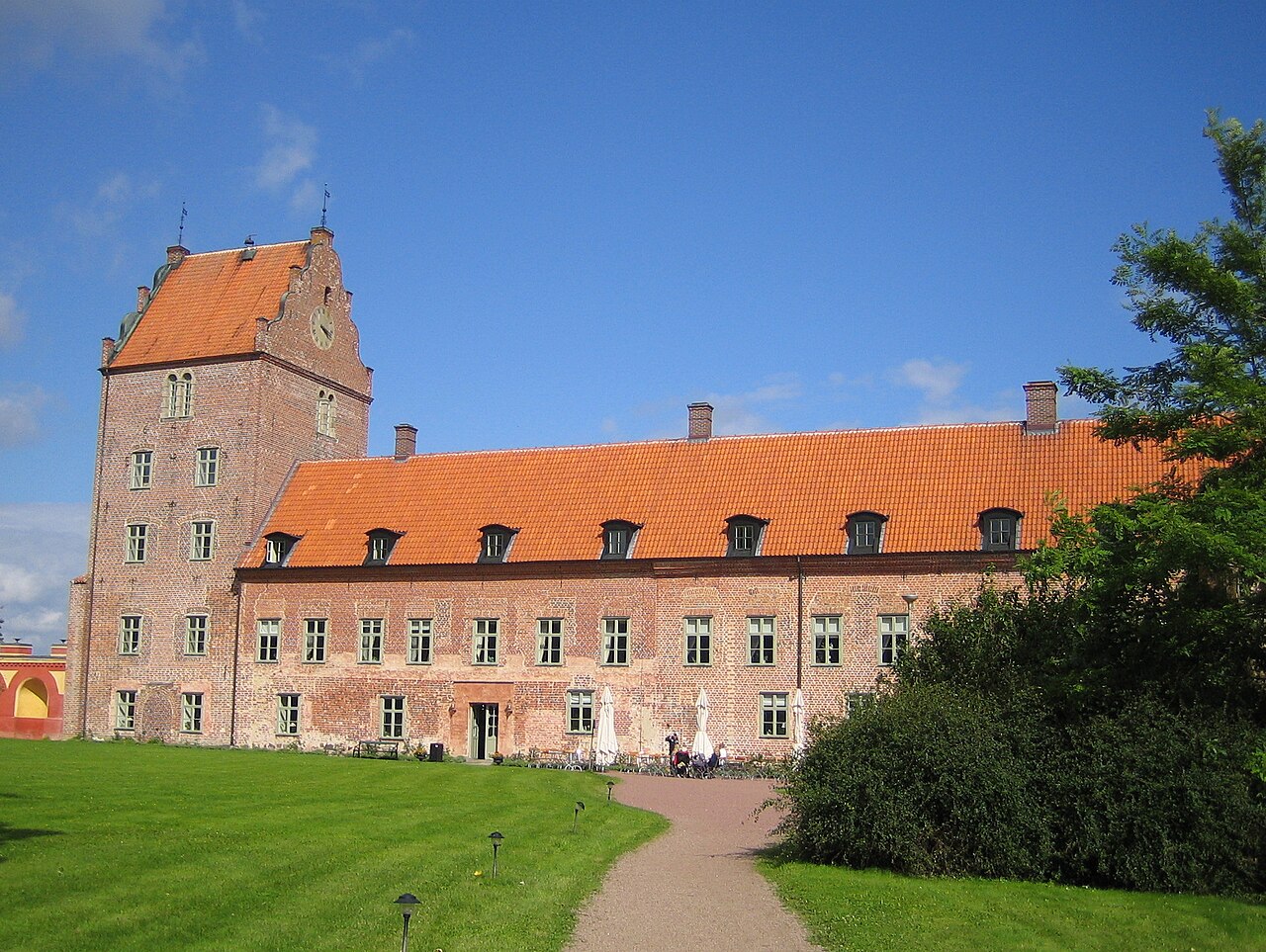
In 1862, Karsholm Castle underwent a major reconstruction under the direction of Rudolf Hodder Stjernswärd. This renovation transformed the castle’s exterior into the neo-Renaissance style, a popular architectural movement during the 19th century that revived elements of Renaissance design. The style is characterized by symmetrical façades, classical proportions, and ornate detailing, which are evident in Karsholm’s current appearance.

The reconstruction incorporated modern building techniques of the time while respecting the castle’s historic roots. The castle’s layout includes typical features of a manor house, such as a central block with balanced wings, large windows, and decorative cornices. The use of brick and stone materials contributes to the castle’s stately and enduring presence in the landscape.

Architectural features and estate grounds

Karsholm Castle’s architecture reflects a blend of historic and 19th-century influences. The neo-Renaissance exterior is complemented by a carefully arranged estate that includes formal gardens, wooded areas, and agricultural land. The castle’s façade features decorative gables, pilasters, and arched windows, which enhance its elegant appearance.

The interior, though privately owned and not generally open to the public, is known to retain period details consistent with the 19th-century renovation. The estate grounds provide a picturesque setting that highlights the castle’s role as a country manor rather than a fortified stronghold.

Current status and private ownership

Today, Karsholm Castle remains in the possession of the Treschow family, who use it as a private residence. Its status as a privately owned estate means that public access is limited, preserving the castle’s privacy and maintaining its condition. Despite this, Karsholm Castle is recognized as a significant cultural landmark within the region of Skåne.

The castle’s preservation reflects ongoing efforts to maintain Sweden’s architectural heritage, particularly estates that illustrate the transition from medieval origins to modern adaptations. Karsholm stands as an example of how historic properties can evolve while retaining their essential character and historical significance.

Frequently asked questions (FAQ)

What is the historical significance of Karsholm Castle?
Karsholm Castle, built in the 16th century, is an important historical site in Kristianstad, Sweden. It served as a noble residence and has witnessed significant events throughout Swedish history, reflecting the architectural styles of its time. The castle's rich history makes it a valuable cultural landmark in the region.
When was Karsholm Castle constructed?
Karsholm Castle was constructed in the late 1500s, specifically around 1580. Its design showcases Renaissance influences, and it has undergone various renovations over the centuries. The castle's historical architecture offers insights into the stylistic developments of that era.
Can I visit Karsholm Castle?
Yes, Karsholm Castle is open to visitors, providing guided tours that delve into its history and architecture. Visitors can explore the beautiful grounds and learn about the castle's past. It is advisable to check the official website for specific visiting hours and any special events.
What are the opening hours for Karsholm Castle?
Karsholm Castle typically opens to the public from May to September, with varying hours depending on the day of the week. During peak tourist season, the castle may offer extended hours for visitors. Always check the castle's official website for the most current information on opening hours.
Is it possible to access Karsholm Castle with public transportation?
Yes, Karsholm Castle is accessible by public transportation from Kristianstad city center. There are local bus services that can take you close to the castle. Additionally, walking from the city center offers a scenic route through the surrounding area.
What are the ticket prices for visiting Karsholm Castle?
Ticket prices for Karsholm Castle are generally affordable, with discounts available for students and seniors. Children under a certain age may enter for free. For the latest pricing, it is recommended to visit the official website or contact the castle directly.
When is the best time to visit Karsholm Castle?
The best time to visit Karsholm Castle is during the summer months, from June to August, when the weather is warm and the gardens are in full bloom. This period also typically features more guided tours and events. Spring and early autumn are also lovely times to explore the castle with fewer crowds.
Are there any nearby attractions to visit along with Karsholm Castle?
Yes, several attractions are located near Karsholm Castle, including the beautiful Kristianstad city center and the nearby Naturum Vattenriket, which offers stunning natural views. Additionally, visitors can explore local museums and parks, making for a full day of activities. Check local tourism guides for more recommendations.

Information

Palace Castle

Sources & official resources

Verify the information above using these authoritative references.

Loading map...

Visitor reviews

No reviews yet. Been here? Write the first review and help other travelers!

Write the first review

Visited this castle? Share your experience

Your review helps other travelers and adds first-hand knowledge to our encyclopedia.
Write a review

(5/5)

0/2000 characters

Your review will be visible after admin approval

Nearby castles

4.3 km
Bäckaskog Castle — Sweden castle

Bäckaskog Castle

Fjälkinge, Sweden

Bäckaskog Castle stands as a remarkable example of historical transformation, evolving from a 13th-century Premonstratensian monastery into a prominent Renaissance castle nestled between the scenic waters of Ivö Lake and Oppmanna Lake in southern Sweden. This unique location on a narrow isthmus has shaped the castle's strategic and aesthetic significance throughout its long history. Medieval origins and monastic heritage The origins of Bäckaskog Castle trace back to the early 13th century when it was founded as a Premonstratensian monastery, a Catholic religious order known for its communal life and devotion. The monastery was strategically situated on a narrow peninsula flanked by two lakes, providing natural defense and a tranquil environment conducive to monastic life. The original complex included a chapel and monastic buildings designed to support the spiritual and daily needs of the religious community. During its monastic phase, Bäckaskog was part of a broader network of religious institutions in Scania, then under Danish rule. The monastery thrived until the Reformation in 1537, when the Danish Crown confiscated ecclesiastical properties, leading to the dissolution of the monastery. This marked a significant turning point in the site's history, transitioning from religious to secular use. Renaissance transformation and noble ownership Following the Reformation, the former monastery entered the hands of various noble families, including the Ulfstand, Brahe, Bille, and Parsberg families. The most influential transformation occurred between 1584 and 1653 under the stewardship of Henrik Ramel and his son, who remodeled the site extensively to create the castle's present Renaissance appearance. This period introduced architectural elements typical of the Renaissance style, such as symmetrical layouts, ornate façades, and fortified residential features. The castle's design during this era reflected both defensive needs and the desire for a prestigious noble residence. The incorporation of the medieval monastic structures into the new castle complex illustrates a blend of architectural styles and functions. Swedish crown and military role After the Treaty of Roskilde in 1658, Scania became part of Sweden, and in 1684, King Charles XI took control of Bäckaskog Castle. The estate was repurposed as the residence for the colonel commanding the Southern Scanian cavalry regiment, highlighting its strategic military importance. Despite its military association, the castle was often leased to tenants, maintaining its residential character. 19th and early 20th century developments The 19th century saw further enhancements under notable figures such as Field Marshal Johan Christopher Toll and King Charles XV, who owned the estate from 1853 to 1872. Later, Crown Prince Frederick of Denmark acquired the castle in 1885, managing it before leasing it to chamberlain Filip Stjernswärd in 1900. These owners contributed to the castle's upkeep and adapted it for contemporary residential and agricultural use. By the early 20th century, Per Åkers (Nilsson), a prominent industrialist, became the final tenant to both lease the castle and cultivate its agricultural lands directly. After his tenancy, the estate's agricultural and residential functions were separated in 1956, with the castle increasingly used for public events under Gustav Ferlenius. Architectural features and landscape Bäckaskog Castle's architecture reveals layers of history, combining its medieval monastic origins with Renaissance residential design. The castle complex includes the main buildings and the preserved castle chapel, which retains its religious significance amidst the castle's evolving role. The surrounding park, originally part of the monastery grounds, was transformed in the early 19th century into a landscape-style garden known as the "wild park," reflecting the era's naturalistic gardening trends. Although some features like the orangery and decorative elements were removed in the early 20th century, new botanical additions such as an herb garden and a biblical garden were introduced, emphasizing the site's spiritual and educational heritage. The park is also renowned for its extensive rose cultivation, earning Bäckaskog the nickname "the castle of roses." This horticultural tradition underscores the care given to the estate's landscape over centuries. Cultural significance and preservation Bäckaskog Castle has played a role in cultural works, featuring in Åsa Storck’s 1996 children’s book "Rymlingen," which imagines life at the castle during the 14th century. It has also served as a filming location for the popular television program "Stjärnorna på slottet" across multiple seasons between 2012 and 2025. The castle's historical and architectural importance was officially recognized in 1935 when it was designated a listed building (Byggnadsminne), ensuring its protection as a cultural monument. In 1996, the Swedish National Property Board (Statens Fastighetsverk) acquired the castle, marking a new era of preservation and public engagement. Today, Bäckaskog Castle operates as a hotel and restaurant, welcoming visitors to experience its rich history, architectural beauty, and serene lakeside setting. The castle's enduring legacy reflects its continuous adaptation from a medieval monastery to a Renaissance noble residence, military headquarters, and modern cultural landmark.

Renaissance (15th–17th c.)
Details
7.3 km
Biskopskällaren — Sweden castle

Biskopskällaren

, Sweden

Biskopskällaren is a historic castle located in Sweden, classified as a hill castle due to its strategic position atop elevated terrain. This location provided natural defensive advantages typical of hill castles, allowing control over surrounding areas and enhanced visibility against approaching threats. Although the exact city or town of Biskopskällaren remains unspecified, its significance within Swedish medieval fortifications is notable.The architectural significance of BiskopskällarenThe castle's architectural style and construction period are not precisely documented, but its classification as a hill castle suggests origins in the medieval period, likely between the 12th and 15th centuries. Hill castles in Sweden commonly featured robust stone walls, fortified towers, and defensive ditches or moats adapted to the terrain. Biskopskällaren would have incorporated these elements to maximize defense while utilizing the natural landscape.Typical features of such castles include a central keep or donjon, surrounded by curtain walls and protected by battlements and arrow slits. The elevated position often meant steep access routes, which further deterred attackers. While detailed records of Biskopskällaren's specific structures are lacking, its categorization aligns it with these medieval defensive architectural principles.Historical context and roleSweden's medieval castles served as both military strongholds and administrative centers. Biskopskällaren, as a hill castle, would have played a role in regional defense and governance. Castles of this type were often controlled by local nobility or ecclesiastical authorities, serving as seats of power and symbols of territorial control.The name "Biskopskällaren" suggests a possible connection to ecclesiastical ownership or influence, as "biskop" translates to "bishop" in Swedish. This implies the castle might have been associated with a bishopric or church authority, which was common in medieval Scandinavia where church officials held significant temporal power.Preservation and current statusThe current physical condition of Biskopskällaren is not explicitly documented. Many hill castles in Sweden exist today as ruins or partially preserved sites, reflecting centuries of historical change and the impact of natural decay. Without specific information, it is reasonable to consider that Biskopskällaren may be in a ruined or partially preserved state, typical of many medieval castles in the region.Visitors interested in Swedish medieval history and castle architecture might find Biskopskällaren a site of archaeological and cultural interest, offering insights into the defensive strategies and feudal structures of the time.Visiting and cultural importanceWhile exact details on visiting hours, ticket prices, or accessibility are unavailable, hill castles like Biskopskällaren often attract historians, archaeologists, and tourists interested in medieval heritage. Such sites contribute to understanding the historical landscape of Sweden and the evolution of castle construction in Northern Europe.Exploring Biskopskällaren would provide a glimpse into the medieval period's military architecture and the socio-political dynamics of the region. Its elevated position not only served practical defense purposes but also symbolized authority and control during its time of use.

High Medieval (11th–13th c.)
Details
8.3 km

Råbelöv Castle

Kristianstad, Sweden

Råbelöv Castle is a historically significant estate located near Kristianstad in southern Sweden. Its origins trace back to the medieval period, with the earliest recorded owner being Ingeborg Kjeldsen Krognos, born in the mid-14th century. The estate has witnessed centuries of regional conflict and architectural evolution, reflecting the turbulent history of the Scanian region. Medieval origins and early ownership The estate of Råbelöv was established well before the current castle structure was built, with records indicating ownership in the 1300s. Ingeborg Kjeldsen Krognos is the earliest documented proprietor, marking the estate’s roots deep into the medieval era. During this time, the property was likely a manor or fortified residence, typical of noble estates in the region, serving both agricultural and defensive purposes. Renaissance construction and architectural features In 1637, the estate underwent a significant transformation when Christoffer Ulfeldt acquired it in 1616 and commissioned the construction of the present-day castle. The castle was built in the Renaissance architectural style, which was characterized by symmetry, proportion, and the use of classical elements such as pilasters, columns, and decorative cornices. The castle’s design reflects the influence of Renaissance ideals in Scandinavia during the early 17th century. It features a robust rectangular main building with strong, fortified walls and a pitched roof, typical of Swedish Renaissance manors. The use of brick and stone masonry was common, providing both durability and aesthetic appeal. Defensive adaptations during the scanian war During the Scanian War (1675-1679), Råbelöv Castle played a strategic role. In 1677, under orders from the Danish Crown, the castle was fortified to defend against advancing Swedish forces. This involved strengthening the castle’s fortifications, likely adding earthworks, ramparts, and possibly a moat or other defensive measures to withstand siege warfare. The Scanian War was a conflict between Denmark-Norway and Sweden over control of the Scanian provinces, and castles like Råbelöv were critical in the military campaigns. The castle’s fortification during this period underscores its importance as a military asset as well as a noble residence. Ownership through the centuries and current status After the Scanian War, Råbelöv Castle changed hands multiple times, reflecting the shifting political and social landscape of the region. Despite these changes, the castle has remained a private estate rather than becoming a public monument or museum. Today, Råbelöv Castle is owned by the Murray family and remains in private use. The castle is preserved as a well-maintained historic residence, retaining much of its Renaissance character and architectural integrity. While not generally open to the public, its exterior and grounds contribute to the cultural heritage of the Kristianstad area. Architectural significance and heritage value Råbelöv Castle is an important example of Renaissance architecture in Sweden, illustrating how European stylistic trends were adapted to local building traditions and defensive needs. Its combination of residential comfort and military readiness reflects the dual role of many noble estates during the early modern period. The castle’s history, spanning from medieval origins to its role in 17th-century warfare and its continued preservation, provides valuable insight into the region’s cultural and historical development. It stands as a testament to the architectural and historical legacy of the Scanian region.

Renaissance (15th–17th c.)
Details