Kannonji Castle
Kannonji Castle stands as a remarkable example of a late-medieval hill castle in Azuchi, Japan. Though the exact date of its construction remains uncertain, historical records indicate its existence as early as 1335. The castle is believed to have been originally built by the Sasaki clan, a powerful family during the Kamakura to Muromachi periods. Over the centuries, Kannonji Castle played a significant role in the turbulent military and political struggles of the region, especially throughout the Sengoku period.
The castle is situated on a strategic mountaintop, allowing it to dominate the surrounding landscape. Its extensive layout nearly covered the entire mountain, featuring multiple baileys, stone walls, and earthen ramparts. This vast complex made it one of the most extensive mountaintop castles constructed in Japan, reflecting both its military importance and the ambition of its successive rulers.
Early history and construction
The origins of Kannonji Castle are somewhat obscure, but the earliest documentation dates to the early 14th century. It is widely accepted that the Sasaki clan established the castle as a stronghold to control the region. The castle's location on a high hill provided natural defenses, which were enhanced by man-made fortifications including stone walls and earthen embankments.
The sengoku period and the rokkaku clan
During the Sengoku period, the castle became a focal point of conflict and power struggles. The Rokkaku clan undertook significant reconstruction and expansion of the castle, reinforcing its defenses and enlarging its complex. Despite these efforts, the Rokkaku gradually lost influence due to military defeats and internal strife.
One notable event was the defeat of Rokkaku Yoshikata in 1560 by the Asai clan, which weakened the clan's hold on the region. Further turmoil arose in 1563 with the execution of Goto Katatoyo, a retainer whose death caused dissent among the Rokkaku retainers. Ultimately, the rise of Oda Nobunaga in 1568 led to the Rokkaku clan's displacement. Nobunaga's construction of the nearby Azuchi Castle marked a shift in regional power and likely led to the abandonment of Kannonji Castle as a major stronghold.
Architectural features and layout
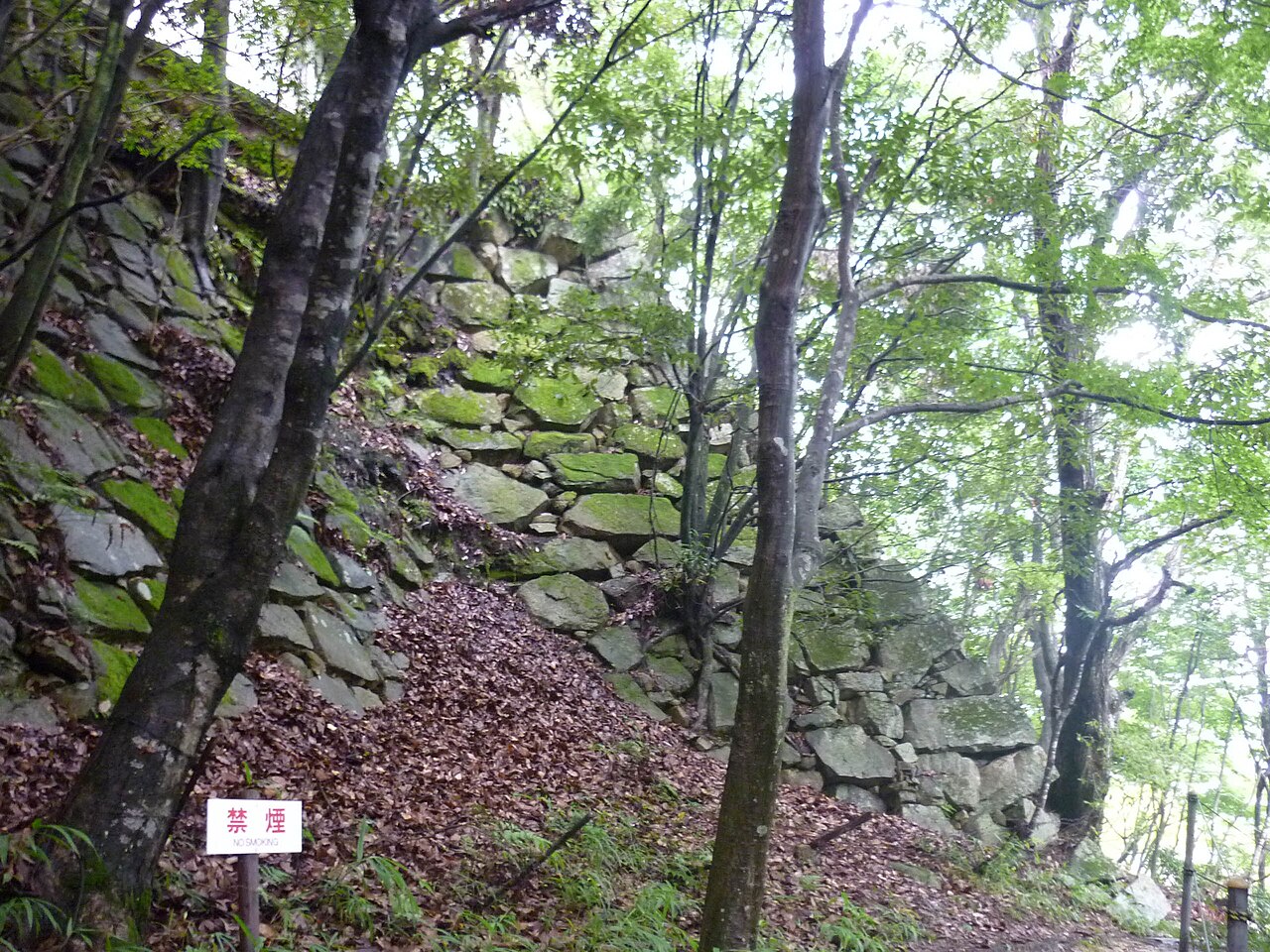
Kannonji Castle was notable for its extensive use of natural terrain combined with sophisticated fortifications. The castle's multiple baileys were arranged across the mountaintop, connected by stone-paved paths and protected by a series of stone walls and earthen embankments. These defenses were designed to maximize the natural steepness and ruggedness of the hill, making any assault difficult.
The castle's layout included numerous defensive structures such as watchtowers, gates, and battlements, though much of these remain in ruins today. The sheer scale of the castle complex is evident from the wide area it covered, making it one of the largest hilltop castles of its era in Japan.
Modern-day ruins and visiting information
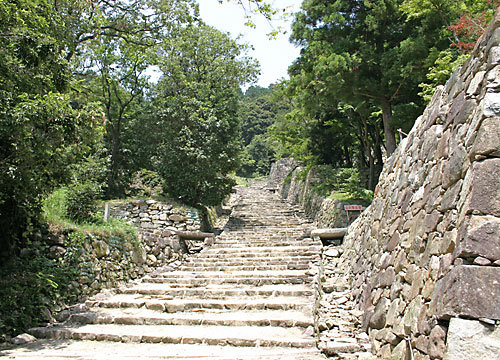
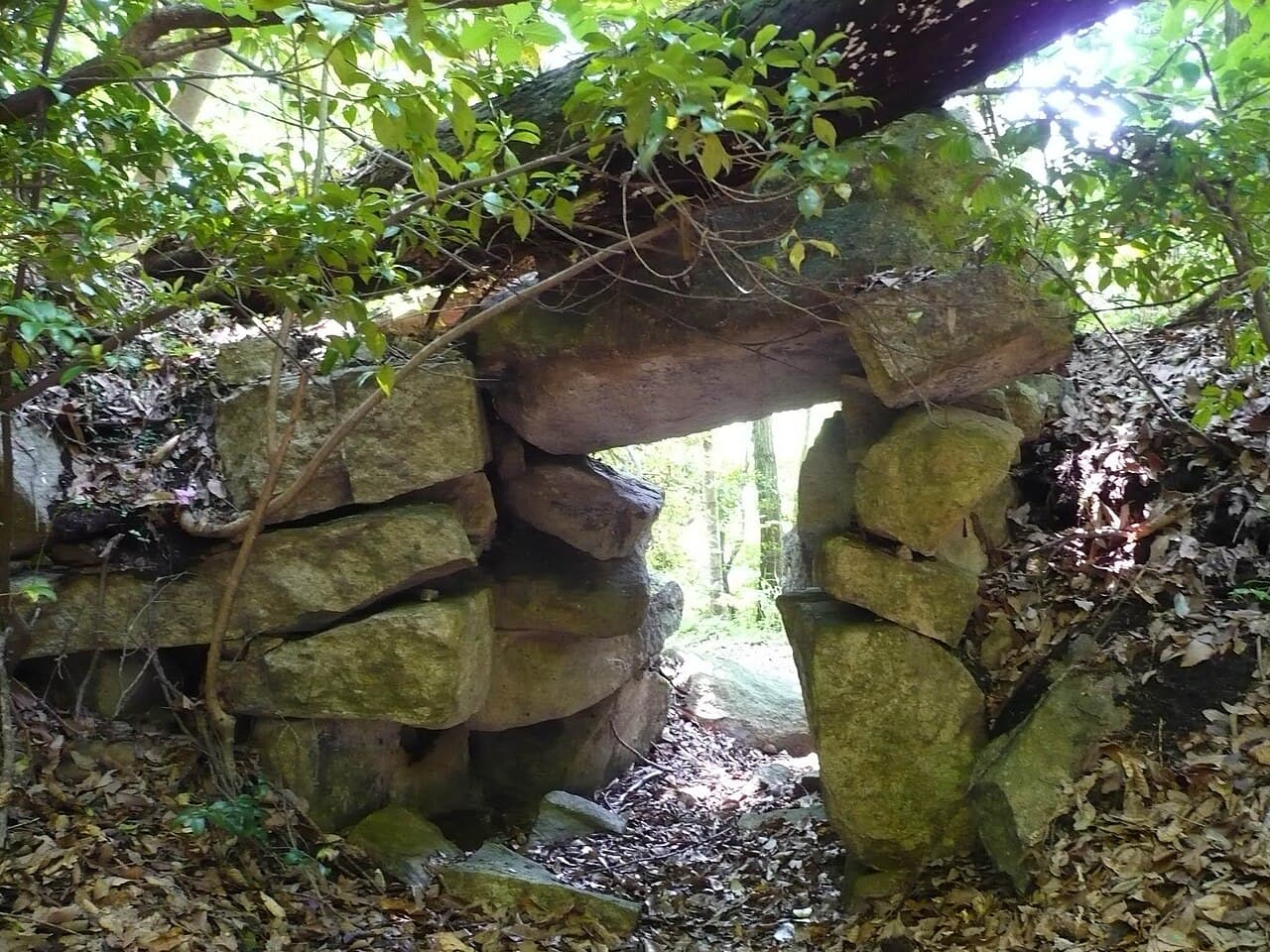
Today, Kannonji Castle exists as a series of ruins scattered across the mountaintop. Visitors can explore remnants of the stone walls, earthen ramparts, and foundations of various castle structures. The site offers a unique combination of historical interest and natural beauty, with hiking trails that ascend the mountain through scenic landscapes.
Access to the castle ruins typically begins at Azuchi Station, where visitors can rent bicycles and obtain maps that guide them to nearby cultural sites such as Kuwanomi Temple (桑實寺). From there, a well-maintained stone-paved path leads up the mountain to the castle ruins. The hike takes approximately 60 minutes and requires good footwear and preparation due to the steep ascent.
The trails around the castle vary in difficulty and marking, with some less frequented paths offering a more solitary experience. The site is popular among both history enthusiasts and hikers, especially during pleasant weather seasons. Despite the extensive ruins visible, the full extent of the castle complex can be challenging to explore in a single visit, inviting repeated visits for those interested in its history and architecture.
Cultural and historical significance
Kannonji Castle holds an important place in Japanese history as a symbol of the military and political upheavals of the Sengoku period. Its association with notable clans such as the Sasaki, Rokkaku, and Oda Nobunaga highlights its strategic importance. The castle's extensive ruins provide valuable insights into medieval Japanese castle architecture and the adaptation of fortifications to natural landscapes.
As a cultural heritage site, the castle and its surroundings attract visitors interested in Japan's feudal past, castle construction techniques, and the dynamics of regional power struggles. The proximity to other historical sites like Azuchi Castle and Kuwanomi Temple enhances its appeal as part of a broader historical itinerary in the region.
Frequently asked questions (FAQ)
- How do I get to Kannonji Castle from Azuchi Station?
- From Azuchi Station, you can rent a bicycle and pick up a map to Kuwanomi Temple. From there, follow the stone-paved mountain path leading to the castle ruins. The hike takes about 60 minutes and requires good footwear due to the steep ascent.
- What is the historical significance of Kannonji Castle?
- Kannonji Castle was a major stronghold during the Sengoku period, associated with the Sasaki and Rokkaku clans. It played a key role in regional power struggles before being abandoned after Oda Nobunaga's rise and the construction of Azuchi Castle nearby.
- What can I expect to see when visiting the ruins?
- Visitors can explore extensive ruins including stone walls, earthen embankments, and foundations of various castle structures. The site offers scenic hiking trails with varying difficulty and some less crowded paths for a more solitary experience.
- Is Kannonji Castle accessible for all visitors?
- The castle ruins are located on a steep mountaintop and involve a strenuous hike of about 60 minutes. It is recommended for visitors who are physically fit and wear appropriate hiking footwear. Accessibility may be limited for those with mobility issues.
- When is the best time to visit Kannonji Castle?
- The best time to visit is during mild weather seasons such as spring and autumn when hiking conditions are favorable and the surrounding nature is especially beautiful.
Photo gallery

Photo by 投稿者が撮影•Public domain
Information
Opening hours
If you enter or exit through Kuwanomi Temple you'll need to pay the admission fee of 300 yen. Hours are 900-1630.
Website
Visit websiteSources & official resources
Verify the information above using these authoritative references.
Loading map...
Visitor reviews
No reviews yet. Been here? Write the first review and help other travelers!
Write the first reviewVisited this castle? Share your experience
Your review helps other travelers and adds first-hand knowledge to our encyclopedia.