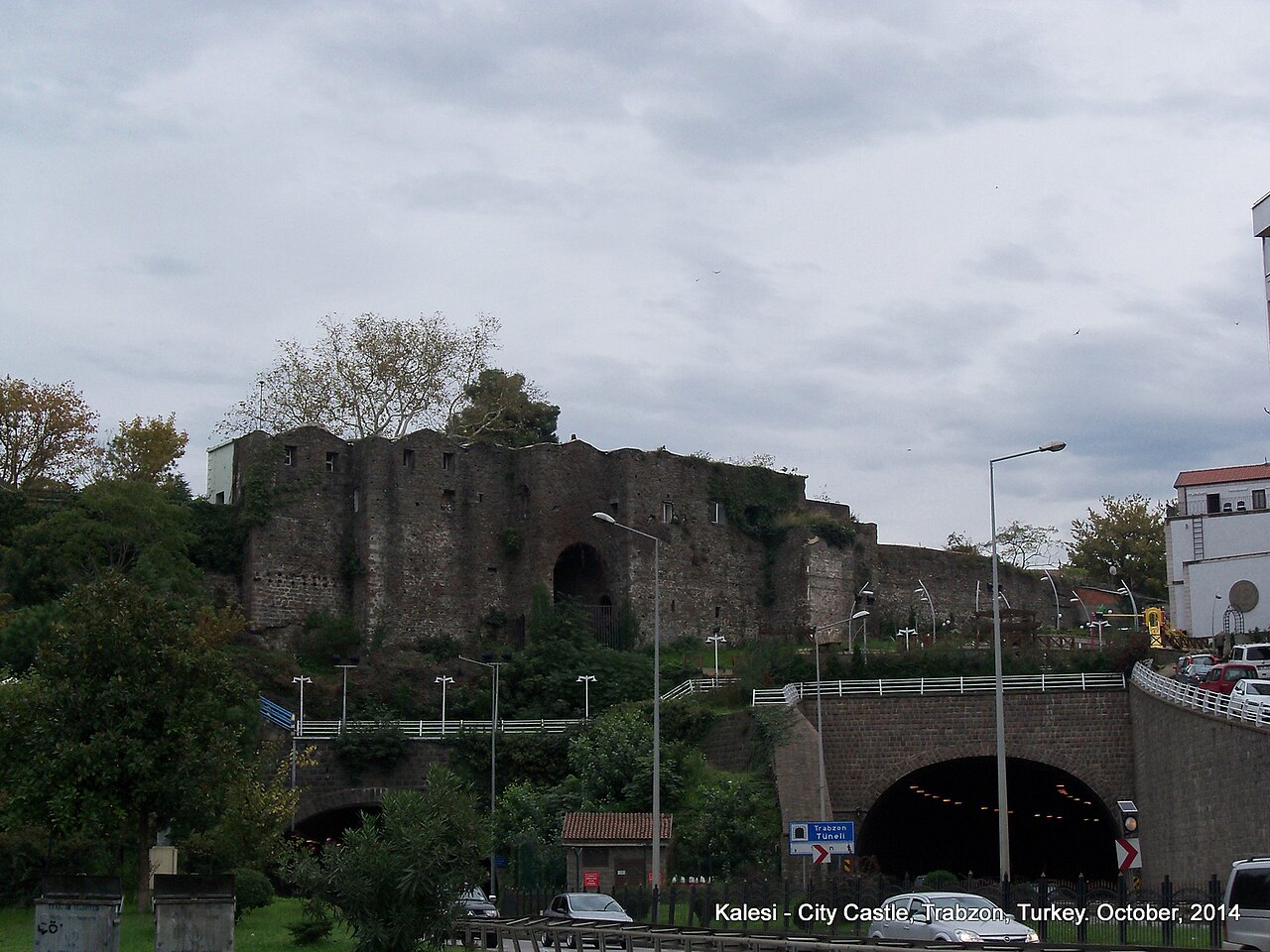
Akçakale Castle
Akçakale Castle, also known locally as Akçakale Kalesi or Haldandoz Kalesi, is a notable late medieval fortress situated in the village of Akçakale within the province of Trabzon, Turkey. This castle occupies a strategic position on a rocky promontory that extends into the Black Sea, rising approximately 20 meters above sea level. Its location was critical for controlling maritime access and defending the coastal approaches to the historic city of Trebizond (modern-day Trabzon).
Historical background and strategic importance
Constructed in the first quarter of the 14th century, Akçakale Castle was commissioned by Alexios II Megas Komnenos, the Emperor of Trebizond. The fortress was built primarily to protect the empire’s capital from the advancing Seljuk Turks and to secure a small bay to the east, which was vital for regional maritime activities. During the era of the Empire of Trebizond, the castle was known as Kordyle, a name that appears in contemporary chronicles and maps of the period.
Following the fall of Trebizond to the Ottoman Empire in 1461, Kordyle Castle notably resisted Ottoman domination for an additional seven years. It was only in 1468 that the fortress succumbed after a prolonged siege led by Mahmut Pasha, a commander under Mehmed II the Conqueror. Mahmut Pasha died at the conclusion of the siege and was reportedly buried within the castle grounds, marking the end of the castle’s role as a stronghold of Trebizond resistance.
Architectural features and modifications
The castle’s construction utilizes a combination of rubble masonry and cut stone, typical of defensive structures of the period. Its irregular rectangular layout conforms to the natural shape of the promontory, maximizing defensive capabilities. A prominent feature is the large square tower located on the southwest wall, which likely functioned as the keep or main stronghold within the castle complex.
During the Ottoman period, the castle underwent significant repairs and alterations. Notably, in the 19th century, a substantial section of the eastern seaward wall was rebuilt to incorporate seven cannon emplacements, reflecting the evolution of military technology and the need for coastal artillery defenses. The fortress served as a military base until the early 20th century, after which its military role diminished.
Post-military use and preservation efforts
Following its military decommissioning, the interior of Akçakale Castle was repurposed for agricultural use and even served as a children’s playground, indicating a period of neglect and informal use. However, recent decades have seen renewed interest in the site’s archaeological and cultural value.
Archaeological excavations conducted in 2007 and again in 2022 have contributed to a better understanding of the castle’s historical phases and structural layout. These efforts have aimed at consolidating the ruins and preparing the site for public access.
Currently, the castle is not accessible to visitors, but plans are underway to stabilize the structure and open it as a small public park, allowing greater appreciation of its historical significance and scenic location.
Geographical and cultural context
Situated on the Black Sea coast, Akçakale Castle represents an important example of medieval coastal fortifications in northeastern Anatolia. Its role in the defense of the Empire of Trebizond and subsequent Ottoman military adaptations highlight the castle’s enduring strategic importance through several centuries.
The castle’s proximity to the city of Trabzon places it within a region rich in Byzantine and Ottoman heritage, contributing to the cultural landscape of the area. Its current status as a ruin awaiting restoration underscores the challenges of preserving medieval fortifications in coastal environments.
Frequently asked questions (FAQ)
- When was Akçakale Castle built and by whom?
- Akçakale Castle was built in the first quarter of the 14th century by Alexios II Megas Komnenos, the Emperor of Trebizond, to defend against Seljuk Turkish advances.
- What is the historical significance of Akçakale Castle?
- The castle served as a key defensive fortress for the Empire of Trebizond and resisted Ottoman conquest until 1468, seven years after Trebizond fell.
- What architectural features does Akçakale Castle have?
- The castle features rubble masonry and cut stone construction with an irregular rectangular plan, including a large square tower that likely served as a keep.
- Is Akçakale Castle open to visitors today?
- Currently, Akçakale Castle is not accessible to the public due to ongoing preservation efforts, but plans exist to open it as a public park after consolidation.
- What changes were made to the castle during the Ottoman period?
- In the 19th century, the eastern seaward wall was rebuilt with seven cannon emplacements to adapt to artillery warfare, and the castle was used as a military base until the early 20th century.
Information
Loading map...
Visitor reviews
No reviews yet. Been here? Write the first review and help other travelers!
Write the first reviewVisited this castle? Share your experience
Your review helps other travelers and adds first-hand knowledge to our encyclopedia.