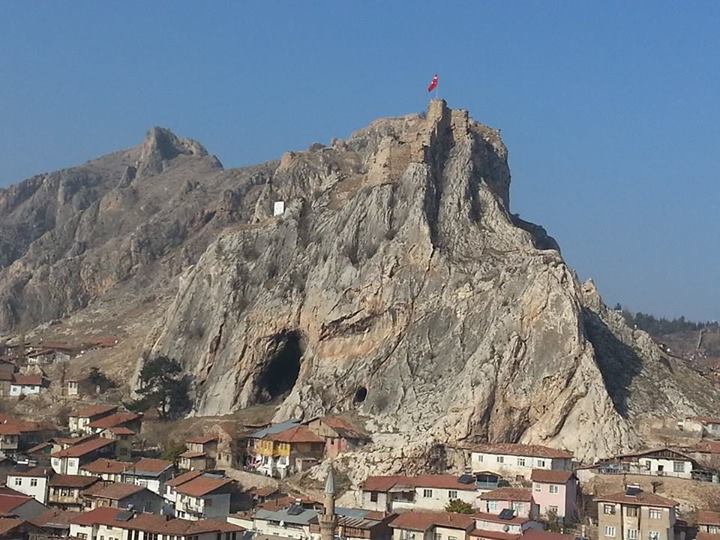
Kaleköy Castle
Kaleköy Castle is a notable medieval fortress located on the island of Gökçeada in the province of Çanakkale, Turkey. Known locally simply as "Kale," the castle stands on a prominent rocky ridge overlooking two natural harbors and the village of Kaleköy beneath it. The site offers commanding views northwards towards the Greek island of Samothrace, highlighting its strategic maritime importance in the northeastern Aegean Sea.
The castle's origins trace back to the late medieval period, with construction believed to have occurred in the second half of the 14th century. While traditionally attributed to the Byzantines, some historical sources suggest that the Genoese may have played a role in its construction or later modifications. This reflects the complex political and military dynamics of the region during this era, when various powers vied for control of key maritime routes and territories.
Historical background and strategic significance
The village of Kaleköy itself has a long history, with evidence of settlement dating back to Roman times. Historically, the village was known as "Kastro," a Greek term meaning "castle," emphasizing the centrality of the fortress to the local community. Prior to 1970, the island was called Imbros or Imroz, and the population was predominantly ethnic Greek until the early 20th century.
Throughout its history, Kaleköy Castle underwent several documented repairs and restorations. Notably, it was repaired in 1390, 1439, and 1441, reflecting ongoing military and administrative importance. After the Ottoman Empire took control of the island in 1455, the castle was restored again to maintain its defensive capabilities against pirate raids and other threats common in the Aegean during the 15th and 16th centuries.
Architectural features and layout
Kaleköy Castle is constructed on a rocky ridge that provides natural defensive advantages. The fortress was designed to protect the two harbors on either side, which were vital for maritime trade and local fishing activities. The castle's walls and towers were strategically positioned to control access and provide overlapping fields of fire.
The castle ruins today reveal a complex layout with multiple defensive walls and towers. The surviving masonry displays characteristics typical of late medieval fortifications, including thick curtain walls, battlements, and possibly a keep or central stronghold. The use of local stone and the adaptation to the rugged terrain are notable architectural features.
Defensive structures
The fortress likely included gatehouses controlling entry points, battlements for archers and artillery, and watchtowers for surveillance of both land and sea approaches. The positioning on the ridge allowed defenders to monitor maritime traffic and anticipate potential threats from pirates or hostile fleets.
Decline and present condition
By the 16th century, the local population began to decline, with many inhabitants moving inland to the village of Dereköy in the mountainous interior of the island. This migration was likely motivated by the desire for greater safety from pirate raids and other dangers along the coast.
As the village population shifted, Kaleköy Castle gradually lost its military and administrative relevance. Over subsequent centuries, the fortress fell into disrepair and eventually became a ruin. Today, the castle remains a freely accessible ruin, offering visitors a glimpse into the island's medieval past and panoramic views of the surrounding seascape.
Cultural and tourism aspects
Kaleköy Castle is a site of both historical and cultural interest, reflecting the layered heritage of Byzantine, Genoese, and Ottoman influences in the region. The castle ruins attract visitors interested in medieval architecture, maritime history, and scenic vistas.
Nearby, the village of Dereköy also features castle ruins, making Gökçeada an appealing destination for those exploring the island's fortifications and historical landscapes. The freely accessible nature of Kaleköy Castle allows for self-guided exploration, though visitors should be prepared for uneven terrain and limited facilities.
Overall, Kaleköy Castle stands as a significant example of late medieval fortress architecture in the northeastern Aegean, embodying the strategic maritime defense needs of its time and the cultural transitions of the island through centuries.
Frequently asked questions (FAQ)
- How do I get to Kaleköy Castle on Gökçeada Island?
- Kaleköy Castle is located in the village of Kaleköy on Gökçeada Island, accessible by ferry from the Turkish mainland. Once on the island, local roads lead to the village where the castle ruins are situated.
- What is the historical significance of Kaleköy Castle?
- Kaleköy Castle dates back to the late 14th century and reflects Byzantine and Genoese influences. It served as a defensive fortress protecting the island's harbors and village from pirate raids and military threats.
- Is Kaleköy Castle open to visitors?
- Yes, Kaleköy Castle is freely accessible to the public. Visitors can explore the ruins and enjoy panoramic views of the surrounding sea and the Greek island of Samothrace.
- What architectural features can I see at Kaleköy Castle?
- Visitors can observe the castle's thick curtain walls, battlements, watchtowers, and the rocky ridge on which it is built. These features illustrate typical late medieval fortress design adapted to maritime defense.
- When was Kaleköy Castle last restored?
- The castle underwent repairs in 1390, 1439, and 1441 during Byzantine rule, and again after the Ottoman takeover in 1455. Since then, it has fallen into ruin without significant modern restoration.
Information
Address
Kaleköy, Gökçeada, Çanakkale, Turkey
Loading map...
Visitor reviews
No reviews yet. Been here? Write the first review and help other travelers!
Write the first reviewVisited this castle? Share your experience
Your review helps other travelers and adds first-hand knowledge to our encyclopedia.