Kajaani Castle
Kajaani Castle stands as a significant example of early 17th-century military architecture in Finland, constructed primarily to secure the northern borders of the Swedish Empire against Russian advances. Located on the small island of Ämmäkoski in the Kajaani River, between the rapids of Ämmäkoski and Koivukoski, the castle was built from 1604 to 1619 and later expanded in the mid-17th century. It was the last medieval-style stone castle constructed under Swedish rule, marking the end of an era of fortress building in the region.
The castle's strategic position on a river island allowed it to control river traffic and defend the region of Kainuu, which Sweden had acquired following the Treaty of Teusina in 1595. Its construction was initiated by King Charles IX of Sweden and continued under the supervision of master builders Isak Rasmusson and Lars Thomasson. Despite slow progress due to limited resources and labor, the castle became functional as an administrative center, prison, and military stronghold by 1619.
Architectural design and construction phases
The original structure featured a rectangular stone wall approximately 39 meters long, with walls nearly 10 meters high and 4 meters thick. The fortress was fortified with two round artillery towers at each end and two rectangular battery positions. The northern gate tower provided the main access point to the island, which was artificially enlarged to support the castle's foundations. Wooden bridges connected the island to the mainland, facilitating controlled access.
Initially, the internal buildings within the castle were constructed of wood, including living quarters and administrative spaces. However, during the 1650s and 1660s, under the direction of Count Per Brahe the Younger, significant renovations replaced many wooden structures with stone buildings featuring vaulted roofs. This transformation enhanced the castle's role as a noble residence and administrative center. The stone buildings incorporated a double-house design with central porches and rooms on either side. The chancellery was a notable two-story structure with external stairs, and the interiors were plastered with white lime, with some rooms featuring brick or wooden floors.
Defensive features and adaptations
The castle's defenses included thick granite walls coated with white lime plaster and red-painted window frames, which added an aesthetic touch uncommon for military structures of the period. During the Great Northern War, the castle was further fortified to withstand artillery attacks. The upper floors of the towers were adapted to mount cannons, and a thick layer of peat was placed atop the walls to absorb cannon fire. Doors and windows were barricaded, and shoreline obstacles were installed to hinder enemy approaches.
Historical significance and notable events
Kajaani Castle played multiple roles throughout its history. It served as a prison, famously housing the historian Johannes Messenius from 1616 to 1635 under harsh conditions. The poet Lars Wivallius was also imprisoned there. The castle was the administrative seat of the Kajaani Freiherrdom during Count Per Brahe's tenure, reflecting its elevated status in the mid-17th century.
The castle's military importance was highlighted during the Great Northern War (1700–1721). In 1712, Russian forces burned the surrounding Kajaani region, and the castle underwent defensive upgrades. From 1715 to 1716, it withstood a prolonged siege by Russian troops. After approximately five weeks, the defenders surrendered due to shortages of food, firewood, and ammunition. Despite promises of safe passage, the Russians deported the defenders and civilians to Russia and destroyed the castle by explosives in 1716.
Following the war, the castle returned to Swedish control but was never rebuilt. A small garrison occupied the ruins until the late 18th century. After Finland was ceded to the Russian Empire in 1809, the castle's strategic relevance diminished, though the island remained a key river crossing.
Archaeological excavations and preservation efforts
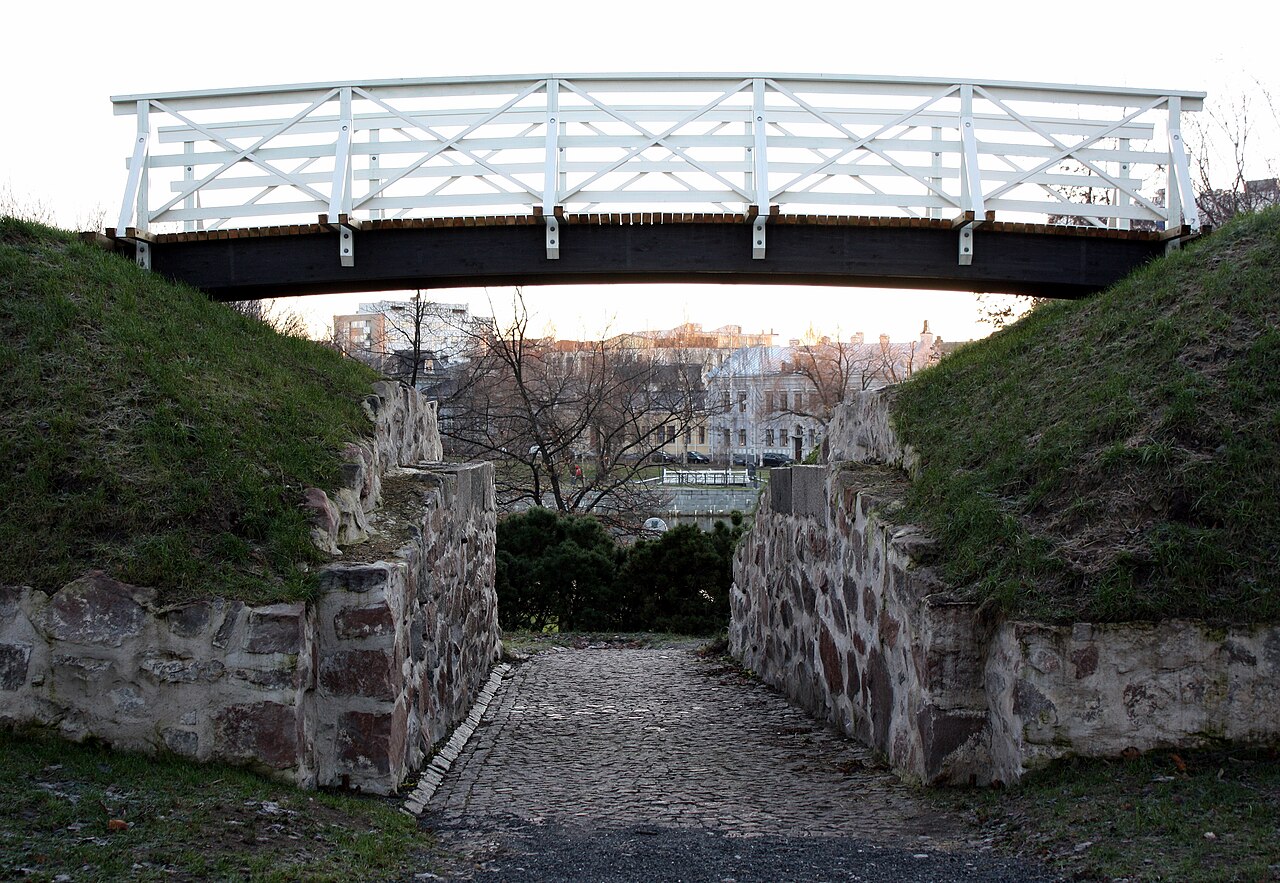
Interest in Kajaani Castle's remains revived in the 20th century. Archaeological excavations in the 1930s during the construction of a new concrete bridge uncovered approximately 1,800 artifacts, shedding light on the castle's history and daily life. Early restoration efforts replaced deteriorated brick patches with granite to preserve the original stonework. Further preservation work from 2001 to 2008 stabilized the ruins and improved visitor access, including the installation of a pedestrian bridge.
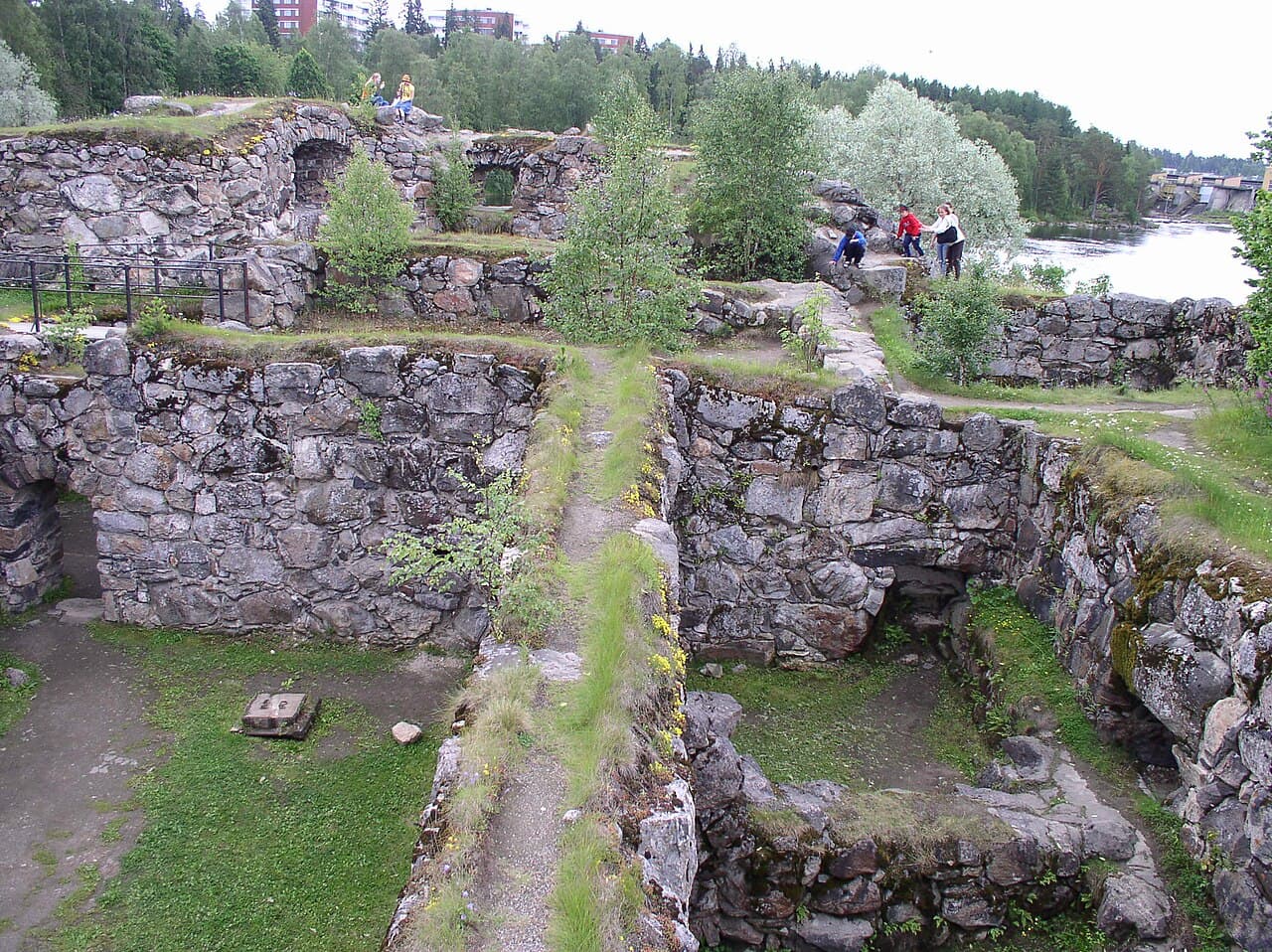
Today, the ruins of Kajaani Castle are roofless but structurally stabilized, allowing visitors to explore the remains of its imposing walls, towers, and stone buildings. Managed by Metsähallitus since 2014, the site is a protected cultural heritage landmark that offers insight into Finland's military and administrative history during the Swedish Empire era.
Structural details and materials
The castle was built primarily from locally quarried granite set with lime mortar, likely produced from limestone sourced near Melalahti. The walls' thickness and height provided formidable defense against siege weapons. The original white lime plaster coating and red-painted window frames indicate an attention to both defense and appearance.
The internal stone buildings constructed during the 1660s renovations featured vaulted roofs and plastered interiors. The commander’s chamber had a brick floor, while other rooms likely had wooden floors. The northern external wall contained gunpowder storage, living quarters, a porch, and a kitchen with a cellar below. The eastern tower’s upper floor was converted into a "great hall," reflecting the castle's dual military and residential functions.
Connection to the town of kajaani
The founding of the town of Kajaani in 1651 by Count Per Brahe the Younger was closely linked to the castle's development. The castle served as the administrative and military hub for the region, supporting the town's growth. The abolition of the Kajaani Freiherrdom in 1681 shifted the castle's role back to a regional administrative center.
Frequently asked questions (FAQ)
- How do I get to Kajaani Castle?
- Kajaani Castle is located on an island in the Kajaani River in the town of Kajaani, Finland. Visitors can access the ruins via pedestrian bridges connecting the island to the mainland. The castle is reachable by car or public transport to Kajaani town center, followed by a short walk.
- What is the best time to visit Kajaani Castle?
- The best time to visit Kajaani Castle is during the warmer months from late spring to early autumn when the weather is suitable for exploring the outdoor ruins and the surrounding natural scenery.
- Is Kajaani Castle wheelchair accessible?
- The castle ruins are partially accessible to visitors with mobility challenges. While some paths and bridges have been improved, the uneven terrain and historic stone surfaces may pose difficulties. Visitors are advised to check with the site management for specific accessibility information.
- What can I learn about at Kajaani Castle?
- Visitors to Kajaani Castle can learn about 17th-century military architecture, the castle's role in the Swedish Empire's northern defense, and its history as a prison and administrative center. Exhibits and information panels detail the castle's construction, sieges, and notable prisoners like Johannes Messenius.
- Are there guided tours available at Kajaani Castle?
- Guided tours are occasionally offered during the tourist season, providing detailed historical and architectural insights. Visitors should check local tourism websites or contact the Metsähallitus managing agency for current tour schedules.
- What happened to Kajaani Castle during the Great Northern War?
- During the Great Northern War, Kajaani Castle was besieged by Russian forces in 1715-1716. After weeks of siege and shortages of supplies, the defenders surrendered. The Russians destroyed the castle with explosives and deported its inhabitants to Russia.
Photo gallery

Information
Sources & official resources
Verify the information above using these authoritative references.
Loading map...
Visitor reviews
No reviews yet. Been here? Write the first review and help other travelers!
Write the first reviewVisited this castle? Share your experience
Your review helps other travelers and adds first-hand knowledge to our encyclopedia.